dailynewsnblog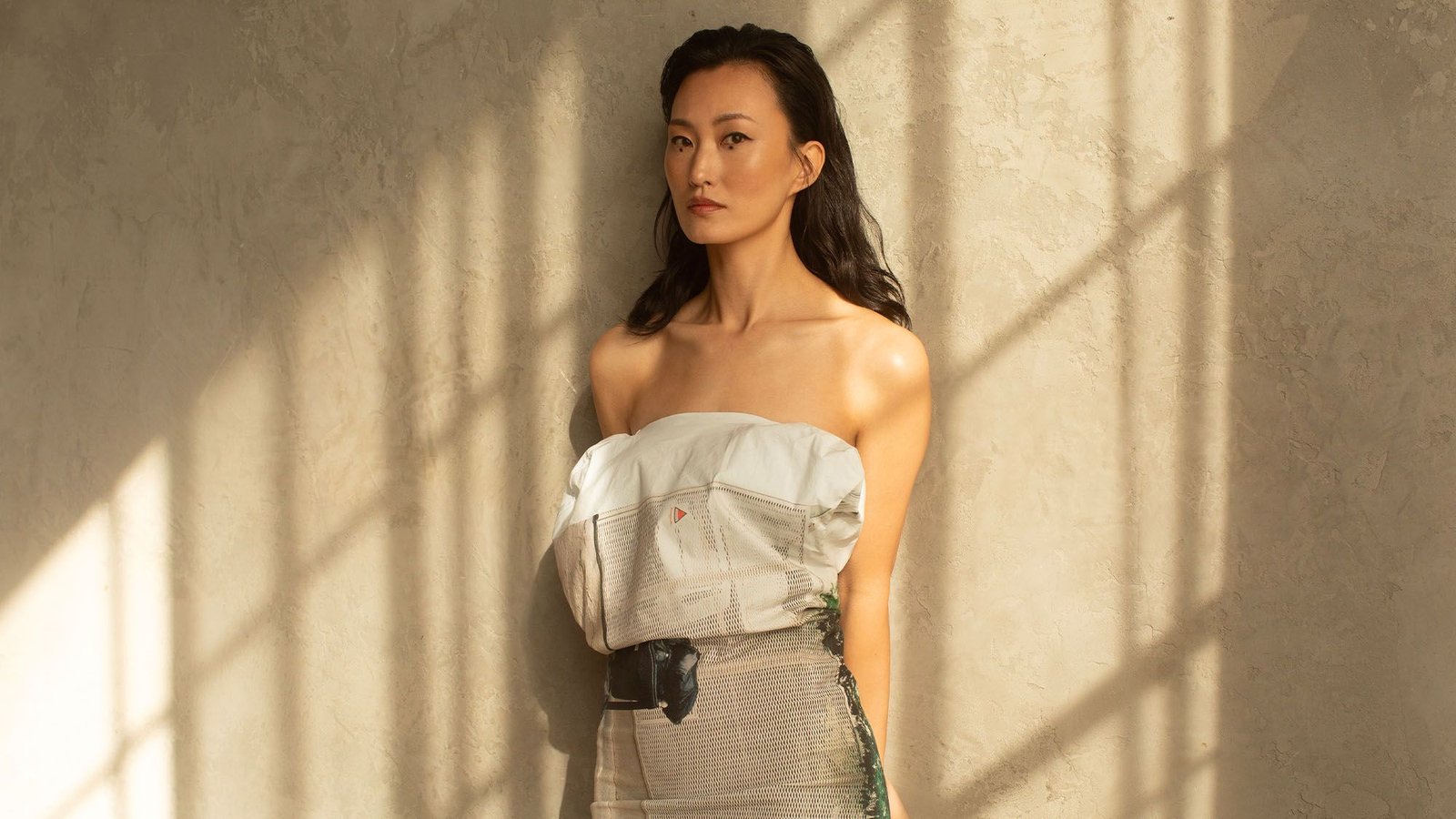
In Hikari’s heartwarming film Rental Family—which is about an American actor who lands an unusual gig with a Japanese agency to play stand-in roles for strangers—Mari Yamamoto plays a woman whose connection to her work is far beyond transactional. She deeply cares about and for the people she is helping. Over a Zoom call in late November, the Japanese actress makes note of that word “care” as a common through line in the characters she plays, saying she’s often cast as the person who cares the most. She’s a self-described sensitive and deeply feeling person herself, so it’s only fitting she’s drawn to such roles.
Yamamoto’s road to acting has been filled with many creative detours. There was her early aspiration to be a violinist. (She played solo as well as in an orchestra.) Then she had a short stint in a high school rock band. After college, she worked as an editor for one of her favorite Japanese culture magazines until the demanding schedule led to burnout followed by a brief period in creative advertising. It was during this stressful time that Yamamoto found comfort in watching movies and television late at night. She became somewhat of a cinephile, although acting wasn’t even on her radar as a career pursuit until she saw Sandra Oh in Grey’s Anatomy. Inspired by the Asian representation in American entertainment and tired of the corporate grind, she picked up and moved to New York City to study acting at the esteemed Lee Strasberg Theatre & Film Institute. She spent her time in the city performing in a series of off-Broadway productions before having to return to Japan. While back home, she met American journalist Jake Adelstein and returned to writing, covering politics and social issues for The Daily Beast for six years. When Adelstein’s book, Tokyo Vice, was optioned to be a series on HBO, he brought her back to New York to be in the writer’s room. Shortly after that, her screen career started to take off with roles in back-to-back Apple TV+ shows, Pachinko and Monarch: Legacy of Monsters.
Today, as she stacks up notable credits and makes headway on personal projects, Yamamoto’s career sits firmly at the intersection of writing and acting. She is, after all, a storyteller at heart. Putting care into the performances she gives on-screen and the words she puts to the page, Yamamoto is proving herself a name to watch.
Rental Family is cowritten and directed by the Japanese filmmaker Hikari, who you credit as a personal icon. Can you tell me about the opportunity to work with her?
I’ve been a fan of hers for a long time. I’d seen all of her stuff, and when I saw her first feature, 37 Seconds, I just thought, “Oh, this is the future of Japanese cinema.” She works in the U.S., but we need somebody like that who knows Japan from the inside and outside to be able to depict it in a way that resonates and travels. So I was really excited.
I received this script a month after my father had passed, so it was finally exciting to receive a script of hers and have a chance to be seen by her, but it was really the script that had so many themes of fatherhood that really moved me. It really felt like a sign from my dad saying, “You’re gonna find love. Don’t worry. You’re gonna find people who care about you.” I was instantly in love with the script and the character, and I thought, “I have to do this.” It was right before the [writer and actor] strikes, so it was like a seven-month process of auditioning, stops and goes, and I finally got it. It was incredible.
I love that it came to you at such an impactful time. Prior to working on this, how familiar were you with the concept of rental families in Japan, and what was your first impression?
I think the reaction was what most people have, which is, “What? What is it?” There had been a New Yorker article maybe 10 years ago that went really viral, so I was familiar with the notion, and it comes up a lot in Japanese media, which I do read and try to stay informed about. I knew that there was this guy who calls himself “the guy who does nothing” on Twitter and rents himself out for like $100 a day, and he would just come to you and provide minimal conversation and do whatever you want. This guy blew up, and he has a book deal and a TV show based on him, so in that sense, this rent-a-person concept was quite familiar to me.
I’ve seen renting a grandmother is quite popular, and renting a middle-aged man is quite popular because, surprisingly, teenage girls want a father figure. Their real dads work too long in Japan, so they never get to see them, so they like to rent a middle-aged man for sage life advice. I thought that was really heartbreaking but also tender.
Did you meet with anyone from a rental agency to help you better understand Aiko and why someone would do this kind of work?
Takehiro [Hira] (he plays my boss in the film), he and I went to speak with a company that provides a rent-a-person service, and they call themselves the All-Women Handyman Company, which is interesting because they don’t label themselves a rental family service. But in essence, that’s what they do because they rent themselves out for $60 an hour for any menial task really. They were telling me about this older lady living alone, and she needed somebody to change her AC filter. That takes five minutes, and she’s paying $60, so they felt bad obviously, and they were like, “Would you like us to do anything?” She would just ask them to do all these tasks around the house, but eventually, it came out that she wanted companionship. She wanted someone to talk to, so she became a regular, and the person who goes to her every week, they have a real relationship [with her]. It’s not a sister or mother. There’s no family label, but she’s a person who cares for you like family in a way and who’s reliable even though you’re paying them. I believe their connection is genuine. The care is genuine. I really felt this from the woman that provides this service. They really cared about their clients and wanted them to find peace in their lives.
It taught me a lot about how Japanese people… Their love language, between even close people, isn’t “I love you.” It’s not words of affirmation. It’s more that you don’t burden the other person because we’re so conscientious. That’s what people love about Japan—that we’re considerate and polite and kind—and that extends to the people around us to an extent, so much so that we’re unable to ask for what we need, which is such a paradox. That’s why it’s so heartbreaking and also why these kinds of services exist in Japan. … People would rather pay somebody else to ask for what they need rather than trouble or burden their actual loved ones. It’s that complexity that I hope people take away and understand rather than judging it from the get-go.

(Image credit: Catie Laffoon)
There is a line Aiko says in the film, which is, “Sometimes, all we need is someone to look us in the eye and remind us we exist.” It reminds me of that woman who mostly wanted to have companionship.
There are so many people who go around not talking to anyone the whole day. I think a lot of people spend their whole days not speaking to someone and look forward to an interaction at the supermarket. It really breaks your heart. Since I’ve done this film, I am really conscious about looking people in the eye, passing them by and smiling, paying a compliment. It does that for me too. When somebody does that to me, it makes my day, so I try to do that consciously since I’ve read this script. It’s changed my life in that way.
Even though we’re so connected through the internet and social media, we’re not actually connecting on an in-person, human level.
I follow this psychologist on Instagram talking about loneliness, which is so ironic, but she said something that really struck me. She said that everybody wants a village, but nobody wants to be a villager. And I thought that hits it right on the head. That’s the perfect place for social media, right? You feel like you’re part of something, but you don’t have to deal with stuff. You can turn it off if you don’t want it. But the downside is that you don’t get the real juicy, messy, but alive connection and support and life of a real village. So that struck me. I thought about my own tendencies of “I’m an introvert, and I really like to choose who I interact with,” but the most surprising, interesting things can come from unexpected places.
Following your previous roles as Hana in Pachinko and Keiko in Monarch: Legacy of Monsters, what really appealed to you about Aiko?
Up until this character, in Monarch and Pachinko and the stuff I’ve done before, I’ve always played the girl who goes missing. It’s mysterious, and it’s fun to play, but that’s been the trope for me, so it was interesting to play a person who’s, you know, here. Even though those were the tropes, I feel like I’ve always played or I always get cast as the person who cares the most. I am a very deeply feeling, sensitive person. I’m not saying I’m a good person, but I do care a lot. I think those are the characters that I fittingly have chosen to play, and Aiko was no exception, in that she cares about her clients the most.
She is the heart of the operation, and there’s a whole story about her that is not in the final product of the film but that we shot, and it’s interesting because if you shoot something, that becomes the blood and bones and the memory of your character. She has that undercurrent of why she came into this job, and I realized that something terrible has happened to her in the past, and that brought her to the rental-family business. I had to figure out, Why does she care so much? Because it’s so strange, right? Why would she care about making this fake wedding go so well? It’s not just money for her—it’s so clear. I realized that it’s a transference. … When something happened to her and she needed people the most, nobody was there for her, and she carries that with her, and that brings about this compulsive need to be there for people who need her.
Her gung-honess totally made sense, but then the complexity that was interesting to play was that she’s such a strong person, and she clearly has these values and principles, but she’s also complicit in this terrible side of the business, which is apologizing on behalf of these philandering men. It was such an interesting challenge for me to say, How does she justify that? And it was all in the script.
There’s a line she says, “The apology service is the most popular service we have.” It clicked for me that, oh, she’s willing to take one for the team so that they can keep the business going [and] she can help the people she really wants to help. She won’t send other people out for the apology services. And then Brendan [Fraser]’s character, Phillip, comes in and tells her, “That’s not okay.” I think we all have that experience in our lives where we normalize these situations that you find yourself in because you don’t really know what to do other than go with it in the moment until somebody says, “Are you okay?” He looks at you with those ocean eyes, and it’s like, “No, I’m not okay.” Getting to play that arc was so cathartic, and it was so interesting to mine those complexities. I had a blast playing her, and I was in love with her from the get-go.
You share most of your scenes with Brendan Fraser. How was it working with him as a scene partner?
Oh my goodness. My first day of the shoot was shooting the scene with him at the bar after I’ve been slapped, and he’s been fired. So we started from rock bottom together. And it’s Brendan Fraser. I rehearsed with him, and he was so lovely, but I was still really nervous. I was so worried, nervously drinking the whiskey and iced tea in the scene a lot, and I was trying to keep track of where I sipped it so I could make sure the continuity was right in all the coverage. At some point, I realized I didn’t remember, and I panicked and was like, “Oh no, continuity.” And he was like, “Continuity is for beginners. You don’t worry about that. You just do the scene.” He just gave me the permission to be so free, and I knew in that instance that I could do whatever and that he would go with me wherever. That was an incredible feeling to have throughout the film. He was so kind to the crew and appreciative of everybody. He’s just an incredible leader and a person and an actor. We were so lucky to have him.

Something interesting about you is that you worked as a journalist for a bit, writing for The Daily Beast and reporting on politics and social issues, and then you also wrote for the HBO Max series Tokyo Vice. Do you see yourself doing more writing in this capacity? What would really excite you in terms of writing a project?
Writing was my first love. My first job out of college was being an editor at a magazine, so that’s always been a big part of who I am. Journalism was also such a through line for me. People get confused like, “Why journalism and acting?” But for me, there’s a through line in journalism being finding facts and building a story. Acting is finding the truth of a character and building the story, so the process for me is the same. It’s research building and fact-checking. I love both, and I write scripts now for myself. The dream is to write and to act in the things I’ve written.
The things I’ve written so far are based in Japan about Japanese stories, but it’s interesting because I’ve lived in the U.S. for over 10 years, and I still feel like an imposter that I can’t write about America because I’m not from here. I think it’s that journalistic side pulling me back being like, “Do you know enough?” But I realized that whatever I write is going to be through a Japanese lens because that’s who I am. I’m excited to challenge myself and take myself out of Japan and write something that’s not Japan related and see that side of me reflected in a world that’s not a Japanese context. Also, playing non-Japanese characters is my next step into widening my range as an actor as well. So that’s what I’m excited about.
Anything else on your acting bucket list?
I saw Park Chan-wook at a party the other day. I could not even approach. He’s just my idol. I was just like, “Oh my God, there is God.” I don’t know. I just need to throw things after I watch his films. Tilda Swinton is my idol. All the choices she’s made in her career are incredible. I came to New York to do theater, so I still want to go back to my roots. I also want to play a spy. I want to do weird things, like experimental things, and I’ve really enjoyed doing fantasy in [Monarch]. But also like a kitchen-sink drama. All of the roles I’ve enjoyed have come out of left field for me, so I’m open to all of the surprises.
Rental Family is in theaters now.
Explore More: