dailynewsnblog
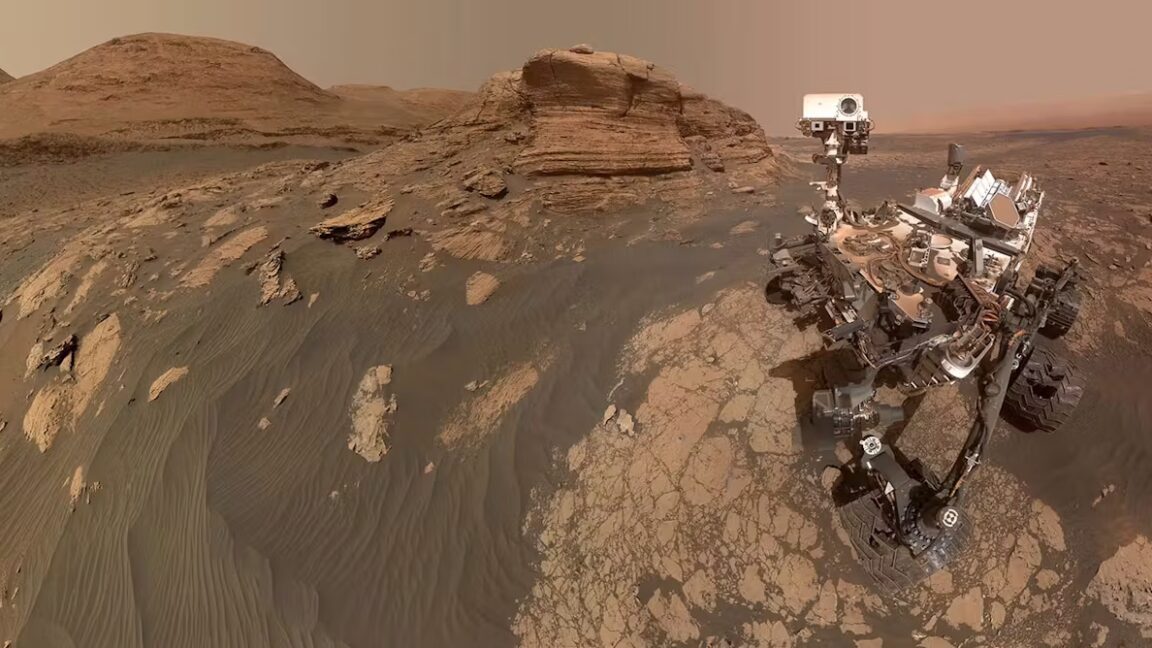
Sending astronauts to the red planet will be a decades-long activity and cost many billions of dollars. So why should NASA undertake such a bold mission?
A new report published Tuesday, titled “A Science Strategy for the Human Exploration of Mars,” represents the answer from leading scientists and engineers in the United States: finding whether life exists, or once did, beyond Earth.
“We’re searching for life on Mars,” said Dava Newman, a professor in the Department of Aeronautics and Astronautics at Massachusetts Institute of Technology and co-chair of the committee that wrote the report, in an interview with Ars. “The answer to the question ‘are we alone‘ is always going to be ‘maybe,’ unless it becomes yes.”
The report, two years in the making and encompassing more than 200 pages, was published by the National Academies of Sciences, Engineering, and Medicine. Essentially, the committee co-chaired by Newman and Linda T. Elkins-Tanton, director of the University of California, Berkeley Space Sciences Laboratory, was asked to identify the highest-priority science objectives for the first human missions to Mars.
‘No turning back’
Although coincidental, the report’s publication on Tuesday comes as NASA’s next administrator, private astronaut Jared Isaacman, is expected to be confirmed by the full US Senate in the next week or so. Isaacman is interested in laying the groundwork for future human missions to Mars as SpaceX and Blue Origin take steps toward building reusable in-space transportation systems that could send humans to Mars within the next two decades.
“There’s no turning back,” Newman said. “Everyone is inspired by this because it’s becoming real. We can get there. Decades ago, we didn’t have the technologies. This would have been a study report.”
The goal of the report is to help build a case for meaningful science to be done on Mars alongside human exploration. The report outlines 11 top-priority science objectives. In order of priority, they are:
- Search for Life: Is there evidence of life, past or present, on Mars?
- Water and carbon dioxide: Understand how water and carbon cycles changed over time
- Mars geology: Better understand the geological history of the planet
- Crew health: How do humans fare psychologically, cognitively, and physically in the Martian environment?
- Dust storms: Understand the origin and nature of large dust storms on the planet
- Search for resources: Develop in situ resource utilization, focusing initially on water and propellant
- Mars and genomes: Determine whether Mars changes reproduction and genome function in plant and animal species
- Understand microbes: Are microbial populations stable on Mars?
- Martian dust: How harmful and invasive is dust on humans and their hardware?
- Plants and animals: Does Mars affect plant and animal physiology and development across generations?
- Radiation sampling: Better understand the level and impact of radiation on the surface of Mars