dailynewsnblog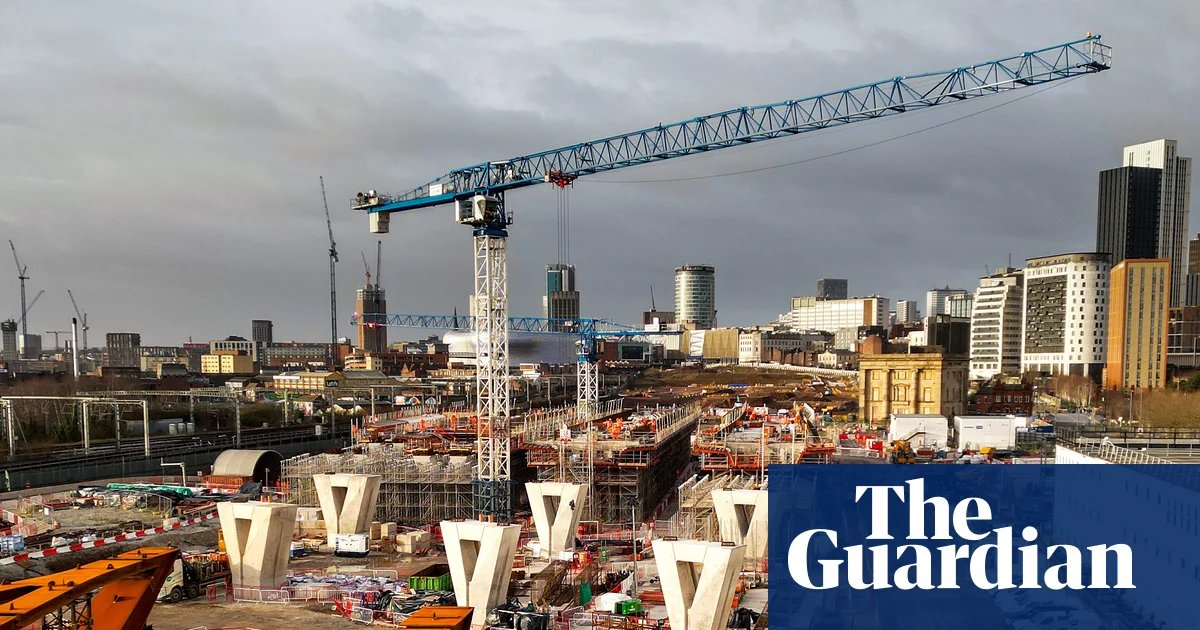
One of HS2’s biggest contractors has warned the government that raising tariffs on foreign steel imports will “exacerbate” cost pressures for the UK construction industry, amid growing concern over the £100bn railway’s rising budget.
Ministers said last week they would double the tariffs on imported steel and slash the amount that can be bought from overseas, in an attempt to save Britain’s struggling steelmakers.
However, the move will also raise the cost of the metal, crucial for infrastructure projects such as HS2, at a time when an energy shock from the Iran war is already inflating steel and concrete prices.
Mark Reynolds, the chair of the construction company Mace, said that amid the rising energy costs and an already depressed construction sector, the tariffs were “ill-timed and unhelpful and will only exacerbate the challenges” facing the UK industry.
Heidi Alexander, the transport secretary, is due to update the Commons on Monday on Labour’s drive to “reset” the cost of HS2 amid concern over its rising price tag. She is expected to say she has asked HS2’s chief executive, Mark Wild, to explore reducing the speed of its trains to save money.
A government source said Alexander was “weighing up all options to claw back as much time and money for the taxpayer as possible” with the aim to open the railway as soon as possible and at the lowest possible cost.
Mace is building stations at London Euston and Birmingham Curzon Street for HS2, the stalling rail project that is already expected to cost about £100bn when accounting for inflation. Last year its boss told ministers that a deadline of opening the line in 2033 could not be met.
Contractors are understood to have already bought much of the steel that goes into the tunnels, viaducts, bridges and underground work that will support the railway. Now they are being told to look for opportunities to buy in advance for other elements such as stations, to mitigate against future price increases.
From July, quotas on importing many overseas steel products will be slashed by 60%, and duties outside those quotas will be raised to 50%. The measures bring the UK in line with recent moves by the US, the EU and Canada in response to a surfeit of cheap imports from China, which is by far the world’s largest producer.
“We have to be honest that tariffs on imported steel will hit infrastructure projects with a cost shock,” said Milda Manomaityte, the chief executive of the Association for Consultancy and Engineering. That would be “felt sharply” on bridges, railways and new tram lines, she added.
Even before the Iran war sent energy prices soaring, the construction industry was trying to bounce back from its worst run since the financial crisis almost two decades ago.
The tariffs were “really unhelpful to the construction market and to the economy at the moment”, said Paul Gandy, the former boss of Tilbury Douglas, a construction company specialising in public projects.
“A lot of this steel is going to go into public sector work,” added Gandy, now the president of the Chartered Institute of Building. Many of those schemes were already “not a pretty picture” when it comes to spending.
The levies are expected to save primary steelmakers such as Tata and British Steel from collapse. The sector, viewed by ministers as strategically important, employs about 10,000 people and has suffered decades of job losses.
A source close to one of the primary steelmakers defended the tariffs, saying: “The steel industry needs to compete with cheap imports coming in from all over the world … once it’s gone you can’t just start it up again.”
A spokesperson for HS2 Ltd said: “During 2023-24, more than half of the steel used to build Britain’s new high-speed railway was from the UK, rising to two-thirds in 2024-25. Our contractors have already procured most of our structural steel for our major civil structures.”
A government spokesperson said the tariffs would make construction “less reliant on steel made overseas” but that it would review the policy after a year “to ensure it remains fit for purpose”.