dailynewsnblog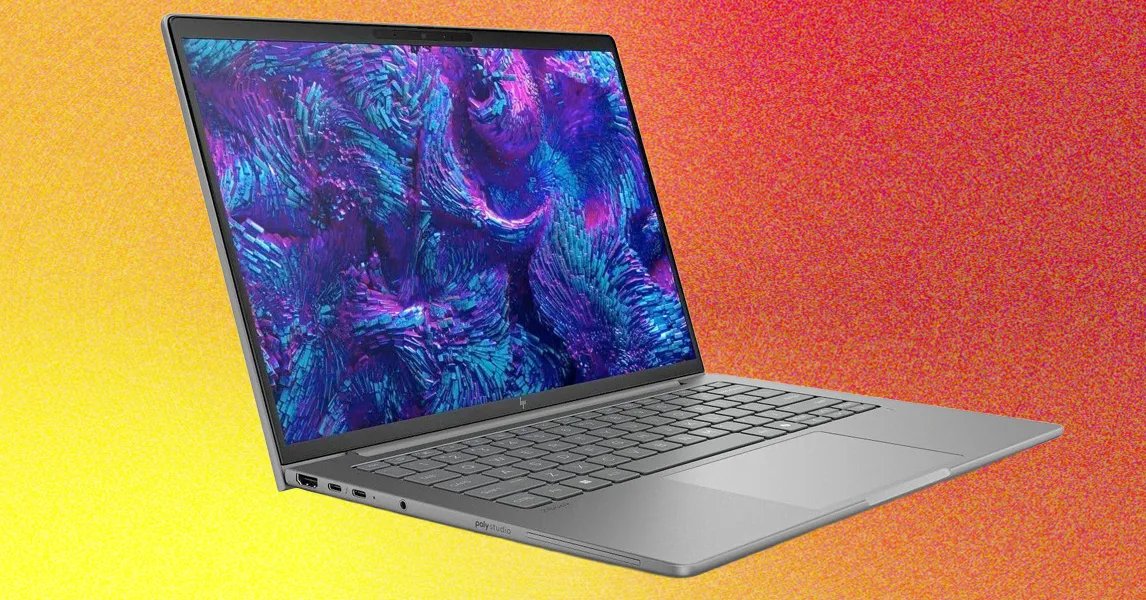
The concept behind the portable workstation isn’t a new or particularly challenging one. Load up a laptop with top-tier specs to make it as powerful and future-proof as possible, and never mind if it adds a few ounces and inches to the load. Ostensibly, these machines are designed with heavy grind tasks in mind, such as video editing or CAD work. Money has historically been no object with the mobile workstation. If you needed this kind of juice, it was expected that you (or, more likely, your employer) would have to pay for it.
HP’s new ZBook 8 G1i checks off all those boxes, though it arrived with a curious twist: A deep discount of more than $2,500 off an over-$4,000 asking price, dramatically bringing the price of the machine down to something in line with a traditional laptop. I’m listening.

Photograph: Chris Null
Thick as a Brick
If it weren’t for the extra girth (27 mm) and weight (3.8 pounds), this laptop would easily pass for any old 14-inch system. (It’s also available in a 16-inch version.) It’s anonymous otherwise, and little thought has been given to industrial design here. Standard HP branding is affixed to a metallic gray chassis composed of partially recycled aluminum and plastic. Gently rounded corners do little to conceal the surprisingly wide bezels around the display, and the keyboard and trackpad are perfectly functional if utilitarian in appearance. If you’d been handed this machine on your first day of work in 2014, you’d probably be pretty jazzed.
Mobile workstations are all about the specs, and to that end, the ZBook 8 is rather surprising. While the inclusion of 64 GB of RAM is on point, the choice of CPU—an Intel Core Ultra 7 265H—is odd, landing just about in the middle of the Core Ultra Series 2 power spectrum. At the very least, it seems like an Ultra 9 would be in order. A 1-terabyte SSD was included in my test configuration. The screen size of 2560 x 1600 pixels is fine for a 14-inch (non-touchscreen) device, but shy of anything I’d consider dazzling.
Discrete graphics—common for a workstation—are present, but the system includes an Nvidia GeForce RTX 500 Ada Generation GPU, a niche processor I’ve never actually encountered in the wild. Nearly two years old, the 500 Ada is a stripped-down version of the GeForce RTX 4060. Benchmarks peg its performance as roughly on par with the mobile GeForce GTX 1000 series. Again, it’s a curious choice for the machine.