dailynewsnblog
IMF chief Kristalina Georgieva joked during a meeting this autumn that the recent arrival of her American deputy had led to a drop in the average age in the room.
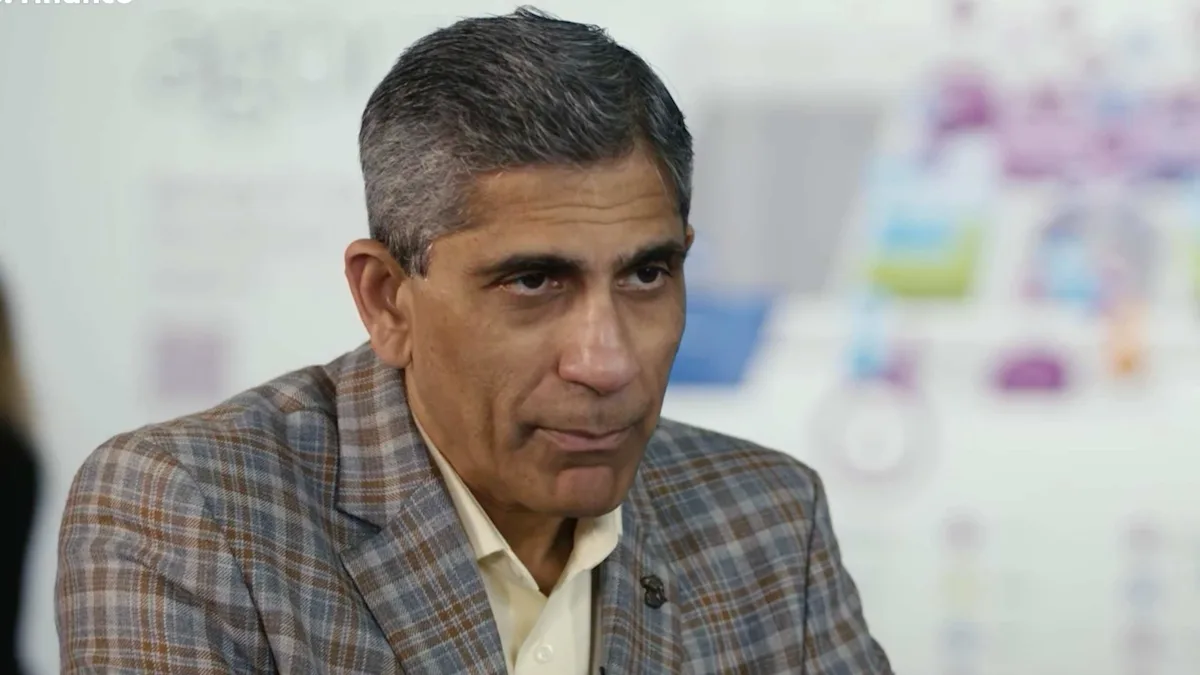
Dan Katz, who took over in October as first deputy managing director of the Washington-based institution, hit straight back. “Yes I’m young,” the 37-year-old said, according to two people familiar with the exchange. “But hopefully we’ll never talk about age in either direction again.”
His riposte to Georgieva, who is nearly twice his age, was light-hearted. But it points to a hard-hitting approach from Donald Trump’s new man at the IMF, as the White House and Republicans in Congress call for sweeping changes in an organisation they have accused of overstretching its mandate and falling victim to “mission creep”.
Katz, who is now the second most senior official at the fund, was previously chief of staff to Scott Bessent. The US Treasury secretary has called for the IMF to subject China’s economic policy to tougher scrutiny as it goes “back to basics”, concentrating less on climate change and gender imbalances, which Georgieva made a cornerstone of her work.
“The IMF is bracing for change,” said Eswar Prasad, an economics professor at Cornell University and former IMF official. “He [Katz] can both directly and indirectly have a pretty significant influence on IMF operations and its policies.”

Katz helped to set the agenda laid out by the US Treasury secretary in April, as Bessent demanded the IMF focus more on surveillance work and crisis management.
Katz also has close links with other senior administration officials, including Federal Reserve governor Stephen Miran; both men co-founded asset management firm Amberwave Partners.
A key focus for the US — and potential point of friction for the IMF — will be Katz’s role overseeing its surveillance of individual countries, including China.
Katz has also been given responsibility for its External Sector Report, offering the chance to drive home US concerns over China’s role in perpetuating imbalances in the global financial system.

As head of surveillance, Katz will — like his predecessor Gita Gopinath — oversee the IMF’s Article IV mission in China. This annual assessment of the state of the country’s economy is expected to focus on issues including the spillovers of China’s industrial policy on the rest of the world.
Bessent has already been highly critical over what he sees as the fund’s favourable treatment of Beijing and has said it should “call out countries like China that have pursued globally distortive policies and opaque currency practices for many decades”.

China’s Article IV mission is currently taking place — 18 months after the previous staff visit concluded. Katz joined the first two days of the mission, which will run from December 1-10.
This included meeting with the People’s Bank of China in Beijing on Monday, including the Chinese central bank’s governor Pan Gongsheng. “The two sides exchanged views on the economic and financial situation in China and globally, as well as co-operation between China and the IMF,” the PBoC said afterwards.
The timetable for the latest Article IV health check with the US has also slipped. The politically sensitive US consultation would normally take place during midsummer but there is still no concrete deadline — partly due to the recent US government shutdown.
Both reviews present a test for the IMF and its willingness to call out policy shortcomings within the world’s two biggest economies, said Mark Sobel, US chair at think-tank OMFIF and a former US Treasury official.
“Do they have the guts to call out the big guys? When the elephants fight the grass gets stomped,” he said.
While the IMF has in the past pressed China to rebalance its economy away from exports and towards consumption — and given it poor marks for its data standards, top Republicans want a tougher assessment.
French Hill, a Republican representative who heads the powerful House Committee on Financial Services, praised Katz as “a capable, experienced executive”, and an “excellent selection to serve as our key American at the IMF”.
“The People’s Republic of China does not have an independent central bank, it doesn’t have an independently market-based currency, it doesn’t have a record of transparent, reliable macroeconomic statistics,” Hill claimed.
One person familiar with the matter in China said Katz’s direct connection with Bessent might be regarded as a positive in Beijing, which would see him as a useful person to deal with. They said Katz would not necessarily actively stir up controversy with China.
Xi and Trump agreed to a truce in their trade war in October and both sides have an incentive to maintain the peace at least until Trump visits China in April. Even if Katz did cause any ructions, Georgieva, who is seen as a capable political operator, would try to contain them, the person said.
China’s Ministry of Foreign Affairs did not immediately respond to a request for comment.
Han Lin, China country director of the Asia Group, a US consultancy, said he expected Katz to press “quietly and technically, for sharper IMF scrutiny of China’s external imbalances; but a loud, public ‘callout’ is unlikely”.
“The IMF’s mandate, governance incentives and China’s weight all push the institution towards calibrated, consensus driven language rather than headline grabbing confrontation,” Lin added.
While the US is the fund’s biggest shareholder, Katz will have to show a willingness to serve its wider membership rather than simply pursuing American interests.
Like his predecessor, Katz is also set to oversee two of the fund’s largest and most politically charged programmes — on Argentina and Ukraine. The Treasury’s decision to extend US financial support to Argentina has heightened the political stakes for the fund.
Some of the demands Bessent has made of the IMF match the interests of existing fund staff, who believe it has strayed too far beyond its mandate.

The fund’s leadership is already making fewer direct statements about global warming. The statement from its steering committee after its latest annual meetings in October referred to increased “extreme weather events” rather than the climate transition as previously.
Insiders believe that Katz is aware that the IMF cannot entirely neglect climate-related risk. He is believed to be insistent that such conversations take place through the prism of so-called “macro-criticality” — the sort of textbook economics approach that the IMF has tended to rely on in the past.
“The IMF plays an indispensable role at the heart of the international monetary system,” Katz told the FT. “It is a privilege to serve our membership by carrying out the fund’s core mission of promoting economic growth and stability, as enshrined in the articles of agreement.”
Staff are on watch for signs that the US and others want to trim costs.
The IMF told the Financial Times that, when adjusted for inflation, it spends the same amount now on administration as it did 20 years ago, despite the increasing complexity of its work.
“This reflects the fund’s emphasis on prudent expense management,” it said. “But it is incumbent on the management team to constantly seek to derive the most value for our members.”
Already Bessent has criticised it for having a golf course at its disposal. The Bretton Woods Recreation Center in Maryland is financially and operationally independent from the IMF, but it allows staff to become members at a discounted rate.
“Getting back to the core mission is something even some IMF staff themselves have been eager to do,” said Prasad. “There is a feeling that the institution got too thinly spread by taking on too many mandates.”