dailynewsnblog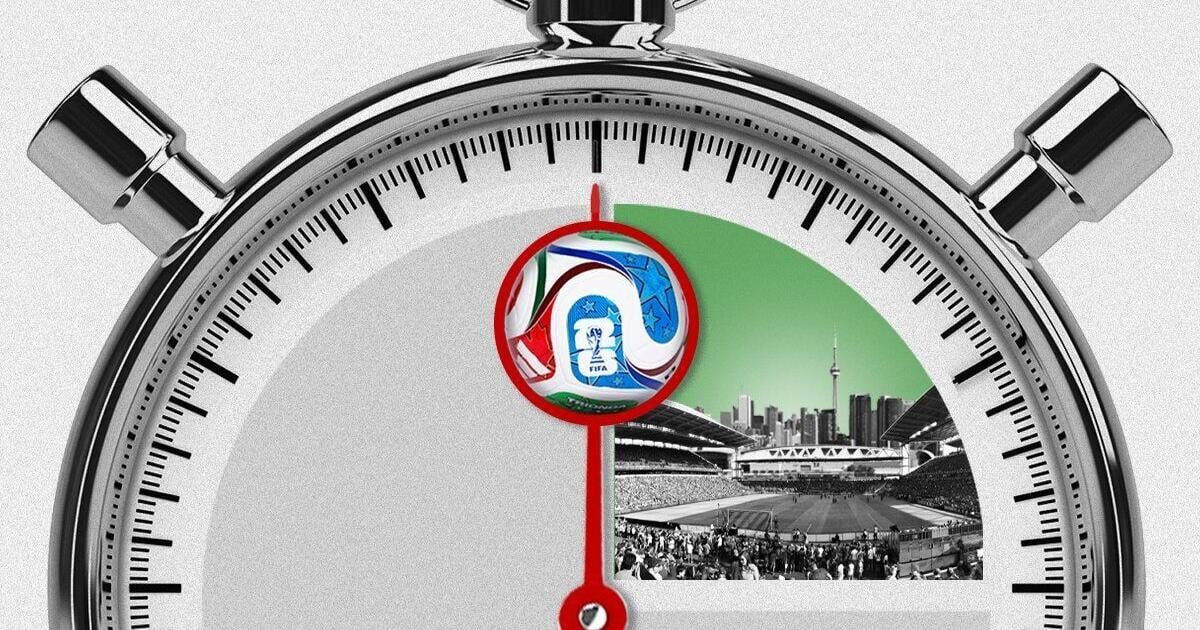
Young Malcolm McGuigan’s world orbits a soccer ball.
This summer, the highest expression of the game, the FIFA World Cup, is happening in his backyard and he’s elated.
“I played since I was young,” the nine-year-old centre-midfielder told the Star. “It’s fun to play, again and again.”
In this he’s like his father. A defining moment in Calum McGuigan’s lifelong romance with the sport was watching the 1994 World Cup with his da back in Glasgow. He caught every single game that tournament.
Malcolm expects he’ll do the same this World Cup. But he has an advantage his father never did — six of the global tournament’s games are coming to his doorstep this summer.
“I know this World Cup is going to be really special for him,” said Calum. “The fact that it’s in Toronto — that’s just crazy. There never was a World Cup in Scotland, I had to watch them all on TV.”
This summer, the McGuigans are set to watch Germany face off with the Côte d’Ivoire in Toronto. They’re counting down the days. When they aren’t in the stadium, they expect they’ll be at the fan festival nearby, or watching the games in Cherry Beach with Malcolm’s team, which his dad coaches.
Behind the scenes, the city is still at work trying to ensure the experience the McGuigans and others are hoping for comes to pass without incident.
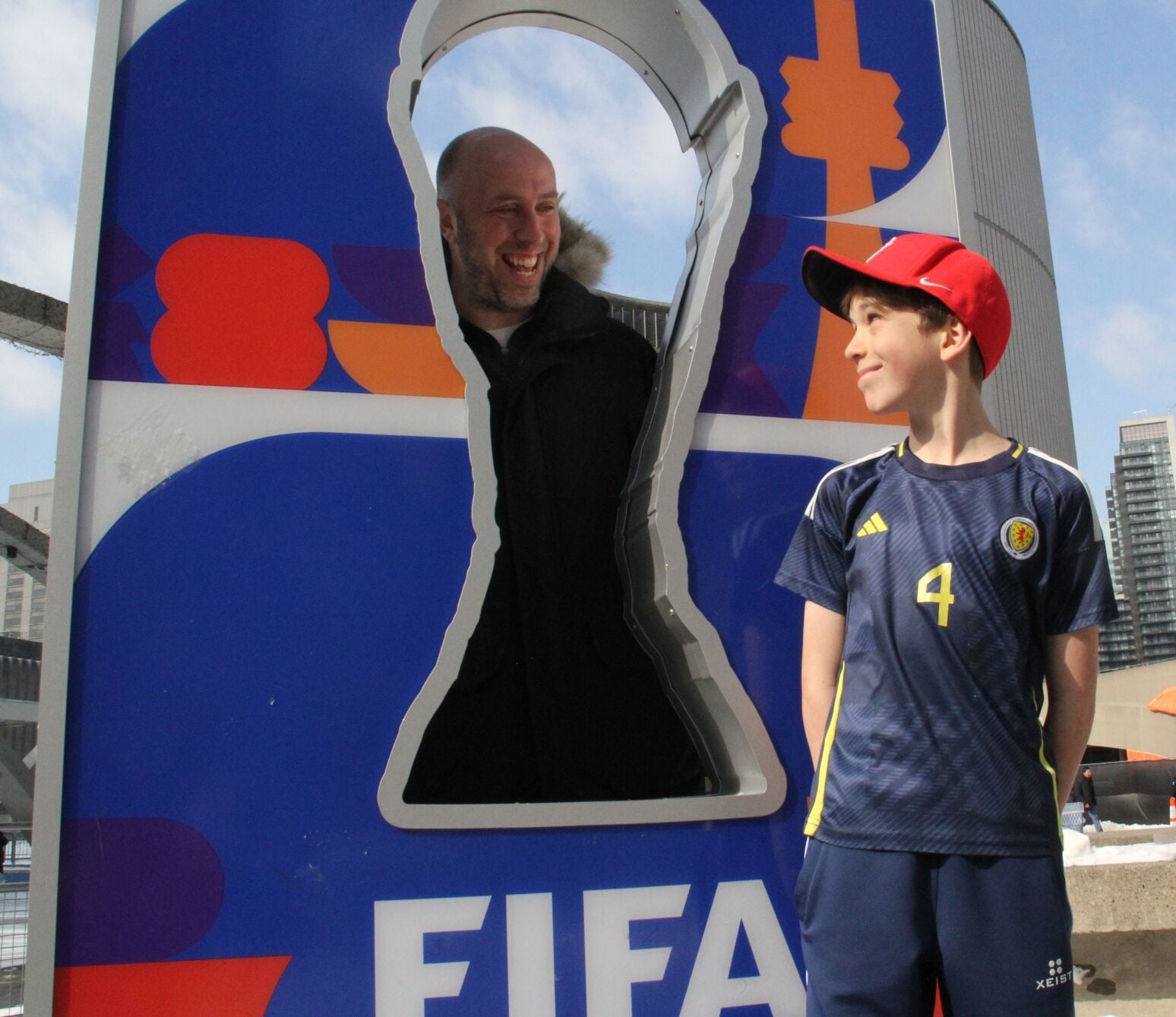
Lifelong football fans Calum McGuigan and his son Malcolm are overjoyed that the World Cup is coming to their doorstep this summer.
David Rider
There are logistical and financial hurdles Toronto needs to clear in the looming 100 days until the World Cup — co-hosted by the U.S., Canada and Mexico — comes to town. Details of provincial funding are still being sorted. The stadium is not fully built. The city has yet to finalize a traffic scheme.
“I’m worried about everything, basically,” Coun. Mike Colle (Eglinton-Lawrence), chair of council’s World Cup subcommittee, said with a laugh. He said he’s confident preparations are on track, but “it’s such a big undertaking” and “nothing comes easy.”
Here are all the complexities officials must unwind in the coming weeks, before an estimated 300,000 football fans descend on Toronto and screens around the world broadcast the city to a billion more.
How Toronto will deal with the FIFA crowds
Up to 45,000 fans will attend each match, and as many as 20,000 are expected to take part in each Fan Festival, at Fort York and the Bentway. The city’s modelling shows traffic on key corridors will increase by about 10 to 15 per cent.
While a detailed transportation plan won’t be released until the end of March, city manager Paul Johnson said in a December memo to council that to deal with the increase the city will modify traffic signals, deploy traffic agents and restrict parking on key routes and sites close to the stadium. It will also temporarily close highway on- and off-ramps — such as the Jameson Avenue entrance to the Gardiner Expressway — and suspend construction projects that block key roads.
The city is also exploring limiting areas close to the stadium to local traffic during the tournament, and closing or restricting sections of streets such as Lake Shore Boulevard and Dufferin Street on match days.
Without any subway lines to the stadium, the TTC will rely on its streetcar and bus network to ferry riders to and from matches.
With newly installed priority bus lanes on Bathurst and Dufferin, the 511 Bathurst streetcar and the 29 and 929 Dufferin buses are expected to run more frequently on match days. Other streetcar lines that feed into the area around Exhibition Place, such as the 504 King and 509 Harbourfront, will also have increased service, according to TTC staff.
Metrolinx has yet to release its plans for service for the Lakeshore West line that stops at Exhibition GO Station, but spokesperson Lyndsay Miller said the agency is “working on enhancing our service.”
Work on the Ontario Line, which begins at Exhibition Station, will continue, but truck traffic at construction sites near the stadium will pause for approximately 12 hours during match days.
Public health kicks around an AI tool
Toronto Public Health confirmed to the Star it built a machine-learning algorithm to scour the internet for evidence of public health risks at mass gatherings, which it might debut at the World Cup.
The project is only in a “preliminary phase,” said spokesperson Chris Wai in a statement, and needs to be evaluated for “reliability and value” before it gets deployed.
A report in August to the board of health claimed the AI tool can “detect infectious disease threats, injuries, heat-related illness, and drug and alcohol related harms.”
TPH refused to speak to the Star about its other duties during the World Cup. The agency came under fire for budgeting $200,000 to distribute condoms and lube during the tournament, which it said is standard public health practice to prevent the spread of sexually transmitted infections.
How Toronto’s ‘controlled area’ will work
As required under its hosting contract, the city is designating everything within a two-kilometre radius of the stadium a “controlled area,” where municipal officials and FIFA plan to crack down on unauthorized use of World Cup branding.
Sponsors have paid millions of dollars to be associated with the games, and FIFA is intent that only those companies are able to use official promotional material. According to a guide released by the city, intellectual property that’s off limits to non-sponsors include the official tournament logo, host city poster, images of the World Cup trophy, and the phrases “FIFA” and “World Cup.”
The city says its approach will “prioritize education,” but when rules against activity such as illegal vending are breached, bylaw officers could issue fines or lay charges.
“We’re not going to have someone looking at every chalkboard outside every bar in the city,” said Sharon Bollenbach, executive director of Toronto’s FIFA secretariat, but “there will be people monitoring this,” particularly in the controlled zone. The city hopes businesses and residents will “respect the guidelines and be following them.”
The zone stretches roughly from Ontario Place in the south to Dundas Street West in the north, and from Roncesvalles Avenue in the west to about Spadina Avenue in the east.
The price of policing during FIFA
The Toronto Police Service is budgeting $56 million for “comprehensive safety and security planning and operations” for the tournament. The force will be the lead agency responsible for co-ordinating with other police services, such as York, Durham, Peel and the OPP.
Staffing for World Cup duties will “primarily” involve overtime, according to a TPS spokesperson, and as a result the force’s regular operations “will not be impacted.” Funding for policing the games will be paid for out of the city’s FIFA budget.
Cartel violence has eyes on Mexico
Despite cartel-related violence afflicting Mexico in recent weeks, including host city Guadalajara, FIFA has said it is not planning on relocating any games.
Colle said he is monitoring for any potential changes on this front.

Aerial view of Akron Stadium, a 2026 FIFA World Cup venue in Guadalajara, which will temporarily change its name to “Estadio Guadalajara” for the tournament.
ULISES RUIZ AFP via Getty Images
If FIFA does move games from any of the three Mexican venues, Colle predicted they would likely go to one of the 11 U.S. host cities, not Toronto or Vancouver.
The situation is “worrisome, but I don’t think it’s going to affect us here,” he said.
Money makes the world (cup) go round
The Ontario government recently signed a deal to put $97 million toward Toronto’s $380-million hosting budget, but there is still uncertainty over the provincial contribution. The province has said some of its share would be in the form of increased provincial services required for the games, such as transit, health care and the OPP.
Bollenbach said last week the exact breakdown of the provincial funding is “still being determined.”
While Toronto is set to receive a fraction of the tax revenue the tournament will generate compared to the other levels of government, the municipality is paying nearly half of hosting costs, at about $179 million. The federal government has committed roughly $104 million.
Sprucing up Toronto Stadium
Toronto still has to complete the $133-million renovation at city-owned BMO Field (renamed Toronto Stadium during the tournament). The first phase of the work, completed last fall, included installing four new billboards, each with five million LED pixels. Broadcast infrastructure, concession areas and hospitality suites were all upgraded.

Part of the preparation for the World Cup is extra seating at BMO Field, which has been renamed Toronto Field for the tournament.
Steve Russell Toronto Star
The next phase requires expanding capacity by 17,000 seats, upgrading the pitch and player spaces, and new lighting. The work is on track to be done by the end of March, according to the city.
The cost of stadium upgrades has gone up more than $9 million from a city estimate in September, but it says the tournament’s overall $380-million budget remains intact, and the additional funding was available in a contingency fund.
MLSE, which owns Toronto FC and the Toronto Argonauts, both of which play out of the stadium, is funding $25 million in upgrades that weren’t mandated by FIFA.
Fan Fest going ahead
The official FIFA fan festival in New Jersey was cancelled this month in favour of smaller watch parties. The one in Miami’s future is uncertain because of a lack of funding.
That’s not an issue in Toronto, according to Coun. Ausma Malik (Spadina—Fort York), who, alongside her constituents, is getting ready for a sea of people to flow in when they open up fan fest in her ward. Exact dates have yet to be announced, but it will be staged on 22 days of the 38-day tournament, according to Bollenbach.
Malik said the city wants to make sure there’s a place for people to feel the “energy of the games” whether they have a ticket or not.
Jennifer Poon, a member of the Fort York Neighbourhood Association, said she is excited. Malik and the city have been terrific assuaging the worries of local residents, she said, consulting regularly with them.
“I’m feeling pretty confident about the logistics of this and how the city is preparing for it.”
With files from Andy Takagi