dailynewsnblog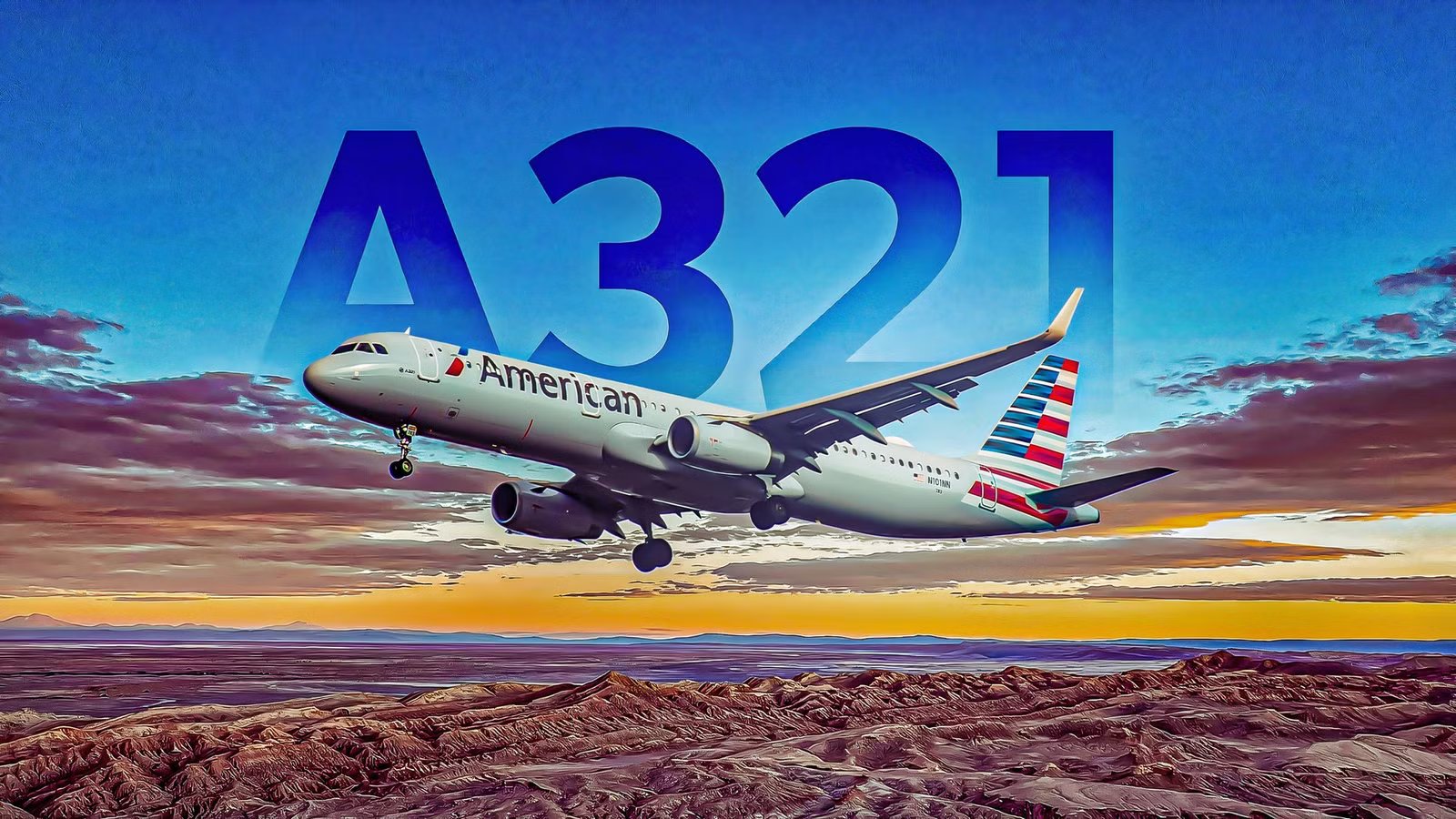
The ubiquitous Airbus A321 plays an important role in  American Airlines’ fleet. According to ch-aviation, it has 304 of them, comprising 218 A321ceos, 84 A321neos, and now two A321XLRs. The 155-seat XLR entered commercial service on December 18.
Let’s focus on its A321ceos. They exist in two layouts: the very notable, very premium 102-seater and the far less interesting, standard 190-seater. Ch-aviation shows that 15 frames still have the extremely low-capacity configuration.
A Quick Look At American’s A321Ts

The 102-seaters are the airline’s so-called ‘transcontinental’ A321Ts, a highly different and premium subfleet. Although rare, some other airlines have unusually low-capacity, high-premium equipment in normal scheduled operations. For example, United has its 167-seat Boeing 767-300ERs, All Nippon has 184-seat 787-8s, etc.
American’s A321Ts have ten fully flat seats in Flagship First (1-1), 20 fully flat seats in Flagship First (2-2), 36 seats in Main Cabin Extra (3-3; 35″ pitch), and just 36 seats in the bog-standard Main Cabin (3-3; 31″). Some 29% of its capacity is first and business, which is a phenomenal proportion. Obviously, this dictates where they are deployed; more on that below.
You’ll know that its A321Ts are being reconfigured to its standard 190-seat A321ceo layout. The first frame to be ‘densified’ rolled out in May 2024 and reentered service the following month. It was the 11.7-year-old N115NN.
It remains unclear when the remaining 15 frames will be removed from service to be reconfigured. To a certain and probably limited degree, the 155-seat A321XLR will replace them in at least one transcon market. The A321T’s reconfiguration will probably speed up as more XLRs arrive.
Where The A321T Is Flying

Cirium Diio indicates that American plans the following routes and frequencies on its 102-seaters in January. As not many frames have been reconfigured yet, activity is only marginally down compared to January 2025 (-4%) and 2024 (-5%). As more aircraft are pulled from service, flights will obviously be reduced more significantly. However, Cirium data shows there’s currently no discernible difference in any month in 2026. It’s one to watch.
Everyone knows that the configuration is deployed between  New York JFK and Los Angeles and San Francisco, with the pair of routes accounting for two in three flights. For obvious reasons, JFK-Los Angeles is the nation’s highest-trafficked market that generates the most revenue. (It is Delta’s only route, outside Atlanta, that has a million-plus passengers.)
Unlike in January 2025, American’s A321T flights from JFK have fallen by 16%. Part of the reason is the introduction of the XLR. But to a much more significant degree, it is because the subfleet’s activity at  Boston has doubled year-over-year.
|
Departing A321T Flights In January 2026* |
Route |
|---|---|
|
183 (four to eight daily) |
JFK-Los Angeles |
|
121 (two to six daily) |
JFK-San Francisco |
|
117 (three to four daily) |
Boston-Los Angeles |
|
36 (one to two daily**) |
JFK-Orange County |
|
Six (only four dates in the month) |
JFK-Las Vegas |
|
* Double for both ways ** Two departures January 1 to January 5, daily the rest of the month |

Can You Survive A 10-Hour Ride On A Boeing 737?
A subjectively exciting new route will take flight this week, but can passengers endure the journey?
Up To 12 Daily Departures From JFK

Focusing on the Big Apple, American plans up to 12 daily departures in January (double for both ways), but it does vary. You might wonder why more departures don’t exist, especially given the table’s contents. It’s simply because the highest frequencies don’t all operate on the same days.
As a snapshot of a day’s activity, consider January 5. On that Monday, American’s A321T frames will depart from JFK at 6:00 am (Los Angeles), 7:00 am (Orange County), 7:29 am (Los Angeles), 9:00 am (Las Vegas), 9:30 am (Orange County), 10:30 am (San Francisco), 11:00 (Los Angeles), 4:30 pm (Los Angeles), 5:45 pm (Las Vegas), 7:30 pm (Los Angeles), 7:35 pm (San Francisco), and 9:00 pm (Los Angeles).