dailynewsnblog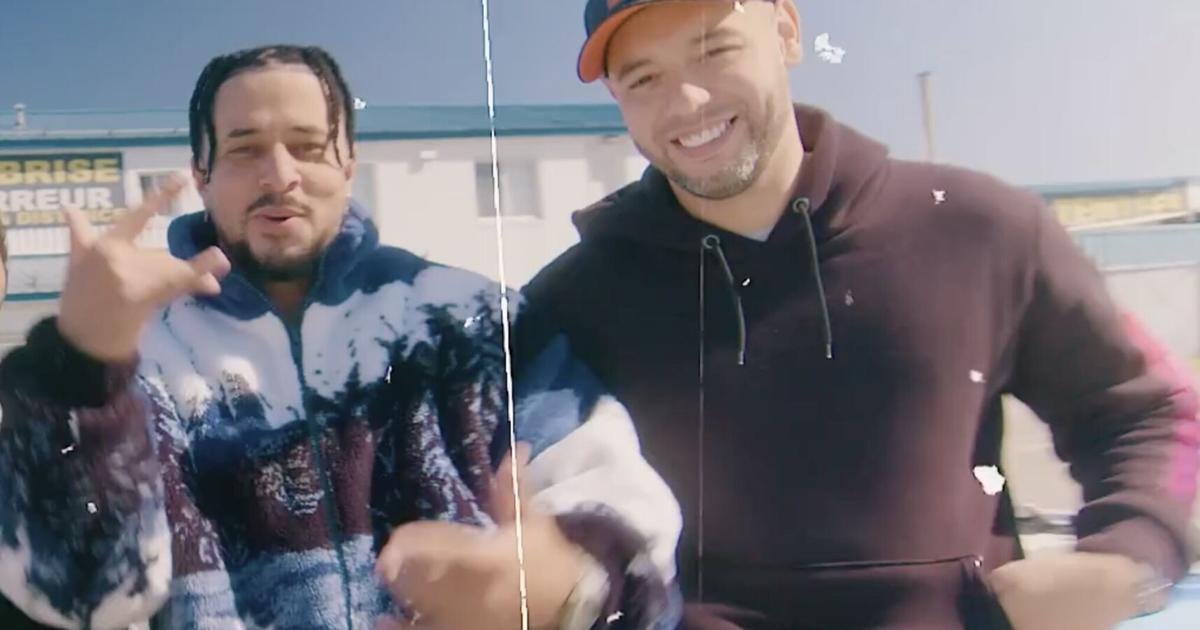
A year before he agreed to help the FBI take down alleged drug lord Ryan Wedding, Jonathan Acebedo Garcia appeared in a music video.
A smiling Acebedo Garcia is seen only briefly in the outro, as the bouncing reggaeton beat winds down. Dressed in a branded cap and hoodie, the Montrealer poses with the artist and two others in front of a blue convertible at an auto body shop in Laval, Que. He removes his hands from his pockets to flash the peace sign, and the music fades.
Years later, U.S. prosecutors say, the video would be enough to set off a chain of events leading to his assassination.
In new court records recently filed in Quebec court, prosecutors paint the most detailed picture yet of the relentless efforts Wedding allegedly took to eliminate what many criminals perceive as their biggest threat: a “rat.”

Ryan Wedding has been arrested. But many of the biggest open questions in his case remain unanswered.
Ryan Wedding has been arrested. But many of the biggest open questions in his case remain unanswered.
Taken as a whole, the documents, combined with previous court filings, reveal how Wedding and a team of hit men allegedly used a music video they discovered online as a lead to hunt down and kill Acebedo Garcia, the man who turned against them.
Among his alleged co-conspirators is Edwin Basora-Hernandez, or Ed Winter, the Montreal reggaeton artist behind the music video.
Basora-Hernandez is now facing the prospect of life in a U.S. prison for his alleged role in Acebedo Garcia’s murder.
According to the FBI, Wedding’s associates paid him as much as $1,000 to hand over his friend Acebedo Garcia’s phone number; that was used to track him across the globe and, eventually, to Medellin, Colombia.
In a Quebec extradition court, Basora-Hernandez’s lawyer described a modest man who made little income from his music career and working at his family’s garage. He argued there was no evidence his client had any idea what the information would be used for, or that he was part of Wedding’s network.
After all, lawyer Alexandre Bergevin said, Acebedo Garcia was a friend — someone who had even invested in Basora-Hernandez’s music career. Why would he want him dead?
The beginning of the end of the Wedding drug empire
It was October 2024, and Wedding was on a mission.
As the FBI’s main target, the still-fugitive Wedding knew what was at stake. If caught and convicted, he’d face life behind bars; maybe even the death penalty.
He knew the FBI had an inside man — the U.S. indictment said as much — and he was confident he knew who it was. But “The Boss” wanted to be sure.
According to the records, Wedding instructed Atna Ohna, an alleged hit man and prominent Montreal organized crime figure, to text Acebedo Garcia, a Colombian-Canadian whom Wedding had met in prison.
It’s unclear what was said in the exchange, but the documents suggest Acebedo Garcia admitted it directly to Ohna when asked. Why he’d be so seemingly cavalier, we don’t know; the records only say he told Ohna “he had no choice but to co-operate” with the FBI.
(Prosecutors say a search of Acebedo Garcia’s phone after his death revealed he told several people he was working with authorities, going as far as sending them news articles about the October 2024 charges and arrests.)
Wedding suspicions were confirmed: his longtime partner, a man he trafficked drugs with for 10 years, had flipped.
Next, what to do with this information?
According to the FBI, Wedding received advice from an Ontario lawyer: Kill the star witness, and the government has no case. With the “rat” gone, there would be no one to testify against him at trial.
Wedding allegedly placed a bounty of up to $5 million on Acebedo Garcia’s head — “Without him there’s nothing,” he’d allegedly write in a text.
Court records suggest Wedding executed a series of plots to track Acebedo Garcia down, including a failed scheme to lure him to a location to be killed, and paying a crime blogger $3,500 to out him as the confidential informant.

One of the few publicly accessible images of Johnathan Acebedo Garcia.
Facebook
The documents say Wedding also tried using an on-device interception tool (ODIT) — a piece of spyware that can be installed remotely— using phone numbers linked to Acebedo Garcia. The intent was to read his messages and track his location in real time, though the attempts were unsuccessful — seemingly because the target had changed his number.
Finding Acebedo Garcia wouldn’t be easy. Online, he was a ghost, with almost no social media presence. His name appeared in business records, however.
Wedding and his co-conspirators needed an “in” — someone who knew Acebedo Garcia well.
The music video from 2022 was hiding in plain sight.
We don’t know exactly how Wedding’s team knew to look for it, but that short outro to the Ed Winter video makes a clear impression — Basora-Hernandez would know the grinning man to his left.
Indeed, Acebedo Garcia had financially supported Basora-Hernandez’s career; anyone in their circles of friends could have known about it or been able to confirm their identities.
Born in the Dominican Republic, Basora-Hernandez came to Canada as a teenager and is a permanent resident. Online, he is marketed as a rising star in the reggaeton and urban music scene. He’s also a photographer and works full-time at his family’s garage, according to court records.
In the video, a heavy, bouncing beat carries Spanish lyrics centred on a sexual encounter in a car. The visuals move between a nightclub, urban streets and a parking lot in Laval, Que., where Acebedo Garcia lived most of his life.
The singer poses in front of a classic blue Pontiac convertible. As the song fades, the camera shows two men spinning donuts in the lot before panning to a group of four men.
Acbedo Garcia is on screen for only five seconds — just enough time for Wedding’s associates to get a good look at their target.

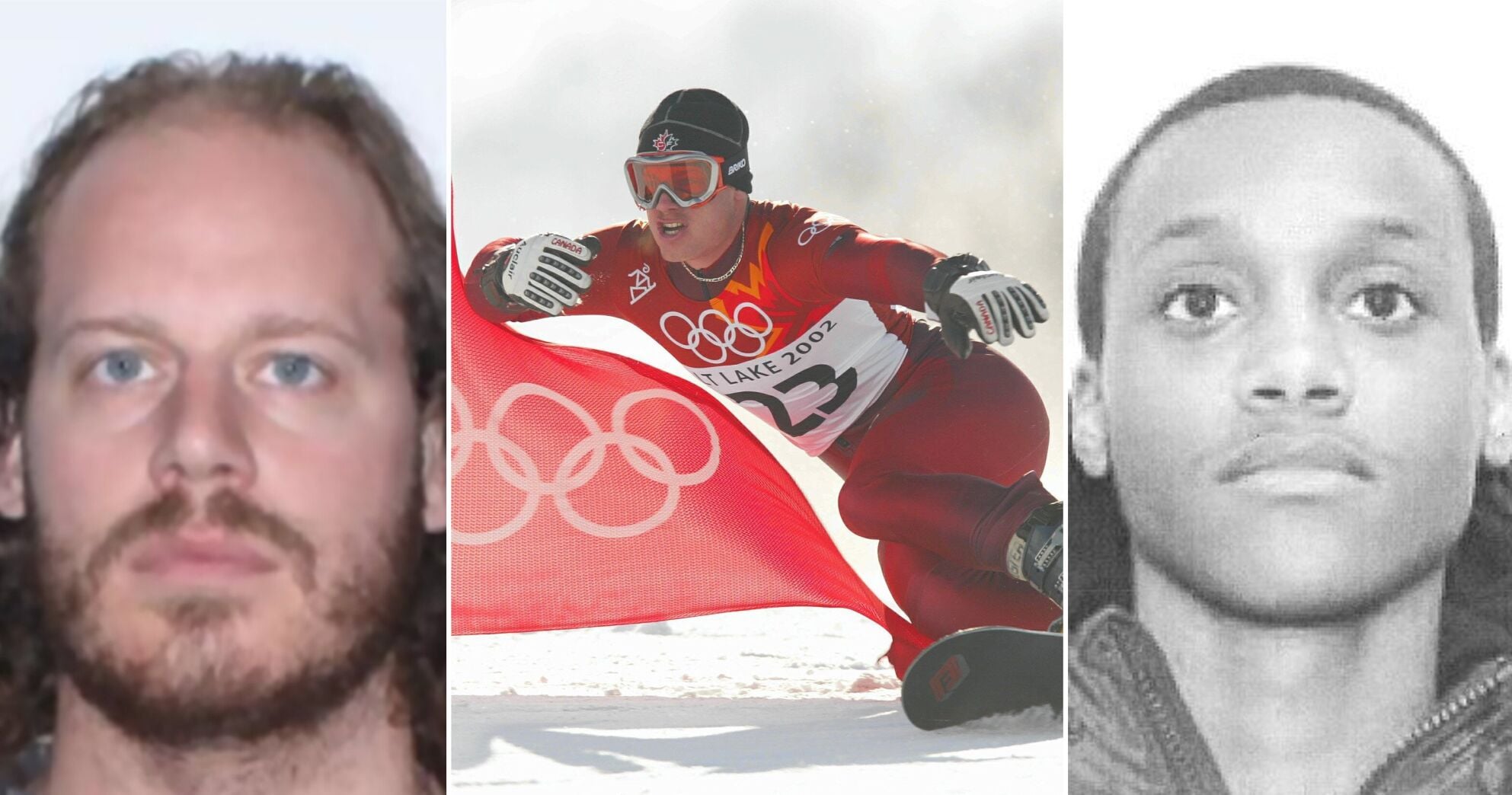
A composite of images of Ryan Wedding released by the FBI before his arrest.
U.S. Federal Bureau of Investigation/The Canadian Press
The assassination of Jonathan Acebedo Garcia
For Ohna, the alleged Montreal organized crime figure, Basora-Hernandez was a lead. Ohna allegedly used a middleman, fellow Montrealer Tommy Demorizi, for the approach.
Court documents say Demorizi paid Basora-Hernandez between $500 and $1,000 in exchange for Acebedo Garcia’s latest phone number and email address.
Demorizi allegedly told the singer they were looking for the informant, and got him to confirm this number was still active.
After, Wedding once again deployed an ODIT onto Acebedo Garcia’s phone, according to the records, but the phone appeared to be off.
A few weeks later, in December 2024, the RCMP got in touch with Basora-Hernandez. What the Canadian police knew about the plot to go after Acebedo Garcia is not clear, but after the encounter, Basora-Hernandez informed Demorizi, who relayed the information.
When word got back to Wedding, he grew suspicious.
He and his alleged lawyer, Deepak Paradkar, called the Montreal-based artist, court records say. Paradkar allegedly identified himself as an attorney, while Wedding kept his real identity a secret.
During the call, Basora-Hernandez allegedly confirmed police had asked about Acebedo Garcia’s whereabouts. He insisted he didn’t say anything — only that he had no idea where his friend was.
The records don’t say if Acebedo Garcia was ever in witness protection, if he was living freely or if he was still actively working with the FBI.
At one point, Wedding suggested that perhaps Acebedo Garcia had “run away” from his FBI handlers, but we don’t know if that’s true.
As the Star has previously reported, Acebedo Garcia left Canada for good and moved full-time to Medellin, Colombia, at some point in 2024. In records, prosecutors describe him as a broker for Wedding’s organization who served as a primary link to the Colombian cocaine supply.
In Medellin, he appeared to live a very different life from the one he had in Quebec, according to his longtime friend. He described Acebedo Garcia’s lifestyle as luxurious, with fancy cars and a mansion with a basketball court.
Looking for help, Wedding enlisted Carmen Florez, a well-connected Colombian madam who, according to court records, offered commercial sex services to Wedding and other “high-value clients.”

The Medellin shopping centre where Colombian-Canadian witness Jonathan Acebedo Garcia was shot and killed on Jan. 31, 2025.
Street View
Through her contacts within the Colombian military and cartels, Florez used the cellphone number provided by Basora-Hernandez to successfully ping Acebedo Garcia’s phone to a location in the Middle East. Wedding dispatched an associate there to find him, but the mission was a red herring; Acebedo Garcia was nowhere to be found.
Eventually, Wedding determined his target was indeed in Colombia.
With Florez’s assistance, he turned to the “plaza bosses” — a team of professional hit men with the Oficina de Envigado. The crime syndicate, which “oversees and blesses criminal activity” in Medellin, was formed in the 1980s as the enforcement wing of Pablo Escobar’s Medellin Cartel.
At first, Wedding told the Oficina to kidnap and torture Acebedo Garcia. But the plan changed to an execution-style murder.
For weeks, the Oficina surveilled Acebedo Garcia, his spouse in Canada and his “lover” in Colombia.
On Jan 29, 2025, Wedding allegedly shared a surveillance video showing Acebedo Garcia and his girlfriend in Medellin.
The shooting had all the signs of a calculated hit, including a silencer on the gun, a getaway car and a photographer already stationed at the scene to snap the picture of Acebedo Garcia’s body.
All five suspects remain at large.
Who is Edwin Basora-Hernandez?
During an interview in September 2025, Basora-Hernandez told the FBI and RCMP he knew Wedding’s associate, Demorizi, was part of an “unknown” criminal organization, and confessed to giving him Acebedo Garcia’s email. He denied ever handing over his friend’s phone number, but authorities say they had proof he was lying.
Basora-Hernandez also told them he owed money to the informant, but said they didn’t speak regularly.
In November 2025, police arrested Basora-Hernandez at his Montreal apartment in the presence of his spouse and young child. He was charged with trafficking drugs and conspiracy to murder in connection to a criminal organization, among other offences.
In an emailed statement, his lawyer told the Star there was no evidence or “factual foundation” to support any of the charges against his client, and that all but one count — conspiracy to commit murder — have since been removed from the extradition request.
Basora-Hernandez “remained detained for months before I was able, with considerable difficulty, to secure his release,” Bergevin wrote, adding he intends to avoid extradition by proving his client’s innocence in a Canadian court.
At his bail hearing in January, several sureties described Basora-Hernandez as a hardworking, responsible man with close family ties. Court heard he has no criminal record, earns a minimal income and lives day to day.
A Montreal judge granted his bail, finding that his alleged connection to Wedding was relatively weak and it was unlikely the organization would expend resources to help him flee.
Basora-Hernandez testified he and his brother — described as his manager and partner — made no money after travelling to Colombia in 2023 to pursue music opportunities. He said they stayed at a friend’s apartment in Medellin.
Later, in cross-examination, Basora-Hernandez revealed that the apartment belonged to Acebedo Garcia — their old Friend from Laval, who funded his music career.
Read more of Calvi Leon’s reporting on the Wedding case