dailynewsnblog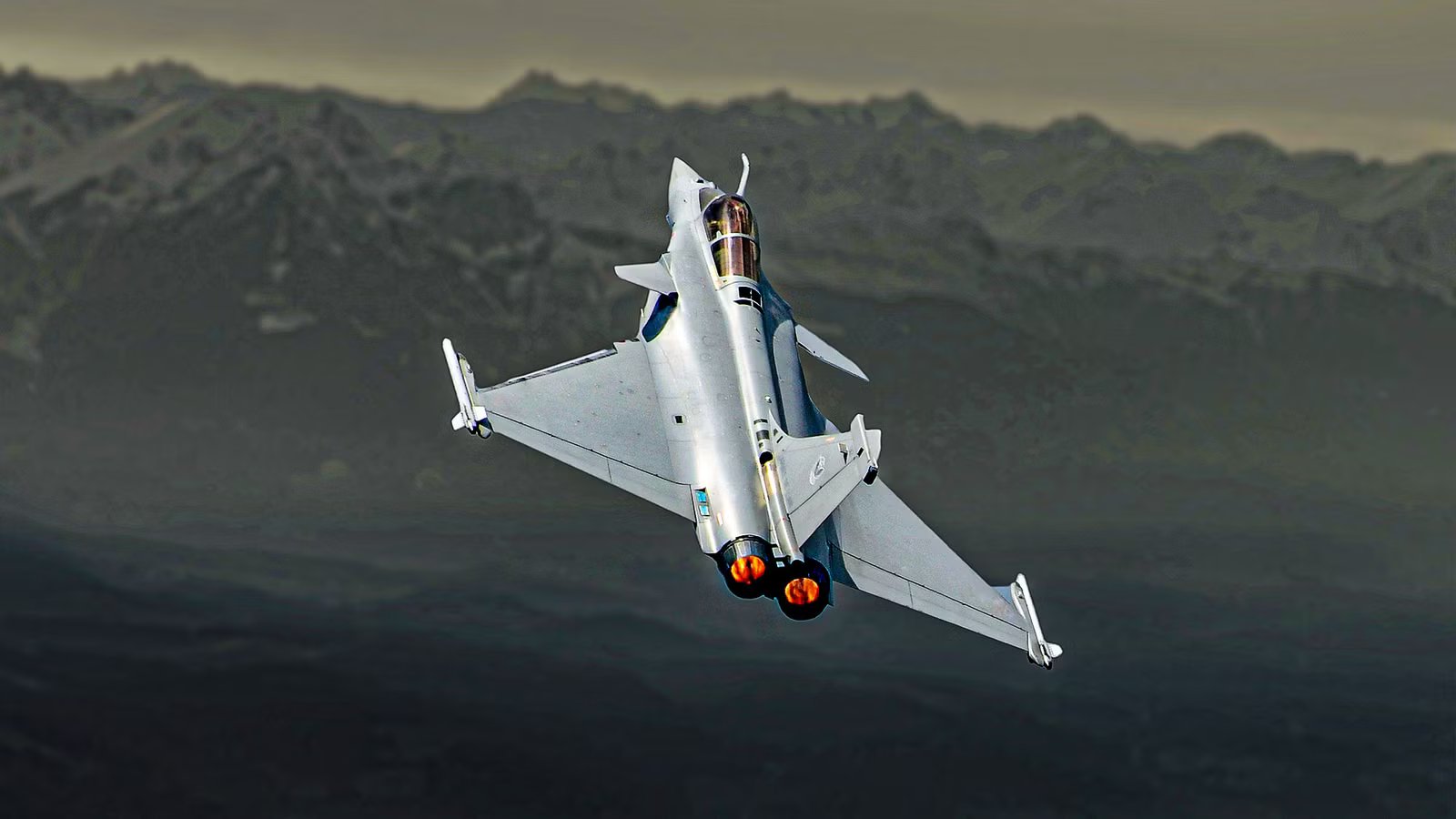
Modern fighter jets like the Eurofighter Typhoon are better thought of not as fighters in the classic sense, but as flying supercomputers and networked nodes plugged into a much larger kill chain. The Eurofighter Typhoon was designed by the UK, Germany, Italy, and Spain in the late Cold War specifically to fight in dense Soviet-style integrated air defense systems (IADS).
The Eurofighter was designed to overmatch anything the Soviets and later Russians had. Today, it is considered to have a significant advantage over Russia’s modern fighters when operating in its intended ecosystem. This is why the UK doesn’t see the development of the GCAP/Tempest next-generation fighter jet as particularly urgent. The Typhoon, coupled with the F-35, is considered sufficient to counter Russia, while Japan has a more pressing need to counter the threat of emerging Chinese aircraft.
The RAF’s Eurofighter Typhoon

The Typhoon is the primary frontline fighter of the Royal Air Force, as well as the German, Spanish, and Italian air forces. The aircraft is expected to remain relevant into the 2060s when it will be replaced by 6th-generation fighter jets. The British and Italians are currently working to develop the 6th-generation GCAP/Tempest fighter to replace their Typhoons and complement their fleets of F-35s. The first demonstrator is in building, and the aspiration is for the aircraft to enter service in 2035.
The Typhoon is designed to operate in high-threat environments, including in intense electronic warfare. In these settings, the Typhoon not only has to work where other systems are trying to jam it, but it also goes on the offensive and jams other systems. But while the Typhoon may be capable of EW, it is not comparable to the dedicated US Navy EA-18G Growler electronic warfare aircraft or what the F-35 is capable of.
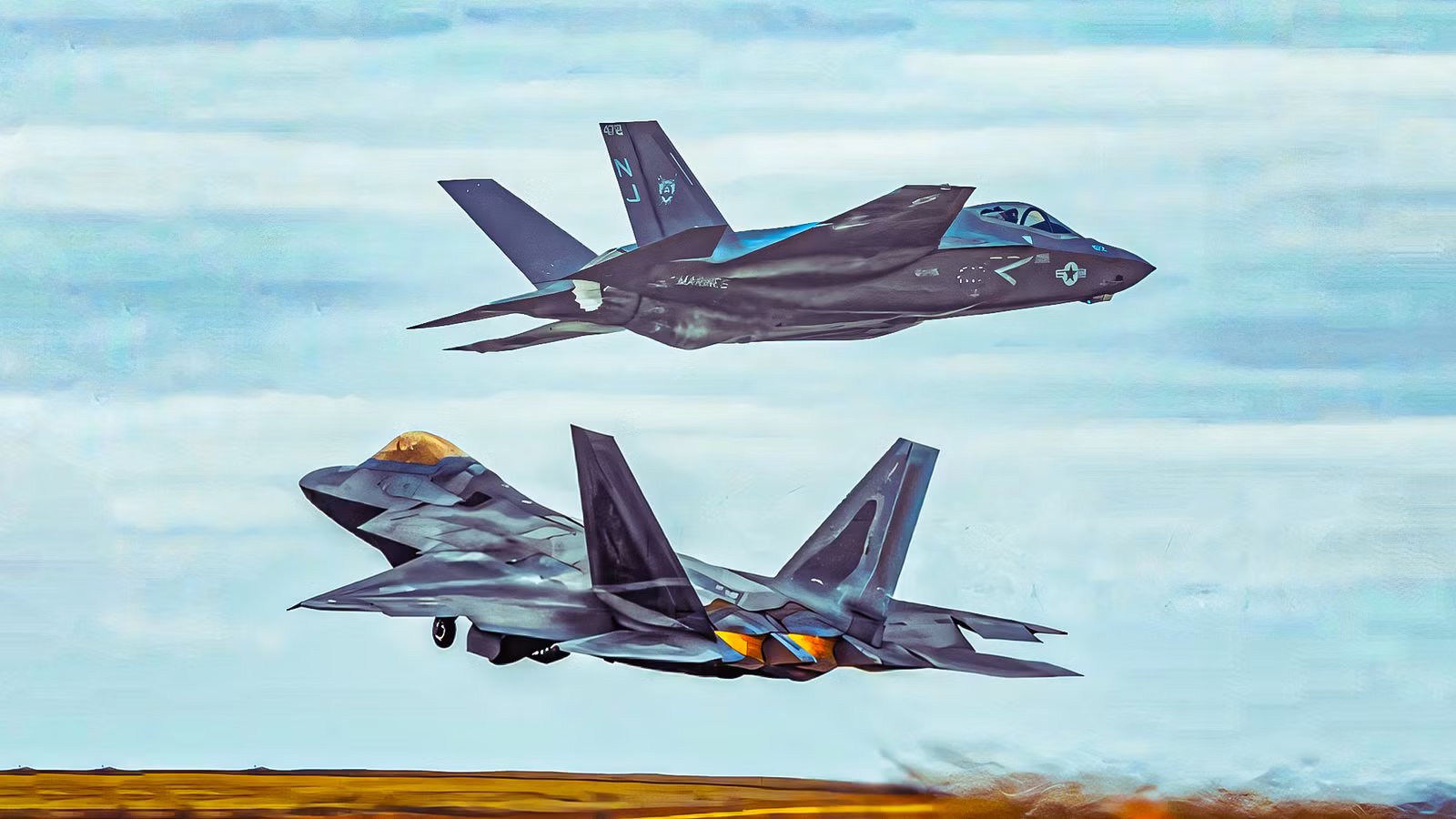
Speaking of the F-35, it is not possible to discuss the modern Eurofighter Typhoon without also discussing the F-35. These are now both operated by the Royal Air Force, with the F-35Bs shared with the Royal Navy. In RAF service, these are not two separate systems, but rather complementary systems. When considering modern weapons systems, it is important to see them within their designed kill chains and not in isolation.
The Paired RAF Typhoon & F-35 System

The F-35 is the most advanced fighter jet in the world, and it takes the flying supercomputer and sensor fusion concepts to another level. But in RAF service, it is not a matter of which is better; it is how they work together and force multiply. In the RAF, the Typhoon is known as the thug, while the F-35B is termed the assassin. In other words, the F-35 sees first, while the Typhoon shoots farther and carries more munitions.
The Typhoon provides air dominance while the F-35 is focused on stealthy precision strikes. The F-35’s advanced sensors and data fusion allow it to feed its ‘god’s eye view’ of the battlespace to the Typhoon. Operating as a forward scout, the F-35B can share real-time data while also being a battlefield manager. For example, the F-35B can identify targets and validate strikes for the Typhoon, allowing the Typhoon to engage beyond visual range with systems like Meteor.
This means that the Typhoon can fire without having to reveal its location by turning on its radar. The Typhoon brings its large data aperture (Captor-E AESA), its supercruise, its high speed, its large payload, its Praetorian DASS, and more to the fight. For the RAF, the Typhoon plus F-35 is a winning formula. The capabilities of the Typhoon are not just the aircraft itself, but also its ability to talk with the F-35 and carry the Meteor and other advanced missiles. More on that below.

Why Will The Eurofighter Typhoon Never Be A Stealth Fighter?
Why the Typhoon can’t be “stealthified.”
The Eurofighter’s EuroDAS Praetorian DASS Suite

At the heart of the Typhoon’s self-defense is the EuroDASS Praetorian DASS (Defensive Aids Sub-System). It was developed by the EuroDASS consortium with the contractors Leonardo, ELT Group, Indra, and Hensoldt. This electronic warfare suite includes radar warning receivers, missile approach warning systems, laser warning receivers, jammers, chaff and flares, and towed radar decoys.
The system works to continuously build a picture of the environment from detected emissions. It can identify radar type (e.g., early warning or fire control), estimate distance and mode, and automatically recommend or execute countermeasures. EuroDASS says, “It provides protection against air-to-air and surface-to-air threats by monitoring and proactively responding to the operational environment, detecting and evaluating threats, and initiating appropriate countermeasures at maximum range.”
|
RAF Eurofighter Typhoons (per Eurofighter Consortium, UK Parliament) |
|
|---|---|
|
Total ordered by RAF |
160 |
|
Remaining in service |
137 |
|
Total Eurofighters ordered by all countries |
769 |
|
Entered service |
2003 |
|
Replacement |
GCAP/Tempest (RAF) |
The system is designed to both conduct offensive electronic warfare operations and to defend against enemy electronic warfare. The Typhoon’s EW suite is also upgraded and enhanced by systems like the European Common Radar System (ECRS) Mk2 active electronically scanned array (AESA) radar.
Typhoon’s Towed Radar Decoy

Praetorian is not just tasked with noise jamming; it does much more than that. It provides coherent deceptive jamming, something that is much more effective against radars. In other words, it doesn’t just make the radar see static; it will offer it conflicting information, false targets, and more. The Typhoon uses noise jamming, deception, and digital radio frequency memory to capture, modify, and retransmit enemy radar signals.
One of the more notable aspects of the system is that it has towed radar decoys. Movies focus on the use of flares and chaff as decoys to attract enemy missiles that are locked on. There are more ways than one to evade enemy missiles, although flares may be more visually impressive. Typhoons, through the Praetorian system, have fiber-optic towed decoys called Towed Radar Decoy (TRD). These trail behind the aircraft and emit deceptive signals.
To a radar-guided missile homing in on the Typhoon, this towed decoy appears as the aircraft itself. It emits a stronger radar return than the aircraft and causes the missile to divert and engage the decoy. The decoys are particularly useful against modern monopulse radars that are able to resist simple chaff. One thing often misunderstood about stealth is that it means hiding or being invisible. Stealth is about delaying detection, actively confusing enemy radars, and denying them a firing solution, as well as being harder to see.

How the Eurofighter Typhoon Stacks Up Against the US F-35
Dogfight agility meets stealth supremacy. The Eurofighter and F-35 redefine air combat in a clash of speed, power, and cutting-edge tech.
How The Typhoon Overcomes Jamming

The Typhoon overcomes enemy jamming in a number of ways. Modern systems are built on the assumption that both sides will jam heavily. The Typhoon combines its active radar (AESA Captor-E on newer Eurofighters), its Infrared Search and Track (IRST), and its off-board data. If its radar is degraded, it is still able to use its IRST to detect and track aircraft passively.
Its datalinks allow it to triangulate with other platforms like other fighter jets, space-based cueing, ground radars, and AWACS aircraft. The new Captor-E AESA radars are much more difficult to jam than the Captor-M radars they replace. They also use low probability of intercept (LPI) modes, a narrow beamwidth, and frequency agility.
If certain frequencies are jammed, it can hop between frequencies rapidly. The radar is able to burn through noise jamming at closer ranges and reduce sidelobes. Flipping this around, if enemy fighter jets or ground-based radars are jamming, then their emissions become visible beacons giving away their locations. The Typhoon is then able to passively home in on these jammers with its anti-radar missiles. In modern dense electronic warfare environments, the side that emits first can become the first target.
Typhoon & F-35 Paired For Dilemmas

Going back to the F-35, the aircraft’s stealth and ability to detect radars passively means it is likely the aircraft that will see first. Through the secure data links, the F-35 can relay this information to the Typhoon, which can then shoot at it. The Typhoon is designed around the Meteor air-to-air missile, which is regarded as one of the most advanced today. It comes with an exceptionally long range, ramjet propulsion, and a large no-escape zone.
The Typhoon may not be a stealth fighter, but it doesn’t need to be. The F-35 and Meteor give it the range to engage and destroy enemy air targets before those targets are able to detect the Typhoon. Not only does this increase the engagement envelope, but it also increases the survivability of the F-35, which can go on passively sensing its environment, passing that information back to the Typhoon. The F-35 can focus on its core mission to neutralize high-end SAM nodes and disrupt command and control nodes.
This forces enemies into dilemmas with no good answers. Leaving the radars off means the F-35 is more difficult to detect, and a firing solution is more problematic. But if the radars are turned on, then they are instantly targets with the F-35 geolocating them and either the F-35 or Typhoon engaging them. If enemy fighters push forward, they need to turn their radars on to find the invading F-35, but if they do, then Typhoons operating at high altitude with long-range Meteors will be passed the fighter solution by the F-35 to take them out.