dailynewsnblog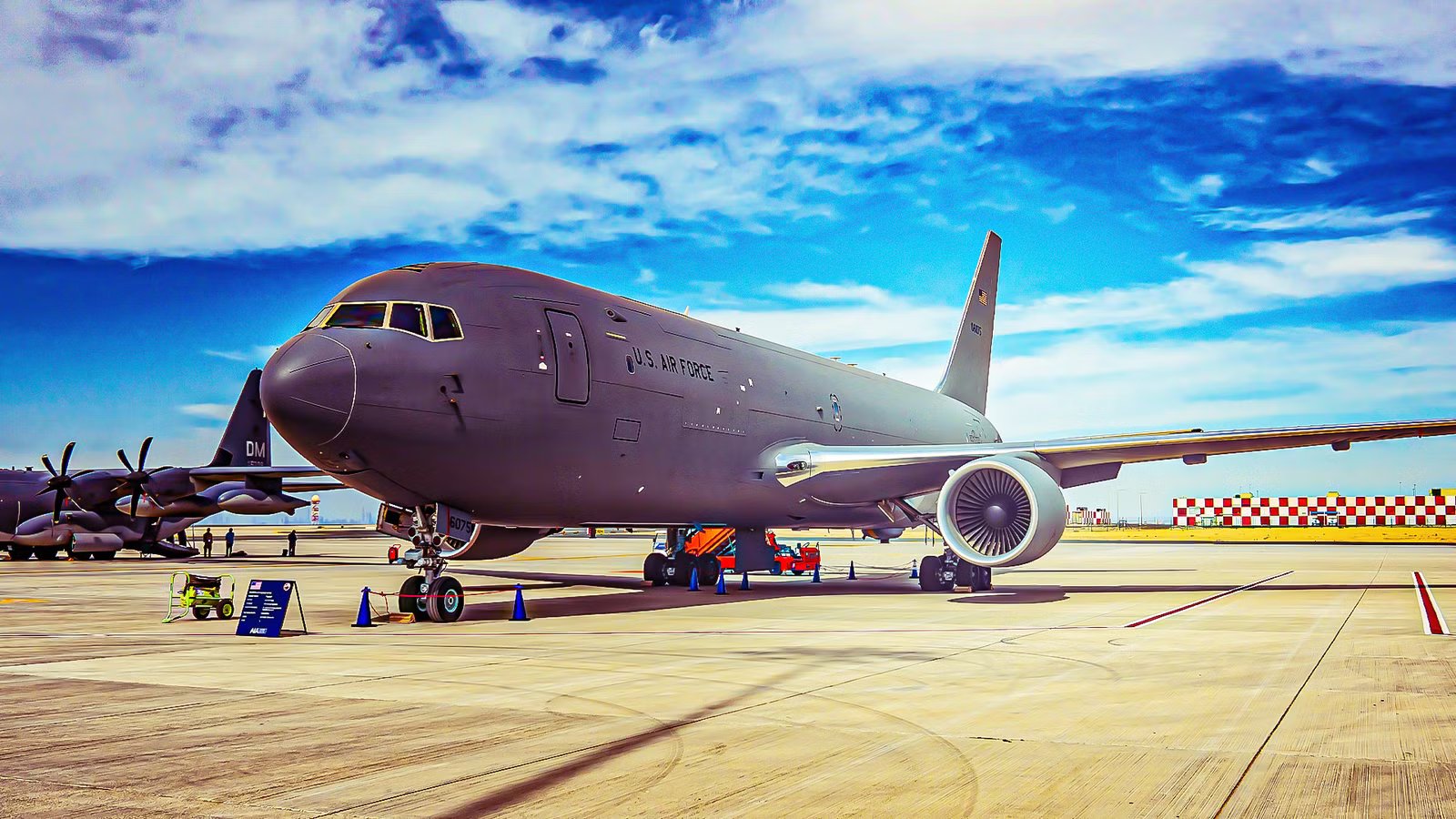
Aerial refueling is the backbone of American expeditionary power. Tankers extend range, sustain combat aircraft on station, and support global mobility networks. The Boeing KC-46 Pegasus entered service promising to redefine how the United States Air Force projects fuel, logistics, and connectivity across the globe. Its arrival has triggered the gradual retirement of classic tankers like the KC-135 and KC-10, sparking debate over capability, maturity, and mission fit.
This article examines how the KC-46 stacks up against legacy tankers in 2025, across fuel capacity, technology, survivability, and operational utility. Understanding how the KC-46 compares with its predecessors matters not only for analysts but also for aircrew, commanders, and allied air forces looking at their own tanker fleets.
The KC-46’s Place In A Tanker Lineage Built Over Decades

The KC-46 traces its origins to the earlier Boeing 767-2C airframe, yet its mission environment is entirely different from the previous KC-135 that entered service in 1957. Instead of uncontested Cold War skies, Pegasus was conceived for contested domains, digital command integration, and joint coalition tasking. By mid‑2025, roughly 90–98 airframes had been delivered, and production resumed after a short inspection pause.
The Pegasus incorporates modern avionics, secure communications, and the ability to refuel diverse airframes across joint and allied operations. It entered service to replace two long-serving icons: the KC-135 and KC-10.
Unlike legacy tankers whose primary purpose was moving fuel, the KC-46 is built as a multi-mission platform, able to support medevac, cargo, and command-and-control roles. The incorporation of defensive systems reflects the reality that tomorrow’s tanker may operate closer to near-peer threats rather than in uncontested airspace.
The type is increasingly visible at major mobility hubs alongside Stratotankers, symbolizing the transition underway inside the US Air Force. But so far, older tankers remain indispensable, particularly the KC-135, which still flies hundreds of missions monthly around Europe, the Indo-Pacific, and the Middle East.
Avionics, Communications, And Refueling Systems

At the systems level, the KC-46 integrates three capability pillars that define its operational value, such as:
-
Modern avionics: Boom operators in legacy tankers used to look out a window to guide the telescopic
refueling
boom into a receiver. KC-46 boom operators, by contrast, rely on digital images, created by cameras and sensors. The avionics suite centers on an integrated flight deck with advanced situational awareness displays, mission management consoles, and a Remote Vision System (RVS). Some shortcomings of the RVS caused two-year delivery freezes and operational concerns, in particular, poor depth perception, glare, and shadows from the sun. To overcome these issues, on November 19, 2025, a KC-46 equipped with a Remote Vision System 2.0 completed its first flight. The new version provides the boom operator with a new level of visibility and awareness, introducing full-color 4K resolution and 3D imaging, upgrading the two long-wave infrared spectrum cameras, and adding six visible spectrum panoramic cameras. - Secure communications: Communications and datalinks are equally central. Pegasus was built to operate with a secure line of sight and beyond line of sight links that allow it to participate in distributed command networks, share refueling schedules and positional data with receivers, and receive dynamic tasking from joint command nodes. That capability enables more efficient refueling tracks, reduces friction in coalition operations, and supports coordinated operations with fighters, ISR platforms, and allied tankers. In contested environments, the ability to exchange timely data with escorts and EW assets can be the difference between a successful refueling and an aborted mission.
-
Dual refueling modes: The refueling hardware on the KC-46 supports both a fly-by-wire boom and hose and drogue pods, giving it broad interoperability across USAF,
US Navy
, and allied receiver types. The boom provides high-rate fuel transfer for large receivers such as strategic airlifters and bombers, while the drogue pods enable probe and drogue refueling for many fighters and allied aircraft. The combination reduces the need for mixed formation planning or separate tanker tasking and simplifies coalition refueling in joint tasking.
To appreciate how the KC-46 reshapes aerial refueling, it helps to understand the systems environment it inherits from earlier tankers. The KC-135’s boom operator famously lay prone, peering through a rear window to guide fuel transfer.
This procedure has remained largely unchanged for six decades. The KC-10 added hose-and-drogue capability and more communications capacity, but its avionics architecture still reflected 1980s cockpit design. Today’s Pegasus pulls those legacy strengths forward while overlaying them with digital tools, greater networking ability, and a refueling system designed for remote operation.

From KC-97 To KC-46: A Brief History Of US Air Force Tankers
The first tanker was propeller-driven and today they are based on airliners (the Boeing 707 and 767), but this is soon set to change.
Survivability, Defensive Systems, And Multi-Mission Fit

A doctrinal shift highlights the Pegasus’ survivability features: planners now accept that tankers may need to operate closer to near-peer threats than was assumed during the KC-135 era. As a result, the KC-46 can be equipped with an EMP-hardened flight deck, ALR-69A radar warning system, and AAQ-24 Large Aircraft Infrared Countermeasure (LAIR-CM) technology.
LAIR-CM is a combined missile warning and countermeasure systemthat uses two IR wavelength bands to detect and locate incoming missiles, then degrades their guidance with a high‑intensity IR laser.
Like its predecessors, the KC-46 Pegasus can be equipped with the standard flare-chaff AN/ALE-47 Countermeasures Dispensing System, as well as the AN/ASQ-238 ECM System. These systems are not intended to turn the tanker into a combat aircraft; rather, they reduce vulnerability and buy time for escorts or EW assets to respond.
The multi-mission design complements survivability by reducing the number of separate sorties required to accomplish a set of tasks. A single Pegasus sortie can refuel fighters, carry palletized cargo to a forward hub, and evacuate casualties on the return leg, minimizing exposure across multiple flights and simplifying logistics chains.
That consolidation is particularly valuable in contested or austere environments where basing options are limited, and sortie generation is constrained by threat, runway availability, or tanker density.
From a maintenance and sustainment perspective, the multi-mission fit introduces complexity: mission systems, defensive suites, and refueling hardware all require distinct spares, test equipment, and trained maintainers. The tradeoff is operational flexibility versus sustainment burden; successful fielding depends on early investment in supply chains, depot capacity, and training pipelines so that the Pegasus’ expanded capability does not become a bottleneck during high-tempo operations.
Comparing Pegasus With Legacy Tankers: KC-46, KC-135, And KC-10

The differences between the KC-46, KC-135, and KC-10 are best understood as tradeoffs between volume, modernization, and operational simplicity. The KC-10 Extender historically delivered unmatched fuel and cargo capacity. Its ability to move heavy offloads and outsized freight made it the ideal platform for long-range airbridge missions and major deployments.
The KC-135, by contrast, represents the Cold War “mass-produced workhorse” approach: simple, rugged, and fielded in numbers large enough to sustain high-tempo global refueling demands.
The KC-46 sits right between the two. While it cannot match the KC-10’s raw fuel volume or cargo bay, it compensates with integrated mission systems, modern survivability features, and native boom and drogue refueling capability. Where the KC-135 relies on retrofits for coalition receiver compatibility, Pegasus was engineered for data-sharing, secure communications, and flexible mission types from day one.
|
Attribute |
KC‑135 Stratotanker |
KC‑10 Extender |
KC‑46 Pegasus |
|
Design focus |
High‑tempo refueling; endurance |
Strategic fuel + large cargo capacity |
Networked multi‑mission; survivability |
|
Refueling modes |
Boom primary; some pods retrofitted |
Boom + drogue native |
Boom + drogue native |
|
Operational niche |
Backbone, routine global coverage |
Strategic reach and outsized cargo |
Coalition interoperability; contested‑aware missions |
|
Sustainment profile |
Mature depot network; abundant spares |
Aging fleet; higher sustainment cost per flight hour |
New supply chains; block upgrades |
|
First flight |
1957 |
1980 |
2015 |
|
Approx max fuel |
200,000 lb (90,700 kg) |
~356,000 lb (161,500 kg) |
~212,000 lb (96,100 kg) |
|
Typical MTOW |
322,500 lb (146,300 kg) |
~590,000 lb (267,600 kg) |
~415,000 lb (188,200 kg) |
|
Role and notes |
Strategic tanker; small footprint, widely deployable |
Very large offload; retired from USAF service |
Modern systems, mixed boom/drogue; deliveries ongoing |
What these contrasts reveal is less a competition than an evolution of priorities. Each tanker was designed for the challenges of its era: the KC-135 for mass availability during the Cold War, the KC-10 for long-range deployments in the post-Vietnam and Desert Storm era, and the KC-46 for networked, contested, coalition environments.

US Air Force May Order More KC-46s, Scrap Stealth Tanker, According To Budget
The NGAS is out and the Pegasus is in.
Common Questions

Quite a common question among aviation enthusiasts is whether the KC-46 will replace all legacy tankers: over time, the KC-46 is the recapitalization path, but replacement is phased and deliberate.
If all KC-10 Extenders have been retired, legacy KC 135s will remain in service until Pegasus numbers, capability blocks, and sustainment infrastructure reach thresholds that preserve global refueling capacity and operational readiness. That means planners should expect a mixed fleet environment for years and design operations accordingly.
Another question is how the KC-46 is supposed to change tanker employment. The answer involves a paradigm shift: modern tankers should be viewed as networked nodes rather than rear area service aircraft. To fully exploit Pegasus’ cargo and medevac flexibility and reduce sortie counts, new plans for dispersed refueling tracks and integrated escort or EW support will be necessary, together with training and doctrine adapted to datalink operations and coalition procedures.
Also, sustainment risks should be taken into account: new platforms require early investment in spares, depot capacity, and training pipelines. Without those investments, the operational benefits of multi-mission capability can be offset by maintenance bottlenecks and reduced sortie generation.
The Bottom Line

The KC-46A Pegasus is a platform created for networked, coalition, and contested operations. Its design trades some of the KC-10’s raw volume and the KC-135’s simplicity for integrated avionics, secure communications, and multi-mission flexibility that changes how planners and operators think about refueling, logistics, and casualty evacuation.
The transition will be mixed and incremental: legacy tankers remain indispensable while Pegasus squadrons grow, capability blocks are fielded, and sustainment pipelines mature.
Success will depend on coordinated investments in training, supply chains, allied integration, and doctrine so that the Pegasus’ promise becomes an operational reality rather than an aspirational capability.