dailynewsnblog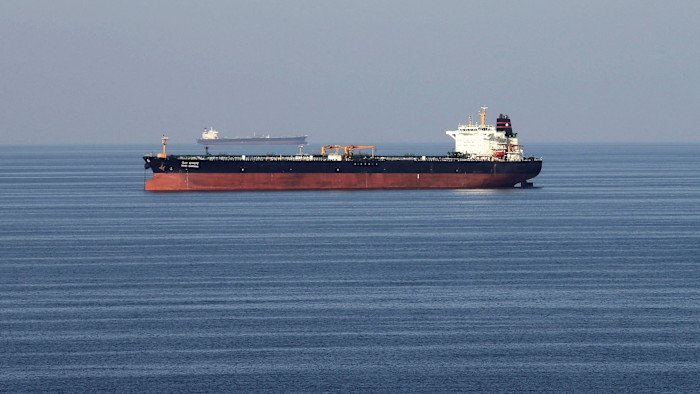
This article is an on-site version of our Energy Source newsletter. Premium subscribers can sign up here to get the newsletter delivered every Tuesday and Thursday. Standard subscribers can upgrade to Premium here, or explore all FT newsletters
Hello and welcome to Energy Source, coming to you from New York, where policymakers and industry face the worst energy crisis since Russia’s full-scale invasion of Ukraine in 2022.
Gas prices soared as much as 50 per cent in Asia and Europe on Monday when QatarEnergy shut down production at its Ras Laffan liquefied natural gas plant, which produces about a fifth of global supplies.
Oil prices are up more than 20 per cent this year in response to US President Donald Trump’s military actions in Venezuela and Iran, which have added a significant geopolitical risk premium. Wood Mackenzie and several other energy consultancies have warned prices could hit $100 if tanker flows through the Strait of Hormuz do not resume soon.
Analysts said a sustained increase in energy prices would increase inflation and dent the global economy, both outcomes that would hurt the Republican Party’s prospects in the US midterm elections in November.
The Trump administration is expected to outline measures aimed at mitigating the oil price shock on US and global consumers. For the moment that does not appear to include plans to draw down oil from the US Strategic Petroleum Reserve, which holds about 415mn barrels of oil.
Surging prices may be toxic for politicians and consumers, but for energy suppliers, higher prices can boost profits. The US LNG industry and traders are poised to benefit from the conflict in the Middle East as spot prices soar and companies reroute cargoes to desperate buyers in Asia and Europe.
For today’s newsletter we’ve rounded up our coverage of the conflict’s impact on energy markets. Plus, a report on Shell’s court defeat in an arbitration battle with US LNG producer Venture Global. Thanks for reading, Jamie
How could Iran disrupt global energy flows?
Iran has outsized ability to rattle global energy markets, despite years of US sanctions and under-investment that have hobbled its oil exports. The main source of market concern is Tehran’s influence over shipping in the Strait of Hormuz, through which the oil and gas of its Gulf neighbours has to pass, and its sponsorship of militias throughout the region that could launch attacks on energy infrastructure.
How will war impact the global economy?
The answer depends on whether the US and its partners can avert a sustained shutdown of the Strait of Hormuz. If not, oil and gas price surges risk reigniting inflation in major economies, derailing central bank rate-cutting plans and shaking business confidence.

How serious is the gas price shock?
Gas prices in Asia and Europe have surged as the conflict has spread, with shipping through the Strait of Hormuz at a virtual standstill and Qatar’s liquefied natural gas output halted after Iranian strikes on its flagship Ras Laffan production facility. A prolonged conflict could have a similar effect as in 2022, when flows of Russian gas to Europe dropped after Moscow launched its invasion of Ukraine, triggering a price surge that damaged economies.

The Middle East is an important gas-producing region and Qatar is the world’s second-largest LNG player, accounting for about 20 per cent of global supplies. While LNG only accounts for roughly 7 per cent to 8 per cent of global gas supplies, it is a crucial marginal source in many countries and thus a price-setter. “Anything that happens to global LNG markets often sets the price in markets like Europe and Asia,” Andreas Schroeder, head of energy analytics at commodity research group ICIS, told the FT.

Opinion
Oil market vulnerability Opec+ pledged to increase its production by 206,000 barrels a day from April, which could be used to replace lost exports from Iran. But nearly all of the group’s spare capacity is in other countries around the Gulf, raising the risks of any further escalation, writes John Kemp, founder of Base Research.
Gas shock The Iran war has inevitably upended the global oil market, but the impact could prove greater for consumers of gas and LNG. While most of the LNG cargoes transiting the Strait of Hormuz are contracted into Asian markets, the repercussions will be keenly felt across Europe, writes Wood Mackenzie’s Massimo Di Odoardo.
Wake-up call The world has already reckoned with its dependence on oil, exemplified by Strategic Petroleum Reserves in the US and around the globe. By contrast, natural gas storage is more of a patchwork system, our colleagues at Lex write.
Keeping the Strait open The narrow waterway is easy for Iran to block, but western navies have several options to keep it open, James Holmes of the US Naval War College explains.
Shell loses LNG arbitration battle
In other news, Shell has lost a high-profile court challenge against an arbitration ruling in favour of the US LNG producer Venture Global in the New York Supreme Court.
The oil major alleged Venture Global withheld evidence from the arbitration panel during the hearing regarding the commissioning of one of its LNG facilities. Shell sought to have the award overturned and to conduct targeted discovery to determine whether the documentation it sought existed.
In a ruling published on Tuesday, the court denied Shell’s petition to vacate the arbitration panel’s award, citing the “substantial deference” that it must give to arbitral decisions.
Shell is one of several energy companies which claimed in arbitration cases that Venture Global improperly sold LNG on the spot market instead of delivering to long-term partners when prices soared after Russia invaded Ukraine in 2022. BP won its arbitration case against Venture Global while Shell and Repsol lost their cases. (Jamie Smyth)
Power Points
Energy Source is written and edited by Jamie Smyth, Martha Muir, Alexandra White, Rachel Millard, Malcolm Moore and Ryohtaroh Satoh, with support from the FT’s global team of reporters. Reach us at energy.source@ft.com and follow us on X at @FTEnergy. Catch up on past editions of the newsletter here.
Recommended newsletters for you
Moral Money — Our unmissable newsletter on socially responsible business, sustainable finance and more. Sign up here
The Climate Graphic: Explained — Understanding the most important climate data of the week. Sign up here