dailynewsnblog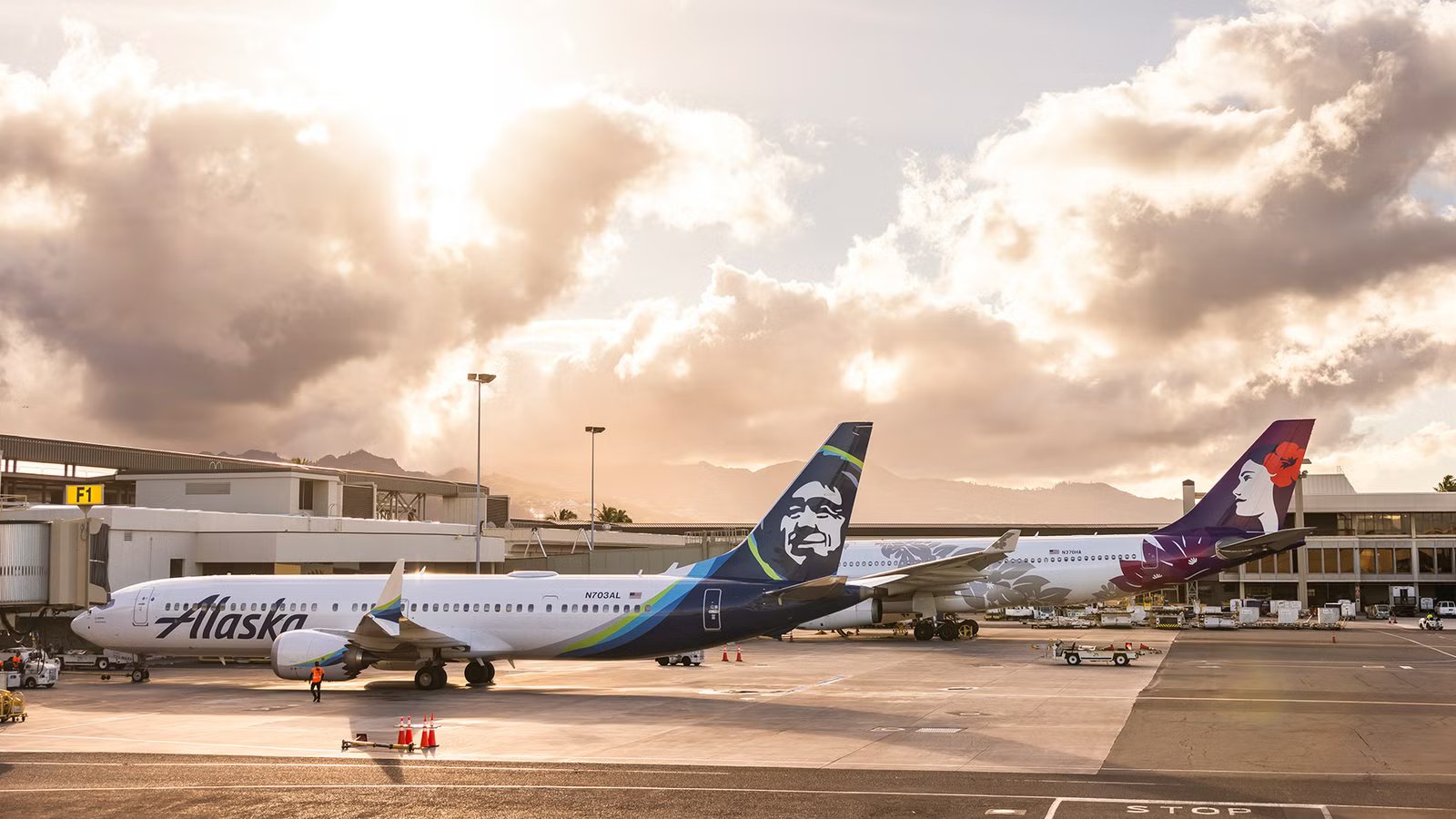
In 2025, Alaska Air Group closed the books on a roller-coaster year that saw profits fall sharply as the airline continued integrating its largest acquisition ever, Hawaiian Airlines. The Seattle-based carrier reported a full-year net income of only $100 million in 2025, down dramatically from $395 million in 2024, leaving analysts and investors puzzled by a performance that lagged seriously behind industry peers like  Delta Air Lines and
  United Airlines.
What’s striking is how much of that decline can be traced to the costs of absorbing Hawaiian, an airline that was still bleeding cash even as  Alaska Airlines guided it through its first full year under new ownership. For Hawaiian alone, losses totaled about $189 million in 2025 (about $518,000 per day), dragging down the combined group’s financial picture.
The result is a story of ambition colliding with integration realities: Alaska now flies farther than ever, but its bottom line has taken a hit in the process.
Merger Comes With A Hefty Price Tag

Alaska Air Group’s 2025 financial results laid bare just how costly the merger with Hawaiian Airlines has been. According to the company’s official release, 2025 net income under GAAP was $100 million, significantly lower than the prior year’s $395 million — a decline that reflected both operating pressures and integration expenses.
On an adjusted basis, taking out special items and other one-offs, Alaska logged $293 million in net income for the year, down from $625 million in 2024. This represented a steep drop in profit margins, and Alaska’s adjusted pretax margin slid to just 2.8% for 2025.
Part of this is pure scale: the airline’s total revenue climbed as Hawaiian’s business was folded in, but costs rose faster than returns. Fuel costs, labor agreements, and the broader operational expenses tied to merging two airlines pushed margins lower throughout the year.
The most vivid symbol of the headwinds Alaska now faces is Hawaiian’s performance in its first full year under new ownership. According to the Hawaiian-based Beat Of Hawaii news website, Hawaiian Airlines lost $189 million before income taxes in 2025, even after cutting its losses roughly in half compared to the period immediately before the acquisition.
That equates to a daily loss of about $518,000, underscoring the scale of the challenge Alaska faces in integrating and right-sizing the iconic island carrier.
Despite the negative bottom line, supporters would note that Hawaiian’s losses are smaller than before the merger and that Alaska has begun implementing cost controls and operational changes. But for investors and analysts focused on profitability, the numbers serve as a stark reminder that turning around a struggling airline can take multiple years and hefty cash flows.
Ben Minicucci, President & CEO of Alaska Air Group, told investors in the press release:
“We feel momentum accelerating in 2026 as the Alaska-Hawaiian Airlines combination gains full strength … Our model is positioned for where travelers are headed, and we’re ready to compete as one of four global US airlines.”
Broader Industry And Competitive Context

According to The Seattle Times, Alaska’s profit slump stands in contrast with the performance of larger US airlines in 2025. Carriers like United and Delta rode strong corporate travel demand and premium pricing to robust revenue growth and significantly higher profits, leaving Alaska’s flatter results far behind. For example, United reported strong earnings with a premium-driven revenue mix and expanded loyalty program contributions, while Delta maintained high unit revenues through diversified offerings.
Part of the issue is scale: Alaska’s network was heavily regional and leisure-centric before the merger, giving it less exposure to high-yield corporate routes than its larger peers. The airline is attempting to rectify this with new international routes and expanded loyalty benefits, but those gains take time to translate into profits.
However, the Hawaiian acquisition was not Alaska’s only integration challenge in 2025. The airline also navigated a series of operational disruptions, including IT outages that led to cancellations and strained customer service, as well as a lengthy US government shutdown that dampened demand and added costs.
These factors didn’t help Alaska’s profit picture either: although revenue per available seat mile (RASM) improved slightly year over year, unit costs excluding fuel also rose modestly.
Additionally, broader macroeconomic pressures on the airline industry, such as West Coast fuel price volatility, forced the airline to issue a more cautious profit outlook for 2026, reinforcing the notion that the path back to stronger margins remains uncertain.

One Year On: Was Alaska Airlines’ Merger With Hawaiian Worth It?
There have already been some notable improvements in the first year of integration.
What Comes Next

Looking ahead, Alaska is banking on synergies from the Hawaiian integration and on strategic initiatives, such as its three-year Alaska Accelerate strategic plan, to drive long-term earnings growth. The company has also begun rolling out international routes from Seattle to Tokyo, London, Rome, and more — moves that position it more directly against global rivals.
But the earnings gap between Alaska and larger US airlines reveals how difficult it is for a mid-sized carrier to juggle expansion and profitability in a highly competitive market. Hawaiian’s losses, while improved, are still a drag, and Alaska’s overall profit, though positive, is markedly lower than the industry’s strongest performers.
This means Alaska’s executives face a two-pronged challenge in 2026: continue refining operations and cost structures while coaxing growth from the very assets that weighed on 2025 results.