dailynewsnblog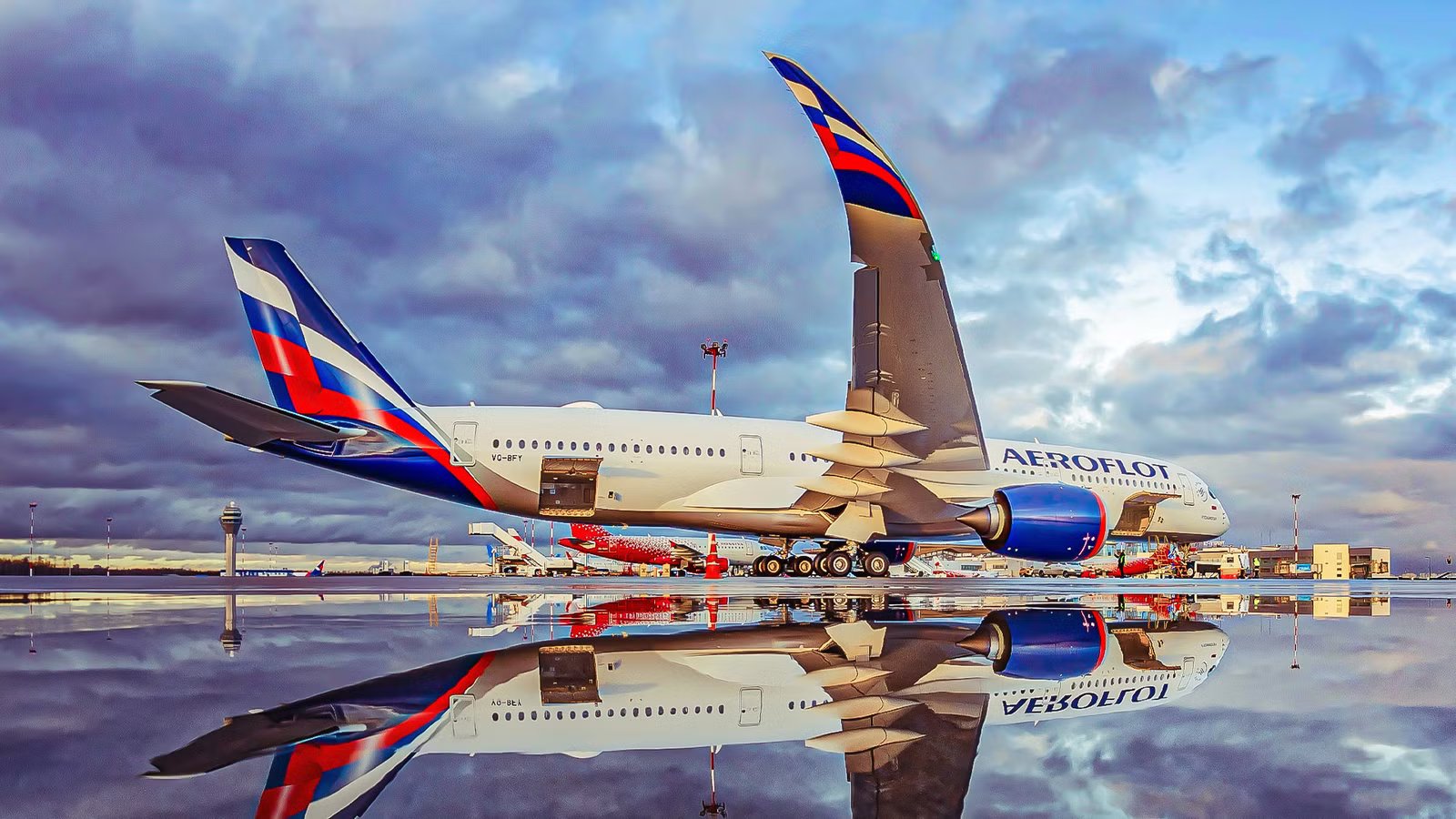
In the immediate wake of February 2022, many predicted a total grounding of the Russian commercial fleet within weeks. Without proprietary software updates, certified turbine blades, or legal access to the global supply chain, the world’s 11th largest aviation market was expected to take a major hit. Yet today, the radar screens tell a different story; Russian long-haul aviation hasn’t collapsed at all. By defying the laws of traditional aviation maintenance, Russia has built a parallel, self-sustaining ecosystem that challenges the very idea of Western technological hegemony.
Civil aviation has become the ultimate geopolitical litmus test for the Kremlin. It is no longer just about moving passengers everywhere between St. Petersburg and Vladivostok. Now it is about proving that a G20 nation can maintain a 5-star, Western-built fleet while being entirely de-platformed from the global financial and technical grid. This guide explores the granular, often invisible realities of how Russia is actually succeeding in keeping its wings level.
Keeping Its Own Network

Since 2022, a shadow network of over 100 intermediary companies has emerged, primarily based in the UAE, China, Turkey, and Georgia, according to YLE reports. These entities act as logistical filters, purchasing Western-made avionics, landing gear, and engine components and then re-exporting them to Russian carriers. This system has successfully funneled over €1 billion worth of  Boeing and Airbus parts into Russia, ensuring that the core of the long-haul fleet remains mechanically viable.
Reports indicate that Russian airlines have moved away from desperately stripping one plane to fix another, to a model of proactive acquisition. The US Department of Commerce has increased enforcement on involved companies, resulting in significant prison sentences for brokers in 2025, but the scale of this multinational network remains too large to plug entirely. By focusing on jurisdictions that refuse to join Western sanctions, Russia has ensured that a Honeywell sensor or a Safran gasket can still find its way to a Moscow hangar within 48 to 72 hours of an order being placed.
Furthermore, the success of this defiance is visible in the sheer volume of operations. In 2025, Russian airlines maintained a fleet of over 1,135 aircraft, with roughly 67% being foreign-made. The reality for a Russian traveler is that the experience today is largely indistinguishable from what you could expect anywhere in Western Europe. Instead of seeing a graveyard of grounded jets, the primary hubs of  Moscow Sheremetyevo(SVO) and Pulkovo(LED) remain busy. As long as a nation has the capital and the diplomatic ties to non-aligned hubs, a technological blockade is more of a hurdle than a wall.
Working Around Disconnection

Engineering a modern long-haul jet without the manufacturer’s direct involvement is a task that aviation experts once deemed impossible. However, Russian technical centers have moved into a sovereign maintenance phase, where the goal is no longer to follow the Boeing or Airbus manual, but to rewrite it. This involves the domestic certification of non-critical parts, from cabin interiors to brake cooling systems, by Rosaviatsiya. By late 2025, many Russian companies had been granted Part 21 status, allowing them to legally manufacture and install components that were previously strictly imported.
Since SITA and Jeppesen cut ties, Russian engineers have developed indigenous workarounds to keep black box systems operational. This includes the air-gapping of certain navigation suites to prevent remote disabling by Western OEMs. While this creates a safety divergence from global standards, the planes are not becoming unsafe by any means. These aircraft are now subject to a technical track that prioritizes mechanical persistence over regulatory compliance.
The reality of this success is that Russian technicians are becoming some of the most versatile in the world, forced to solve problems that other mechanics would simply solve by ordering a new part. For example, the S7 Technics and Aeroflot maintenance hubs now perform full heavy maintenance checks on Western-made aircraft, including engine overhauls that were once sent to Germany or Singapore. This self-reliance proves Russian resilience, but it permanently decouples these aircraft from the global resale market. Once a jet enters the sovereign maintenance cycle, it can never legally return to a Western lessor’s fleet.

The Longest Airline Routes Out Of Russia Have One Thing In Common
Russia’s longest flights are to the tropical beaches of Venezuela, Bali, and Cuba (destinations free from Western sanctions).
Returning To Domestic Aircraft Production

2026 marks the definitive transition from Russia’s maintenance phase to its manufacturing phase. Many reports often focus on the repeated delays of the Yakovlev MC-21 and SJ 100 programs, but the geopolitical reality is that Russia is successfully completing one of the most aggressive industrial pivots ever seen. The Yakovlev SJ-100 has moved beyond prototype status, completing critical winter certification trials in the Komi Republic to prove its domestic avionics can handle the extreme Arctic environments that define Russian territory.
The SJ-100 has replaced dozens of foreign systems, including the flight-control units and landing gear. Most crucially, the transition to the PD-8 engines represents a move toward total propulsion sovereignty. This aircraft isn’t leading this charge alone; by March 2026, the United Aircraft Corporation is reported to have approximately 20 MC-21 airframes at various stages of assembly in the Irkutsk Aviation Plant. These aircraft now utilize 100% domestic composite materials in their wings, a feat that was accelerated by the 2022 blockade of Western carbon fiber.
|
Aircraft Model |
Capacity |
2026 Status |
Key Domestic Tech |
|
SJ-100 |
87–98 seats |
12 deliveries planned |
PD-8 Engine, Russian Avionics |
|
MC-21-310 |
163–211 seats |
Serial production ramp-up |
PD-14 Engine, Composite Wing |
|
Tu-214 |
210 seats |
8 aircraft annually |
Fully Russian Systems Modernization |
While it is true that serial production was pushed back from 2024 to 2026, the aircraft emerging now are technically more resilient than the original versions designed for global cooperation. This resilience has paved the way for leveraging international relations. In early 2026, the UAC showcased the fully import-substituted SJ-100 at the Wings India airshow. By presenting the aircraft in an Indian-themed livery and signing localized production agreements with Hindustan Aeronautics Limited, Russia is pushing its sanction-proof aviation model as a viable export product for other nations wary of Western supply-chain cutoffs.
Safety Becoming Out Of Control?

The Kremlin and Rosaviatsiya maintain that the country remains within global safety norms, but independent data suggest a widening safety divergence. In late 2025, an investigation by Novaya Gazeta revealed that the number of recorded equipment malfunctions leading to emergency landings or cancellations had reached over 800, roughly four times the number recorded in the same period for 2024. This data suggests that even if the shadow pipeline is providing the needed parts, the lack of real-time manufacturer telemetry and certified software is creating a friction that manifests as mechanical failure.
However, a closer look at the data reveals a more nuanced reality. The majority of these incidents are non-fatal and concentrated in the aging regional fleet rather than the primary long-haul carriers like  Aeroflot or S7 Airlines. In February 2026, Vladimir Kovalsky, the head of the State Aviation Supervision, admitted that approximately 480 aircraft, nearly half of the operational fleet, had been flagged for safety violations ranging from falsified maintenance reporting to the use of unauthorized modifications. It acknowledges the systemic strain of sanctions but also proves that Russian oversight bodies are still actively grounding aircraft that fail to meet their new, sovereign safety bar.
Typically, figures such as these are used to predict an imminent shutdown of the Russian sky. Yet, for the average traveler flying on one of the many airlines still operating, the experience remains statistically safe. The real risk lies in the grey zones of maintenance, such as the cluster of nine engine failures reported in a single week in December 2025. These incidents are often blamed on harsh winter conditions and the use of grey market lubricants that do not perform as well as OEM-certified fluids. Russia’s response has been to launch a massive audit of 51 regional airlines, a process scheduled to run through December 2026, showing a priority of safety stabilization over the expansion of their network.

The First ‘All-Russian’ MC-21 Has Taken Flight
The Russian homegrown MC-21 has hit a milestone.
Shifting Sanctions

The focus of aviation sanctions has shifted from physical part-shortages to a legal deadlock over $500 million in aircraft components currently held in US-based facilities. Contrary to the various shadow network deliveries, these parts have been purchased and paid for by Russian carriers prior to February 2022. According to Trade Minister Anton Alikhanov, these assets have effectively become geopolitical hostages within the Western regulatory framework. Importantly, the Kremlin is no longer merely demanding their release but is instead utilizing these stranded assets as primary leverage in broader trade and security discussions with the new US administration.
In June 2025, a landmark ruling by the UK High Court in the case of AerCap vs. AIG determined that lessors had been permanently deprived of their aircraft as of March 10, 2022, effectively forcing insurers to pay out billions, and has created a massive legal vacuum. Russia’s gambit is to offer a buyback or settlement scheme where they would pay a fraction of the aircraft’s value in exchange for the release of their frozen $500 million in parts and a clean legal title to the planes they currently possess.
Select Russian airlines have now completed settlement deals with a handful of Western lessors, using state-backed funds to legally purchase the planes they previously seized. This move, while controversial, proves that the door still remains open for international cooperation. For Russia, succeeding amidst sanctions means knowing when to seize the planes and when to be a partner. This strategic flexibility is something that is often overlooked, with a serious effort to legitimize a sovereign fleet on the global stage.
Breaking Through The Walls

Sanctions are no longer seen in Moscow as a temporary barrier, but as the foundation of a permanent, independent aerospace ecosystem. Russia is successfully creating a blueprint for sanction-proof aviation that other non-aligned nations are watching closely. The goal of the Comprehensive Program for the Development of the Air Transport Industry is to have over 80% of the domestic fleet comprised of Russian-made aircraft by 2030. Ultimately, this is a bid to decouple from Western technological standards entirely, potentially creating a new Eurasian Aviation Bloc where Russia, Iran, and potentially partners in Central Asia and the Global South share a parallel certification and parts-exchange network.
These advancements point towards enhanced Russian sovereignty that has a clear end goal in sight. While the transition has been expensive and technically grueling, it has forced an industrial modernization that would have taken decades under normal conditions. The successful integration of the PD-14 engine and the localized SJ-100 avionics proves that the blockade failed to achieve its primary goal of the total cessation of Russian air connectivity. Instead, it has birthed a competitor that is no longer beholden to the licensing whims of Seattle or Toulouse.
A large, resource-rich state can maintain a modern commercial fleet through a combination of grey-market ingenuity and aggressive state investment. Of course, there is a long way to go to be truly on par with the likes of European and American manufacturers, but the overall network remains robust despite hardships. Russia is slowly giving way to a new era of domestic production, ensuring that the country’s vast geography remains connected, with or without the approval of the West.