dailynewsnblog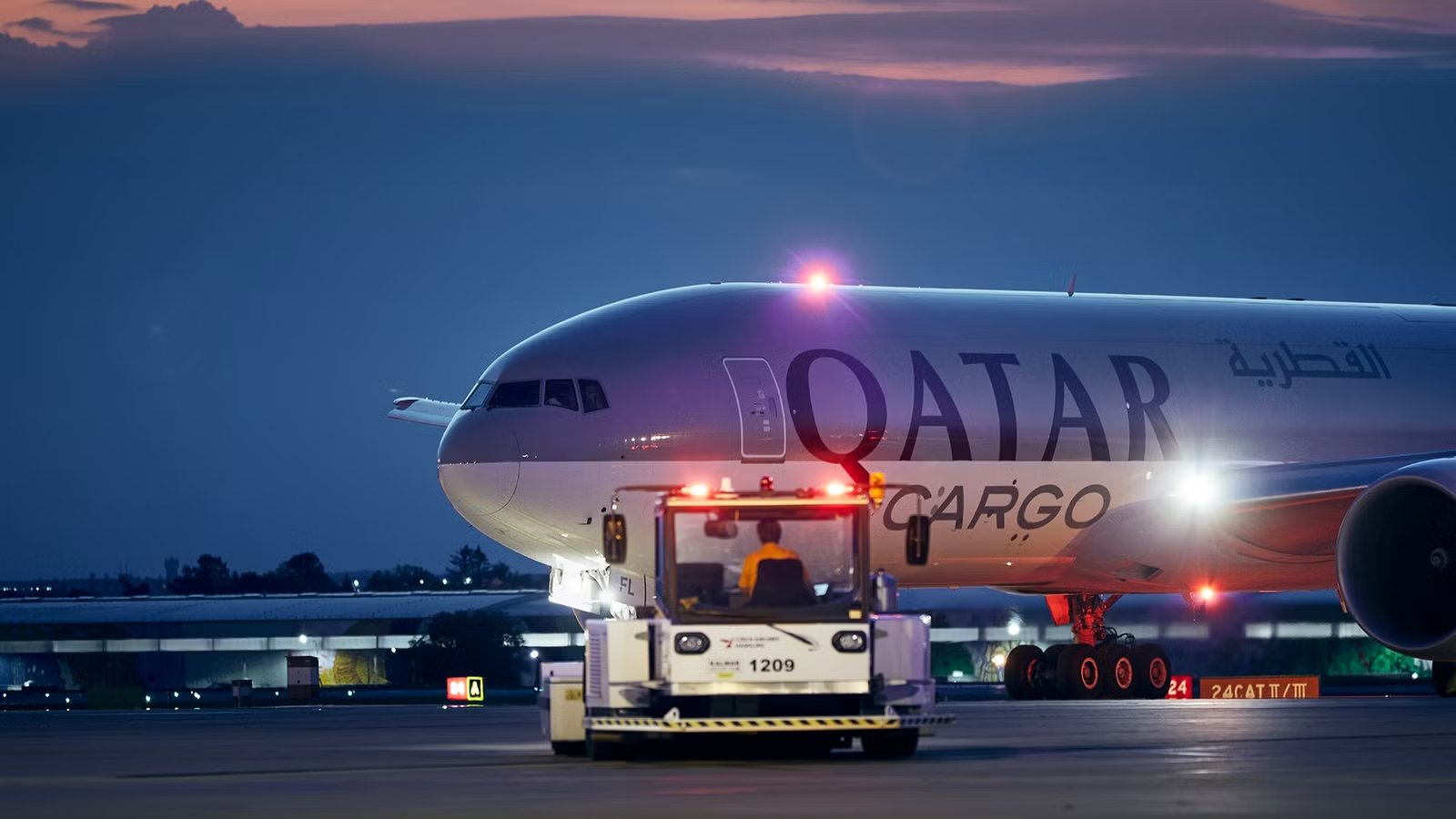
The evacuation of 147 elite horses from Doha took place this week, after a journey by road to Riyadh, and two  Qatar Airways Boeing 777F cargo flights from Riyadh to Liège. One flight departed with 74 horses, the other with 73, accompanied by staff onboard the specially organized flights.
Through a coordinated effort between the Doha Equestrian Tour, Qatar Airways, and other local stakeholders, the decision was made to move the animals from Qatar due to the escalating conflict between Iran, the United States, and Israel, and the continued attacks in the Gulf region.
Using A Qatar Airways 777F

Transporting horses by aircraft is something more common than you might think. Among the 147 evacuated animals, these prized showjumping horses include two ridden by German show jumper Janne Friederike Meyer-Zimmermann. The transportation via flight is a quick and somewhat easy way to move horses around the globe. During this trip, some staff were able to travel with the horses on the cargo-configured aircraft.
Qatar continues to have closed airspace, and commercial flights have been unable to operate from the country’s  Doha Hamad International Airport (DOH). To enable the flights to operate, vehicles and horse floats were provided to travel from Doha to Riyadh, a four-hour journey by road covering 217 miles (350 kilometers). From Riyadh King Khalid International Airport (RUH), the flights were then able to operate safely, for the six-hour non-stop flight to Liège Airport (LGG). The Doha Equestrian Tour provided a statement to Simple Flying:
“Qatar continues to closely monitor the evolving regional situation, with safety and stability as the priority. While the main impact has been on airspace and international travel, the Doha Equestrian Tour remains operationally prepared to resume competition as soon as local authorities and relevant sports institutions allow.”
How To Transport Horses

Horses that are transported in an aircraft are housed in specialized padded ‘jet stalls’, which are placed into the cargo hold of the aircraft. The stalls allow the horses to stand during the flight, similar to a horse float, while accompanied by staff, who can include grooms and veterinarians. Each stall typically holds up to three horses, providing enough room for them to stand while remaining narrow enough to keep them stable.
The horses are walked into the stalls on the tarmac, before being lifted by a high loader to place the stalls onto the cargo bay level of the plane. Due to international air travel, this can involve import/export regulations, health checks, documentation, and strict quarantine regulations.
During the flight, staff and veterinarians will monitor the horses, checking on their health, stress, and temperature, and will feed and water them throughout the journey. The compartment where the horses are stored is temperature-regulated to provide additional comfort, as the hold of a regular aircraft can get very cold due to the aircraft’s altitude.

No Horsing Around: The Logistics Of Flying Elite Equines On A Cathay Cargo 747
A high-stakes mission unfolds as precious cargo takes to the skies.
147 Horses Now Safe In Europe

With both flights operating without any major issues, this has enabled all 147 horses to be safely evacuated from the rising tension in the Middle East. The Longines Global Champions Tour has reiterated that, while disappointed it has been unable to start the season in Doha as planned, it plans to return to Al Shaqab as soon as possible and instead will shift its focus to the Miami Beach 2026 season.
Part of the decision to evacuate these horses was due to the ongoing air strikes that have been hitting US airbases in the region, including Al Udeid Air Base, the largest US base in the Middle East, home to more than 1,000 soldiers. The Al Shaqab equestrian complex is just one hour by road from the base.
Both flights were able to depart safely from Riyadh for the journey to Liège Airport, which is located just west of Aachen and is a major hub for international cargo and international horse transportation.