dailynewsnblog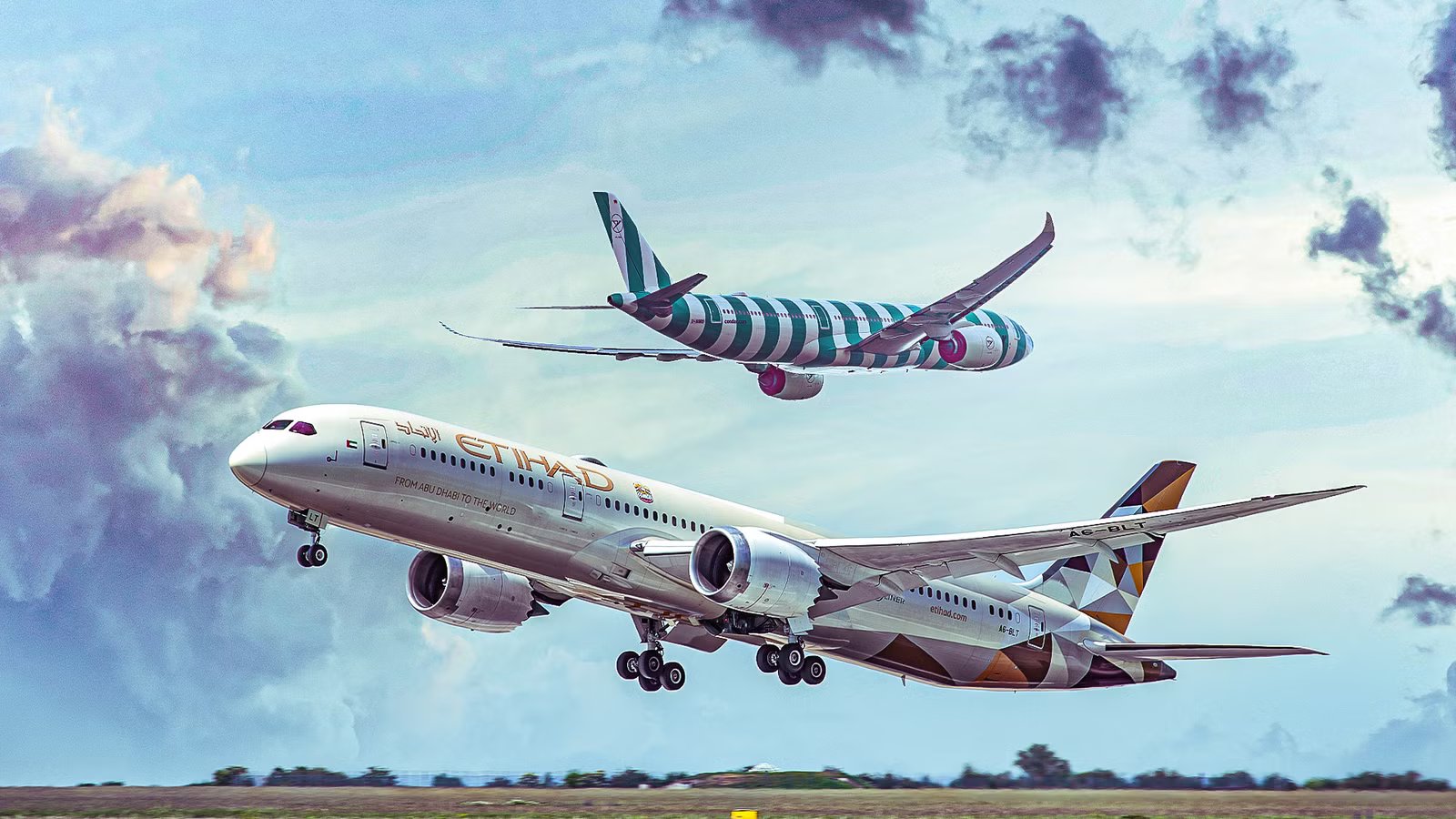
The middle market battle has reached a fascinating crossroads in 2026, as airlines balance the immediate need for capacity against the long-term necessity of ultra-long-range efficiency. At the heart of this competition are two of the most capable widebodies ever built: the Boeing 787-9 Dreamliner and the Airbus A330-900neo. While both aircraft represent the pinnacle of modern twin-engine engineering, they arrive at their performance benchmarks through vastly different philosophies. The choice between them often comes down to a single, critical metric of range.
This guide explores the technical divide between  Boeing’s clean-sheet composite pioneer and Airbus’ masterfully re-engineered classic. We will look beyond the marketing brochures to analyze how these aircraft perform on the world’s most demanding routes, particularly the transpacific corridors where these aircraft see plenty of use. By the end of this analysis, you will understand not just which plane flies further, but why that extra distance matters for the current requirements of the global aviation landscape.
A Difficult Choice?

When Boeing first conceptualized the 787-9, it was designed to be capable of flying long, thin routes that were previously reliant on the much larger Boeing 747. Its composite-intensive structure and high-bypass GEnx or Trent 1000 engines allowed for a significant leap in range and fuel efficiency. Conversely, the Airbus A330-900neo was born from a strategy of optimized evolution. By taking the proven, reliable airframe of the original A330 and adding the advanced Rolls-Royce Trent 7000 engines and updated Airspace cabin technology, Airbus created a platform that offers modern efficiency without the high acquisition costs of a clean-sheet design.
In the Asian market, carriers like All Nippon Airways (ANA) and  Singapore Airlines have historically leaned into the Dreamliner’s capabilities to connect directly to the US West Coast. However, with the increased 251-tonne MTOW modification for the A330neo and a future 253-tonne version still to come, the range gap that once made the 787-9 the champion of the Pacific is beginning to narrow, forcing a re-evaluation of which aircraft truly leads the middle market.
This evolution represents a shift from a purely technical competition to a tactical one. The 787-9 remains a marvel of 21st-century materials science, offering an impressive package of performance that handles 14-hour flights with ease. Meanwhile, the A330-900neo has become the pragmatist’s choice, providing much of the Dreamliner’s capability at a price point that makes it highly attractive for routes where the extreme range of the Boeing isn’t strictly necessary. This key difference is clearly reflected in the choices many airlines have made in regard to choosing these types.
Benefits Of A Clean Sheet Design

While the A330neo has closed the gap, the Boeing 787-9 remains the leader for ultra-long-haul operations due to its superior payload-range curve. The primary reason for this is the Dreamliner’s composite-intensive airframe, which allows for a significantly higher fuel-to-weight ratio. A standard 787-9 has a published range of approximately 7,565 nautical miles, while the upgraded 251-tonne A330-900neo reaches roughly 7,200 nautical miles. While a difference of 365 nautical miles might seem negligible on paper, in the world of flight planning, that distance represents the safety buffer required to fly against the fierce winter jet streams that hammer routes across the world.
The technical breakdown of this divide comes down to MTOW and wing efficiency. The 787-9’s wings are designed with a high aspect ratio and raked wingtips that provide incredible lift-to-drag ratios at high altitudes. This allows the Boeing to climb faster and cruise higher, where the air is thinner, and fuel burn is lower. Conversely, even with the 251-tonne modification, the A330-900neo’s aluminum-based wing, though heavily optimized with sharklets, is heavier and generally operates more efficiently at slightly lower altitudes.
|
Aircraft Type |
Max Range (Typical 3-Class) |
MTOW (Tonnes) |
Fuel Capacity (Litres) |
Cruise Speed |
|
Boeing 787-9 |
7,565 nm |
254 t |
126,370 L |
Mach 0.85 |
|
Airbus A330-900neo |
7,200 nm |
251 t |
139,090 L |
Mach 0.82 |
|
Range Delta |
+365 nm (Boeing) |
+3 t (Boeing) |
-12,720 L (Boeing) |
Mach 0.03 Faster |
This range advantage is further amplified when range with full payload is considered. Data from Aircraft Monitor indicates that once every seat and load in the cargo hold is filled, the A330neo’s range drops off more sharply than the 787-9’s. For a carrier like  United Airlines or Japan Airlines operating from Haneda to New York, the 787-9 can carry a full load of passengers and high-value cargo without needing a fuel stop. On that same route, an A330neo might have to choose between leaving 20 to 30 seats empty or carrying less cargo to ensure it can reach the destination against a 100-knot headwind. This payload penalty is the hidden cost that keeps the Dreamliner at the top of the long-haul hierarchy.

How The Airbus A330neo Has Impacted The Market Despite Its Weaker Sales
The aircraft had an impressive impact on the market.
Big Savings For Operators

In the aviation industry, airlines distinguish between fuel efficiency and capital efficiency to help make key strategic decisions. Because the A330neo is an evolution of a legacy platform rather than a clean-sheet design, its acquisition cost is significantly lower. As per IStat, in current market terms, an airline can often lease an A330-900neo for roughly $700,000 to $900,000 per month, whereas a high-demand 787-9 can command upwards of $1.05 million.
For a carrier operating a high-frequency route that doesn’t push the aircraft to its range limits, the 787’s superior fuel efficiency may not save enough money to offset its higher monthly lease payment. The A330-900neo can be viewed, therefore, as a value product that provides most of the capability for a significantly lower entry price. This is a primary reason why the A330neo thrives with leisure-heavy carriers like Condor or Cebu Pacific, where the focus is on low-margin, high-density seating rather than ultra-long-haul premium connectivity.
However, the view shifts back toward Boeing when fuel prices spike or when carbon taxes become a heavier burden. The 787-9’s composite structure allows for bleedless electrical architecture, which extracts less power from the engines for cabin systems. According to data from i6.io, the 787-9 maintains a fuel burn advantage of approximately 5% to 7% over the A330neo on long-range missions. For an airline like United Airlines, which operates massive hubs and long-haul spokes, that 7% difference across a fleet of 50 aircraft translates into hundreds of millions of dollars in annual savings, more than justifying the higher entry fee of the Dreamliner.
Configuration Flexibility

When looking at where these aircraft are commonly used, the choice between the 787-9 and the A330-900neo varies massively across carriers. Routes like Tokyo to the US East Coast are the ultimate testing grounds, often exceeding 6,700 nautical miles, placing them firmly in the ultra-long-haul category. The Boeing 787-9 has become a major utility for United in the US as well as Asian carriers like Japan Airlines and EVA Air, allowing them to bypass traditional hubs and fly long and thin point-to-point routes that were once unthinkable for a mid-size widebody.
The technical brilliance of the 787-9 in this specific market lies in its ability to handle winter headwinds without a significant payload penalty. During the peak of winter, a flight from Haneda to JFK can face consistent 100-knot headwinds, effectively stretching the air distance by hundreds of miles. While the 251-tonne A330-900neo has the range to make the distance on a clear day, those fierce Pacific currents can push the Airbus to its absolute limit. In these scenarios, an airline might be forced to block off 20 to 30 seats or leave lucrative cargo on the tarmac to ensure the flight has the legal fuel reserves to reach the East Coast. For a high-yield carrier like JAL, which prioritizes premium passenger comfort and consistent cargo revenue, that is a compromise they are rarely willing to make.
The 787-9 offers a unique marketing advantage for those in the Asian markets, that being its configuration options. JAL, for example, operates its 787 fleet with a 2-4-2 economy layout, offering the widest seats available compared to the standard 3-3-3 found on most other Dreamliners and A330neos. This focus on the passenger experience is a key reason why the 787-9 remains the preferred choice for the airline. While the A330neo is a phenomenal aircraft for 8-to-10-hour regional long-haul flights to Australia or Southeast Asia, the 787-9’s ability to dominate the 13-hour transpacific trunk routes ensures it remains the essential tool for long-range operations.

Why The Boeing 787-9 Dreamliner Has Much Longer Range Than The 787-10
The higher-capacity jet has some impressive capabilities.
Passenger Benefits

Why do passengers often report feeling less destroyed after a 13-hour haul on a 787-9 compared to almost any other aircraft? The secret to this lies in a feature already covered earlier. The A330-900neo offers a quiet, modern ride, but it is still fundamentally a metallic airframe. The Boeing 787-9, however, uses its composite fuselage to fundamentally change the internal environment. Composites do not corrode like aluminum when exposed to moisture, meaning Boeing can maintain a cabin altitude of 6,000 feet and significantly higher humidity levels, compared to the 7,000 to 8,000 feet found on traditional metallic aircraft like the A330neo.
The breakdown of this physiological response is quite simple. A lower cabin altitude means your blood carries more oxygen, and higher humidity prevents the dehydration-induced brain fog often associated with long-haul travel. While Airbus has made strides with its Airspace cabin, which includes larger overhead bins, specialized LED mood lighting, and remarkably quiet engines, the fundamental physics of the metallic hull limit how much moisture they can pump into the air without risking structural damage over time.
|
Feature |
Boeing 787-9 |
Airbus A330-900neo |
Operational Impact |
|
Effective Cabin Altitude |
6,000 ft |
7,500 to 8,000 ft |
Reduced fatigue and jet lag |
|
Cabin Humidity |
15% to 20% |
5% to 10% |
Less dehydration, better taste buds |
|
Window Size |
18.5 in (Dimmable) |
14 in (Traditional) |
Greater sense of space and better views |
|
Noise Level (Interior) |
70 to 72 dB |
69 to 71 dB |
Both are exceptionally quiet |
|
Connectivity (2026) |
Starlink Ready |
Starlink/Ka-Band |
High-speed, low-latency Wi-Fi |
Supporting the modernization of the cabin is the rapid rollout of high-speed connectivity. As of early 2026, the industry has shifted toward low-earth orbit satellite providers to meet the demands of travelers who expect home-speed internet at 35,000 feet. Virgin Atlanticand United Airlines have led the charge with fleet-wide Starlink installations on their 787s, offering very low latency. While the A330-900neo is also gaining these capabilities, the 787’s all-electric architecture makes it a particularly efficient platform for these high-power antenna arrays.
New Leaders Of The Middle Market

While the range delta between the Boeing 787-9 and the Airbus A330-900neo provides a clear technical winner, the real choice for the next decade is increasingly being dictated by production availability and supply chain reliability. The global widebody market remains in a state of undersupply, and for many airlines, a 7,200 nautical mile A330neo that can be delivered in 24 months is infinitely more valuable than a 7,565 nautical mile 787-9 with a 4-year backlog.
The best aircraft is ultimately the one that fits the specific network geometry with the least amount of operational risk. For now, the 787-9 will likely remain the choice aircraft for trunk operations. However, the A330-900neo is finding a unique niche as a high-capacity regional workhorse. By utilizing the Airbus for high-density routes to Bangkok, Taipei, or Sydney, carriers can preserve the cycles and engine life of their long-range Dreamliners for the missions that actually require that extra 365-mile buffer and lower cabin altitude.
Both platforms are already being prepped for 100% sustainable aviation fuel compatibility, and the flight decks are becoming increasingly digital. With the Boeing 777X set to enter service to handle the ultra-heavy loads, the 787-9 and A330-900neo will settle into their roles as the high-frequency backbone of global aviation.