dailynewsnblog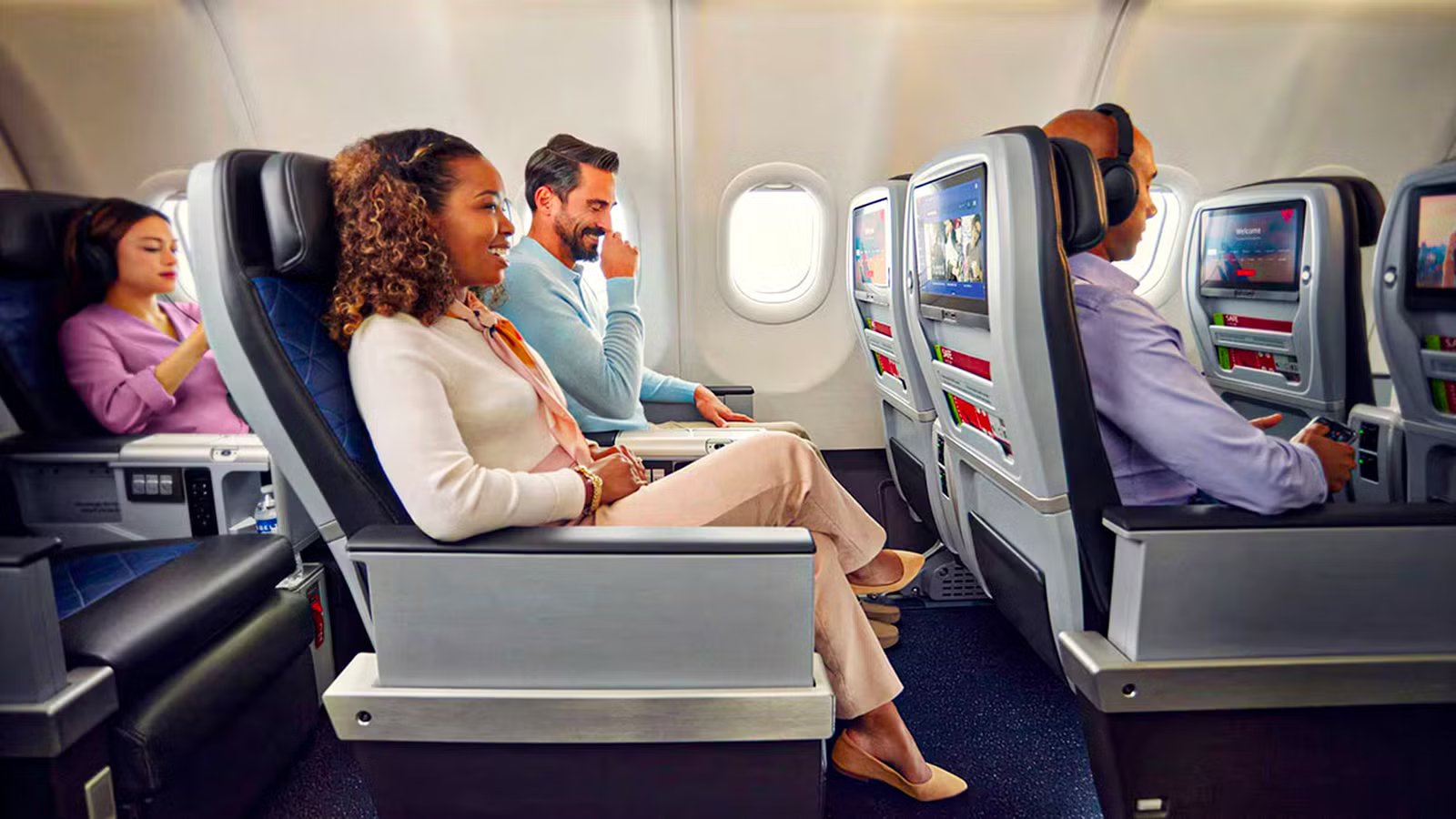
Upgrading to premium economy on US carriers like  Delta Air Lines, American Airlines, and United Airlines typically costs between $200 and $600 (€185–€555) on domestic routes and $500 to $1,500+ (€460–€1,380+) on long-haul international flights. This can depend on demand, timing, and availability. Based on recent fare data and airline upgrade offers, this pricing positions premium economy as a mid-tier upsell, more expensive than standard economy, but significantly cheaper than business class.
For US-based travelers flying to Europe or Asia, these upgrade ranges are now a key part of airline revenue strategy, with targeted offers often appearing closer to departure. Upgrade costs tend to drop when seats remain unsold, meaning last-minute offers through airline apps or email can provide the lowest prices. However, availability is never guaranteed, and prices can rise sharply on high-demand routes, so upgrading to premium economy is most cost-effective when purchased strategically.
The Surge Of Premium Economy

Premium economy has emerged as one of the fastest-growing cabin classes in commercial aviation, positioned between traditional economy and business class. Airlines introduced it to capture travelers willing to pay more for comfort without the steep price of premium cabins. Typically, offering wider seats, extra legroom, enhanced meals, and priority services, premium economy appeals to both leisure travelers seeking a better experience and corporate flyers whose companies have tightened travel budgets.
The surge in demand is closely tied to shifting consumer expectations and post-pandemic travel behavior. Many passengers are prioritizing comfort and personal space on long-haul flights, especially after experiencing heightened awareness of health and well-being. At the same time, airlines have recognized that premium economy delivers higher profit margins per square foot than standard economy, making it an attractive investment.
As a result, carriers across the globe have expanded or introduced premium economy sections, often retrofitting older aircraft to include this intermediate class. Looking ahead, premium economy is likely to become a standard offering rather than a niche upgrade. Competition among airlines is driving improvements in seat design, service quality, and branding, blurring the lines between premium economy and business class. For travelers, this means more choices and better value.
Which US Airlines Can You Book Premium Economy Seats With?

In the United States, only a few major airlines offer a ‘true’ premium economy cabin, meaning a separate class with wider seats, more legroom, upgraded meals, and enhanced service. The three primary carriers are  American Airlines, Delta Air Lines, and United Airlines. Each carrier markets the product slightly differently: American calls it ‘Premium Economy,’ Delta uses ‘Premium Select,’ and United brands it as ‘Premium Plus.’
Regardless, however, they all provide a noticeably improved experience over standard economy, particularly on long-haul international flights. These premium economy cabins are most commonly found on widebody aircraft used for transatlantic and transpacific routes, such as flights to Europe, Asia, and South America.
The seats are typically arranged in a separate section between economy and business class, offering features like increased recline, larger entertainment screens, better dining options, and priority boarding. For many travelers, this represents a balance between affordability and comfort, especially on flights lasting more than six hours. Other US airlines, such as JetBlue and Alaska Airlines, offer upgraded seating options with extra legroom and enhanced services.
However, these are generally not classified as true premium economy because they currently lack a distinct cabin, though JetBlue plans to introduce a dedicated cabin in 2026. Meanwhile, Southwest Airlines now offers assigned seating and a premium ‘Extra Legroom’ option. As a result, travelers specifically seeking a genuine premium economy experience in the US market will generally need to book with one of the three major legacy carriers.

Why Airlines Are Adding More Premium Seats Than Ever
Premium demand has skyrocketed since the pandemic.
How Much Do Premium Economy Fares Cost In The US?

Premium economy seats in the US are priced noticeably higher than standard economy, but they remain far more affordable than business class. Recent 2025 airfare data shows that the average premium economy ticket costs about $1,201 (€1,100) compared to roughly $462 (€425) for economy, according to Visa Verge, highlighting its role as a mid-tier option for travelers seeking added comfort without a luxury price tag.
This pricing reflects the extra benefits included, such as wider seats, greater legroom, improved meals, and a more spacious cabin. In most situations, premium economy fares are typically 40% to 100% more expensive than economy tickets, though this can vary depending on factors like route, airline, season, and how far in advance you book. For instance, a long-haul flight priced at $850 (€780) in economy might increase to around $1,400–$1,700 (€1,285–€1,560) in premium economy.
The price difference is often more pronounced on international routes, where the enhanced comfort and service have a bigger impact thanks to the longer travel times. Overall, premium economy is designed to strike a balance between cost and comfort, and it generally costs around 1.5 to two times the price of economy.
This makes it an appealing choice for passengers who want a more relaxed and upgraded flying experience without committing to the significantly higher expense of business class. This balance of value and comfort is a key reason why demand for premium economy has continued to grow.
Pay Upfront, Upgrade Later, Or Use Points?

When it comes to securing a premium economy seat, travelers generally have three main options: booking it outright, upgrading with cash, or using points or miles. Booking premium economy from the start is often the simplest approach, especially on airlines like American Airlines, Delta Air Lines, and United Airlines. This guarantees availability and allows you to select your preferred seat early, which is particularly useful on popular long-haul routes where premium cabins can fill up quickly.
Upgrading with money can sometimes offer better value, especially if you initially book an economy ticket and then receive a discounted upgrade offer closer to departure. Airlines frequently send these offers via email or through their apps, and prices can vary widely depending on demand and seat availability. While not guaranteed, this method can be a cost-effective way to experience premium economy without paying full price upfront.
Using points or miles is another popular strategy, particularly for frequent flyers. Many loyalty programs allow you to upgrade from economy to premium economy using rewards, though availability may be limited and often depends on fare class and route. In some cases, redeeming points for a full premium economy ticket can provide excellent value, especially during peak travel periods when cash prices are high. Ultimately, the best option depends on your flexibility, budget, and how you value convenience.

Why US Carriers Are Doubling Down On Premium Cabins
Airline luxury is going mainstream.
Which US Premium Economy Seat Is The Best?

When comparing US premium economy products, Delta Air Lines is often considered the standout choice. Its Premium Select cabin is widely regarded as the best overall, thanks to a strong combination of comfort, service, and attention to detail. Passengers frequently highlight upgraded meals, more attentive cabin crew, and thoughtful extras like plush bedding and welcome drinks, all of which help create a more refined experience.
What sets Delta apart is the balance between the physical seat and the overall onboard experience. Across the three major carriers, American Airlines, United Airlines, and Delta, the seat dimensions are fairly similar, typically offering around 38 inches (96.5 cm) of pitch and 18.5–19 inches (47–48.3 cm) of width. However, Delta enhances this with better service, improved dining, and a more polished cabin atmosphere, making it feel closer to business class than its competitors.
With that being said, the ‘best’ option still depends on your priorities. After all, American Airlines offers a consistent and widely available product, while United Airlines provides solid comfort and extensive route options. However, for travelers seeking the most well-rounded and premium experience in this category, especially on long-haul flights, Delta Premium Select is generally viewed as the top performer in the US market.
Is It Worth Paying More?

Upgrading to premium economy can absolutely be worth it, but it depends on the type of trip you’re taking. For long-haul flights (typically six hours or more), the extra legroom, wider seat, and increased recline can make a noticeable difference in comfort, especially if you want to arrive well-rested. Airlines like Delta Air Lines, American Airlines, and  United Airlines also include better meals, priority boarding, and upgraded amenities, which together create a more relaxed and less stressful journey.
However, the value of upgrading really comes down to price. If the upgrade costs a few hundred dollars on a long flight, many travelers find it worthwhile for the added comfort and space. On the other hand, if the fare jumps significantly, approaching business class pricing, it may not feel like such good value. For shorter flights, the benefits are much less noticeable, so paying extra is often harder to justify unless comfort is a top priority.
Ultimately, premium economy sits in a sweet spot between affordability and comfort. It’s a strong option for travelers who want a better experience without the high cost of business class, particularly on overnight or international routes. If you can secure it at a reasonable price, either when booking or through a discounted upgrade, it’s often a worthwhile investment in a more enjoyable flight.