dailynewsnblog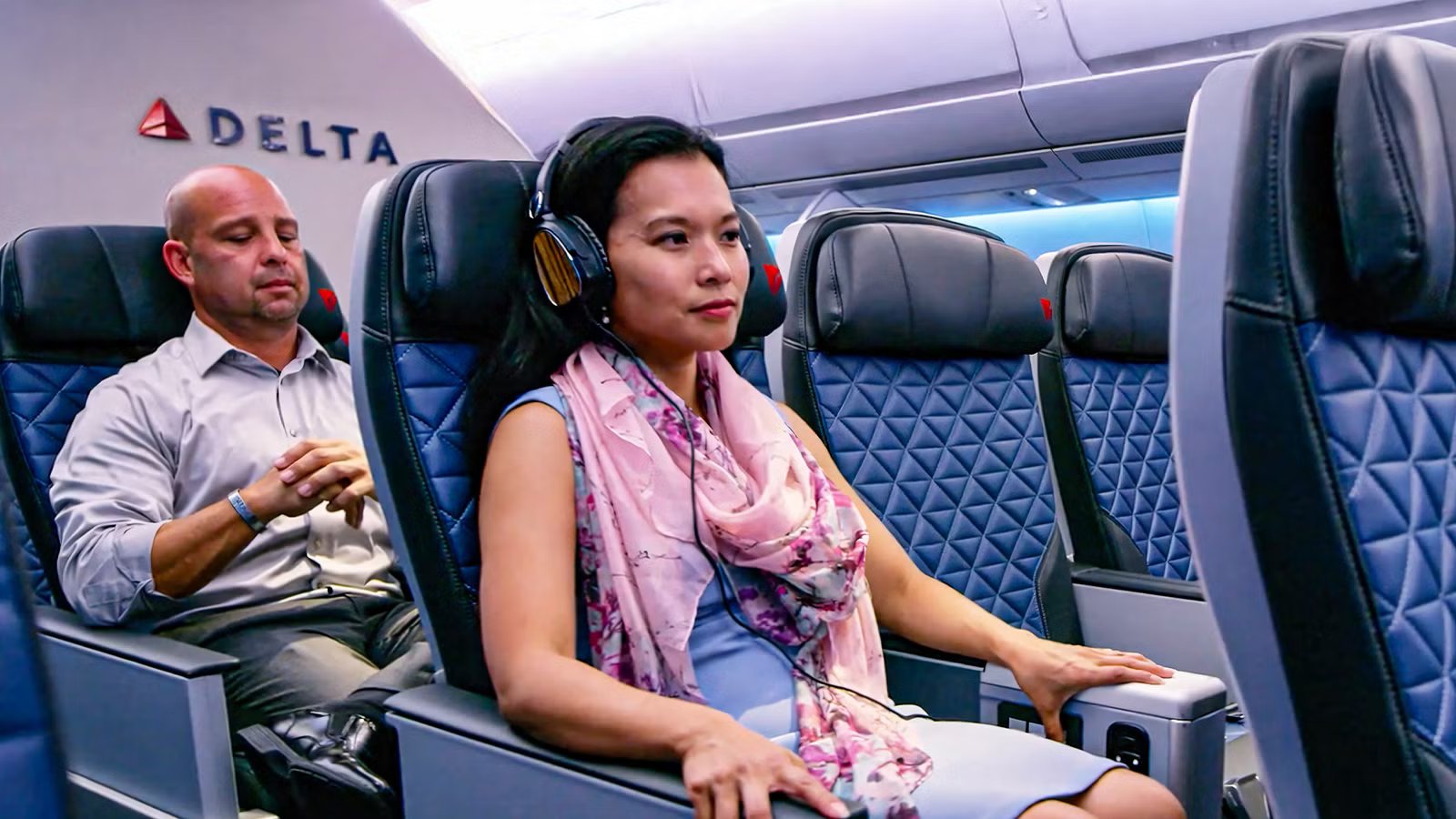
An upgrade to premium economy might sound simple for passengers, but the real answer to the question of cost is that it fundamentally depends. Across the industry, airlines price premium economy upgrades in a dynamic manner, meaning the amount a traveler pays can vary widely depending on the route, season, booking class, demand, cabin load, and how close the flight actually is to departure. Some carriers sell fixed-price upgrades while some rely on post-booking cash offers, all while others use bidding systems that turn the entire process into some kind of calculated gamble. That means the traveler is not just buying a better seat, but also deciding when to buy certainty and when to bet on a later discount that could pop up for them in some way.
We aim to analyze how much premium economy upgrades cost the traveler under typical circumstances, why so much variation exists, and when it actually makes much more sense to buy the cabin outright rather than wait. We will compare the major upgrade models used by airlines, ranging from Lufthansa’s fixed-price upgrade offers to Air Canada’s bidding and instant-upgrade systems, while also drawing on real traveler experiences that show just how inconsistent the market can actually be. At the end of the day, we will conclude that premium economy upgrades cannot be understood as a standard fee, but rather as a form of airline revenue management where timing, flexibility, and luck can matter almost as much as the headline fare itself.
What Is The Theoretical Purpose Of A Premium Cabin?

The theoretical purpose of a premium economy cabin is to create a middle layer between economy and business class that manages to capture passengers who are willing to pay meaningfully more for comfort, but not enough to justify the price of a true premium cabin in the traditional sense. In overall revenue terms, it helps airlines segment demand in a more precise manner. Instead of forcing travelers into a binary choice between low-cost economy products and expensive business-class seats, premium economy gives carriers a product that better matches the preferences of leisure travelers, small-business customers, and corporate buyers with tighter travel budgets.
It also serves an important strategic role when it comes to upselling passengers. Premium economy allows an airline to monetize passengers who are in search of extra space, better food, a larger baggage allowance, or priority treatment without giving away the much larger seat footprint and service costs which are associated with business class travel. This means that the airline is capable of generating higher yields from the same aircraft while preserving business class as a more exclusive product in its own right.
Just as importantly, premium economy reflects how air travel has managed to evolve. Many long-haul passengers today expect a more comfortable experience, but they still think in cost-conscious terms. The cabin, therefore, exists to bridge overall affordability and aspirations. In theory, premium economy is not just a bigger seat but rather a carefully designed compromise that lets airlines extract more value from passengers’ willingness to pay across the board.
Which US Airlines Offer Premium Economy?

In the US aviation market, the clearest examples of true premium economy products are exclusively offered by the three legacy carriers.  American Airlines names its product Premium Economy, while Delta calls its cabin Delta Premium Select, and United’s is Premium Plus. American Airlines sells Premium Economy on select international flights and some longer domestic services, which use its Boeing 777 and 787 jets. Delta Air Lines positions Premium Select as a separate cabin, one including upgraded features like larger recliner seats, improved dining, and airport priority services (although lounge access is not guaranteed).
United Airlines offers Premium Plus on pretty much all of its widebody international services. The important distinction is that not every airline calling a product premium sells a true long-haul premium economy cabin. Alaska Airlines sells a class of seats that are marketed as “Premium Class,” but they are essentially just Main Cabin seats with four extra inches of legroom, earlier boarding, and complimentary drinks. JetBlue’s EvenMore product is an extra-legroom, extra-perks product rather than a separate international premium-economy cabin.
Hawaiian Airlines’ Extra Comfort product works much the same way. Thus, US carriers that genuinely offer a distinct premium-economy cabin are the three big global network airlines, with other players like Alaska, JetBlue, and Hawaiian offering upgraded economy seating that is more comparable to extra-legroom economy than to the four-cabin premium-economy products seen on major long-haul aircraft.

The Striking Differences Between Premium Economy & Economy Class In 2026
What secrets lie between these two cabin classes in 2026? The differences may surprise you…

The overall booking premium is the additional amount that a traveler pays to buy premium economy outright instead of standard economy at the time of booking. This is a decent benchmark for how much it costs to fly premium economy, but it is not the only way that you can end up in a premium economy seat. There is no universal average for this figure, primarily because airlines price the cabin dynamically by route, season, remaining inventory, and corporate demand.
Some analysis can help us get a reasonable gauge. McKinsey & Company, a leading management consulting firm, examined flights where premium economy tickets were around $1,000 when economy class tickets were around $400 one-way, implying a surcharge of around 150%, a number roughly 2.5 times the economy fare. Other travel analysis places the premium at a less massive 50% above economy in many markets, highlighting just how wide and difficult to estimate this market is.
The larger and potentially more important point that comes out of this is structural, as airlines use premium economy to segment passengers who want more comfort but will not pay business-class fares. That is why the segment has become strategically important. Premium demand has been one of the strongest growth areas for the entire US aviation market, and premium economy can generate materially higher returns from the same aircraft real estate than standard economy. The cleanest conclusion is that the booking premium is usually substantial, often sitting somewhere between roughly 50% more and well over double the price of economy.
Upgrading With Cash From Economy To Premium Economy

Cash upgrades from economy to premium economy are, at times, cheaper than buying premium economy outright at the moment of initial booking, but they are much less predictable in nature. Airlines increasingly sell these seats as post-booking offers, check-in offers, or bid-based opportunities to monetize unsold premium inventory without weakening the headline premium-economy fare.
American Airlines explicitly says that passengers can use Instant Upgrade after purchase to move into Premium Economy using cash if seats are available, and Lufthansa similarly says that an economy passenger can upgrade to Premium Economy at pretty much any stage of the journey. Real-world pricing shows why travelers find this incredibly confusing. In one American Airlines example, the original fare gap to book premium economy upfront was $975, but the later upgrade offer arrived at $275 per segment, or $550 round-trip.
Delta figures are not all that different, where cash offers for upgrades can range significantly. Individual data points do not help determine averages, but they can help us put together a picture of what exists in this unique kind of market. They can also be much higher, disappear entirely, or shift in other unpredictable ways when demand is very strong. At the end of the day, only airlines themselves know how wide these actual fare gaps are.

Here’s How Much More Spacious Premium Economy Is Compared To Economy Class
Premium Economy delivers 5–8 more inches of legroom, wider seats, and deeper recline—offering a calmer, more comfortable upgrade from standard Economy
Using Miles To Upgrade From Economy To Premium Economy

Using frequent-flyer miles to move from economy to premium economy can also be an attractive option, but the pricing logic varies sharply based on the airline that one is flying. Delta allows for any SkyMiles member to use miles to upgrade from Main Cabin to Delta Premium Select, either during booking or after purchase, and Delta’s own terms say that prices vary by market and may change without any notice to the passenger.
External analyses found that many Delta upgrades offer a redemption rate of around 1.07 cents per SkyMile, making this price often closely shadow the price of just upgrading with cash. American Airlines also allows post-booking Instant Upgrade offers into Premium Economy using AAdvantage miles if seats are available, but the airline’s older mileage-upgrade award regime for its own flights was cut off in August 2025.
United, however, has a much more traditional model. MileagePlus members can still request upgrades with miles, and they can start at around 20,000 miles on some European itineraries. The broader takeaway is that mileage upgrades can work well, but only when the airline’s dynamic offer is reasonable, and upgrade space actually exists.
What Is Our Bottom Line?

At the end of the day, premium economy is increasingly becoming an option for passengers all across the globe. US legacy carriers, including United Airlines,  Delta Air Lines, and American Airlines, have been leading the charge, expanding their premium economy offerings in recent years.
A key piece of the puzzle for passengers considering upgrading is deciding when to actually pull the trigger on an upgrade to another cabin, as it can be very expensive if done inappropriately. This means that carriers have to be very careful as they manage their inventories, in order to try and capture as much revenue as possible.
Passengers thus have a few options for how and when they want to upgrade. Upgrading to premium economy using miles can often be an appealing option, but this argument only holds if passengers are willing to risk not having the premium seat at all. As with anything else in the aviation industry, the value of a particular upgrade varies significantly by airline and by route.