dailynewsnblog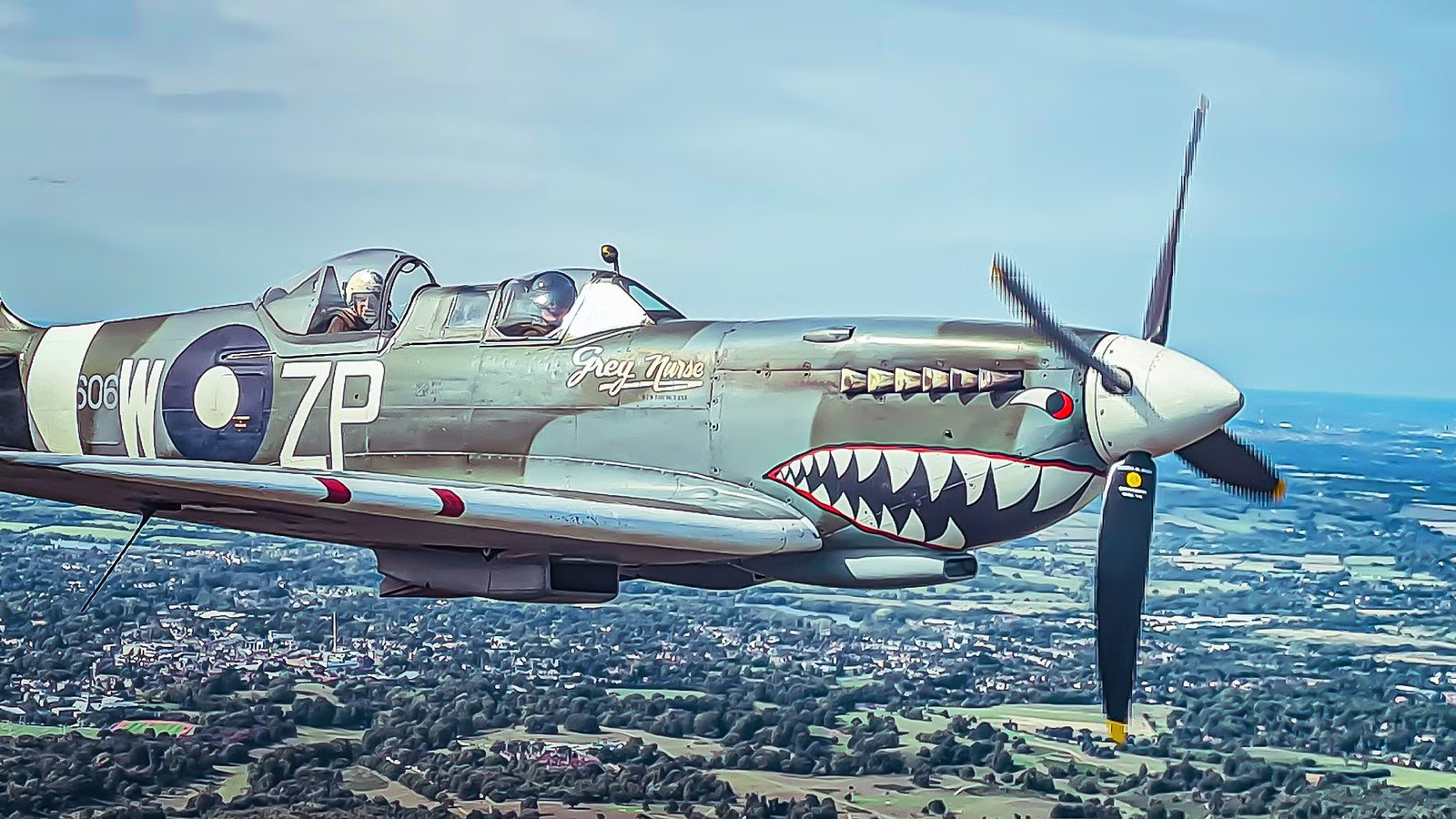
The Supermarine Spitfire remains one of the most iconic and mass-produced aircraft ever developed. It is regarded as the only British fighter able to meet the German Messerschmitt Bf109E on equal terms during the Battle of Britain, with outcomes of engagements often depending more on the quality of the pilots than the aircraft. While the United States produced far more military aircraft than any other country during WWII, more Spitfires were produced by Britain than any other WWII US military fighter or bomber.
The Supermarine Spitfire is a common sight at heritage aircraft shows in the UK, Australia, and the United States, and is one of the most loved WWII-era aircraft. It is one of the very few fighters to have become a household name. Here is what to know about how many Supermarine Spitfires were produced.
The Battle Of Britain Icon

The Spitfire was designed by R. J. Mitchell of the Supermarine Aviation Works in 1934 in response to the RAF’s requirement for a modern fighter. The first prototype Spitfire was displayed at the 1936 RAF Display at Hendon in the New Types Park. The aircraft entered operational service with the RAF in August 1938. By the time war broke out, the RAF had nine squadrons equipped with Spitfires, and by July 1940, RAF Fighter Command had 19 Spitfire Mk I squadrons.
The aircraft became iconic in the Battle of Britain following the Fall of France in 1940. It’s important to note that Spitfires changed dramatically over their history. They evolved from the Mk 1 to the Mk 24, receiving more powerful engines, new wing shapes, new armament, and other changes along the way. The last time the RAF used the Spitfire in an offensive sortie was in Malaysia in 1951. The aircraft formed the backbone of the Royal Air Force and seems destined to remain the most-built British aircraft.
The British aircraft manufacturer, Supermarine, was founded in 1913 as Pemberton-Billing Ltd. Vickers-Armstrongs took over Supermarine in 1928 and operated it as Supermarine Aviation Works (Vickers) Ltd. Supermarine continued within Vickers-Armstrongs (Aircraft) Ltd until 1960. In 1960, the company was incorporated into British Aircraft Corporation (BAC). BAC was succeeded by British Aerospace, which was in turn succeeded by BAE Systems, which is the largest aerospace defense contractor in the United Kingdom today.
How Many Spitfires Were Built

The Imperial War Museum states, “Between 1937 and 1947, over 20,000 of them were built and in those 10 years.” It adds, “The Supermarine Spitfire was the only Allied frontline fighter in complete and continuous development all the way through the Second World War.” In total, 20,351 land-based Spitfires were built, plus a few thousand more naval Seafires.
The overwhelming majority of Spitfires were built in the United Kingdom, initially at Woolston and Southampton, before being dispersed to other sites. The largest single site was Castle Bromwich Aircraft Factory, which built 12,129 Spitfires. This included 921 Mk IIs, 4,489 Mk Vs, 5,665 Mk IXs, and 1,054 Mk XVIs. Today, the factory and site are owned by Jaguar Land Rover, which ended production of complete cars at the site in 2024.
|
Supermarine Spitfire in numbers (per USAF Museum, BAE Systems |
|
|---|---|
|
Number produced (land-based) |
20,351 |
|
Number of naval Seafires produced |
2,626 |
|
Total |
22,977 |
|
Number operated by the USSR |
Over 1,200 |
|
US Army Air Forces Spitfires |
Around 600 |
|
Number remaining airworthy |
50-70 |
The most common variants were the Mk V with around 6,479 units produced and the Mk IX with 5,665 units. The only other variants with around 1,000 aircraft were the Mk I (1,566), Mk II (920), Mk VIII (1,658), Mk XIV (957), and Mk XIV (1,054). The Spitfire’s peak production was between 1941 and 1945 during the war years, following a massive ramp-up. It is one of the few aircraft that was manufactured both before and after the war, but in much lower quantities.

Rolls-Royce Merlin: Inside The Most Legendary Piston Engine Ever Built
Discover the legendary piston engine that roared through history, powering the Allies to victory!
How Many Seafires Were Built

The Supermarine Seafire was the naval version of the Supermarine Spitfire and was built to operate from Royal Navy aircraft carriers. Famously, by the time of the sinking of the German battleship, the Bismarck, the naval fighters in the battle were old Swordfish biplane torpedo bombers that were approaching obsolescence, although that may also have protected them from flak fire. Royal Navy Fairey Swordfish also took part in the Battle of Taranto, a prelude to Pearl Harbor the following year.
The Supermarine Seafire was introduced in 1942 with a total of 2,626 examples being built. The first combat use of the Seafire took place in Operation Torch as the Allies landed in North Africa. This was also the first significant operation by US forces in the European/Mediterranean theater, with the US Army Air Forces also using Spitfires in the campaign.
The Seafire would go on to serve in the French Navy, the Royal Canadian Navy, and the Irish Air Corps. Seafires took part in the destruction of Bismarck’s sister ship, the Tirpitz. They saw action during the Normandy landings and supported Allied landings during Operation Dragoon in invading Southern France. They were present in the British Pacific Fleet and saw action against Japan all the way to the end of the war.
Spitfires Operated By The US, Allies, & Post-War

Around 30 countries operate the Spitfires, including the squadrons of militaries in exile, like Poland, Belgium, and France. It was also one of the main fighters operated by the British Empire Commonwealth air forces of Canada, Australia, and New Zealand. The Spitfire became much more widespread after WWII, as it was shipped secondhand to many countries or drawn from surplus RAF stocks, including Egypt, Greece, Italy, Syria, Turkey, Thailand, and others.
The only other country that built Spitfires was Australia, where some local assembly took place. Hundreds of crated Spitfires were shipped from Britain to Australia and assembled there, mostly at No. 1 Aircraft Depot at Laverton. This was not manufacturing, but simple reassembling, so the UK can still be credited with the manufacturing of these Spitfires. The Royal Australian Air Force says, “A total of 20,334 Spitfires were built before, during and after the Second World War, with a total of 1652 Spitfire Mk VIII variants built.“
Perhaps surprising to many, but around 600 Spitfires served in the United States Army Air Forces and Navy. These were mostly confined to the USAAF, with the Navy mostly having the VCS-7 Cruiser Support Squadron. Many aircraft in WWII were not strictly British or American. American forces operated British-origin aircraft like Spitfires, while British forces operated American-origin aircraft like P-51 Mustangs.

10 Can’t-Miss Military Planes On Display At The US Air Force National Museum
The US Air Force Museum boasts the world’s greatest aircraft displays with some of its rarest and most iconic aircraft.
Spitfires Operated By The Soviet Union

One of the biggest operators of the Spitfire was the Soviet Union, which relied heavily on British lend-lease aid, especially early on. British lend-lease aid is often overshadowed by the larger, and slightly later, US lend-lease to the Soviet Union, as well as to Britain itself. In 1942, the US said, “It is believed of particular importance, for the following reasons, that a lend-lease agreement basically similar to the British agreement be concluded with the U. S. S. R. at the earliest possible moment.”
The British lend-lease with the USSR started in 1941, although it had already delivered 450 aircraft to the Soviets before a formal lend-lease agreement was signed. Under the British and American lend-leases, the Soviets received large numbers of British Spitfire (around 1,200) and Hurricane fighters, American P-39 Airacobra, P-40 fighters, as well as C-47 Skytrain transport aircraft and PBY Catalina flying boats. These aircraft are often forgotten in post-war Soviet/Russian national narratives.
The UK government reports “Total dispatched 6,778 aircraft, including 2,672 aircraft sent from U.S.A. These were sent on United States Lend/Lease to U.S.S.R., as part of the British commitment, in exchange for a supply of British aircraft to U.S. forces in the European theatre.” The Royal Navy was central to transporting Atlantic-bound American aid to the Soviet Union.
Still 7th-Most-Produced Aircraft

Today, the Supermarine Spitfire and Seafire remain the seventh-most-produced aircraft and the third-most-produced military aircraft. The most produced aircraft are the Cessna 172 (44,000), the Soviet Ilyushin Il-2 (36,183), the German Messerschmitt Bf109 (34,852), the Piper PA-28 (around 33,000), the Cessna 150/152 (31,471), and the Cessna 182 (over 23,000).
As the Il-2 was a ground attack aircraft, the Spitfire is the second most produced fighter of all time after the Bf109. Other highly produced fighters included the German Focke-Wulf Fw 190 (20,051), the Soviet Yakovlev Yak-9 (16,769), the American Republic P-47 Thunderbolt (15,660), and the North American P-51 Mustang (15,586).
The most produced fighter jet ever built was the MiG-21 with 13,996 units produced, while the most common fighter jet in service today is the F-16 Fighting Falcon. Separately, with Croatia, Romania, and India all recently retiring their MiG-21 fleets, the MiG-21 Fishbed is now essentially out of service. Around 100 are still estimated to be in service around the world, but these are likely mostly non-flying aircraft on-paper inventories rotting on the tarmac. The Spitfire remains one of the most popular WWII aircraft, with up to 70 remaining airworthy and hundreds as static displays.