dailynewsnblog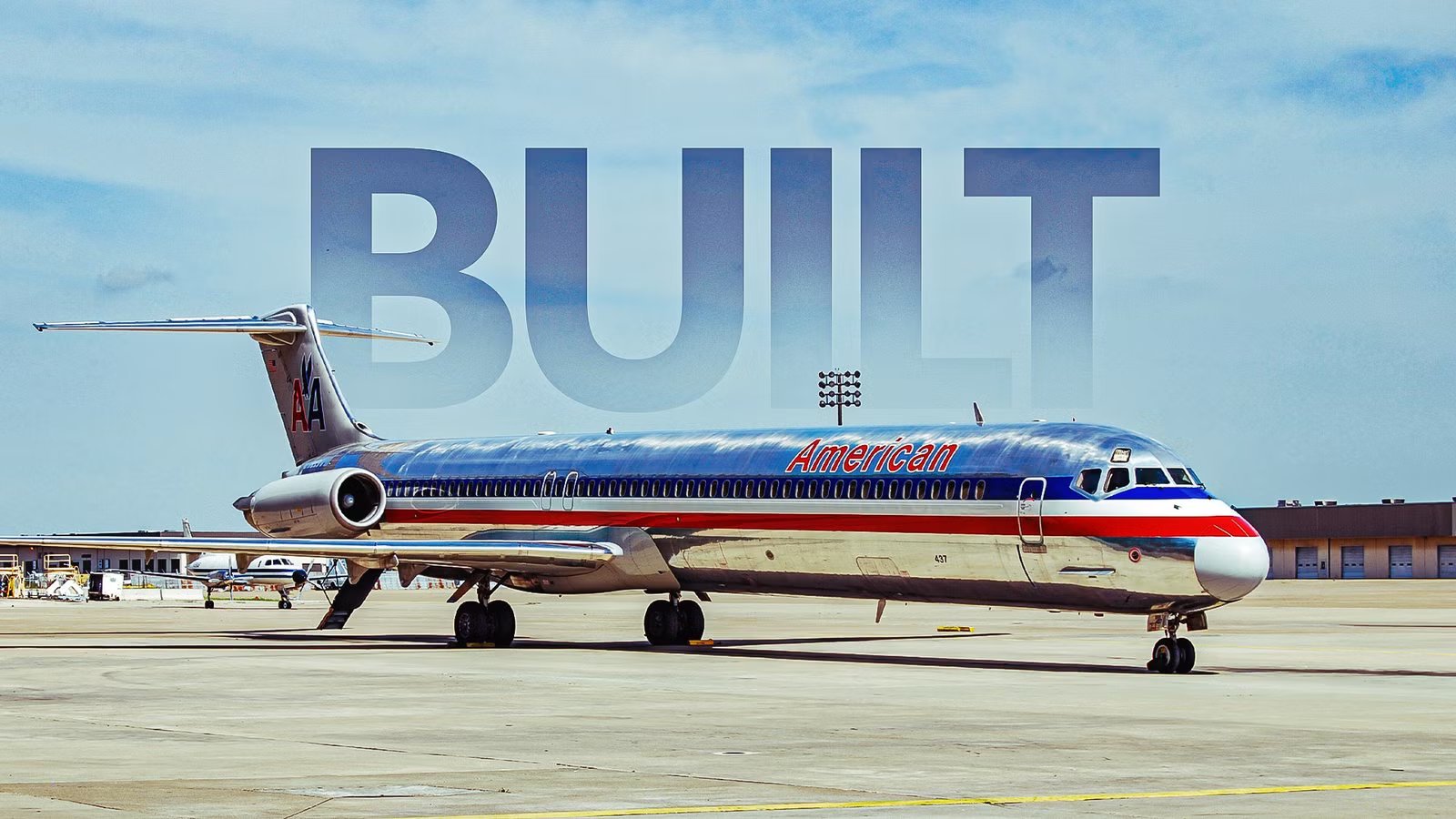
The McDonnell Douglas MD-80, or ‘Mad Dog’ as it was affectionately known, has retired from serving American flyers, and only a handful are still in service around the world, but at the peak of its popularity, several hundred could be in the air on any given day. The total production run of the MD-80 yielded 1,194 airframes for major US carriers and international airlines around the world.
Douglas also granted a license to the Shanghai Aviation Industrial Corporation in China to domestically make its own examples before production ended in 1999. The classic airframe was a ‘love or hate’ flying machine for aircrew and passengers alike. Most of the planes in its era have long since retired, but the iconic Mad Dog has endured even as the technology of commercial aviation has long since relegated it to the annals of history.

Before its merger with American Airlines in 2001, Trans World Airlines (TWA) was a massive operator of the MD-80. American acquired 61 MD-80s directly through this merger. At its peak in the early 2000s, American operated a fleet of over 360 ‘Super 80s.’ The MD-80 made up nearly 40% of American’s entire fleet during this era.
Delta operated 243 MD-80 family aircraft over its history, and it was the first regular operator of the MD-88 in the US. It famously remained the last major American passenger airline to fly them, retiring its final Mad Dogs in June 2020.
The largest operator of the MD-80 outside of North America was Alitalia. The Italian flag carrier used them extensively across Europe, North Africa, and the Middle East for decades. Scandinavian Airlines (SAS) was another major European customer, particularly for the original MD-81 variant, operating a fleet of approximately 25 at any given time during its peak years.
By The Numbers

The MD-80 was the most significant airframe produced under the same family tree of Douglas’ DC-9 series. The DC-9-80, or MD-80, accounted for almost half of all DC-9 variants built before the series was discontinued. The Mad Dog was also the last commercial airliner made with the Pratt & Whitney JT8D low-bypass turbofan, outrunning its contemporaries’ production runs like the 727 and 737-200 by more than a decade.
The secret to the success of the Mad Dog was its low production cost and operating expenses. A thread exploring the history of the MD-80 on Aviation Stack Exchange describes the jet being nearly obsolete from the moment it rolled off the line due to these design choices, yet the low price tag of the jet allowed it to endure well after its prime.
Below is a quick spec comparison between the MD-80 and its successors from Aerospaceweb Airbus, and Jettly:
|
Feature |
MD-80 |
Boeing 737-800 |
Airbus A320-200 |
|---|---|---|---|
|
Typical Seating |
155 (2-3 configuration) |
160–175 (3-3 configuration) |
140–180 (3-3 configuration) |
|
Engines |
2x Pratt & Whitney JT8D-217 |
2x CFM56-7B |
2x CFM56-5 or IAE V2500 |
|
Range |
2,050 nautical miles (3,800 kilometers) |
3,340 nautical miles (2,560 kilometers) |
3,350 nautical miles (6,200 kilometers) |
|
Flight Deck |
Analog “Hybrid” |
Full Glass Cockpit |
Fly-by-wire, Full Glass |
Large carriers like American and Delta kept MD-80s for decades because the aircraft were fully paid off. With no monthly lease payments, the planes remained profitable. It was highly economical during its peak in the 1980s and 1990s, but became increasingly expensive as fuel prices rose and newer technology emerged. The gradual evolution of dramatically more fuel-efficient regional jets finally spelled the end for the MD-80.
In the 1990s, McDonnell Douglas attempted its own replacement with the MD-90, but it sold poorly. The MD-80 was primarily replaced by the Boeing 737-800 and the Airbus A320-200. These ‘Next Generation’ narrowbodies offer roughly the same seating capacity but with vastly superior fuel burn rates as well as modern avionics.
Douglas Plays It Safe

The DC-9 airframe served as a proven foundation for Douglas to design the MD-80 with incremental improvements instead of investing in a ‘clean-sheet’ design, which would have required both significant engineering and research costs, as well as new tooling and jigs to produce. Using the existing DC-9 Type Certificate (TC) even allowed the MD-80 to be certified easily and quickly, saving on Federal Aviation Administration (FAA) costs and time.
The DC-9 airframe and systems were already well-engineered with few known flaws and strong aerodynamic qualities at the time. Using a proven platform also helped entice customers who were ‘risk-averse’ and preferred to operate aircraft without too many new design features. Instead of a total redesign, the company focused on specific upgrades like the higher bypass P&W JT8D-200 turbofans as well as more wing area to carry a higher payload.
A number of variants continued implementing iterative upgrades. Here’s a list of those as compiled by Aerospaceweb:
|
Model |
Description |
|---|---|
|
MD-81 or DC-9 Super 81 |
Basic production model carrying 125 to 146 passengers with JT8D-209 engines. |
|
MD-82 or DC-9 Super 82 |
Model with increased power engines for better performance, carries 137-155 passengers, also built in China. |
|
MD-83 |
Extended-range version with extra fuel tanks, more powerful engines, and strengthened landing gear, also built in China. |
|
MD-87 |
Extended-range model with shortened fuselage carrying 105 to 130 passengers. |
|
MD-89 |
Proposed stretched model carrying 173 passengers and with a range of 2,605 nm (4,830 km), cancelled. |
The 1967 merger with McDonnell also saw a shift in strategy, which leaned heavily toward conservative engineering choices and financial strategies. Compounding this leadership position was the resource-draining DC-10 widebody project in development at the same time as the MD-80. The company had invested so much into the DC-10 that the Mad Dog program adopted a philosophy of ‘low cost, high reward,’ seeking to capitalize on as much existing technology as possible with minimal R&D.

The Striking Differences Between The McDonnell Douglas DC-10 & MD-11
Discover how the DC-10 and MD-11 reshaped wide-body design, defined the trijet era, and why their legacy still lingers in today’s skies.
Chasing After Boeing

In the 1970s, the Boeing 727-200 was a dominating airframe in the short to medium-haul market. As Boeing’s one and only trijet, it was very popular with operators going to hot-and-high destinations as well as airfields with minimal infrastructure. The jet had a very strong performance profile for a commercial aircraft. Its shortcoming was a high fuel burn, which was becoming less and less appetizing to airlines at the time.
Seeing the writing on the wall, Douglas sought to seize the opportunity and bring a new 150-seat narrowbody to market before Boeing or Airbus. Simply stretching the DC-9-50 fuselage, enlarging its wings, and upgrading the engines eliminated years of development from the timeline that a clean sheet design would require. McDonnell Douglas marketed the MD-80 specifically to steal share from the 727 by focusing on superior economics.
The MD-80 used only two Pratt & Whitney JT8D-200 series engines, while the 727 required three. This led to a massive one-third reduction in fuel burn per seat-mile compared to the 727. The MD-80 was also the first jet in mainline service to eliminate the flight engineer, reducing crew costs by roughly one-third per seat-mile over the 727. On top of all that, McDonnell Douglas offered a unique low-risk lease deal to airlines that allowed them to return the planes with just 30 days’ notice, hooking major carriers like American and Delta.

It’s 2025, But Why Do Some Airlines Still Love The Boeing 717?
Unveiling the mystery behind the Boeing 717’s enduring appeal among airlines.
MD-80: Buy It For Life

One of the most valuable qualities of the Mad Dog that allowed it to endure for so long with major carriers like Delta despite the retirement of its contemporaries was the absence of a financial burden on operators. A new single-aisle jet, like a Boeing 737 MAX cost hundreds of thousands of dollars per month just for debt or leasing. It is much more profitable to fly the MD-80 with its zero ownership cost every month by comparison, even with significantly higher operating expenses.
Douglas intended for the plane to be extraordinarily durable when it designed the Mad Dog, and true to that philosophy, the MD-80 still enjoys a reputation for ruggedness and exceptionally high dispatch reliability. The jet was often over 90% in reliability statistics and impressed Delta Air Lines so much that they even expanded the fleet by buying MD-90s and snatching up jets that were sold by other airlines over the years.
The MD-80 was also the ‘right size’ for the mission that was asked of it. It was favored so strongly by Delta that it was flying nearly half of all departures in the 2010s from the mega-hub at Atlanta Hartsfield-Jackson International Airport (ATL). Ultimately, the sharp drop in air travel demand during the COVID-19 pandemic, combined with rising fuel costs and growing noise restrictions, led to fleet consolidation that finally sunset the Mad Dog.

The Last Douglas DC-8s Still Airworthy
The Douglas DC-8 is an early long-range narrowbody jetliner.
End Of An Era

The transition to the Airbus A220 regional jet and A321 single-aisle is about more than just improved fuel efficiency. The A220 has been a major Improvement for service on long and thin routes with lower passenger density, bringing 21st-century technology to small airfield operations. The A321 has similarly improved the experience for customers traveling between hubs with more space and comfort, even on short journeys.
Successor aircraft not only have an average of a 25% lower fuel burn but also have significantly longer range and greatly improve the passenger experience on board, thanks to modern features, a quieter cabin, and a smoother ride. Many pilots loved the Mad Dog for its ‘Hands-On’ flying, but the A220 cockpit has been heralded as one of the most comfortable and intuitive jets in the sky, winning over aircrew with fly-by-wire and glass avionics.
On top of the growing obsolescence of the MD-80 from a mechanical standpoint, the parts supply was simply running out, making a change inevitable. While the MD-80 was a mechanical ‘brick’ that rarely broke, the A220 has faced recent groundings and supply chain issues related to its Pratt & Whitney GTF engines. This ongoing fleet crisis has highlighted the value that the Mad Dog gave its operators despite its antiquated technology.