dailynewsnblog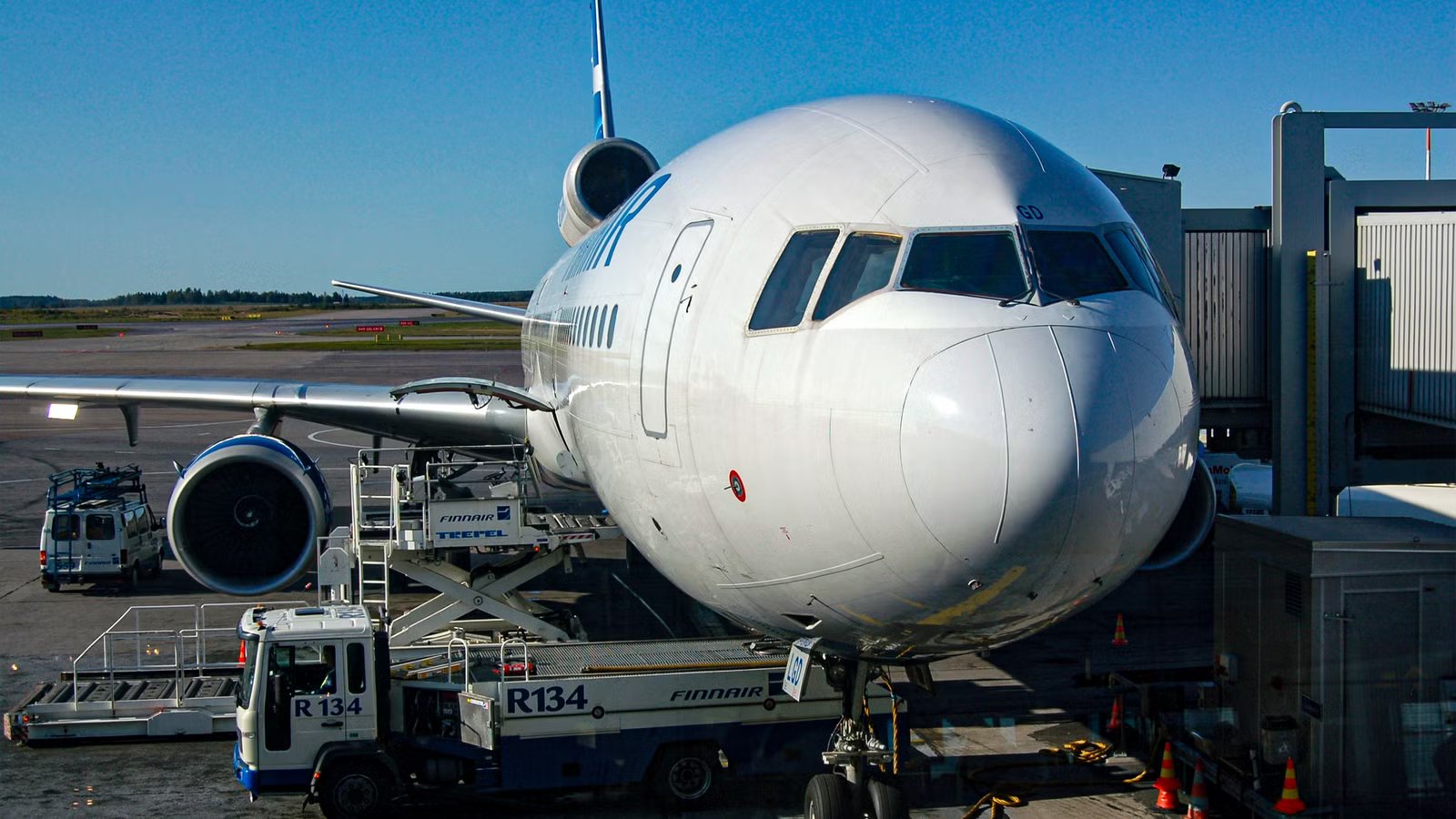
The McDonnell Douglas MD-11 occupies a unique place in commercial aviation history. Designed as a modernized successor to the DC-10, it promised longer range, improved efficiency, and advanced avionics at a time when airlines were rethinking long-haul travel. Yet despite its distinctive three-engine profile and ambitious design goals, the MD-11 never achieved the widespread commercial success its manufacturer had hoped for. For being such an iconic airframe, there were not many MD-11 aircraft built during its production window.
The reason is closely tied to the economic, technological, and competitive pressures of the late 20th century commercial aviation market. From its roots in the DC-10 program to its rebirth as a highly successful freighter, the MD-11’s story reflects both the challenges of transitioning aircraft generations and the shifting priorities of airlines worldwide. The number of how many were built, and the context around that number, offers insight into the rise, struggle, and enduring legacy of one of aviation’s most recognizable widebody jets.
The DC-10: The MD-11’s Predecessor

The McDonnell Douglas DC-10 laid the foundation for the MD-11, both structurally and conceptually. First entering airline service in 1971 with  American Airlines, the DC-10 was developed to meet growing demand for a widebody aircraft that could satisfy capacity and route length demands. Airlines wanted an aircraft that could carry large numbers of passengers on medium- and long-haul routes without the size or infrastructure requirements of large jumbo jets like the Boeing 747. The DC-10 emphasized flexibility, allowing airlines to operate the aircraft from shorter runways yet still offering meaningful intercontinental range.
A defining feature of the DC-10 was its three-engine configuration, with two engines mounted under the wings and a third integrated into the base of the vertical stabilizer. This tri-engine layout provided the performance and redundancy needed for long-distance flights at a time when twin-engine aircraft faced strict operational limitations. Over its production life, the DC-10 was built in multiple passenger, cargo, and military variants (McDonnell Douglas KC-10 Extender), achieving commercial success and widespread global adoption.
By the early 1980s, however, advances in aerodynamics, engines, and avionics were beginning to outpace the DC-10’s original design. Airlines increasingly sought aircraft with greater fuel efficiency, longer range, and reduced crew requirements. The recently-merged McDonnell Douglas responded by evolving the proven DC-10 platform into the MD-11, retaining the tri-jet design, but promising significant performance improvements. While the MD-11 would ultimately follow a different commercial trajectory, its origins were firmly rooted in the strengths and lessons of the DC-10 program.
An Updated Airframe

Although the MD-11 shares its lineage with the DC-10, it is far more than a simple stretch or rebrand. McDonnell Douglas redesigned key elements of the airframe to create an aircraft optimized for longer range and improved fuel efficiency, while maintaining enough commonality to attract existing DC-10 operators. The most visible change was a lengthened fuselage, which increased passenger and cargo capacity and gave the MD-11 its distinctive, stretched appearance.
The MD-11 completed its first flight on January 10, 1990, marking the introduction of the last commercial airliner designed by McDonnell Douglas. The aircraft entered airline service later that year, with Finnair as the launch customer. Its arrival came at a transitional moment for the industry, as airlines were beginning to favor increasingly efficient twin-engine wide-body aircraft for long-haul routes.
|
Dimensions Comparison of the DC-10 and MD-11 |
||
|---|---|---|
|
DC-10 |
MD-11 |
|
|
Length |
181 feet 5 inches |
200 feet 10 inches |
|
Wingspan |
155 feet 4 inches |
169 feet 6 inches |
|
Height |
59 feet 3 inches |
57 feet 9 inches |
|
Wing area (square feet) |
3,550 |
3,648 |
|
Horizontal stabilizer area (square feet) |
1,338 |
920 |
Source: Delta Flight Museum (DC-10, MD-11)
Aerodynamic and technological upgrades further set the MD-11 apart from its predecessor. The aircraft featured a redesigned wing equipped with winglets, reducing drag and improving cruise efficiency, along with a smaller, reconfigured horizontal stabilizer that relied more heavily on advanced flight control systems. Inside the cockpit, the MD-11 introduced a two-crew glass flight deck, eliminating the flight engineer position and aligning the aircraft with modern operating standards. Together, these changes made the MD-11 one of the most advanced tri-jets ever produced, even though its real-world performance would ultimately impact its commercial fate.

The Striking Differences Between The McDonnell Douglas DC-10 & MD-11
Discover how the DC-10 and MD-11 reshaped wide-body design, defined the trijet era, and why their legacy still lingers in today’s skies.
Production History

MD-11 production was centered at McDonnell Douglas’s Long Beach, California facility, where the DC-10 had been built for years. Deliveries began in the early 1990s following certification, with passenger variants making up the bulk of initial output. At first, the aircraft appeared well-positioned to attract long-haul operators seeking a modernized tri-jet with improved range and efficiency.
However, as the decade progressed, market conditions shifted rapidly. Airlines increasingly favored twin-engine wide-body aircraft that offered comparable range with lower fuel burn and operating costs. Orders for passenger MD-11s slowed, and production increasingly relied on freighter and convertible variants.
|
Top 10 Commercial Operators of the MD-11 |
|
|---|---|
|
Airline |
Total Aircraft |
|
Varig |
23 |
|
Swissair |
22 |
|
American Airlines |
19 |
|
Delta Air Lines |
17 |
|
Swiss International Air Lines |
16 |
|
Garuda Indonesia |
11 |
|
Japan Airlines |
10 |
|
KLM |
10 |
|
World Airways |
9 |
|
VASP |
9 |
The program’s fate was further sealed after the 1997 Boeing–McDonnell Douglas merger, which saw the MD-11 left outside of Boeing’s core long-term strategy. With no significant new orders on the horizon, factory production concluded in 2000, when the final aircraft was delivered. A total of 200 MD-11s were built, a relatively modest figure for a wide-body commercial aircraft. Although the assembly line had closed, the MD-11’s story was far from over, as the aircraft would go on to enjoy a long and influential second career in cargo service.
Limited Success In Commercial Service

Despite its modern design, the MD-11 struggled to achieve widespread commercial adoption, with only 200 aircraft ever built. A key reason was that it failed to meet McDonnell Douglas’s promised performance: fully loaded, it burned more fuel than advertised and often could not reach its maximum range with a full passenger or cargo payload. For airlines, this translated into higher operating costs and reduced flexibility on long-haul routes, making the MD-11 less competitive in the passenger market.
|
Performance Comparison of the MD-11 and 777-200 |
||
|---|---|---|
|
MD-11 |
777-200 |
|
|
Max. takeoff weight (pounds) |
610,000 |
545,000 |
|
Range (nautical miles) |
6,725 |
5,240 |
|
Fuel capacity (US gal) |
38,615 |
31,000 |
|
Thrust per engine (pounds force) |
62,000 |
77,200 |
Source: Delta Flight Museum, Boeing
While a quick performance comparison suggests that the MD-11 is a better choice, the 777-200 was much more economically efficient to operate. For airlines, this was a major factor in the decision to scrap the MD-11 for the 777-200 on passenger flights that carry much tighter financial margins. Delta and American retired their MD‑11 fleets relatively quickly for these performance-based financial reasons.
These shortcomings made the MD‑11 uneconomical for long-haul passenger routes, especially as more efficient twin-engine widebodies like the Boeing 777 and Airbus A330 became available. Both of these airlines began cutting down MD-11 operations to just a handful of routes. Eventually, the combination of higher operating costs, limited payload-range performance, and the availability of better alternatives led both airlines to phase out the MD‑11 after only a short service life.

Is The McDonnell Douglas MD-11 Done Flying For Good?
The aircraft was once a long-haul workhorse.
The MD-11’s Second Act As A Freighter

While the MD‑11 struggled to win lasting favor with passenger airlines, its second life as a cargo workhorse was far more enduring. After passenger service faded, many of the 200 aircraft built were converted to freighters or sold to cargo operators. Carriers like FedEx and  UPS Airlines relied on the MD‑11F for decades because its long range and generous payload made it well suited to express freight networks, and it became one of the most recognizable large freighters in the world.
|
Largest Current MD-11F Operators |
|
|---|---|
|
Operator |
Total Number in Fleet |
|
FedEx Express |
74 |
|
Western Global Airlines |
17 |
|
Largest Former MD-11F Operators |
|
|
UPS Airlines |
43 |
|
Lufthansa Cargo |
17 |
|
China Cargo Airlines |
9 |
|
EVA Air |
9 |
|
World Airways |
9 |
Source: ch-aviation
That role has recently come under intense scrutiny following a deadly cargo crash in Louisville, Kentucky. On November 4, 2025, a UPS‑operated MD‑11F departing Louisville Muhammad Ali International Airport crashed shortly after takeoff, killing 14 people including the three crew on board and 11 people on the ground. Reports indicate that the left engine and its pylon separated from the wing during the takeoff roll, triggering a catastrophic accident and prompting a wide‑ranging safety investigation.
In the aftermath of that tragedy, regulators and operators have taken dramatic steps. The FAA grounded all MD‑11 and MD‑11F aircraft pending detailed airworthiness inspections, issuing an emergency directive requiring checks and corrective action before any further flights. In response to safety concerns and fleet modernization plans, UPS retired its entire MD‑11 fleet in January 2026, accelerating a shift toward more efficient aircraft. Other US MD‑11 operators remain grounded as they work through FAA inspection requirements, underscoring how a once‑reliable freighter has entered a period of rapid transition.
Legacy Of An Iconic Airplane

The MD-11’s legacy is defined as much by ambition as by outcome. Conceived as an advanced evolution of the DC-10, it introduced important innovations that reflected the industry’s transition into a more automated, efficiency-focused era. While it never fulfilled its original promise as a long-term passenger flagship, the MD-11 remains one of the most distinctive and recognizable wide-body aircraft ever built.
Ultimately, the MD-11 found its true success not with airline cabins but with cargo holds, where it proved durable, capable, and remarkably long-lived. Its extended service as a freighter, followed now by what may be a rapid and highly visible retirement, has cemented its place as the last great tri-jet of commercial aviation. Though only 200 were built, the MD-11’s impact far exceeded its production numbers, ensuring its status as an enduring icon in aviation history.