dailynewsnblog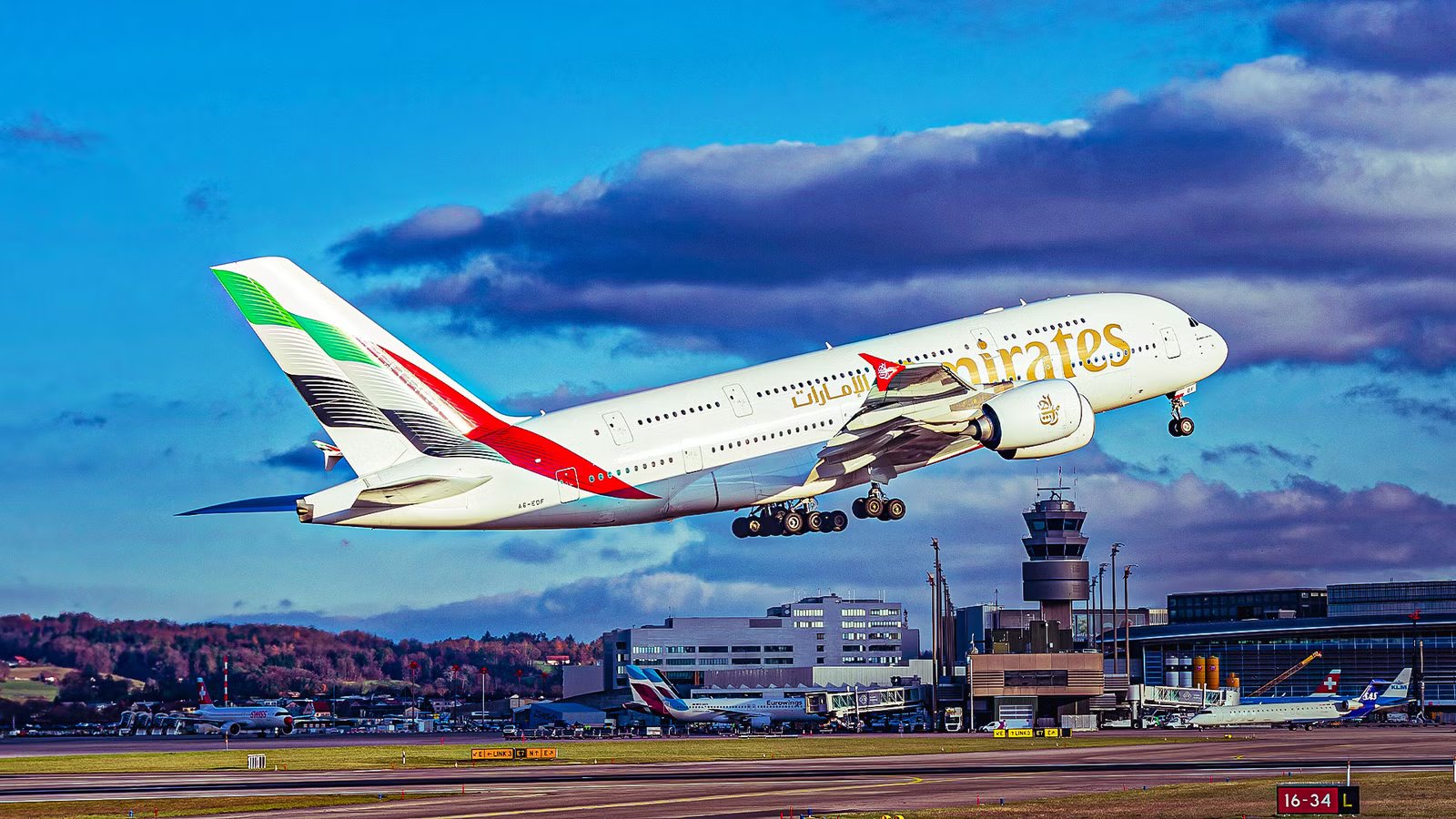
How many hours can the Airbus A380 fly nonstop without refueling? It’s a question that continues to fascinate aviation enthusiasts, passengers, and airline planners, even as production of the world’s largest passenger jet has ended. Apart from being the largest commercial jet, it can fly long-haul, covering an impressive distance of 8,000 nautical miles (14,800 km). Flight endurance is one of the most fundamental measures of an aircraft’s capability, shaping everything from route networks and scheduling to payload limits and operational flexibility.
Designed to connect the world’s busiest hubs with enormous passenger volumes, such as Singapore to London, the A380 needs to remain airborne for extraordinarily long periods over 10 hours while carrying hundreds of passengers, their luggage, and cargo. Understanding how long the aircraft can actually fly without refueling offers insight into both its engineering brilliance and its real-world limitations. This article explores the Airbus A380’s maximum endurance in hours, how that figure is derived from its range and fuel capacity, and what airlines and experts say about its real-world performance. Using official Airbus data alongside analyses from Airbus, Flightradar24, and expert commentary, we break down what the numbers really mean.
What Is The Short Answer?

In operational terms, the Airbus A380 can fly approximately 14.5 to 16 hours without refueling and without making stopovers under typical long-haul cruise conditions. This endurance aligns closely with the aircraft’s published maximum range of around 8,200 nautical miles (15,200 kilometers), as stated by Airbus and supported by independent sources such as Flightradar24. However, the range can be extended to over 8,800 nautical miles (16,300 km) with max fuel, for example, on ferry flights.
At a normal long-haul cruise speed of around Mach 0.85, the A380 covers roughly 480–510 knots true airspeed, depending on altitude and atmospheric conditions. In real airline service, flights are rarely planned to the absolute edge of this envelope. However, routes exceeding 14 hours, particularly those operated by Emirates, demonstrate that the A380’s endurance figures are not merely theoretical but are routinely achievable in day-to-day operations, as evidenced by Flightradar24’s operational data.
To understand the A380’s endurance, it helps to revisit why Airbus built the aircraft the way it did. According to Airbus’ own documentation, the A380 was conceived in the 1990s as a response to growing congestion at major airports and the continued dominance of hub-and-spoke travel. The Airbus A380 was designed for ultra-long-haul flying. The goal was simple: move more people farther, using fewer slots.
That vision demanded an aircraft with extraordinary range and fuel capacity. Airbus designed the aircraft with a massive wing optimized for long-distance cruise efficiency, along with one of the most complex fuel systems ever installed on a commercial airliner.
The result was an aircraft capable of lifting unprecedented payloads across intercontinental distances. While newer twin-engine aircraft have since surpassed the A380 in fuel efficiency per seat, few have matched its combination of passenger capacity and long-range endurance, and on-board service, including bars and showers, but that’s another story.
Factors That Influence The A380 Range

Although 10 to 16 hours is a normal distance for the flights operated by the A380, the actual endurance of any A380 flight depends on a range of technical and operational factors. Endurance is not a fixed quantity; it is a variable outcome shaped by aircraft configuration and flight.
Fuel capacity is the most obvious determinant of endurance. The Airbus A380 can carry approximately 85,500 gallons (320,000 liters) of fuel, making it one of the largest fuel loads ever carried by a commercial aircraft. The fuel is stored across multiple wing tanks and trim tanks integrated into the aircraft’s massive structure. Airbus confirms this figure in its official specifications, noting that the fuel system was designed to support ultra-long-haul missions while maintaining structural balance and aerodynamic efficiency.
Payload and configuration: Payload directly impacts endurance. A fully loaded A380 carrying more than 500 passengers, their baggage, and cargo will burn more fuel than a lightly loaded aircraft. Airlines must constantly balance passenger numbers, cargo revenue, and fuel planning to achieve optimal performance. Airlines like  Emirates often operate high-density configurations that slightly reduce maximum range but still allow for flights exceeding 14 hours with ample reserves.
Cruise speed and altitude: The A380 typically cruises at Mach 0.85, a compromise between fuel efficiency and passenger time savings. Flying faster increases fuel burn, while flying slower extends endurance but may not be operationally practical. Altitude also matters. Long-haul flights usually involve step climbs as fuel burns off, allowing the aircraft to cruise more efficiently at higher altitudes later in the flight.

It’s 2025, But Why Do Some Airlines Still Love The Airbus A380?
Popular with passengers but airlines have gradually phased them out.
Real-World Endurance: What Airlines Say About Their A380

While theoretical endurance figures provide useful benchmarks, real-world airline operations offer the clearest confirmation of what the Airbus A380 can actually achieve in service. Over more than a decade of commercial flying, the aircraft has consistently demonstrated that its published endurance figures translate well into day-to-day operations, albeit only with careful planning and conservative margins.
Emirates, by far the world’s largest Airbus A380 operator, provides the most compelling real-world evidence of the aircraft’s long-haul capability. According to flight-tracking data, Emirates routinely operates A380 flights lasting 13-15.5 hours, including ultra-long-haul routes such as Dubai–Los Angeles, Dubai–San Francisco, and Dubai–Sydney. These missions sit comfortably within the aircraft’s performance envelope while still meeting strict international fuel-reserve requirements. Airlines do not plan these flights to the absolute limits of the aircraft’s range, but they do exploit the A380’s enormous fuel capacity to maintain flexibility in the face of weather, routing changes, and air traffic delays.
Other operators have also demonstrated the A380’s endurance over time.  Singapore Airlines, the aircraft’s launch customer, initially deployed the type on long-haul routes such as Singapore–London, helping to validate Airbus’ range and endurance claims early in the program. While not the longest sectors in the airline’s current network, these services regularly featured flight times well into double digits, aligning closely with the manufacturer’s published figures and reinforcing confidence in the aircraft’s long-haul reliability.
From an engineering and certification standpoint, Airbus designed the A380 to meet stringent regulatory requirements, including fuel for contingencies, alternate airports, and extended holding if necessary. As a result, even on flights approaching 15 hours, the aircraft never arrives with empty tanks but with legally mandated reserves intact. This conservative planning philosophy underscores a key point: the Airbus A380’s endurance is not about pushing limits for their own sake. Instead, it reflects a design optimized for reliability, predictability, and operational resilience over very long distances. All these qualities together have defined the aircraft’s role in global long-haul travel since its entry into service.
How Does The A380 Compare To Other Long-Haul Aircraft?

When viewed purely in terms of endurance, the Airbus A380 remains competitive but no longer dominant. The closest competitor in size and shape is the Boeing 747, especially its latest variant, the Boeing 747-8I. In terms of range and endurance, the two aircraft are broadly comparable, but they arrive at those levels through different design philosophies. The Airbus A380 has a published maximum range of around 8,200 nautical miles (15,200 km), translating into typical flight times of 14.5 to 16 hours, depending on conditions.
The Boeing 747-8i, by comparison, offers a slightly shorter range of approximately 8,000 nautical miles (15,000 km), which generally corresponds to flight durations closer to 14 to 15.5 hours in airline service. While the difference is not dramatic, it gives the A380 a slight edge in raw endurance. Where the contrast becomes more pronounced is in capacity: the A380 clearly wins, with over 500 passengers, compared to the 747 with about 470.
Meanwhile, twin-engine aircraft, like the Airbus A350-900ULR, can fly longer in terms of hours, often exceeding 18 hours, but do so with far fewer passengers onboard. The A380 was optimized for capacity and range, not record-breaking duration. Similarly, aircraft such as the Boeing 777-200LR and Boeing 787-9 offer comparable or slightly greater endurance in hours, but again with significantly smaller cabins.
What sets the A380 apart is that it can fly for 14–16 hours while carrying more than 500 passengers in typical airline configurations; this feature remains unmatched in commercial aviation.

Airbus A380 Vs. Boeing 747: Which Aircraft Gets More Miles Per Gallon?
While the A380 and 747 remain marvels of aviation, their fuel efficiency is no longer at the cutting edge.
Limitations And Caveats

Despite its impressive numbers, the A380’s endurance is not limitless, as the following factors play a crucial role:
Weather and winds: Strong headwinds can significantly reduce effective range and endurance. Westbound flights, in particular, may see flight times increase while still covering fewer nautical miles, a factor airlines must account for when planning routes near the aircraft’s maximum capability.
Regulatory requirements: International aviation regulations require aircraft to carry fuel for alternate airports, contingencies, and holding. These requirements effectively reduce the usable portion of the A380’s total fuel load, ensuring that maximum endurance figures are rarely exploited in full.
Economic considerations: Finally, just because the A380 can fly for 16 hours does not mean it always makes economic sense to do so. Ultra-long-haul flights are expensive, crew-intensive, and sensitive to demand fluctuations—one of the reasons many airlines now favor smaller, more flexible long-range aircraft.
So, How Long Can The Airbus A380 Really Fly?

After more than a decade in commercial service, the Airbus A380 has provided a clear, real-world answer to how long it can fly without refueling. Airline operations consistently show the aircraft operating comfortably in the 14.5 to 16-hour range, a figure that closely matches Airbus’ original performance targets. These numbers have been validated daily on some of the world’s longest and busiest long-haul routes.
This capability has been most visible through airlines such as Emirates, whose global network regularly places the A380 on flights lasting well over half a day. Routes linking Dubai with cities like Los Angeles, San Francisco, and Sydney, and other over 15-hour nonstop flights demonstrate that the aircraft can sustain long durations without operating at the edge of its limits. What makes this endurance particularly notable is that it is achieved while carrying hundreds of passengers, significant cargo, and full onboard amenities, reinforcing the A380’s role as a true long-haul, high-capacity aircraft rather than a niche endurance platform.
Ultimately, the Airbus A380’s endurance reflects a specific moment in commercial aviation, one defined by scale, hub-to-hub travel, and the pursuit of maximum range with maximum capacity. The newer aircraft have shifted the industry toward efficiency and flexibility; the A380 remains a benchmark for sustained long-haul performance. Even as its global presence slowly declines, its ability to stay airborne for around 15 hours while transporting an entire widebody’s worth of passengers across continents remains one of the most impressive achievements in modern airline history.