dailynewsnblog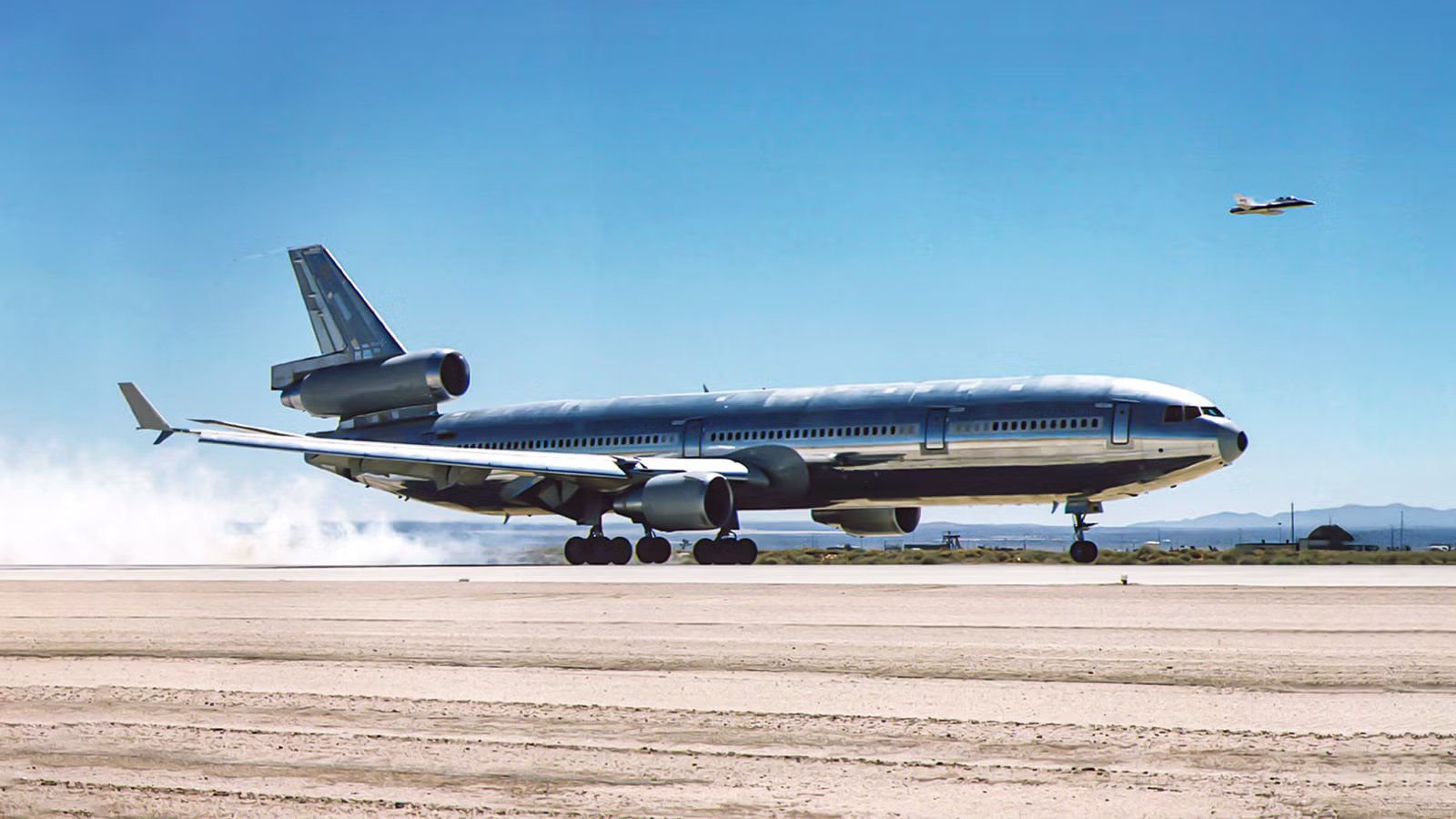
Determining the endurance of the McDonnell Douglas MD-11 is a central question for many aviation enthusiasts and logistics planners, as it defines the operational limits of one of the world’s most iconic tri-jets. Once a popular choice for many passenger-carrying airlines, it became a staple in the cargo sector, valued for its capacity and range that tempted some of the largest cargo operators around. This guide provides a definitive answer to that question, examining the technical specifications and operational variables that keep this three-engine powerhouse in the sky.
The MD-11 was designed to be a long-range successor to the McDonnell Douglas DC-10, incorporating advanced aerodynamics and more efficient engines to push the boundaries of transoceanic travel. While its time in passenger service has largely concluded, its role as a utility in the freight industry has proven to be significant, especially for carriers like FedExand  UPS Airlines. This article will explore the maximum flight duration of the MD-11, the technical factors that influence its range, and how it holds up against modern twin-engine competitors in the 21st century.
A Substantial Range For Its Time

Under standard operational conditions with a typical payload, the McDonnell Douglas MD-11 can fly for approximately 12 to 13 hours without refueling. While the maximum ferry range allows for even longer durations, a fully loaded freighter usually operates within a window of 10 to 12 hours to maintain safety margins and fuel reserves. This endurance allows the aircraft to comfortably cover distances of up to 6,725 nautical miles or 12,455 km, of course, depending on the specific variant and weight.
This timeframe is largely made possible by the aircraft’s massive fuel capacity, which is distributed across tanks in the wings, as well as a specialized tail tank used for balancing the center of gravity. To help demonstrate this point, a cargo-configured MD-11F can depart from a major hub like Memphis or Louisville and reach deep into Europe or South America without a single technical stop. The three-engine configuration it possesses, with two under the wings and one at the base of the vertical stabilizer, provides a unique power-to-weight ratio that supports these long-duration missions.
From a historical perspective, the MD-11 was a pioneer in long-thin routes, flights that were too long for standard widebodies but didn’t have enough passenger demand for a Boeing 747, for example. During its peak years with airlines like KLM and Finnair, it was common to see the aircraft performing 11-hour stints between Europe and the West Coast of the United States. Its ability to maintain these schedules reliably helped bridge the gap between the era of four-engine jumbo jets and the current dominance of ultra-efficient twin-jets.
Built For Speed?

The duration an MD-11 can remain aloft is never a fixed number and really depends on what the aircraft is being specifically used for. The primary constraint is the trade-off between payload and fuel, as the more heavy machinery or cargo containers loaded into the hold, the less fuel the aircraft can carry while staying under its maximum takeoff weight. Furthermore, the MD-11’s unique aerodynamic profile, featuring smaller winglets and a high-cruise speed of Mach 0.82, means that it consumes fuel at a higher rate when pushed to its velocity limits.
Several critical variables determine whether a flight lasts 8 hours or pushes toward 13 hours. Payload weight is the most significant factor of all. For every additional ton of cargo, the aircraft’s range and endurance diminish proportionally. Altitude and temperature also play vital roles, as the three engines, which are either the General Electric CF6-80C2 or Pratt & Whitney PW4460, operate more efficiently in the thin, cold air of higher flight levels. Finally, headwinds or tailwinds across the jet stream can add or subtract over 1 hour of flight time, often forcing dispatchers to plan technical stops if the burn rate exceeds safe reserves.
|
Configuration |
Max Range (Full Payload) |
Typical Flight Duration |
Max Fuel Capacity |
|
MD-11 Freighter (MD-11F) |
3,950 nautical miles (7,315 kilometers) |
8.5 – 9.5 Hours |
258,000 lbs |
|
MD-11 Passenger (ER) |
6,725 nautical miles (12,455 kilometers) |
12.5 – 13.5 Hours |
300,000+ lbs |
|
MD-11 (Ferry Flight) |
8,000+ nautical miles (14,800 kilometers) |
15.5+ Hours |
Max Tanks / No Cargo |
Pilots utilize the MD-11’s automated fuel management system, which carefully shifts fuel to the horizontal stabilizer tank to optimize the aircraft’s trim. By moving the center of gravity further aft during the cruise portion of the flight, the system reduces the downward lift required from the tail, thereby decreasing drag and extending the aircraft’s time in the air. This sophisticated balancing act was revolutionary at the time of the tri-jet’s debut and remains a key reason the aircraft can still compete on specific long-haul freight corridors.

The Aircraft Replacing The McDonnell Douglas MD-11
The MD-11s are approaching their operational life, and newer, more efficient types are taking over their role.
Needed Skill To Fly

Aviation professionals and long-term operators often describe the MD-11 as an aircraft that requires a gentle hand and a sharp eye, particularly during the long-haul cruise segments that define its endurance. Experts from legacy carriers note that while the aircraft was marketed as a high-tech successor to the DC-10, its real-world performance often depended on weight and balance precision. Cargo giants like FedEx, which at one point operated the world’s largest MD-11 fleet, have frequently highlighted that the aircraft’s sweet spot lies in its ability to carry dense freight over 8 to 10-hour stages, where its high cruise speed provides a competitive edge for overnight delivery services.
The consensus among veteran MD-11 pilots is that the tri-jet remains a powerhouse for shorter long-haul routes, but its efficiency begins to wane as it approaches the 12-hour mark. Many airline dispatchers have shared that while the aircraft can fly longer, it is rarely the most economical choice for ultra-long-range missions compared to modern twins. Real-world examples include Lufthansa Cargo’s historical routes, where the MD-11 was favored for its fast turnaround times and high reliability, even if it required more frequent refueling stops on Trans-Pacific lanes compared to the newer Boeing 777F.
The MD-11’s value is not just in how long it can stay in the air, but in how much it can carry over a standard intercontinental distance. Airlines eventually moved away from using the MD-11 for the absolute longest passenger routes because the fuel burn on a 13-hour flight became prohibitively expensive as newer, more efficient engine technology arrived. However, for cargo operators who prioritize the ability to lift heavy, specialized pallets that won’t fit on smaller jets, the aircraft’s 10-hour endurance remains a highly viable operational upside.
Falling Short Of Others

When measuring the MD-11’s endurance against its peers, it occupies a unique middle ground between the older generation of jumbo quad-jets and the ultra-modern long-haul twins. While the original DC-10 was often limited to 8 or 9-hour segments, the MD-11’s improved aerodynamics and additional fuel capacity allowed it to challenge the Boeing 747-400’s territory. However, the 747 still held the crown for total airtime, often staying aloft for 14 to 15 hours, whereas the MD-11 was more of a sprinter in the long-haul world, offering high speeds and respectable range, but lacking the sheer volume of fuel storage found in the jumbojet.
The primary reason the MD-11 eventually lost ground was the arrival of ETOPS-certified aircraft like the Boeing 777-200LR and the Airbus A350. These newer machines can stay airborne for 17 to 19 hours, effectively making the MD-11’s 12-hour limit look modest by comparison. While the MD-11 offered the safety of a third engine for long overwater stretches, which was a major psychological and regulatory advantage in the early 1990s, the sheer fuel efficiency of modern twin-jets has made the tri-jet’s three-engine thirst difficult to justify on routes where a 777 can fly farther for significantly less cost.
The contrast highlights why the MD-11 found its second life in cargo rather than passenger service. On a 10-hour flight, the MD-11’s high maintenance costs and fuel burn are offset by its low acquisition price and massive main-deck capacity. In contrast, for an airline flying a 16-hour route from Singapore to New York, the MD-11 simply cannot compete, and it would require a mid-way refueling stop, adding hours to the journey and thousands of dollars in landing fees, whereas a modern twin-jet can complete the trip non-stop.

The Striking Differences Between The McDonnell Douglas DC-10 & MD-11
Discover how the DC-10 and MD-11 reshaped wide-body design, defined the trijet era, and why their legacy still lingers in today’s skies.
A Troubled Past

While the 12-hour mark is a reliable benchmark for the MD-11, hot and high airport conditions pose a significant challenge to the aircraft’s theoretical endurance. When departing from high-altitude hubs like Mexico City or during blistering peak-summer temperatures, the thinner air drastically reduces both engine thrust and wing lift. In these scenarios, the aircraft often hits its performance limits before its tanks are full, forcing operators to choose between leaving heavy cargo behind or carrying less fuel, which can slash the non-stop flight time by 2 to 3 hours.
Mechanical quirks and stability requirements also introduce variability in how long this tri-jet can stay aloft. The MD-11 relies on a sophisticated fuel-transfer system that moves propellant into a tank located in the horizontal stabilizer to optimize the center of gravity. If there is a malfunction in this transfer system or the longitudinal stability augmentation system, the aircraft must be flown with a more nose-heavy configuration to ensure safety. This increases aerodynamic drag and fuel burn, effectively shortening a long-haul mission and potentially requiring an unscheduled refueling stop to maintain legal reserves.
|
Weight Category |
Weight in Pounds (lbs) |
Impact on Endurance |
|
Max Takeoff Weight (MTOW) |
630,000 lbs |
Limits fuel if cargo is at max |
|
Max Landing Weight (MLW) |
491,500 lbs |
Requires fuel dumping in emergencies |
|
Typical Empty Weight |
249,100 lbs |
Baseline for range calculations |
|
Max Fuel Load |
258,000 lbs |
Enables 12–13-hour ferry flights |
As the CF6 or PW4000 engines rack up thousands of cycles, they inevitably lose a small percentage of their original thermal efficiency. Operators must monitor these fuel-flow deviations closely, as a slightly thirstier engine on a 30-year-old airframe might turn a formerly comfortable 11-hour transoceanic hop into a much tighter mission that leaves little room for unexpected holding patterns or weather diversions.
Tri-Jets On The Way Out?

The McDonnell Douglas MD-11’s endurance is a testament to the over-engineering of the late-twentieth-century tri-jet era. While its maximum theoretical endurance pushes towards 13 to 14 hours in a ferry configuration, its operational life is defined by the 10-hour sweet spot that allows it to bridge continents with a heavy structural payload.
Currently, this iconic aircraft is as much about safety and aging as it is about range. Following the tragic UPS crash in late 2025 and the subsequent global grounding of the type, the industry has reached a definitive turning point. While FedEx is working toward a return-to-service date in May 2026 after rigorous pylon inspections, the permanent retirement of the entire UPS MD-11 fleet signals that for many, the cost of keeping these 30-year-old tri-jets airborne is finally outweighing their utility.
Looking forward, the MD-11 will likely be remembered as the bridge that carried the world’s cargo until the arrival of ultra-efficient twins like the Boeing 777F and Airbus A350F. For aviation enthusiasts, the sights and sounds of the MD-11 are becoming a rarity. While it may still have a few years left in specialized roles, the era of the three-engine long-haul workhorse is rapidly descending toward its final landing.