dailynewsnblog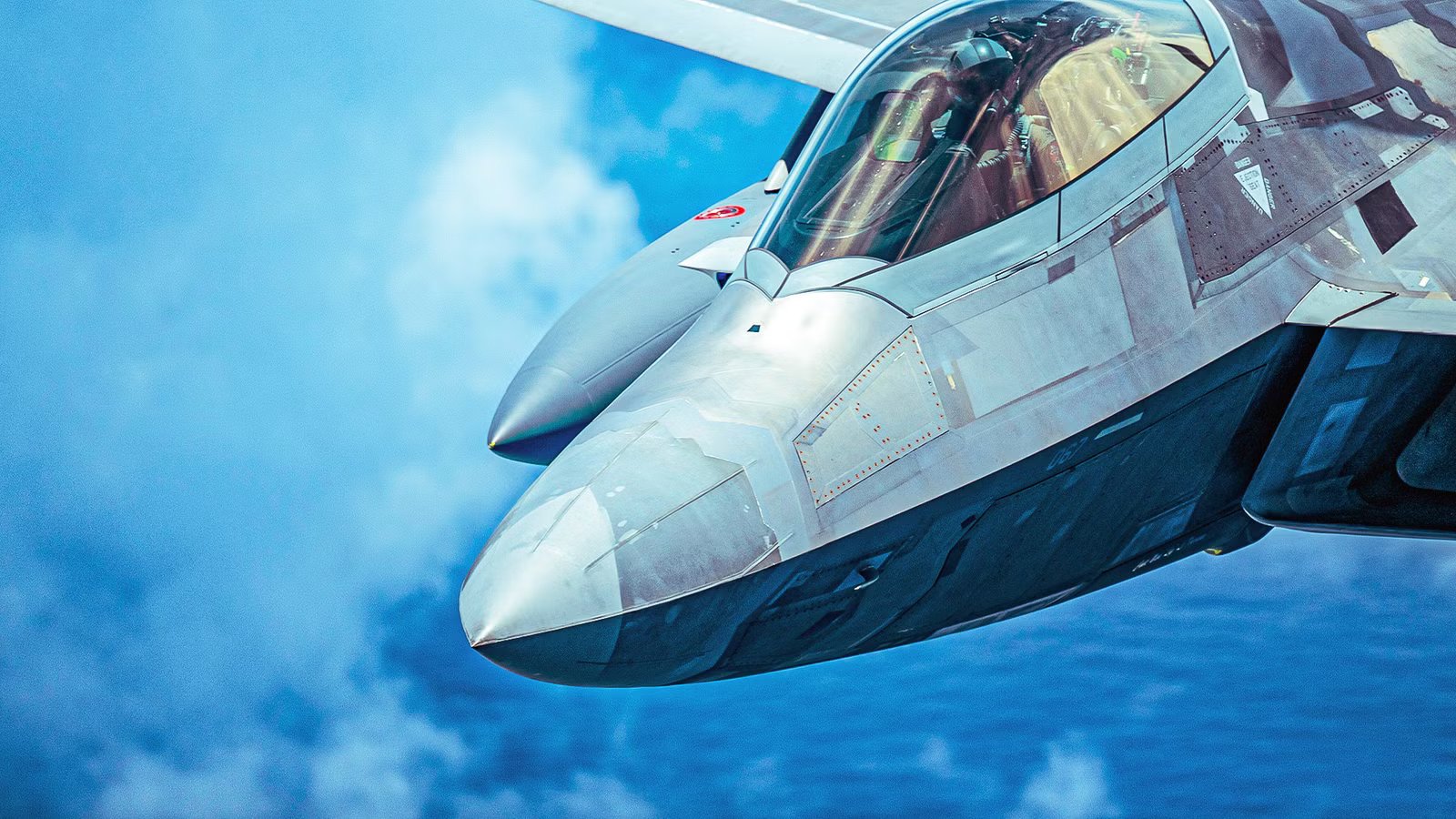
When people try to count how many fighter jets the United States Air Force operates, they often want to find a simple number, a single snapshot of American airpower. But that seemingly simple question opens the door to a deeper story about force structure, modernization, doctrine, and the evolving nature of combat aviation. Fighter aircraft are among the most visible and expensive components of military capability, and their numbers serve as shorthand for readiness, deterrence, and global reach. Counting fighter jets reflects strategic priorities, congressional funding decisions, and the balance between legacy aircraft and cutting-edge stealth platforms. The United States fields the largest and most technologically diverse fighter fleet in the world, but the precise composition and the definition of a “fighter jet” for the USAF reveal how the Air Force organizes its combat power.
We will examine the current fighter and fighter-attack aircraft inventory of the USAF’s active force, clarifying how many aircraft are actually in service today. It explores the role of iconic aircraft such as the F-15, F-16, F-22 Raptor, and F-35, and includes the A-10 Thunderbolt II because the USAF & Air Force Almanac groups it within the fighter/attack category. Beyond raw numbers, the article explains what these aircraft represent operationally, how the fleet is distributed, and how it compares with other powerful air forces around the world.
What Is The Short Answer?

At its core, the answer is this: in 2025, the active United States Air Force operates roughly 1,450 fighter and fighter-attack aircraft (with statistics varying from as low as 1,295 in Statista to a maximum of 1,610 by WDMMA) across five principal types — the F-15 family, F-16C and F-16D variants, F-22A, F-35A, and also the A-10 Thunderbolt II. These figures derive from consolidated inventory reporting, such as the USAF aircraft registry summarized in Air And Defense Forces Almanac, and defense industry fleet analyses, including Statista and the World Directory of Modern Military Aircraft (WDMMA).
This number varies because it represents aircraft assigned to active-duty squadrons, and those aircraft might be active for a period of time, then parked for several months for maintenance, which can cause statistical discrepancies. The number doesn’t include airframes held primarily by the Air National Guard or the Air Force Reserve. Importantly, it does not reflect aircraft on order or planned future deliveries. It is a snapshot of combat aviation strength as it currently exists.
The composition of that total reveals a transitional force. The F-16 remains numerically dominant, the F-15 continues to provide heavy multirole capability, stealth fighters are expanding their share of the fleet, and the A-10 Warthog persists as a specialized attack platform. Together, they form a layered structure designed to support air superiority, strike missions, close air support, and rapid global deployment.
Historically, this figure was even more striking. During the Cold War, the USAF fielded several thousand fighters. Today’s smaller number reflects modernization, multirole capability, and a doctrine that emphasizes quality, survivability, and integration over sheer mass. The shift illustrates how fighter aircraft have evolved into networked systems within a broader combat architecture.
How The Aircraft Are Counted

Understanding how the USAF arrives at this inventory requires examining how aircraft are categorized and assigned. The Air Force operates under a “Total Force” model, meaning aircraft are distributed among active-duty, Guard, and Reserve components. Only a portion of the total fleet is in active inventory at any given time, and aircraft frequently rotate through modernization, maintenance, or training roles.
The classification of aircraft also shapes the count. The A-10 is technically an attack aircraft optimized for close air support. However, official Air Force publications, including the Air & Space Forces Almanac, group it within the fighter/attack category because of its operational integration with tactical fighter units. Including the A-10 reflects how the USAF conceptualizes combat aviation rather than a strict doctrinal taxonomy. Currently, there are 141 active Warthogs, and the total number, including the reserve, is 219 aircraft.
Fleet lifecycle management further influences totals. Fighters undergo depot-level maintenance, upgrades, and modernization cycles that temporarily remove them from operational squadrons. Meanwhile, replacement programs gradually introduce newer aircraft. The F-35A’s expansion and the incremental arrival of F-15EX aircraft illustrate how inventory numbers shift over time without sudden changes in capability.
USAF Fighter / Fighter-Attack Aircraft Inventory Table
|
Aircraft Type |
Active Duty |
Air National Guard |
Air Force Reserve |
Total Force |
|
A-10 Thunderbolt II |
141 |
31 |
47 |
219 |
|
F-15C/D Eagle |
116 (+8) |
124 |
||
|
F-15E Strike Eagle |
218 |
218 |
||
|
F-15EX Eagle II |
8 |
8 |
||
|
F-16 Fighting Falcon |
400 (+98 D) |
257 (+36 D) |
47 |
838 |
|
F-22A Raptor |
165 |
20 |
185 |
|
|
F-35A Lightning II |
~400 |
43 |
443 |
|
|
TOTAL |
1,430 |
511 |
94 |
2,035 |
Source: Air And Space Forces Magazine
A snapshot of the active inventory helps clarify scale. Current reporting indicates that active-duty squadrons operate approximately 218 F-15E Strike Eagles and a small but growing number of F-15EX aircraft. The F-16 fleet remains the largest, with roughly 400 F-16C models and about 100 two-seat F-16D aircraft in active service. The stealth fleet includes around 165 F-22A Raptors and approximately 400 F-35A Lightning II fighters assigned to operational wings. Complementing these are the A-10 Thunderbolt II force, numbering around 140 aircraft in active units. These figures align across multiple reporting sources.
These aircraft are not evenly distributed by mission. The F-22 concentrates on air dominance. The F-35 blends stealth, strike, and sensor fusion. The F-15E specializes in heavy strike missions, while the F-16 continues to perform multirole and training functions. The A-10 retains its niche in close air support. This diversity means the raw number alone does not capture operational nuance.

The World’s Largest Air Forces By Total Military Aircraft Numbers
Which air force has the most planes?
Expert Opinion

Defense analysts consistently emphasize that inventory counts tell only part of the story. The Air & Space Forces Almanac notes that fighter totals must be interpreted alongside readiness rates, modernization status, and mission assignment. An aircraft listed as active does not automatically mean full combat availability at all times.
Strategic analysts often point to the gradual reduction in fleet size since the Cold War as evidence of a shift in doctrine. Modern fighters are more capable, more expensive, and designed to operate as nodes within a networked battlespace. Experts argue that fewer aircraft can achieve greater effects when paired with advanced sensors, data links, and joint operations.
Industry observers also highlight the balance between legacy fleets and next-generation systems. The persistence of the aging F-16 and A-10 demonstrates the enduring value of proven platforms, while the expansion of the modern F-35 signals a long-term modernization trajectory. Experts describe this coexistence as a deliberate hedge, maintaining capacity while transitioning to stealth and integrated warfare.
Operational commanders frequently stress that fighter aircraft serve as part of a broader combat network including tankers, command-and-control assets, intelligence platforms, and space-based support. Inventory numbers, therefore, represent one pillar of airpower rather than its entirety.
USAF vs Other Air Forces

The United States Air Force’s active fighter fleet, numbering roughly 1,450 fighter and fighter-attack aircraft, represents the single largest land-based tactical air arm in the world. When compared with the US Navy, the contrast is one of doctrine rather than weakness. The Navy operates a smaller fighter fleet, estimated at 500–600 carrier-capable aircraft, primarily F/A-18E/F Super Hornets and F-35Cs, according to WDMMA data. These aircraft are concentrated into carrier air wings rather than dispersed across global land bases. While the Navy’s fighter force is numerically smaller than the USAF’s, it plays the instrumental role of maritime power projection, allowing the United States to deploy combat aviation without relying on foreign bases.
Beyond the United States, Russia’s Aerospace Forces operate a fighter fleet broadly comparable in size to the USAF’s active inventory, with estimates ranging from 1,300 to 1,500 fighters. These include Su-27/30/35 Flanker variants, MiG-29s, MiG-31 interceptors, and a small number of Su-57 stealth fighters. However, open-source defense analysts consistently note that availability, modernization levels, and pilot training significantly affect Russia’s real-world combat power, meaning raw numbers do not translate directly into operational parity.
China’s People’s Liberation Army Air Force (PLAAF) now fields the largest fighter force in Asia and one of the largest in the world, with approximately 1,700–1,900 fighter aircraft. This fleet includes large numbers of J-10 and J-16 multirole fighters alongside a rapidly expanding inventory of J-20 stealth aircraft, now estimated at over 300 airframes. China’s numerical advantage is paired with an aggressive modernization push, making the PLAAF the USAF’s most serious long-term peer competitor, particularly in the Indo-Pacific region.
|
Force |
Estimated Active Combat Aircraft |
Notes |
|
US Air Force (active only) |
~1,450 |
Based on active F-15, F-16C/D, F-22, F-35A, A-10 totals (excluding Guard/Reserve) |
|
US Navy & Marines |
~450-500+ |
Carrier fighters including F/A-18 variants & F-35C (multiple sources synthesized) |
|
Russia (VKS) |
~1,300-1,500 |
Includes fighters and combat aircraft such as Su & MiG types |
|
China (PLAAF) |
~1,700-1,900 |
Large production of J-10, J-11, J-16, expanding J-20 inventory |
Source: WOJNA.CO.PL
Taken together, these comparisons show that while the USAF no longer dominates global fighter numbers as it once did, it retains a decisive edge in stealth integration, global basing, and combined-arms aviation, especially when paired with US Navy carrier aviation. Numbers alone do not define air superiority; when combined with technology, training, and allied integration, the USAF remains the most capable and the most advanced fighter force in the world.

Which Country Has The Most Superior Military Jets In The World?
Discover why the US leads global air power with over 13,000 aircraft, cutting-edge fighters like the F-35, and sixth-gen tech like NGAD and B-21.
Main Risks And Threats

Counting active fighters involves unavoidable caveats. As we have previously discussed, aircraft may be listed as active yet temporarily unavailable due to maintenance or modernization. Mission capability rates fluctuate with spare parts availability, funding, and operational tempo.
Aging airframes introduce additional complexity. Portions of the F-16 and A-10 fleets have served for over 30 to 40 years, requiring structural upgrades and lifecycle extensions. These aircraft remain effective, but sustaining them demands increasing investment.
Modernization programs can also produce transitional gaps. As new fighters enter service, legacy platforms retire or shift roles. Balancing continuity with modernization presents ongoing challenges for the USAF.
Another nuance is the distinction between training and combat assignment. Some fighters operate in test or training squadrons and not in frontline units, but they remain part of the active inventory. Their inclusion reflects the broader system needed to sustain combat aviation.
Overall Takeaway

So, how many fighter jets are in the United States Air Force? In active service today, the USAF operates roughly 1,450 fighter and fighter-attack aircraft, spanning the F-15, F-16C and F-16D, F-22, F-35, and A-10 fleets. This count reflects how the Air Force organizes combat aviation under its fighter/attack classification and captures the operational core of American tactical airpower.
These aircraft represent a force in transition: blending proven legacy platforms with advanced stealth fighters. Their diversity supports missions ranging from air superiority to close air support, enabling global reach and rapid response.
The fleet’s composition will continue to evolve. As modernization accelerates and next-generation programs advance, the mix of aircraft types will change. However, the core principle remains the same: the fighter force is about strategy, readiness, and the technological edge that characterizes modern airpower, not just about numbers.