dailynewsnblog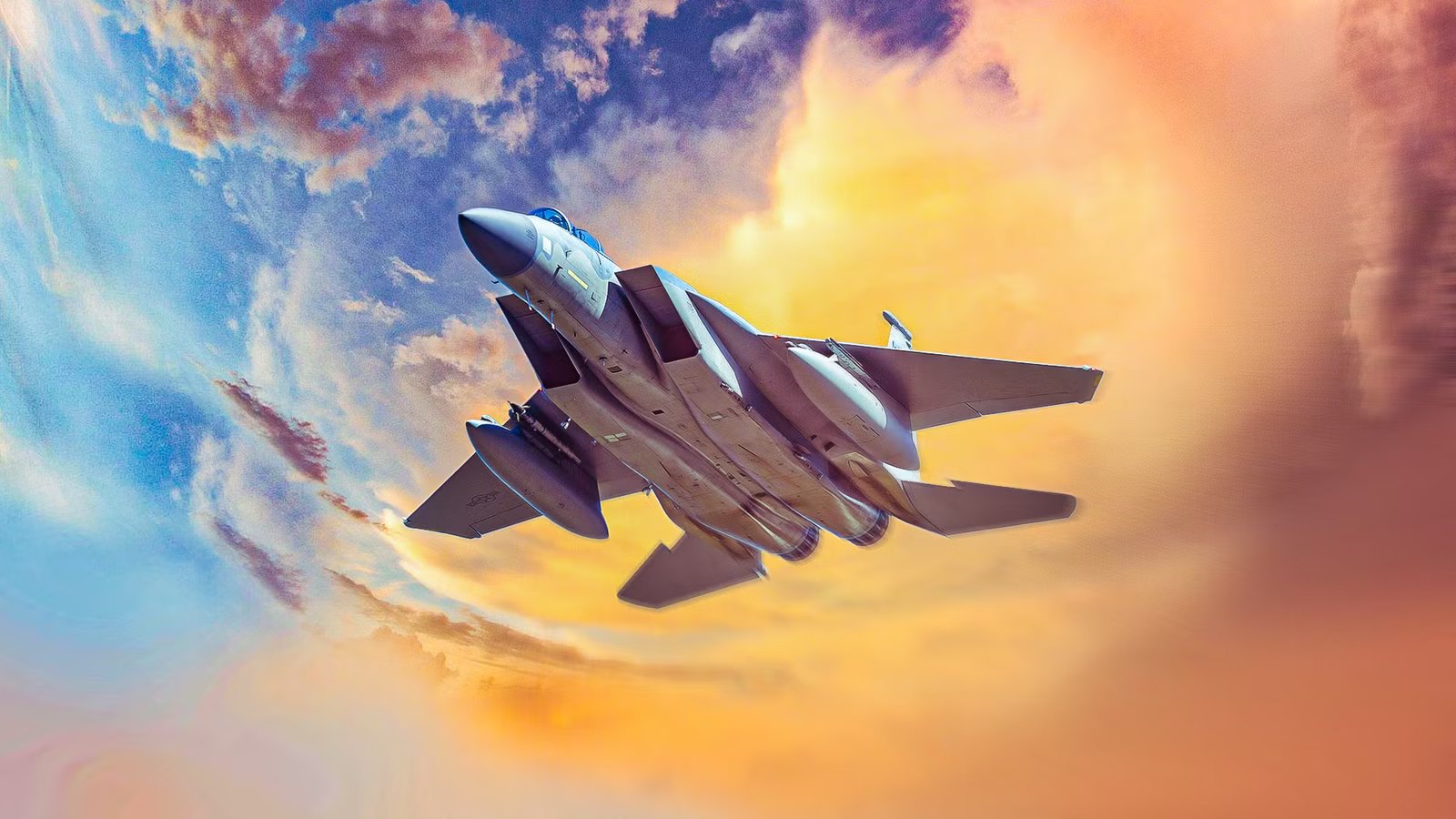
This article addresses a focused question: how many F‑15 aircraft does the United States Air Force operate today, and how are those numbers counted and expected to change? The F‑15 family, including legacy C/D Eagles, F‑15E Strike Eagles, and the new F‑15EX Eagle II, remains a core element of USAF combat capacity. Knowing the exact numbers and how they are reported is essential to understanding surge readiness, homeland defense, and the balance between legacy platforms and fifth-generation investments.
Using the USAF Annual Report on Tactical Fighter Aircraft Force Structure (October 2025), this article explains the difference between Combat-Coded Total Aircraft Inventory (CCTAI) and Primary Mission Aircraft Inventory (PMAI), presents Fiscal Year (FY) 26 F‑15 totals, summarizes procurement and divestment plans affecting the F‑15 family, and places the aircraft in the context of the broader USAF fighter mix. The goal is a single, coherent reference for the current and near-term status of the F‑15 fleet.
FY26 USAF F-15 Totals

The United States Air Force enters FY26 with 42 combat-coded F-15C/Ds, 133 F-15Es, and 27 F-15EXs, although the portion available for day-to-day operations is smaller because the service distinguishes between total combat-coded aircraft (CCTAI) and Primary Mission Aircraft Inventory (PMAI).
To understand these numbers, it helps to know how these metrics work. PMAI is the count of fighters configured, staffed, and ready for operational missions; CCTAI adds the aircraft kept as backup or attrition reserves. Thus, in FY26, the F-15C/D’s 42 CCTAI become 32 PMAI, the F-15E’s 133 become 105, and the F-15EX’s 27 remain 27 because every early-production EX is immediately missionized.
In other words, PMAI tells you what’s ready today; CCTAI shows the real pool of aircraft available for combat operations when surge matters. Understanding this distinction is essential because discussions about USAF fighter strength often conflate these categories. Historically, the USAF published only PMAI, which created a perception of shrinking force capacity.
The 2025 shift to CCTAI reporting was meant to better reflect actual wartime capability, especially for aircraft like the F-15E Strike Eagle that maintain backup capacity for surge operations. In practice, this means the F-15 fleet is somewhat larger and more capable in a crisis than the day-to-day PMAI figures suggest.
The F-15EX Eagle II also plays a major role in the short-term picture. While the program’s maximums have been subject to debate, current planning funds 129 aircraft, with 126 expected by 2030. The EX is much more than an update; it is the first F-15 built around an open-architecture computer backbone and comes with a payload capacity unmatched by any other Western fighter. Its arrival stabilizes massed strike capacity as the last F-15Cs retire and as fifth-generation fighters continue to grow, but remain numerically insufficient to cover every mission.
What Shapes These Numbers?

The number of operational F‑15s is shaped by multiple factors:
- Accounting and reporting methodology: Combat-Coded Total Aircraft Inventory now captures the full combat-coded aircraft set, including reserves and attrition, while the Primary Mission Aircraft Inventory PMAI represents only mission-ready aircraft.
-
Divestment schedules: F‑15C/D retirements are nearly complete, with ANG units retained for Airspace Control Authority (ACA) and homeland defense. Older F‑15E airframes powered by
Pratt & Whitney
F100-PW‑220 engines are selectively retired to focus sustainment on the later-production F-15E powered by the F-100-PW‑229. -
Procurement and industrial capacity:
 Boeing
’s F‑15EX production line is expected to ramp to 24 aircraft per year starting FY27, subject to funding and foreign military sales. - Sustainment pressures: Aging airframes and depot constraints impact readiness, driving selective divestments and maintenance prioritization.
- Force-structure goals: The USAF targets 1,558 combat-coded fighters by 2035, balancing F‑15 retention and procurement with F‑35, F‑22 modernization, and F‑16 upgrades.
|
Platform |
FY26 CCTAI |
FY26 PMAI |
Role / Notes |
|---|---|---|---|
|
F-22A Raptor |
134 |
120 |
Air superiority; limited fleet size; modernization ongoing, supports air dominance and homeland defense alert |
|
F-35A Lightning II |
344 |
312 |
Stealth multirole; expanding fleet; primary growth platform to 2030+ |
|
F-16C/D Fighting Falcon |
488 |
409 |
Largest fighter fleet; extensively upgraded; general-purpose and SEAD missions |
|
F-15C/D Eagle |
42 |
32 |
Legacy air superiority; ANG retained for ACA/homeland defense during sunset phase |
|
F-15E Strike Eagle |
133 |
105 |
Long-range strike; PW-229-powered aircraft retained; PW-220 models increasingly divested. |
|
F-15EX Eagle II |
27 |
27 |
Newest variant: early deliveries, high payload, open-architecture, rapid growth expected. Boeing’s fastest fighter jet in production. |
This variety of factors explains why public counts differ depending on what the source considers “in service”, and why a single static number is almost always misleading without context. The CCTAI > PMAI gap highlights backup and attrition aircraft available for contingencies.

Which Countries Has The US Banned From Buying The F-15?
The US has always been selective where it sells its F-15s, being more restrictive than its F-16 exports.
A Deeper Look At The F-15’s Operational Role

The F-15 Eagle was designed for air dominance, not parity. With unmatched thrust-to-weight for its era, a powerful radar, and the ability to sustain high energy throughout a fight, it gave American pilots decisive engagement control. Israeli F-15s proved this over Lebanon in the late 1970s and 1980s, achieving dozens of confirmed kills without loss. During Operation Desert Storm, USAF F-15Cs cleared the airspace so thoroughly that coalition strike aircraft could operate with near impunity.
The F-15E Strike Eagle added multirole capability without diluting the original concept. In 1999’s Operation Allied Force, F-15Es conducted deep-strike missions at night and in poor weather while F-15Cs flew cover. In 2003, Strike Eagles executed a huge share of the opening-night precision strikes in Iraq.
The F-15EX extends this lineage with a 21st-century twist. Built around an open-architecture software backbone and featuring one of the most advanced electronic-warfare suites on any fighter, the EX can carry hypersonic-class weapons, massive standoff loads, or air-to-air “magazine depth” unmatched by Western peers. It is not intended to replace the F-35 or F-22; instead, it supports them by carrying large, power-hungry payloads in environments where stealth is not essential.
From Legacy to Modernity: How the F-15 Fits Into Today’s USAF

Compared to historical highs of over 700 F-15s in the 1980s, the current number represents a deliberate downsizing, but it contrasts favorably with alternatives like full reliance on stealth fighters, which have a bigger cost and are fewer. The F-15’s place in the USAF’s airpower becomes clearer when set alongside the F-22, F-35, and F-16.
The FY26 posture clearly shows that the F-15 is no longer the numerical backbone of the fleet, yet the F-15E and EX provide capabilities that the other types do not. The F-22 has no rivals in air dominance, but it is in service in limited numbers. The F-35 brings stealth and sensor fusion, but carries fewer large weapons and is still growing into its full mission envelope. The F-16 remains the most numerous fighter, but even its most advanced variants cannot match the F-15’s range or payload.
This complementary relationship has existed for decades. During Operation Allied Force in 1999, for example, F-15Cs flew air-superiority cover while F-15Es conducted deep-strike missions across Serbia. In the 2003 Iraq War, the Strike Eagle was responsible for a substantial portion of precision strikes on the opening nights. The forthcoming EX fits naturally into this lineage: it brings 21st-century sensors to a platform designed from the start for operational stamina and large-scale combat.

Why Is The F-22 Raptor Slower Than The 52-Year-Old F-15 Eagle?
Stealth and maneuverability versus unbridled power and speed – discover how two great American jets stack up, head to head.
Challenges, Risks, And Constraints Ahead

The F-15 fleet’s future is not guaranteed and depends on several pressures. Funding stability is the most obvious one; the EX program has enjoyed support across multiple administrations, but long-term budgets are vulnerable to shifting priorities and the competing demands of NGAD, CCA development, and rising sustainment costs for the legacy fleet. Production bottlenecks could also emerge. Boeing’s St. Louis line supports several foreign customers, and simultaneous demand could stretch delivery timelines.
Operationally, the F-15 family faces survivability limits in the highest-end threat environments. While the EX variant features advanced electronic warfare systems, it is still a non-stealth airframe. Its power lies in payload and deterrent mass, not in penetrating dense air defense networks without support. This reality requires the USAF to carefully balance deployments, ensuring that F-15s operate where their strengths matter and their vulnerabilities can be mitigated.
Pros of the current F-15 fleet size include lower maintenance costs, but cons involve reduced surge capacity for prolonged conflicts. Alternatives like expanding to 129 F-15EXs offer growth, but at $90–97 million per unit, it would divert funds from NGAD. This hybrid approach is preferable to pure legacy retention, which risks obsolescence.
Finally, the USAF must navigate training and transition phases. Converting a squadron to the EX variant requires pilot retraining, maintenance certification, and infrastructure updates. The service has faced instructor-pilot shortages across multiple airframes, and delays in one conversion ripple across the entire fighter enterprise. These challenges do not diminish the F-15’s relevance, but they reinforce that maintaining a large fourth-generation fleet in parallel with rapid fifth-generation expansion is a complex logistical challenge.
Overall Takeaway

The USAF’s FY26 F-15 inventory illustrates a fleet in transition, but not in decline. Once the symbol of American air superiority, the F-15 family has evolved into a multirole backbone that complements stealth aircraft rather than competes with them. Its strength lies in payload, range, and a proven ability to generate sorties at scale, characteristics that the USAF cannot yet replace with its fifth-generation fleet alone.
Looking ahead, the F-15EX is poised to serve as a bridge to the future fighter force. As F-15E retirements begin in the 2030s and the last F-15C/Ds leave service, the EX will preserve mass, ensure industrial continuity, and provide a high-payload platform for missions that do not require stealth. By the time the USAF reaches its 1,558-fighter goal in 2035, the F-15EX is expected to remain an essential element of the fleet, helping the service balance modernization with operational realities.
In that sense, the answer to how many F-15s the USAF operates is a window into how the service plans, fights, and sustains airpower in an era when capacity matters as much as capability.