dailynewsnblog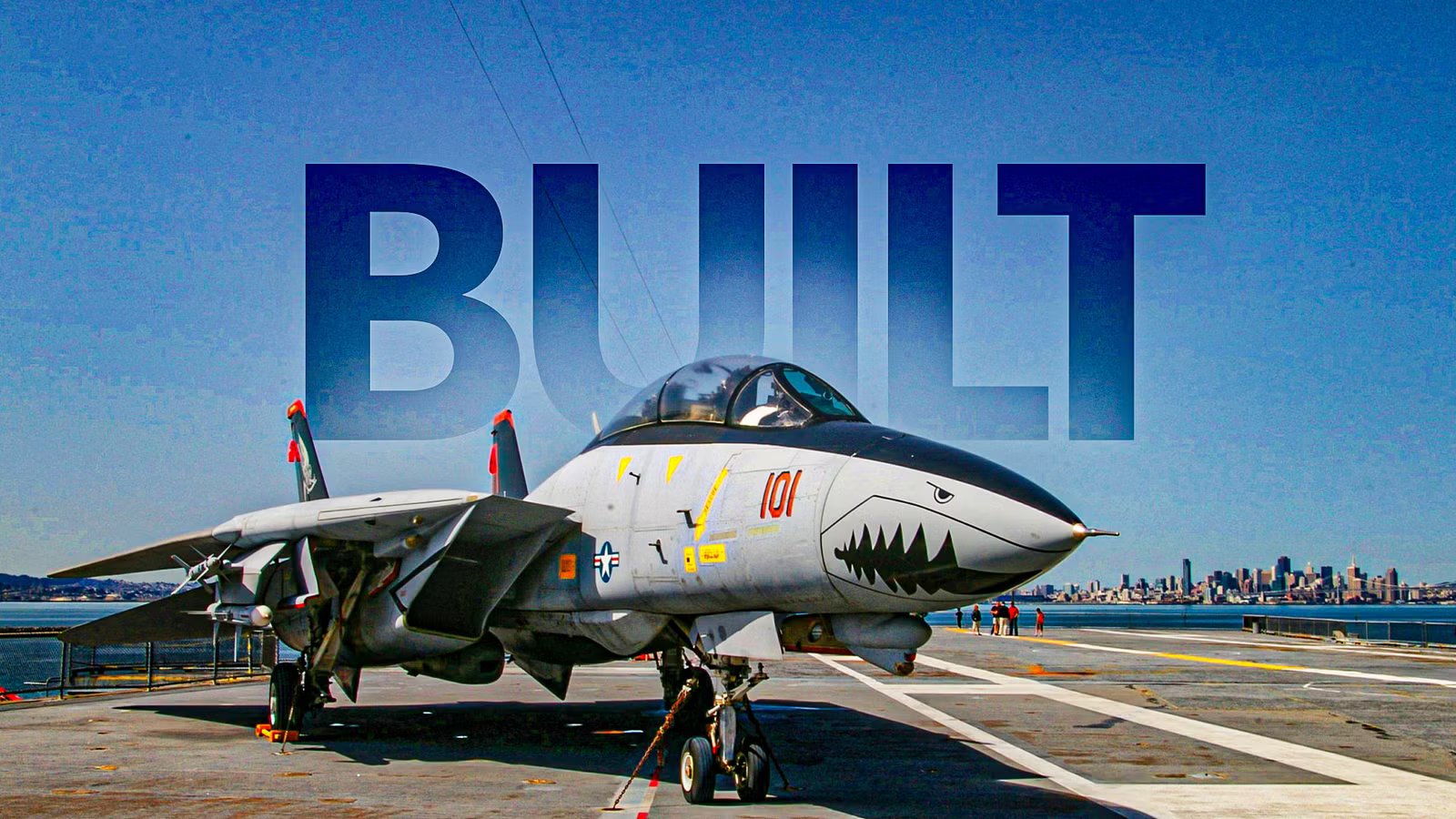
The Grumman F-14 Tomcat remains one of the most recognizable fighter aircraft ever to enter service. For more than three decades, it formed the backbone of the United States Navy’s carrier-based air defense, becoming synonymous with Cold War naval aviation. Even today, long after production ended, the type continues to fly in Iran, an unusual distinction few American-built combat aircraft can claim. That enduring visibility naturally raises a straightforward question: how many F-14 Tomcats were actually built?
Despite its good reputation, its production run was far more limited than one could expect. The aircraft was expensive, highly specialized, and designed around a very specific mission set that reflected the strategic realities of its time. We will examine how many F-14s were produced, how those aircraft were allocated between the US Navy and Iran, and why the Tomcat never saw the kind of large-scale production enjoyed by some of its contemporaries. In doing so, it also helps explain how changing military priorities eventually brought the Tomcat’s story to a close.
A Finite Run Of A Legendary Aircraft

Between 1969 and 1991, Grumman Aerospace produced 712 F-14 Tomcats, a figure now widely accepted in official US Navy records and aviation history sources. That total covers the full evolution of the type, from the original F-14A through the re-engined F-14B to the F-14D, which introduced digital avionics, an upgraded radar, and improved weapons integration. While the aircraft evolved significantly over its lifespan, production numbers remained tightly controlled throughout.
The vast majority of those aircraft, 632 Tomcats, were delivered to the United States Navy, where the type served as the primary carrier-based fleet defense fighter for more than three decades. Iran received 79 aircraft, all delivered before the 1979 Islamic Revolution, making it the only foreign operator of the F-14. One additional airframe was retained by Grumman for testing and development purposes and never entered operational service, rounding out the final production tally.
What makes this number particularly striking is how small it is compared with other Cold War-era fighters. Aircraft such as the F-4 Phantom II or F-16 Fighting Falcon were built in the thousands and exported worldwide. The Tomcat, by contrast, was never intended for that kind of scale. It was a highly specialized and expensive aircraft, designed around a singular mission: defending US Navy carrier strike groups from long-range aerial threats. Its limited production run was less a constraint than a reflection of how specific and demanding that mission really was.
What Shaped The Production Total?

Understanding why the Tomcat run stopped at 712 requires unpacking several technical, strategic, and political factors. The F-14 emerged after the Navy’s earlier attempt to field a long-range fleet interceptor— the F-111B. The F-111B proved too heavy, too complex, and poorly suited to carrier operations, leaving the Navy without a viable answer to the growing threat posed by Soviet bombers armed with long-range anti-ship missiles. The Tomcat was conceived to fill that gap decisively. It was large, powerful, and built around the AN/AWG-9 radar and AIM-54 Phoenix missile, a combination that allowed crews to detect, track, and engage multiple targets at ranges previously thought unattainable.
That capability, however, came at a high cost. Even by Cold War standards, the F-14 was an exceptionally complex aircraft. Its twin-engine layout, variable-sweep wings, advanced radar, and two-seat cockpit all added weight, maintenance burden, and expense. As a result, each Tomcat represented a substantial investment, and the Navy could afford fewer aircraft overall than it could with lighter, simpler fighters.
Export restrictions further constrained production. Only Iran, then ruled by Shah Mohammad Reza Pahlavi and closely aligned with Washington, was approved to receive the aircraft. Even that sale was carefully controlled, reflecting the sensitivity of the Tomcat’s technology. No other foreign customers were cleared to purchase the type, eliminating the kind of large export orders that helped drive production numbers for fighters like the F-4 Phantom II or, later, the F-16.
By the late Cold War, and especially after its end, strategic priorities began to shift. The threat of massed Soviet bomber attacks faded, and the US military increasingly favored multirole aircraft capable of performing air-to-air, strike, and reconnaissance missions at a lower overall cost. Fighters such as the F/A-18E/F Super Hornet offered greater flexibility and reduced maintenance demands, making the continued large-scale procurement of the Tomcat increasingly difficult to justify. In that context, the F-14’s limited production total was less a failure of the aircraft and more a reflection of how narrowly tailored, and time-specific, its original mission really was.

Why The US Navy Could Benefit From The F-14 Tomcat Right Now
The F-14 Tomcat’s unique capabilities may be more relevant today than when it was retired.
The Operators: US Navy And Iran’s Tomcats

From its first deployment in the early 1970s, the F-14 quickly became the US Navy’s premier carrier-borne fighter. Designed to replace the McDonnell Douglas F-4 Phantom II in fleet defense, the Tomcat boasted exceptional radar range, long-range missiles, and robust carrier capability — precisely what the Navy needed to counter Soviet bombers and maritime patrol aircraft during Cold War patrols.
On 22 September 1974, the Tomcat made its official introduction to service, embarking aboard the USS Enterprise (CVN-65). Over the next three decades, it stood as the centerpiece of carrier air wings, flying missions ranging from intercept patrols and fleet defense to reconnaissance and, later in its life, precision ground attack thanks to targeting pods added in the 1990s.
The Tomcat’s operational life with the US Navy spanned key periods of late-20th-century conflict, including Cold War intercept missions and enforcement of no-fly zones over Iraq in the 1990s and early 2000s. Its retirement on 22 September 2006 marked the end of an era, as it was replaced by the F/A-18E/F Super Hornet, which offered greater versatility and lower operating costs.
But perhaps the most fascinating chapter in the Tomcat story is its service with the Iranian Air Force — something few other US aircraft can claim. In the 1970s, the United States and Iran were allies. The Shah’s government sought advanced fighters to modernize Iran’s air force and counter potential threats from Soviet aircraft operating near Iranian airspace. After evaluating modern fighters, the Shah elected to purchase the F-14, ordering 80 aircraft and hundreds of AIM-54 Phoenix missiles in a deal that was at the forefront of US-Iranian military cooperation.
According to the Imperial Iranian Air Force Archive, the first F-14s were delivered to Iran in 1976, and by the time of the Islamic Revolution in 1979, 79 aircraft had been shipped and accepted. The 80th aircraft ordered was retained by the US and never left for Iran.
When the Shah fell, and the Islamic Republic took power, the geopolitical landscape shifted dramatically. The United States imposed a strict arms embargo, cutting off spare parts, technical support, and further deliveries of aircraft and missiles. Suddenly, Iran was left with one of the most advanced fighters in the world — but no official source of support.
Despite these challenges, Iran managed to keep many of its Tomcats flying. Iranian engineers and technicians resorted to multiple stopgaps: cannibalizing parts from non-flying airframes, attempting to purchase spare parts clandestinely on the black market, and reportedly even reverse-engineering components, according to The National Interest.
During the Iran–Iraq War (1980–1988), these aircraft became Iran’s premier air superiority fighters, credited with dozens of aerial victories and playing a pivotal role in controlling airspace over Iranian territory. Exact claims vary, but National Interest suggests Iranian Tomcats accounted for over 150 Iraqi aircraft shot down during the conflict — an extraordinary achievement given the logistical difficulties the Iranians faced.
In the decades since, Iran has continued to operate and maintain Tomcats, albeit in dwindling numbers. Estimates in the 2020s place the number of operational Iranian F-14s at around 30 aircraft, with many more in varying states of disrepair but still valuable for spares or refurbishment. But after the 12-day war with Israel, it is estimated that fewer than 30 aircraft are still airworthy. In addition, Iran is already phasing out its last Tomcats in favor of the more modern Sukhoi Su-35.
This ongoing operation of half-century-old jets, arguably the only aircraft ever exported in meaningful numbers from the US only to then serve into the next century with a government adversarial to Washington, is arguably a unique chapter in the Tomcat’s legacy.
How The Tomcat Compares To Other Fighters Of Its Era

When discussing production numbers in military aviation, it’s helpful to put the Tomcat in context with its contemporaries. Another contemporary with some similarities was the Panavia Tornado, a variable-sweep wing aircraft developed by a European consortium in the 1970s. It used movable wings to balance low-speed performance with high-speed flight, allowing it to operate effectively across a wide range of missions and payloads. The Tornado family went on to fill strike, reconnaissance, and interceptor roles and was produced in 992 units across all models, far more than the Tomcat’s production. But even that figure pales in comparison to fighters designed around simpler wings and lighter missions.
What the Tomcat, Tornado, and aircraft like the F-111 Aardvark had in common was their reliance on variable-geometry wings, a design feature that was once seen as the key to achieving high performance across vastly different flight regimes. During the Cold War, that trade-off made sense. Designers were trying to solve aerodynamic problems with mechanical solutions, and swing wings offered an elegant, albeit complex, answer. But over time, the cons of the variable wings outweighed the pros, for the following reasons:
- The mechanical complexity and weight penalty associated with variable wings ultimately outweighed aerodynamic benefits once advances in avionics, flight control systems, and engine power reduced the need for physical wing reshaping.
-
Modern fighters such as the
F-22 Raptor
and
F-35
Lightning II use advanced flight control and thrust vectoring to achieve and exceed performance goals that earlier designers sought through variable-sweep wings. - Simpler fixed-wing designs reduce maintenance overhead and increase reliability — crucial factors in the era of networked, multirole combat aircraft.
In other words, the very feature that made the Tomcat and similar aircraft stand out in the Cold War Era became a liability in the age of digital flight control and multirole expectations.
Against that backdrop, the Tomcat’s relatively modest production run begins to make sense. Aircraft like the McDonnell Douglas F-4 Phantom II, built in more than 5,000 examples, or the F-15 Eagle, which exceeded 1,500 airframes, including exports, were designed to be adaptable, widely sold, and easier to support across multiple air forces. The F-14 was none of those things. Its 712 aircraft were built to do one job exceptionally well, and once that job no longer defined naval air combat, there was little reason to build more.

America’s 7 Most Expensive Fighter Jets Of All Time
Explore the US’ most high-priced fighter jets, from the F-86 Sabre to the F-22 Raptor.
Exceptions, Drawbacks, And The Real Lessons

Like any aircraft, the Tomcat had its limitations. One of the most persistent issues involved the Tomcat’s original Pratt & Whitney TF30 engines. While powerful on paper, they proved temperamental in service, particularly at high angles of attack, where compressor stalls could become a real concern. These problems shaped how early Tomcats were flown and maintained, and they eventually pushed the Navy toward major upgrades. The later F-14B and F-14D addressed many of these concerns by switching to General Electric F110 engines, improving reliability, thrust, and overall handling, while also introducing more modern avionics.
Operating the Tomcat was another challenge entirely. The aircraft’s defining strengths, especially the AWG-9 radar and AIM-54 Phoenix missile, also made it expensive to keep in service. Maintaining those systems required specialized equipment, trained personnel, and a deep logistics pipeline. Compared with newer multirole fighters entering service in the 1990s, the Tomcat demanded far more time and money per flight hour, even as its original fleet defense mission became less central.
For Iran, however, the aircraft’s greatest limitation had little to do with engineering. After the 1979 Islamic Revolution and the subsequent US arms embargo, Iran was left operating one of the most sophisticated fighters in the world without access to official spare parts, upgrades, or manufacturer support. Over time, that reality took a toll. Many airframes were grounded to keep others flying, and maintaining even a few operational Tomcats became an exercise in improvisation.
A Legacy That Endures

In the end, the answer to how many F-14 Tomcats were built is simple: 712 aircraft, split between the United States Navy and Iran. But that number on its own only tells part of the story. Behind it sits a web of Cold War priorities, technical ambition, and political decisions that shaped not just how many Tomcats were produced, but how they were ultimately used.
For the US Navy, the F-14 was very much a product of its time — designed for an era when carrier battle groups sat at the center of American power projection and long-range interception was a defining measure of air superiority. It was built to counter a specific threat, and for decades, it did exactly that.
For Iran, the Tomcat followed a far more unusual path. Cut off from its original supplier and forced to operate under decades of sanctions, the aircraft became less a symbol of American technology and more a test of local ingenuity. Few combat aircraft have remained in service so long, in such circumstances, or under such constraints.
In a wider historical context, the F-14 also marks the end of a design philosophy. As one of the last major fighters built around variable-geometry wings, it represents a moment when mechanical solutions pushed performance to its limits. Complex, demanding, and unmistakable, the Tomcat’s legacy is inseparable from the era that produced it — and from the people who kept it flying long after its production line stopped.