dailynewsnblog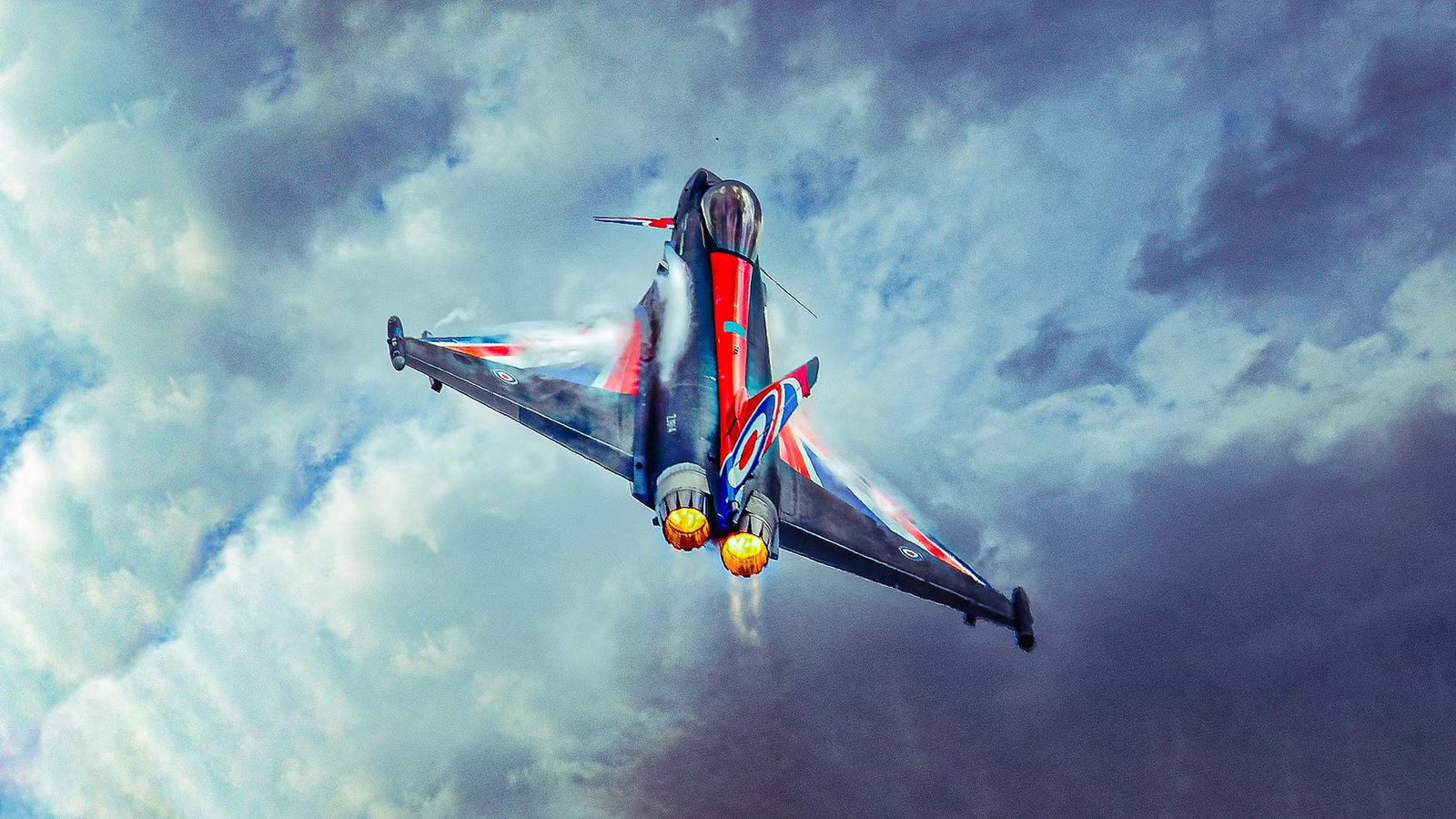
In 2026, the world of defense is extremely focused on 5th and 6th-generation stealth fighters. However, even according to the US Air Force Doctrine, these ‘exquisite’ airframes represent an extreme minority of the actual tactical air power fielded. 4th-Gen and so-called 4.5-Gen fighters are continuing to be upgraded as ‘linebackers’ for the more technologically advanced counterparts.
The Boeing F-15 Eagle is an infamous example of this class of fighter, but the Eurofighter Typhoon may arguably be a superior airframe in the same category, depending on the metric. Airbus reports a total order book of over 750 Typhoons, and defense news outlet MILITARNYI reports that 606 have been handed off to operators as of September 2025.
Notably, the production of both of these very powerful air superiority fighter jets is only a couple of dozen per year. The Eurofighter averages around 15 a year, which pales in comparison to the output of the newest 5th-Gen Western fighter, the F-35, which exceeded 150 jets last year. However, the Eurofighter Consortium has a positive outlook, aiming to increase to 20 units per year with Turkey closing a deal to become the 10th operator in 2025.
Ramping Up The Typhoon

The Eurofighter is produced as part of a multinational consortium. There are four key partners that each have domestic facilities contributing to the overall logistical apparatus that forms the supply chain for the Typhoon. Airbus primarily supports the Luftwaffe from Manching, Germany, and the Spanish Air Force from Getafe, Spain. BAE Systems operated a production line until last year in Warton, United Kingdom, and the last site is run by Leonardo in Turin, Italy.
Last year, the UK chose not to order any additional Eurofighter Typhoons due to the arrival of Lockheed Martin F-35A Lightning II stealth fighters and a planned procurement of the BAE Tempest Global Combat Air Program (GCAP) 5th-Gen fighter. Similarly, other European Air Forces have begun acquiring the F-35 in large numbers, which threatens the continued production of the Eurofighter.
The Typhoon is in its latest and greatest iteration, the Tranche 5, which does not have a stealth-optimized airframe but does incorporate 5th-Gen sensors and systems, and comes without dependence on foreign imports like the F-35 requires. The Typhoon is also tailor-made for the needs of European air forces, providing excellent Quick Reaction Alert (QRA) performance that the F-35 cannot match.
The primary driver for the production ramp-up is the shift in the global order and heightened security concerns following Russia’s war against Ukraine. Far from becoming obsolete, the Typhoon is being reimagined as a ‘networked node’ that complements the F-35’s stealth with superior speed, agility, and massive firepower. European nations are increasingly prioritizing homegrown alternatives to reduce dependence on American military technology. The Typhoon is a mature, reliable platform that can be produced and deployed to strengthen air superiority as the backbone of fleets like the German Luftwaffe.
How The Eurofighter Is Made

The production of the Eurofighter Typhoon is a sophisticated multinational operation designed so that no single nation builds the entire aircraft alone. Instead, the four partner nations each manufacture specific major components, which are then shipped across borders to one of four final assembly lines. The workshare is distributed proportionally based on each nation’s original procurement orders. This ensures that each country maintains a strategic aerospace industrial base while remaining interdependent.
The EJ200 engines are produced by the EuroJet Turbo GmbH consortium, which assigns between a quarter and one-third of the workshare to Rolls-Royce (UK), MTU Aero Engines (Germany), Avio (Italy), and ITP (Spain), respectively. The front, center, and rear fuselage sections are joined using an automated alignment system. This uses laser tracking to ensure tolerances of less than one millimeter.
The consortium maintains four independent final assembly lines. While every Typhoon uses parts from all four nations, the location of final assembly depends on the end customer. The program is managed by Eurofighter Jagdflugzeug GmbH (based in Munich) and the NETMA agency, which represents the four governments. This structure allows nations to be independent in their final assembly and operational testing while remaining connected across Europe. This interdependence ensures that even if one nation’s final assembly slows down, its factories continue to produce essential parts for the other three lines.
Key 2025 Orders

The Royal Air Force (RAF) may not be planning to buy any more Typhoons, but that doesn’t mean that it isn’t still one of the world’s finest air superiority platforms. Thanks to its uncompromising performance and brutal supermaneuverability, the aircraft secured enough orders to not only continue building more Eurofighters, but potentially in higher numbers than ever before
Germany ordered 20 new Tranche 5 Eurofighters in October 2025, with deliveries scheduled between 2031 and 2034. Spain signed the Halcón II contract for 21 additional aircraft, bringing its fleet to 115 in total. Turkey also made a deal for 20 jets, and there is potential for more orders, including interest from Portugal. The Portuguese Cluster for Aeronautics, Space and Defence Industries signed a Memorandum of Understanding (MoU) with Airbus Defence and Space in October 2025 as it reconsiders its F-35 order, according to the Aviationist.
The October 2025 order from Germany moved the program into the Tranche 5 phase, which is expected to act as a bridge to the Future Combat Air System (FCAS). Tranche 5 introduces a modern digital backbone with high-speed computing and an open software architecture. This allows it to function as a ‘node,’ a key requirement for FCAS, which envisions a ‘system of systems’ connecting manned jets with satellites and ground forces.

What Countries Have Acquired The Eurofighter Typhoon?
The Typhoon has had moderate export success having been ordered by five countries in addition to the four that developed it.
Preventing A Fighter Gap

Without the Tranche 5, European fighter production would have likely spooled down by 2030. Transitioning to a 6th-Gen fighter requires a highly skilled workforce. Ramping up Tranche 5 production ensures that the 400 companies and 100,000 jobs in the Eurofighter supply chain remain viable during the decade-long wait for FCAS. The ECRS Mk2 Radar and Saab Arexis electronic warfare (EW) suite in the Tranche 5 provides the high-power jamming and digital sensing capabilities that will be refined for the FCAS.
By continuing to build the Eurofighter, Germany and Spain avoid becoming entirely dependent on the US F-35. This maintains their leverage and technical autonomy when negotiating the sensitive workshare agreements for FCAS. Aerospace engineering requires highly perishable skills. If production had ceased in 2024–2025, thousands of specialized engineers and technicians would have migrated to other industries or non-European firms, a fate that Canada is very familiar with following the cancellation of its Avro Arrow in 1959.
With the FCAS operational date potentially slipping from 2040 toward 2045, the Tranche 5 ensures that Germany and Spain have a cutting-edge fleet that remains relevant into the 2060s. If the 6th-gen program were to fail or split into separate national projects, the Tranche 5 provides a powerful ‘Plan B’ that is already in production and capable of defending NATO airspace against modern threats.

Why Spain Selected The Eurofighter To Replace Its F-18s
Spain has placed another order for domestically assembled Eurofighters while still leaving the F-35 question open.
Typhoon, Rafale, And The FCAS

The Typhoon is the logical platform to mature technologies intended for the Future Combat Air System (FCAS), like teaming with uncrewed ‘loyal wingman’ drones in the early 2030s. Production must continue to bridge a potential 10-year gap between current platforms and the arrival of 6th-gen fighters like the Tempest, which are not expected until at least 2035.
FCAS is embroiled in a political dispute over industrial worksharing, which is delaying the development of the program, which is a collaborative effort between France, Spain, and Germany. France’s Dassault continues to push for a larger share, to the ire of Airbus and Germany, meaning the 6th-Gen replacement for the Typhoon and Rafale may not progress from the demonstrator phase for years.
One of the primary goals of FCAS is the use of drones. Germany and Spain plan to use the Tranche 5 to mature these operational concepts by the early 2030s, long before the first FCAS jet flies. While France does not operate the Eurofighter, its Rafale program mirrors the Tranche 5 strategy for the French Air Force. The next iteration of the Rafale, the F5 in 2030 to 2035, will also feature advanced data links, artificial intelligence (AI), and the ability to control stealth combat drones.

Why Will The Eurofighter Typhoon Never Be A Stealth Fighter?
Why the Typhoon can’t be “stealthified.”
Typhoon By The Numbers

The centerpiece of Tranche 5 is the European Common Radar System (ECRS) Mk2. Unlike previous mechanically scanned radars, this Active Electronically Scanned Radar Array (AESA) allows for simultaneous multi-tasking. The Mk2 is unique because it features a multifunctional array. It can scan for targets while simultaneously performing high-powered, directional electronic attacks (jamming) to blind enemy air defenses and incoming missiles. New wingtip sensors provide 360-degree coverage against both radar-guided and infrared-guided (heat-seeking) threats.
Developed by BAE Systems, the Striker II Helmet provides all-night vision without external goggles and integrates 3D audio cues to help the pilot identify the direction of threats. The legacy three-screen setup is replaced by a single, high-definition Large Area Display (LAD) touch-screen cockpit display. This allows for customized windowing of data, such as fused sensor feeds from the radar, pods, and data links.
The internal wiring has been upgraded to fiber-optics to handle the massive data throughput required by the new radar and future ‘Combat Cloud’ integration. The Praetorian Defensive Aids Sub-System (DASS) has been overhauled to handle modern double-digit Surface-to-Air Missiles (SAMs). The Digital Radio Frequency Memory (DRFM) allows the jet to capture an enemy radar signal, modify it, and send it back to create ‘ghost’ images or hide the aircraft’s true position.
To handle the increased weight of new electronics and heavy weapon loads, the Tranche 5 can be fitted with the Aerodynamics and ‘Aerodynamic Modification Kit’ (AMK). Leading-edge root extensions and enlarged ‘strakes’ on the fuselage increase maximum lift by 25%. These modifications improve the point-and-shoot capability at low speeds, allowing the pilot to pull more Gs and turn tighter during dogfights, even with a full air-to-ground bomb load.
The Long-Term Evolution (LTE) includes the ability to control wingman drones directly from the cockpit, or Manned-Unmanned Teaming (MUM-T). The software is designed to be modular, meaning air forces can plug in new mission apps or weapon codes in weeks rather than the years required for older Tranches.