dailynewsnblog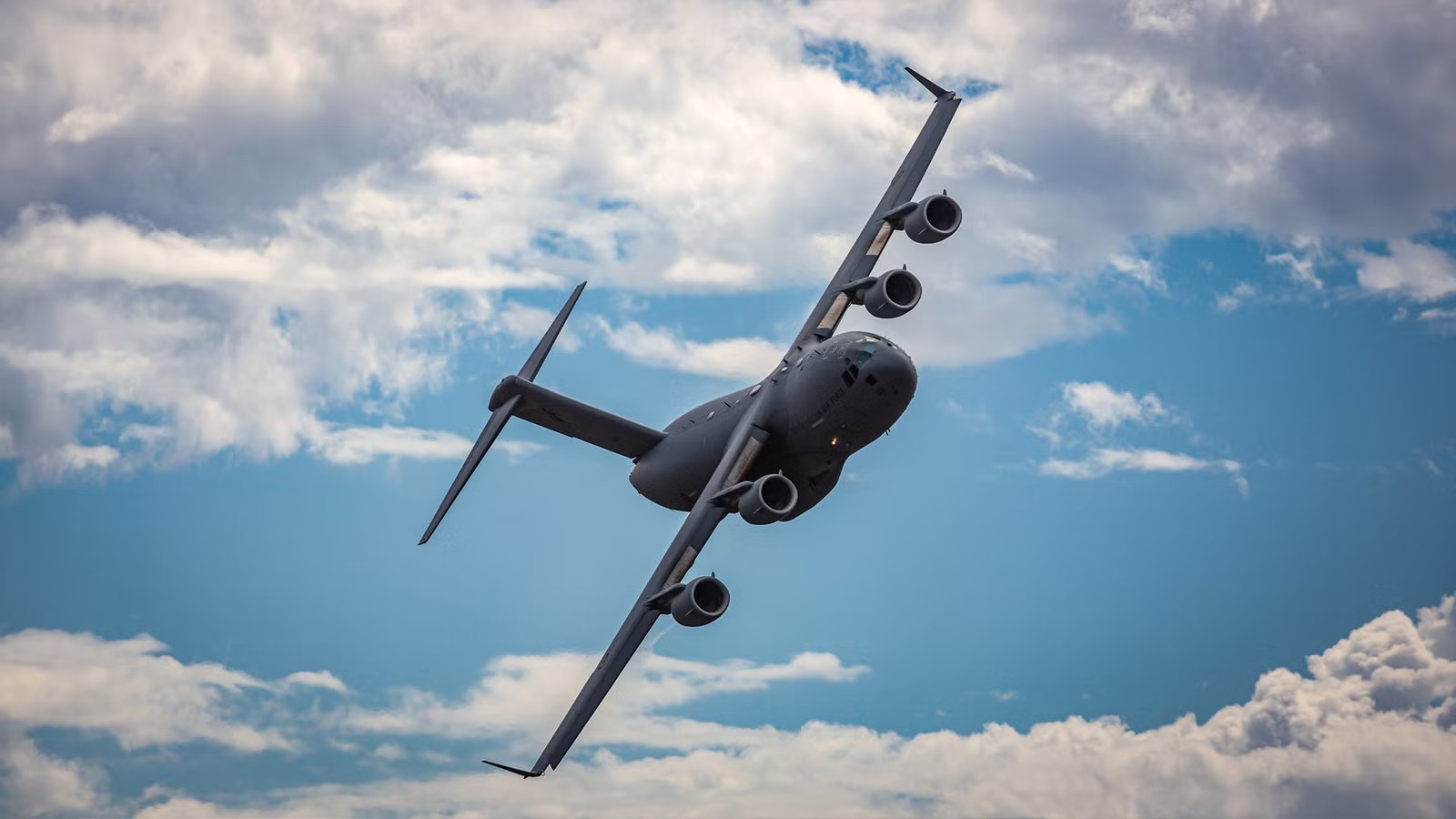
The Boeing C-17 Globemaster is one of the most important military transport aircraft ever fielded, shaping how modern air forces move troops, vehicles, and humanitarian aid around the world. Understanding its total production run helps explain its operational footprint, and also why its absence from the production line continues to be felt across global airlift fleets.
The C-17 emerged at a very peculiar moment in aviation and geopolitical history. Conceived during the final years of the Cold War and delivered primarily in the post-Cold War era, it was designed to do something no previous jet transport could manage so effectively: combine strategic intercontinental range with true tactical flexibility. This article examines exactly how many C-17s were built, how those aircraft are distributed globally, why production stopped, and why current modernization efforts, and not desirable production restarts, define the aircraft’s future.
How Many Boeing C-17s Were Built? A Look At The Numbers

A total of 279 Boeing C-17 Globemaster III aircraft were built between the maiden flight of the prototype in 1991 through final delivery in 2015. This figure includes development and test aircraft, operational deliveries to the United States Air Force, and all export examples sold to allied nations. Boeing officially closed the C-17 production line in Long Beach, California, in November 2015 after delivering the final aircraft to the Royal Australian Air Force, bringing the program to a definitive end.
The United States Air Force accounts for the overwhelming majority of that total. Of the 279 aircraft produced, 223 were delivered to the USAF, making it by far the largest operator. The remaining 56 aircraft were sold to a small group of international customers, including India, the United Kingdom, Australia, Canada, Qatar, the United Arab Emirates, Kuwait, and NATO’s Strategic Airlift Capability unit based at Pápa Air Base, Hungary.
In pure numerical terms, the C-17’s production run appears modest, especially when compared to legacy transports like the Lockheed C-130 Hercules , which has surpassed 2,500 airframes across multiple variants. But numbers alone fail to capture what the C-17 brought to the table. Each aircraft was designed to replace multiple older platforms, collapsing strategic and tactical missions into a single airframe — a design philosophy that naturally limited how many were required.
Why Production Stopped At 279 Aircraft

The C-17’s final production total was shaped by a combination of cost pressures, shifting military doctrine, and changing geopolitical realities. This aircraft was originally developed to replace the Lockheed C-141 Starlifter, and it entered service just as the Cold War ended, dramatically altering the scale of airlift fleets deemed necessary by Western militaries.
Cost was a major factor from the very beginning. Early in the program, the C-17 struggled with weight growth, performance shortfalls, and budget overruns, prompting serious discussion within the US Department of Defense about canceling the program altogether.  Boeing, which inherited the aircraft from McDonnell Douglas, eventually stabilized the design, but the aircraft never became cheap. Unit flyaway costs fluctuated over the years, often landing well above $200 million per aircraft depending on contract structure and configuration, according to data published by the US Government Accountability Office military aircraft cost assessments.
|
Phase |
Fiscal Years |
Aircraft Produced |
Program Context |
|---|---|---|---|
|
Low-Rate Initial Production (LRIP) |
1988–1995 |
40 |
Early development struggles, weight growth issues, near-cancellation debates |
|
Full-Rate Production Ramp-Up |
1996–2001 |
80 |
Program stabilizes; fleet expansion despite post-Cold War drawdowns |
|
Wartime Surge Production |
2002–2008 |
109 |
Afghanistan & Iraq drive peak output; multi-year procurement contracts |
|
Sustainment & Export Extension |
2009–2012 |
41 |
India, Qatar, and UAE orders extend line beyond USAF core fleet |
|
Final Deliveries & Line Closure |
2013–2015 |
9 |
USAF completes 223 aircraft; final export deliveries conclude production |
|
Total Production |
1988–2015 |
279 aircraft |
Program complete |
Another key factor was capability density. The C-17 proved so capable that smaller fleets could accomplish missions that previously required far more aircraft. Its ability to carry outsized cargo, operate from short or semi-prepared runways, and fly intercontinental missions without refueling made it uniquely versatile. For many air forces, that meant fewer aircraft were needed overall, naturally capping production demand.
International sales helped extend the production line, but never enough to sustain it indefinitely. India’s decision to acquire 11 C-17s in the early 2010s was a major boost, as was Australia’s expansion of its fleet to eight aircraft. However, the aircraft’s size, cost, and infrastructure requirements limited its appeal to a relatively small pool of nations. Boeing itself acknowledged in 2014 that no new customers were in active negotiations, prompting the company to announce the program’s closure the following year.
The C-17’s Operational Impact Despite Limited Production

Despite its relatively limited production run, the C-17 Globemaster III is almost universally praised by those who fly and operate it, particularly within the United States Air Force. Senior Air Mobility Command leadership has repeatedly described the aircraft as transformational, crediting it with fundamentally changing how global airlift is conducted by combining strategic range, heavy payload, and short-field performance in a single platform.
Rather than relying on layered staging bases and multiple aircraft types, the C-17 enabled a more direct and flexible air mobility model, a shift that continues to shape US and allied logistics doctrine.
Operational experience strongly supports that assessment. Since entering service in the late 1990s, the C-17 has played a central role in nearly every major US and allied operation, including sustained campaigns in Afghanistan and Iraq, high-tempo evacuation missions such as the 2021 Kabul airlift, and a wide range of humanitarian relief efforts following natural disasters. According to US Air Mobility Command data referenced by FlightGlobal, the aircraft has consistently maintained mission-capable rates that compare favorably with, and often exceed, those of older heavy airlifters, reinforcing its reputation for reliability under demanding conditions. International operators echo these sentiments, with air forces in Australia and Canada frequently describing the C-17 as a strategically indispensable asset that enables independent global reach.
That combination of performance and versatility is also what sets the C-17 apart from other military airlifters. The aircraft occupies a unique position between the very large Lockheed C-5 Galaxy and smaller transports such as the C-130 Hercules or Airbus A400M. While the C-5 offers greater maximum payload, it lacks the runway flexibility that defines the C-17’s tactical usefulness, and while the A400M excels in austere environments, it cannot match the C-17’s payload and intercontinental reach. This balance helps explain why the aircraft has proven so difficult to replace and why, even with production capped at 279 airframes, its operational importance continues to grow.
The Future Is Sustainment, Not A Production Restart

Speculation about restarting C-17 production resurfaces regularly, particularly following high-visibility operations such as the 2021 evacuation from Kabul. However, both Boeing and the US Air Force have been consistent in their messaging: there is no realistic path to reopening the line.
Instead, the focus has shifted decisively toward modernization and life extension, something that has already been done with the B-52. On February 9, 2026, Boeing announced a new C-17 avionics modernization contract in a MediaRoom release. Travis Williams, Vice President of United States Air Force Mobility & Training Services at Boeing, emphasized the aircraft’s longevity:
“With the U.S. Air Force requirement to keep the C-17A viable through 2075, we already have a clear and achievable roadmap to support their needs, and the needs of our international partners around the globe.”
That statement is significant as it places the C-17’s planned service life at 80 years or more from initial delivery, a figure more commonly associated with bombers or nuclear submarines than transport aircraft.
The Boeing Company selected Curtiss-Wright Corporation to provide mission computer technology compliant with the Modular Open Systems Approach (MOSA) in the framework of the US Air Force’s C-17 Globemaster III Flight Deck Obsolescence and Technology Refresh program.
This major avionics upgrade is designed to extend the operational life and capability of one of the military’s most critical airlift platforms and will support cockpit upgrades for the global strategic airlift fleet. The contract has an estimated lifetime value in excess of $400 million.

Why The C-5 Galaxy Has Such A Unique Sound
Unraveling the story behind the C-5 Galaxy’s unforgettable acoustic signature.
What MOSA Means For The C-17’s Long-Term Future

The long-term sustainment and modernization of the C‑17 Globemaster III increasingly rely on a Modular Open Systems Approach (MOSA), a strategy mandated across US defense programs to improve flexibility, reduce costs, and future-proof complex platforms. Rather than locking avionics, mission systems, and software into proprietary architectures, MOSA uses open standards such as CMOSS (C5ISR/EW Modular Open Suite of Standards) and SOSA (Sensor Open Systems Architecture) to allow individual components to be upgraded or replaced independently.
For the C‑17, whose avionics date back to the 1990s, this approach is essential to maintain operational relevance while integrating advanced navigation, communications, cybersecurity, and mission management systems over the aircraft’s projected service life through 2075.
In practical terms, MOSA enables Boeing and the US Air Force to modernize critical systems without redesigning the entire aircraft. New navigation systems, satellite communications, cybersecurity protection, and flight-deck displays can be integrated modularly, reducing downtime and maintenance costs while improving operational performance. This approach also allows the integration of advanced mission planning software and digital flight controls, ensuring the C-17 can comply with evolving CNS/ATM (Communications, Navigation, and Surveillance / Air Traffic Management) standards, which are increasingly critical for safe operations in global civilian and military airspace.
For international operators, MOSA could offer additional strategic advantages. A modular architecture promotes commonality across fleets, making it easier for partner nations to adopt upgrades alongside the US Air Force. This alignment simplifies logistics, reduces training burdens, and enhances interoperability for joint operations, ensuring that even decades after delivery, the C-17 remains a globally integrated, operationally flexible, and highly capable airlifter.
Production Numbers Vs Strategic Value

The question of how many C-17 Globemaster III aircraft were built ultimately leads to a deeper and more consequential understanding of modern military airlift. Yes, the final number of 279 aircraft is fixed, verifiable, and unlikely to ever change. But what makes the C-17 remarkable is how that relatively small fleet has come to underpin global military logistics on a scale normally associated with far larger production runs. The aircraft’s design philosophy condensed roles that once required multiple platforms into a single, flexible airframe, reshaping how air forces think about strategic reach, tactical access, and rapid response.
In hindsight, the decision to cap production was more a product of timing, cost, and capability density, and never about the aircraft’s remarkable performance and capabilities. The C-17 entered service just as the geopolitical environment shifted away from massed Cold War force structures, and it proved so capable that fewer aircraft were required to achieve the same, or greater, effect. That efficiency, combined with high acquisition costs and a limited export market, naturally constrained production. And the same factors now explain why the aircraft’s absence from the production line is so keenly felt: there is no direct successor, no off-the-shelf alternative that combines payload, range, runway flexibility, and global interoperability in quite the same way.
The C-17’s current story is about extracting maximum value from the ones that exist. With service life projections extending toward the 2070s, and with modernization efforts such as MOSA-driven avionics upgrades reshaping the aircraft’s digital backbone, the Globemaster III is still evolving.
For the United States and its allies, these 279 aircraft will continue to form the backbone of heavy airlift, humanitarian response, and strategic mobility for decades to come. In that context, the C-17’s legacy is not defined by its production total, but by the enduring reality that a global airlift has been designed around it — and will remain so long after the last one rolled off the line in Long Beach.