dailynewsnblog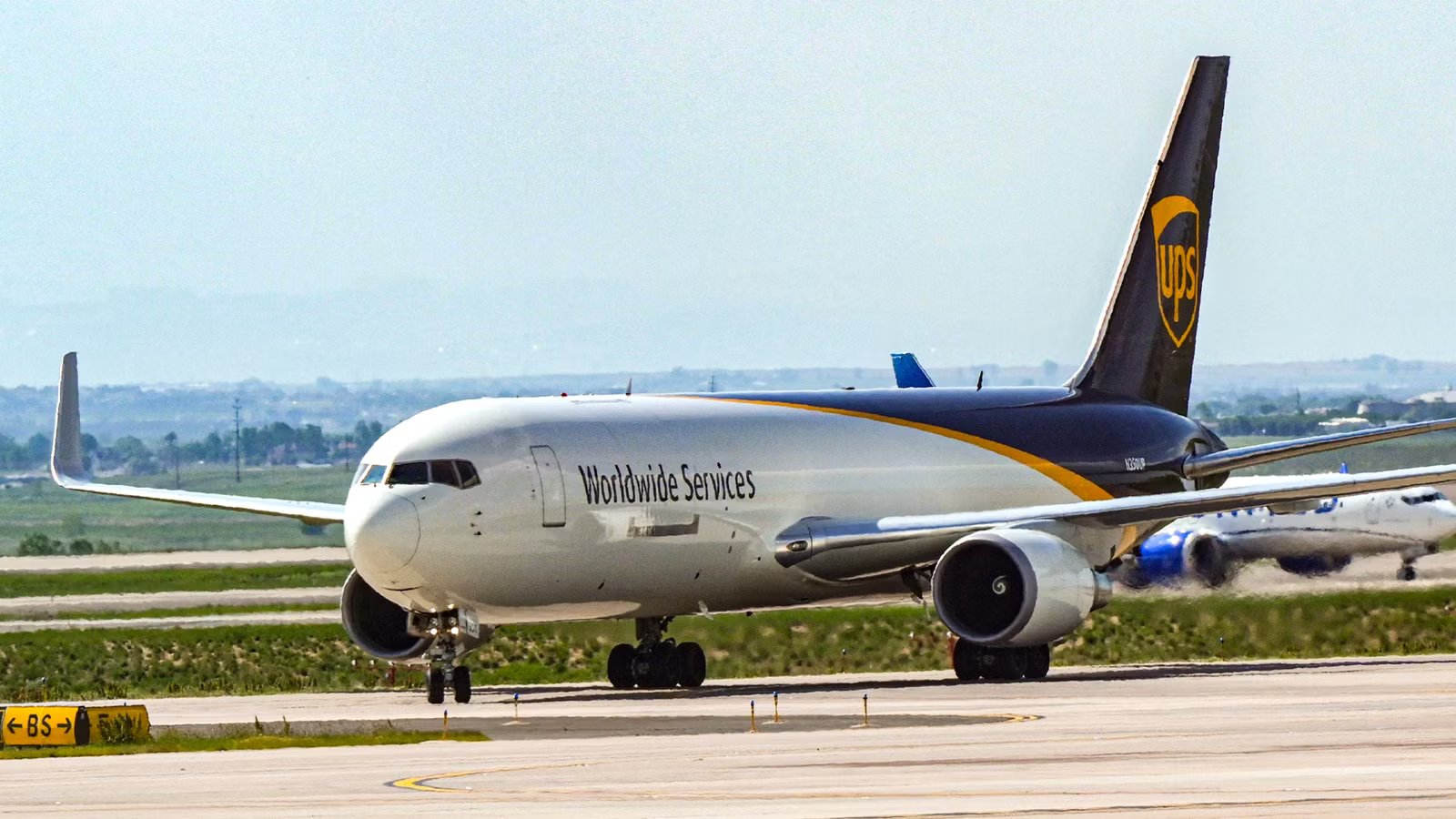
As the operator of one of the largest Boeing 767 fleets in the world,  UPS Airlines has turned the once-passenger favorite into a powerhouse for cargo operations. But just how many of these do they operate? As Boeing moves toward the production sunset of its commercial 767 line, the sheer volume of these mid-size freighters in the UPS fleet highlights the aircraft’s critical role in maintaining global supply chains.
Headquartered at its massive Worldport hub in Louisville, Kentucky, UPS Airlines operates one of the most sophisticated hub-and-spoke networks in the world. Unlike passenger airlines that prioritize young fleets for fuel efficiency, UPS often utilizes a buy-and-hold strategy, owning its aircraft outright to offset the lower daily utilization typical of cargo operations. This article will explore the current state of the UPS 767 fleet in early 2026, clarifying the total number of active 767s and explaining how this aircraft has officially become the primary successor to the recently retired MD-11 fleet.
Highly Dependable

As of February 2026, ch-aviation data shows that UPS Airlines operates a total of 102 Boeing 767 aircraft. This milestone was solidified on February 3, 2026, when the carrier took delivery of a brand-new 767-300F, with the registration N915UP, from Boeing’s Everett facility, marking the 100th freighter of the type to join the fleet. UPS operates a mix of production and converted models, including 90 factory-built 767-300F units and 12 passenger-to-freighter conversions.
The 767-300F is the aircraft that is the most depended on for the UPS network, specifically favored for its up to 119,049lb (54,000kg payload capacity and 3,255-nautical-mile range. These specifications make it the primary choice for medium-demand routes where larger aircraft like the Boeing 747-8F are inefficient, but the volume requirements exceed what a narrowbody Boeing 757 can handle.
This number is expected to grow further throughout the year. According to data from ch-aviation, UPS still holds 17 firm orders for new 767-300Fs. These remaining aircraft are scheduled for delivery before  Boeing officially concludes commercial 767 production, ensuring that UPS remains the largest global operator of the type for the foreseeable future.
An Unexpected Shift

Over 100 of these aircraft may seem like a huge number, but in reality, not all of these aircraft are currently taking to the skies. For example, on February 14, 2026, the carrier proactively removed 24 of its 767s from service to complete required maintenance identified during a routine technical review. While these 24 aircraft are still owned and counted in the total fleet of 102, they are temporarily inactive, demonstrating how routine inspections can shift the daily operational count by nearly a quarter of the fleet’s total strength.
The most dramatic influence on the 767 fleet count to date, however, was the sudden and total retirement of the McDonnell Douglas MD-11 fleet. Following the tragic crash of UPS flight 2976 in Louisville on November 4, 2025, which resulted in 15 fatalities, UPS accelerated its fleet modernization by permanently grounding its remaining 26 trijets. This decision, announced during the Q4 2025 earnings update, included a $137 million non-cash write-off and created an immediate capacity gap that the 767 platform has been tasked to fill.
|
Category |
Count |
Status / Impact |
|
Active/Inventory 767s |
102 |
Total fleet as of Feb 2026 |
|
Maintenance Grounding |
24 |
Temporary removal for review (February 14) |
|
MD-11 Replacement |
17 |
New 767s arriving through early 2027 |
For the 767 fleet, the average age is a relatively modern 16.5 years. This reflects a significant spread between the oldest and newest models in the program, ranging from a B767-200(ERBDSF) at 40.8 years to the newest B767-300F units, which average just 15.5 years. The oldest airframe in the primary fleet, N394UP, was originally built in 1995, while the newest, N915UP, rolled off the line in 2026. This wide age range means that while older airframes require more intensive structural overhauls, the new 767s arriving should provide the high-reliability flight hours needed to offset the lost MD-11 capacity.

FedEx Vs. UPS: Which Carrier Has The Oldest Fleet?
Overall, UPS operates the older fleet.
Compact & Convenient

Industry analysts view UPS’ deep commitment to the Boeing 767 as a masterclass in operational standardization. Rather than chasing newer, untested airframes, the carrier has focused on the extreme reliability of proven technology, a strategy that has only intensified following the accelerated retirement of its MD-11F fleet. This transition is reliant on the delivery of the new 767-300F units, ensuring the platform remains the backbone of the airline’s medium-widebody operations.
The primary reason experts cite for this strategy is engine commonality. The 767-300F is powered by the General Electric CF6 series, a legendary engine platform that UPS already utilizes extensively across its fleet. By sticking with the 767, the airline can make use of its existing maintenance infrastructure, spare parts inventory, and technical expertise established over decades of operating CF6-powered aircraft. This commonality is critical for maintaining high dispatch reliability in a nightly cargo operation where even minor delays can disrupt an entire global logistics network.
Some point to the unique 757/767 common type rating as a massive cost-saver and operational advantage. Because the flight decks of the 757-200PF, of which UPS operates 75, and the 767 are virtually identical, pilots can operate both aircraft types without undergoing separate, costly training programs. This flexibility allows the airline to swap crews between aircraft types at a moment’s notice, significantly reducing labor complexities and providing a stable, economically viable platform for its Worldport hub strategy.
Owning Outright

When evaluating the Boeing 767-300F, it’s important to look at the other main choices for cargo operators, such as the Airbus A330F and the larger Boeing 777F. While these aircraft offer newer technology, the 767 remains the superior choice for UPS due to its unique middle-market sizing and ownership economics. Unlike the A330, which features a much larger wingspan, the 767’s compact 156-foot wingspan allows it to fit into tighter parking gates at major hubs like Worldport. For a carrier like FedEx or UPS, a larger wingspan can actually be a liability, as switching to a wider aircraft could result in losing dozens of critical parking spots at cargo facilities.
From a financial perspective, the 767 strategy stands in stark contrast to the asset-light models used by newer competitors like Amazon Air. While Amazon often leases newer Boeing 737-800s or 767s, UPS prefers to own its fleet outright. For UPS, an older, paid-off freighter that sits idle for 12 to 16 hours a day between nightly sorts is far more profitable than a brand-new $200 million jet that requires massive monthly lease payments regardless of its flight hours. In this high-utilization, low-frequency environment, the lower capital expenditure of the 767 far outweighs the marginal fuel savings of a more expensive platform.
Importantly, the 767-300F outperforms its closest rival, the A330-200F, in sales by a ratio of six to one. Technical experts note that the A330 was originally designed with a nose-down attitude on the ground, requiring a unique, bulged nose gear to level the aircraft for cargo loading, a complexity that adds weight and maintenance costs. The 767, by comparison, is much less complex and provides a substantial payload, making it more efficient for the regional and medium-haul routes that form the backbone of UPS’ domestic network. By doubling down on this proven platform through 2027, UPS is choosing reliability and infrastructure compatibility over the high costs of radical fleet transformation.

The Aircraft Replacing The Boeing 767 In Cargo
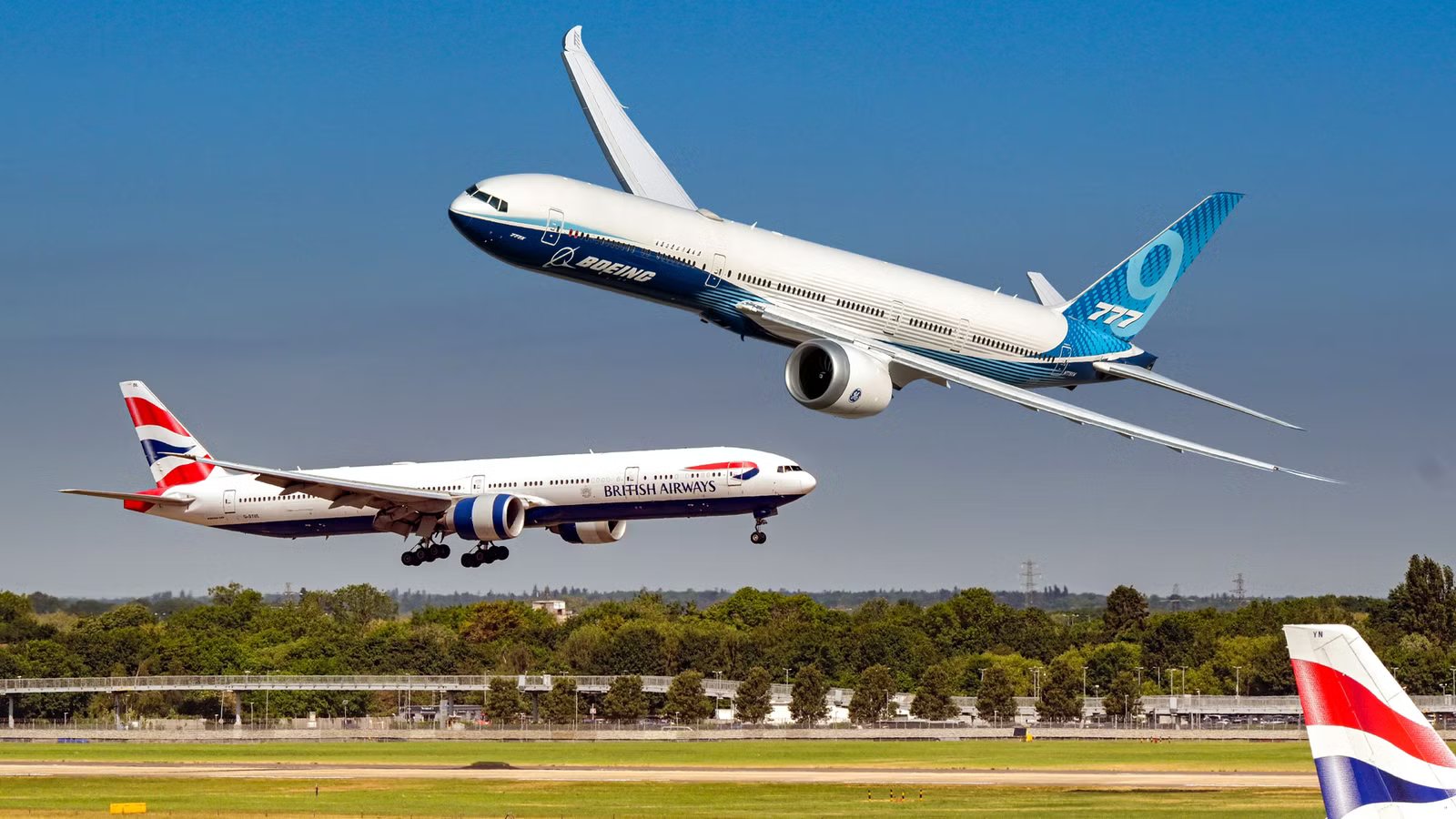
The most likely candidate to replace the 767 freighter is the 777-8F, the freighter variant of the upcoming and long-delayed 777X.
End Of Production Is Near

While the Boeing 767 is the current cornerstone of the UPS fleet, the strategy is not without its technical risks. One primary concern for experts is the near end of 767 production. Due to the tightening ICAO carbon emission standards effective in 2028, Boeing will be forced to cease production of the current 767-300F unless a new engine option is developed. US Congress has provided Boeing with a five-year reprieve on top of this date, however, it is unlikely to extend 767 production for the foreseeable future. For UPS, which still has 17 of these aircraft to be delivered, this creates a finite window to expand with factory-new models before being forced to rely entirely on the conversion market for future growth.
Another drawback is the increasing maintenance requirements of the aging sub-fleets. While the new 767-300Fs average just 15.5 years of age, the UPS conversion fleet is significantly older. These older airframes are more susceptible to structural fatigue and require more frequent, intensive heavy maintenance checks, compared to the newer tri-jets they are replacing. Especially considering the recent events surrounding the MD-11, UPS, as well as other operators in the cargo industry, will be on high alert when it comes to maintaining these older aircraft.
Finally, there is the risk of capacity limitations. The 767-300F is a medium-widebody aircraft, and while it is efficient, it cannot match the raw volume of the MD-11F it replaces. The MD-11F fleet, which UPS is phasing out, offered a three-engine heavy-lift capability that a twin-engine 767 cannot fully replicate on ultra-long-haul routes. This shift requires UPS to potentially fly more frequent frequencies to move the same amount of tonnage, increasing the total number of cycles on the airframes and placing higher demand on the existing CF6 engines currently in service.
Fleet In Transition

The evolution of the UPS Boeing 767 fleet in 2026 represents a decisive shift toward operational resilience and keeping on top of modern safety standards. The accelerated retirement of the MD-11 fleet, catalyzed by the tragic loss of Flight 2976 in November 2025, has permanently closed the chapter on tri-jet operations at Worldport. By replacing these aging airframes with brand-new, fuel-efficient 767-300Fs, UPS is passing on the torch to an aircraft that has already proven to be widely successful for the airline.
Proactive maintenance groundings of 24 aircraft in February 2026 highlight the rigorous oversight required for a large fleet, but the influx of 17 new deliveries ensures that the network remains robust. This modernization strategy, supported by a $137 million non-cash write-off for the fleet transition, positions UPS to maintain its competitive edge in the global logistics market through 2027 and beyond.
Ultimately, the Boeing 767 has solidified its role as the indispensable middle-market utility for the industry as a whole, providing the reliability and efficiency necessary to power the next era of growth. As the company reaches an important point in its strategy, this standardized fleet will be the foundation for delivering on its long-term promise of speed, safety, and global connectivity.