dailynewsnblog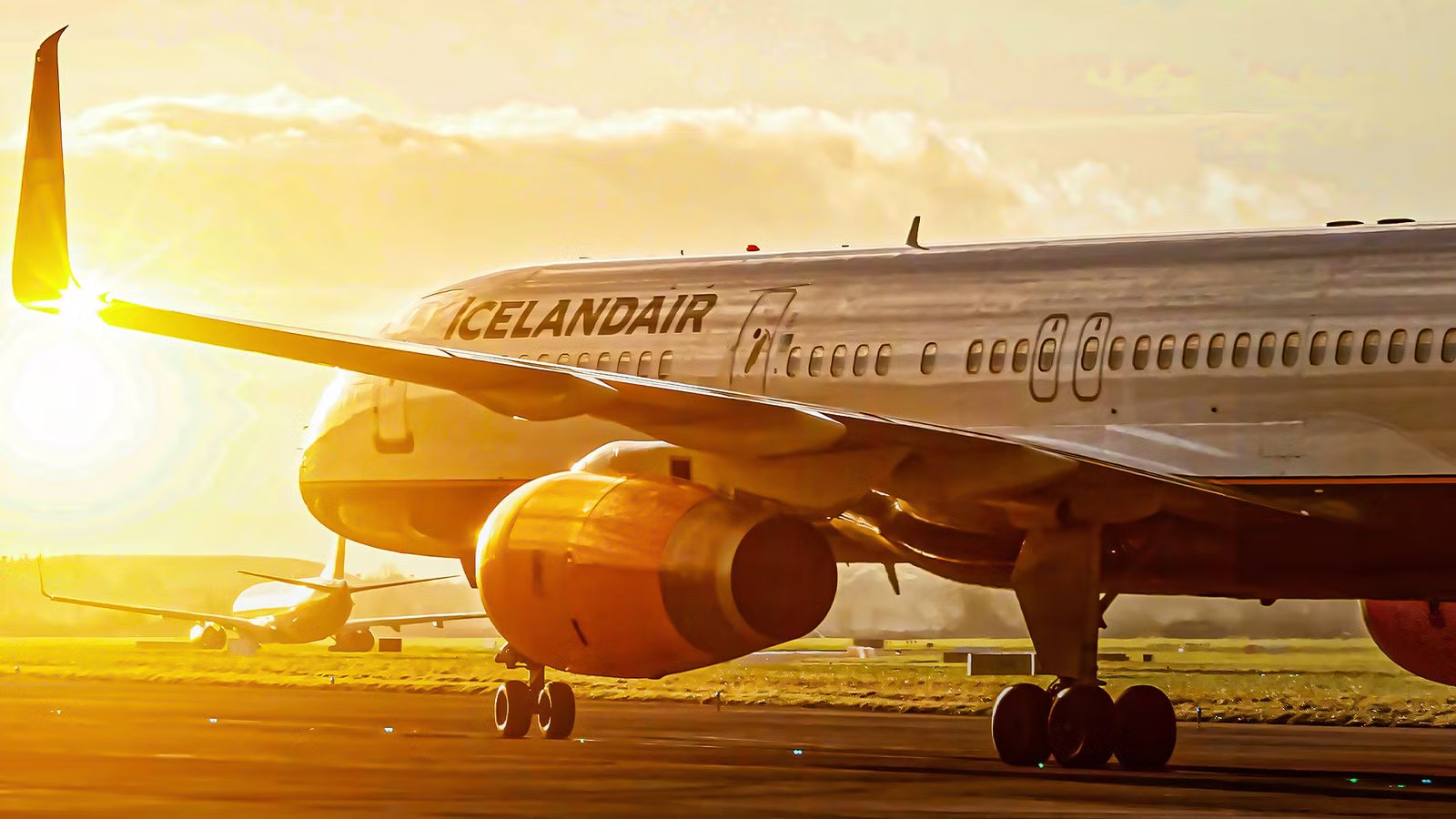
Nearly 45 years after its first flight and over two decades since production ended, the Boeing 757 remains one of the most influential aircraft in commercial aviation. Designed to replace older narrowbody and trijet aircraft, the 757 quickly built a reputation for exceptional performance and the ability to operate routes that few other single-aisle aircraft could match. Even in 2026, the 757 continues to fly thousands of passengers and millions of pounds of cargo around the world every week.
However, being over 45 years old, the 757 is quickly meeting the reality of the 21st century, where newer, more fuel-efficient aircraft have become the norm. As 2026 continues, so too will the number of 757 retirements, with over two dozen expected in February alone. However, the 757 continues to hold a niche role that newer aircraft have struggled to fully replace, leaving a substantial number of 757s still flying in 2026.
The Boeing 757 By The Numbers

The Boeing 757 is one of the most capable commercial airliners ever built. With over 1,000 aircraft produced over the past 44 years, demand for the midsized 757 was largely driven by airlines’ interest in an efficient, longer-range narrowbody airliner that could succeed the Boeing 727 series. Ever since taking flight for the first time in 1982, 54 airlines have operated the 757 as part of their fleets, making it an integral part of both domestic and international networks.
In terms of size, the original Boeing 757-200 is around 155 feet long (47.30 m), and has a maximum capacity of about 200 passengers. Just a few years after launching the 757-200, Boeing introduced a stretched variant, the 757-300. This elongated version measures an impressive 178 feet 10 inches (54.50 m) and can accommodate up to 240 passengers, only slightly less than typical seating on smaller widebodies, such as the 767 or 787.
Despite its age, the 757 remains one of pilots’ favorite aircraft to fly, given its impressive performance. With strong climb performance, short landing distance, and substantial range, the 757 can be fully loaded, takeoff from airports with short runways, and still complete flights across the Atlantic. Looking at the numbers, the 757-200 has a maximum takeoff weight (MTOW) of 255,000 pounds with a range up to 3,900 nautical miles (7,220 km). The 757-300, on the other hand, offers a MTOW of 272,000 pounds and a slightly shorter range of 3,400 NM (5,290 km). Given the 757’s unique handling characteristics, it quickly became a favorite among both pilots and airline operators.
How Many 757s Are Still Flying Around The World?

Today’s Boeing 757 operator base is heavily concentrated in the United States, as well as in international cargo service. In total, ch-aviation data shows 436 active 757 aircraft, flown by 45 different operators. Out of these aircraft, the most common variant still in operation is the Boeing 757-200, with 268 cargo variants and 132 passenger configurations still flying. On the other hand, just 32 of the larger 757-300 remain active, mostly flying with  Delta Air Lines and
  United Airlines.
Delta is by far the world’s largest 757 operator in 2026. With 83 757s in its fleet, the Atlanta-based carrier still relies heavily on the aircraft for its domestic operations. Behind Delta,  UPS Airlines and Fedex Express operate the world’s second and third largest 757 fleets, with 68 and 63 examples, respectively. These aircraft are all in cargo configurations and support airmail operations, given the 757’s unique performance characteristics. Outside the top three, United (51) and Chinese-cargo SF Airlines (42) rolled out the top five. However, the 757 still finds use in other sectors, with the United States owning ten 757s, used to support military operations as well as serving as Air Force Two.
In terms of age, the remaining active 757 fleet averages just over 30 years old, with the oldest active aircraft registered as N144DC at 43.9 years old, currently flying with charter operator Starflite International. Given the aging nature of the 757 family, many airlines have scheduled the retirement of their fleets. United Airlines, for example, plans to retire nearly its entire 757 fleet by the end of 2026, with 22 retirements expected in February 2026 alone. Even cargo operators like FedEx rely heavily on the 757 for freight operations, though FedEx plans to retire the type from its fleet by mid-2035.

Why In The World Does Delta Still Fly The Boeing 757?
The aircraft is a key piece of the airline’s fleet.
The Most Scheduled 757 Passenger Flights

While the total number of 757s still in passenger service is declining, the aircraft still plays an important role in airline operations, especially in the United States. According to data from aviation analytics firm Cirium, March 2026 will see 11,698 scheduled commercial 757 flights, averaging about 377 per day. In terms of seats available, 2,372,601 seats are on offer over the month, accounting for an ASM (available seat mile) count of over 3.4 billion.
Breaking down the scheduled 757 services further, over 96% of these flights will be operated by either Delta or United. Delta has scheduled 7,778 757 flights in March while United has less than half of that figure, with 3,501 flights scheduled next month. For Delta, the airline commonly utilizes its 757 fleet on high-density leisure routes, like from its Atlanta mega-hub to destinations like Tampa, Orlando, and Jacksonville. On the other hand, United’s use of its 757s is slightly more varied, with flights to leisure destinations, as well as flights to European cities like Reykjavík and Edinburgh.
Outside the U.S., just three other commercial airlines continue to operate regularly scheduled 757 flights. This includes Russian Azur Air, Uzbek Fly Khiva, and Icelandic flag carrier Icelandair. Amongst these three carriers, Azur Air will operate the most flights, with 192 scheduled operations and 115 million ASMs. Fly Khiva comes in second with 135 flights, and Icelandair is last with just 92 flights on the 757.
Why Did Boeing Stop Producing The Boeing 757?

In 2005, Boeing ended production of the 757, leaving a gap in the midsized commercial aircraft market. Despite its strong performance as an airliner, shifting airline priorities decreased demand for the 757. With the industry in a state of shock after the tragic 9/11 attacks, little demand remained for the low-capacity long-haul service the 757 was designed for.
21 years ago, when Boeing pulled the plug on the 757, the industry was shifting to dense hub-and-spoke models. While in 2026 airlines have shifted to long and thin routes, the ones the 757 perfectly serves, in 2005 it looked like the future was high-capacity routes between major cities. In 2005, the same year the 757 ended production, the Airbus A380, the largest commercial aircraft ever built, took flight, highlighting the shift away from smaller aircraft like the 757.
As the market rebounded in the 2010s and demand for an aircraft in between smaller narrowbodies like the Boeing 737 and mid-sized widebodies like the Boeing 787, calls for an updated 757X sprang up. However, unlike the 737 MAX and now 777X, Boeing was unable to revive the 757 program. This was largely due to the lack of a suitable next-generation engine, leaving little room to meaningfully improve the 747. Additionally, with production of the 757 ending in 2005, assembly lines previously dedicated to the type had been converted to support production of Boeing’s newer aircraft lines, making it difficult and expensive to restart production.

Should Boeing Have Updated The 757?
Since at least 2015, many analysts have considered bringing an updated 757X to the market impractical.
Still No Direct Replacement For The 757

With demand for a Boeing 757 replacement being at an all-time high in 2025, no aircraft currently available comes close to matching the 757’s unique combination of range, capacity, and performance. The closest modern alternative comes from Airbus in the form of the Airbus A321XLR, part of its best-selling A320 family. On the Boeing side, either the 737 MAX 9 or the yet-to-be-certified 737 MAX 10 acts as the American manufacturer’s closest replacement to the 757.
The Airbus A321XLR, which has already made its commercial service debut with several airlines around the world, including American Airlines in the United States, offers a comparable range and slightly decreased seating capacity than the 757-200. As advertised by Airbus, the A321XLR boasts a range of up to 4,700 NM (8,700 km). However, the A321XLR does give up some capacity compared to the 757, with the 757-200 being 10 feet longer, while the larger 757-300 is over 30 feet longer. This translates to a loss in capacity of around 25 to 50+ passengers, depending on the specific airline, configuration, and aircraft variant. Despite differences between the two aircraft, many major airlines, including United, have said the A321XLR will directly replace many routes previously served by the 757.
Compared to Airbus’s extra-long-range variant of its A321 family, Boeing’s 737 MAX doesn’t come close to matching its 757. While the 737 MAX 10 is roughly the same size as the A321XLR, it has a range just over 3,000 NM (5,550 km), putting some transatlantic routes currently served by the 757 out of reach for the 737 MAX 10. However, Boeing has hinted that it is considering a clean-sheet midsized aircraft that would fit in between its 737 and 787 families. Dubbed the Boeing 797, this aircraft would most likely be a scaled-down version of the 787, utilizing composite materials and a twin-aisle configuration with a range upwards of 5,000 NM (9,250 km) and a seating capacity similar to that of the 757.
However, with the 797 not expected to launch until at least the mid 2030s, given Boeing’s ongoing challenges in certifying the 737 MAX 7, 737 MAX 10, and 777X, the midsize aircraft market looks set to be dominated by the A321XLR for the foreseeable future. With dozens of 757 retirements expected in 2026 and many more to follow in the years to come, it will be seen if any aircraft can truly replace the Boeing 757.