dailynewsnblog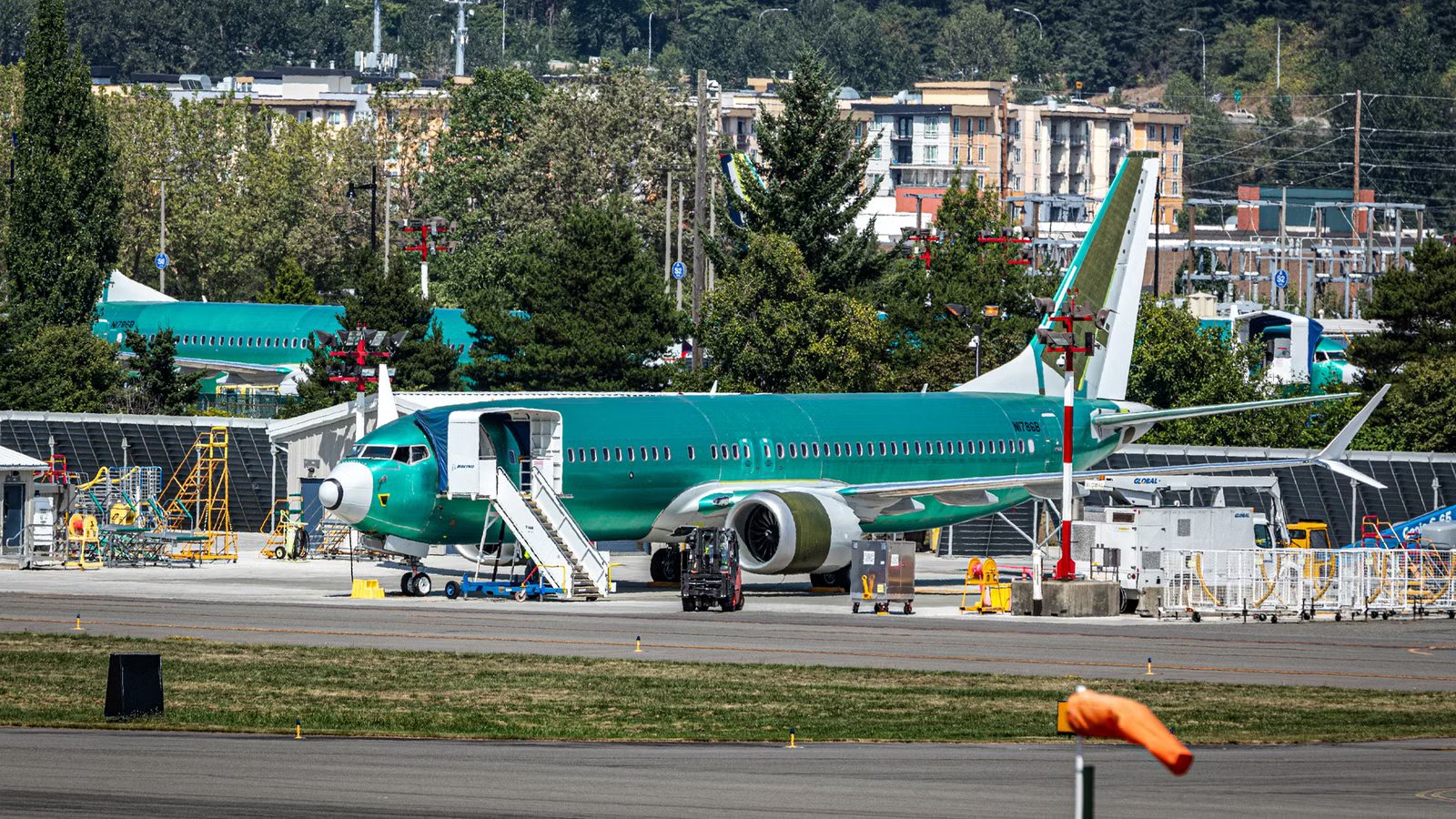
The delivery count of the Boeing 737 MAX has become a critical signpost for the manufacturer’s recovery and the health of global narrowbody capacity. For airlines, receiving these jets is vital to meeting record-high passenger demand while retiring older, less efficient aircraft. For  Boeing, each delivery is a step toward rebuilding its reputation and stabilizing a cash flow that was severely disrupted by years of groundings and production pauses.
This article will explore the cumulative delivery totals of the MAX family, examining the specific breakdown by model and the factors that have finally allowed Boeing to clear its massive storage backlog. We will look at how the program stands today compared to its rivals and what the future holds for the variants that have yet to enter commercial service. Drawing on real-time tracking data and industry analysis, this article clarifies exactly where this dark period of aviation history stands.
Picking Up Momentum

Based on data from January 2026, Boeing has officially delivered 2,157 aircraft from the 737 MAX family. This milestone reflects a massive push to stabilize production and clear the long-standing inventory of jets parked at storage sites like Moses Lake during the global grounding. The start of 2026 has shown significant momentum, with the manufacturer handing over 46 commercial jets in January alone, 38 of which were 737 MAX units, allowing Boeing to significantly outpace its rival, Airbus, in narrowbody deliveries in the opening month of the year.
Major global carriers remain the primary recipients of these airframes as they strive to scale their networks. For example, India’s Akasa Air recently received its 34th 737 MAX 8-200 on February 16, 2026, marking its third delivery in less than two months. The high-density MAX variants are increasingly dominant in delivery totals, as low-cost carriers seek to benefit from the aircraft’s 20% fuel-efficiency improvement over previous generations to aid aggressive international expansion.
From a broader perspective, reaching 2,157 deliveries signals what some industry observers have called the “end of an ugly chapter” for the program. In early 2026, Boeing finally delivered the last remaining 737-8 and -9 airframes manufactured before August 2025, meaning the company is no longer relying on a multi-year backlog of stored, stuck on the ground jets to pad its numbers. While a massive order backlog of 4,887 aircraft remains, the current delivery pace suggests that the production system is finally beginning to align with airline demand.
Transition Period

The final delivery count for the 737 MAX reflects Boeing’s transition from a period of inventory flushing to one of consistent industrial output. For several years, a significant portion of delivery numbers was bolstered by aircraft stored at shadow factories during the global grounding period. By early 2026, this stockpile of previously built jets has effectively run dry, meaning that almost all current delivery growth is now tied directly to the stability and speed of the active production lines in Renton.
While the FAA increased the monthly production cap to 42 aircraft in late 2025, any further move toward the year-end goal of 52 jets per month depends on Boeing meeting rigorous quality benchmarks. Additionally, the reintegration of Spirit AeroSystems has provided a major operational shift for Boeing, aimed at reducing traveled work, or tasks completed out of sequence, which historically led to delivery delays and rework.
|
Milestone |
Status / Target |
Monthly Rate |
|
Current (Feb 2026) |
FAA Authorized |
42 |
|
Mid-2026 Target |
Planned Ramp-up |
47 |
|
Year-End 2026 Goal |
North Line Full Output |
52 |
|
Long-Term Target |
2027/2028 Projection |
63 |
The impact of these factors is most evident in the delivery schedules of major operators like  Southwest Airlines and Ryanair. The MAX 7 and MAX 10 variants are still undergoing the final phases of FAA certification, following several delays that have also affected other Boeing model lines. Nearly 1,300 aircraft in the backlog currently remain undeliverable until later in 2026 or 2027. As a result, carriers that have gambled on these specific models are currently seeing their growth limited by regulatory timelines rather than factory capacity, forcing Boeing to balance its production between the ever-popular MAX-8 and the test-flight requirements of the newer models.

Boeing To Increase Monthly 737 MAX Production To 47 Aircraft In 2026
Boeing is ramping up its production rates.
Keeping A Close Eye

Industry sentiment points towards a period of cautiousness, as major carriers pivot their strategies to account for the slow but steady arrival of new airframes. While Boeing has successfully accelerated deliveries of the MAX 8, airline executives remain laser-focused on the certification timelines for the MAX 7 and MAX 10, which continue to dictate long-term network planning. For many CEOs, the conversation has shifted from questioning the aircraft’s safety to managing the logistical bottleneck of integrating hundreds of delayed jets into their fleets over the next 24 months.
Direct feedback from US-based MAX customers highlights the operational strain caused by these delivery windows. Southwest Airlines CEO Bob Jordan recently confirmed that the MAX 7 is expected to achieve FAA certification by August 2026, but the carrier does not anticipate the first passenger flights until early 2027 due to the necessary induction and pilot training periods. Similarly,  United Airlines has adopted a more aggressive fleet strategy. After removing the MAX 10 from its immediate near-term plans, Chief Commercial Officer Andrew Nocella noted that the airline is now leaning on the MAX 9 and leased A321neos to fill the capacity gap until the largest MAX variant arrives in volume, likely in 2027 or 2028.
Despite the frustrations, some of Boeing’s most vocal critics have softened their tone as production stability improves. Ryanair’s Michael O’Leary, known for his sharp rebukes of Boeing leadership, recently praised the accelerated delivery pace of the 8-200 models, noting that the airline is on track to carry over 260 million passengers by 2027 if the current momentum holds. Market analysts at S&P Global echo this sentiment, suggesting that if Boeing can maintain its current output of 42 jets per month without further quality escapes, 2026 will be remembered as the year the program finally moved from crisis management and damage mitigation to sustainable recovery.
Even Outperforming Airbus?

When assessing the 737 MAX’s delivery success, the most natural comparison is with the Airbus A320neo family, which remains its primary rival in the narrowbody market. While Boeing has successfully delivered 2,157 MAX aircraft as of early 2026, Airbus continues to lead in total volume, having delivered 4,387 aircraft from the NEO family by the end of January 2026. Interestingly, the start of the year provided a rare moment where the underdog outperformed the leader. Boeing handed over 46 commercial jets in January, 38 of which were MAX units, effectively doubling Airbus’s total delivery count of 19 aircraft for the same month.
However, these month-to-month delivery victories do not tell the full story and highlight the structural differences between the two manufacturers’ current positions. Airbus has historically prioritized a massive end-of-year surge, delivering 136 jets in December 2025 alone, which often leads to a natural ebb or reset in January as production lines recalibrate. In contrast, Boeing is striving for the opposite: a steady flow model under new leadership, aiming to avoid these erratic spikes and instead maintain a consistent, predictable output that rebuilds trust with both regulators and airline customers.
|
Metric |
Boeing 737 MAX |
Airbus A320neo Family |
|
Jan 2026 Deliveries |
38 |
15 |
|
Total Deliveries (Cumulative) |
2,157 |
4,387 |
|
Total Order Backlog |
4,887 |
7,190 |
|
Production Wait Time |
~10 Years |
~9.7 Years |
Ultimately, while Boeing is gaining ground in delivery volume, it still faces a significant deficit in the high-capacity segment where the Airbus A321neo reigns supreme. The A321neo accounted for 11 of Airbus’s 15 narrowbody deliveries in January, continuing to capture market share on long-range, single-aisle routes. Until the MAX 10 receives its final certification, targeted for late 2026, Boeing remains at a competitive disadvantage, as it lacks a direct 1-for-1 replacement for the A321neo’s range and capacity, forcing it to compete primarily with the standard MAX 8 and the high-density 8-200 variant.

How Many New Aircraft Does Boeing Deliver Annually?
Where Boeing is now with its annual deliveries, and what its future production volumes will look like.
Setbacks Causing Uncertainty

While having over 2,000 aircraft delivered is something to be celebrated, the number comes with significant caveats regarding the program’s overall health and future scalability. The most glaring exception is that this total is heavily weighted toward just two of the four planned variants: the MAX 8 and MAX 9. For the hundreds of customers who have ordered the MAX 7 or MAX 10, the delivered count remains at zero. This creates a lopsided reality in which Boeing is technically succeeding in volume but failing to fulfill a massive portion of its specialized backlog, leaving certain airlines with gaping holes in their fleet planning for another year.
The primary risk to maintaining this delivery momentum in 2026 lies in the zero-tolerance regulatory environment in place today. Although Boeing has been cleared to produce 42 jets per month, the FAA has made it clear that any further rate increases, such as the target of 52 by year-end, are not guaranteed and will be blocked if quality metrics like escapes or rework begin to trend upward. Furthermore, the technical solution for the engine anti-ice system, which has been the primary roadblock for the MAX 7 and 10, is currently undergoing final validation, and any perturbation in these final flight tests could push certification, and therefore deliveries, well into 2027.
In previous years, high delivery numbers were often artificial, fueled by clearing the storage backlog. Now that the shadow factory is empty, there is no longer a buffer to pad the numbers. If the Renton or Everett lines stop for even a week due to a part shortage or a quality audit, the monthly delivery count will drop immediately. In the meantime, monthly reports for any mention of traveled work are the most reliable early warning sign of a pending slowdown in the delivery pipeline.
Time To Shine?

Early 2026 marks a definitive turning point for the program, signaling the end of the storage era. For years, Boeing’s delivery numbers were a mix of new production and older jets being pulled from long-term storage, but the recent clearing of the shadow factory means the manufacturer is finally standing on its own two feet. While Boeing successfully outpaced Airbus in the first month of 2026, the true test will be maintaining the FAA-capped rate of 42 jets per month without the quality escapes that have historically derailed production schedules.
For the industry and the traveling public, the primary outlook for 2026 is one of transition. While the MAX 8 and MAX 9 are now common sights at airports worldwide, the success of the family’s next chapter depends entirely on the certification of the MAX 7 and MAX 10. Carriers like Southwest and United are currently flying gap-filler schedules, awaiting these variants to optimize their networks.
Boeing is positioning itself for a massive ramp-up, targeting a production rate of 52 aircraft per month by the end of 2026. If the manufacturer can successfully integrate the Spirit AeroSystems acquisition and activate its new Everett production line without introducing new defects, the 737 MAX may finally shed its reputation for crisis and become the reliable workhorse its orders suggest. For now, the “end of the ugly chapter” is here, but the sequel, defined by regulatory trust and manufacturing precision, is only just beginning.