dailynewsnblog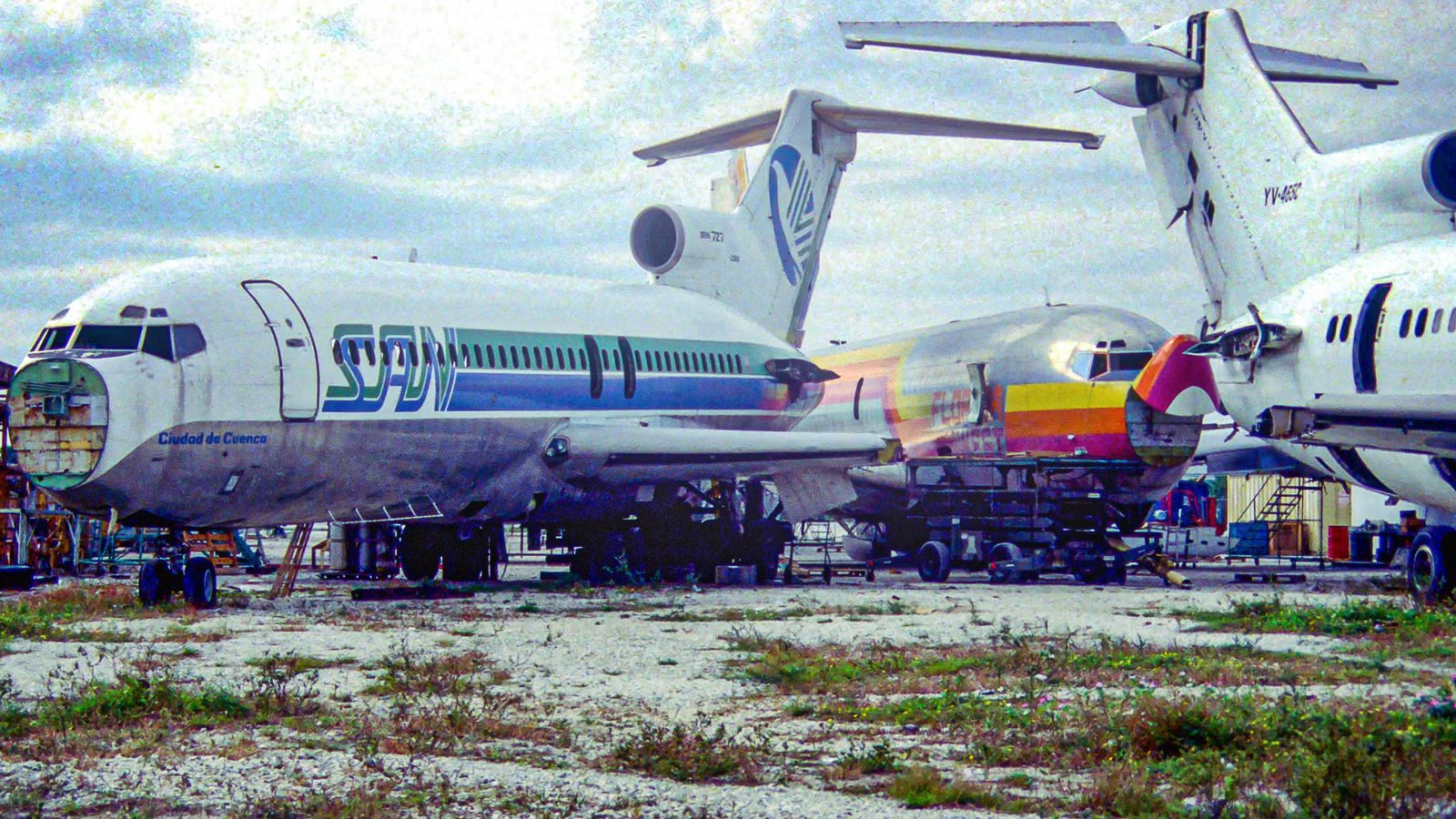
Currently, there is a shortage of aircraft in the world, and this is leading to lower retirement rates for commercial aircraft than would otherwise be expected. In all, there is an estimated cumulative delivery shortfall of around 5,300 aircraft, while around 16,000 are on order. The retirement shortfall is expected to be temporary, and the number is forecast to pick up again in the coming years.
Around 500 commercial passenger jets are scrapped every year, with the rate expected to rise closer to 800 or 900 in the late 2020s and early 2030s. Beyond that, the increasing number of aging aircraft from the increased production of commercial aircraft during the 2000s will push the number ever higher. Here is what to know about how many commercial aircraft are retired annually and why it is not always easy to say when an aircraft has been retired.
More Deliveries Than Retirements

In 2025, Airbus delivered a total of 793 commercial aircraft, Boeing delivered a neat 600 deliveries, and Embraer delivered 78 commercial aircraft, with a few more deliveries from aircraft manufacturers like COMAC. In all, that is around 1,500 aircraft delivered in 2025. However, there is a lag in the aviation industry; aircraft are typically retired after around 30 years of service.
Three decades ago, the airline industry was much smaller than it is today. In 1995, Boeing only delivered 239 commercial aircraft, Airbus only delivered 95, and McDonnell Douglas (which was merged into Boeing in 1997) delivered 42. That is only 376 commercial aircraft between the three major manufacturers. Back then, there were other regional commercial passenger jet manufacturers like Bombardier.
The EASA states, “Around the world, an average of 650 commercial aircraft were retired annually during the previous decade.” This number is higher than McKinsey’s number of around 500 over the last decade or so. The difference could be down to what counts as a commercial aircraft. The 376 delivery figure is only for the big three manufacturers in 1995, delivering mostly narrowbody and widebody jet-powered aircraft. EASA may be counting regional turboprop aircraft as well.
Shocks That Impact Aircraft Deliveries

It’s worth noting that factors like production rates and major shocks in the airline industry can significantly impact the pace of retirements. For example, McKinsey & Company wrote in 2024, “Our analysis suggests that aircraft retirement rates will be approximately 24 percent lower from 2024 through 2026 compared with the prepandemic years of 2010 through 2019.” There was also a wave of retirements during COVID-19, with many airlines accelerating the pace of retirements for their older aircraft.
Some airlines even took COVID-19 as a chance to get rid of their newish, but inefficient aircraft, as Air France did with its fleet of Airbus A380s. COVID-19 was not the only massive shock to the airline industry; the period after the September 11 attacks also had a massive impact, subduing the aviation industry for years. Meanwhile, the period after the pandemic has seen persisting supply chain bottlenecks, and Boeing has not recovered its Boeing 737 deliveries from the MAX crashes of 2018 and 2019.
|
Commercial aircraft retirements (per McKinsey, others) |
|
|---|---|
|
Commercial aircraft deliveries 1995 |
376 (Boeing, MD, Airbus only) |
|
Commercial aircraft deliveries 2025 |
Approx. 1,500 (Boeing, Airbus, Embraer, COMAC) |
|
2025 retirements |
500-650 (depending on inclusion and definition) |
|
Trend |
4.5% retirement growth per annum |
This has resulted in Airbus and Boeing being unable to deliver new aircraft fast enough for the rebounding airline industry. With their replacement aircraft delayed, airlines have been forced to delay retirements and hold onto their old aircraft for longer. One example is Korean Air, which is holding onto its 747-8s, A380s, and older 777s because replacement widebody deliveries are delayed.

Why Airlines Retire Aircraft Early
Airlines are retiring young aircraft like the A320neo and A220, primarily due to engine reliability issues and skyrocketing engine values.
Factors Influencing Retirements

As mentioned above, there are many factors that contribute to decisions to retire aircraft. Sometimes these are industry-wide, other times they are more idiosyncratic. For example, in 2025, UPS suffered the McDonnell Douglas MD-11 cargo plane (Flight 2976) crash. The FAA responded by grounding the entire fleet, which was mostly operated by UPS, Western Global Airlines, and FedEx. UPS then said it would bring the planned retirements of its remaining MD-11 aircraft forward and not return them to service.
This meant that UPS’ retirement of around 30 MD-11s in 2025 alone accounted for around 6% of the world’s total commercial aircraft retirements, a number that could have been much larger if FedEx had followed and retired its 29 MD-11s. A large number of Iranian commercial aircraft appear to have been destroyed in the 2026 air campaign over the country. As of the time of writing, it is unclear how much of Iran’s commercial fleet has been lost.
One example of seemingly bizarre market forces influencing aircraft retirements has to do with salvaging the engines. The airline industry has a shortage of aircraft, and this is largely driven by a shortage of working engines. The Pratt & Whitney GTF engine woes have added to this. The demand for engines is now so high that engines are sometimes worth more when sold separately. This has led to newish (even three-year-old) A320neos being scrapped for their engines.
No Exact Retirement Number

It can also be noted that it’s not always clear when aircraft are retired. Some lists may list an aircraft as retired, stored, written off, grounded, or something else. Others may include aircraft written off from accidents as retired, meaning there can be an inconsistency between lists. Many airliners are withdrawn from use and placed into storage, giving airlines the ability to return them to service if they want.
As an example, Emirates has a few A380s that were withdrawn from service and stored in 2020. It remains unclear if all of these will ever return to service; if they don’t return to service, which year should be counted as their retirement date? Aircraft can remain stored for decades, gathering dust. Fighter jets can be the same. Many lists name North Korea as having one of the largest fighter jet fleets in the world, but these are overwhelmingly obsolete aircraft that likely haven’t flown in many years. In many ways, these fleets resemble something closer to a museum than a functioning air force.
In the commercial sector, this gets murky with sanctioned or underfunded airlines, where aircraft can be grounded for years due to an inability to service them. Examples include many aircraft in Iran and the Russian airline, S7, which has been forced to ground its A320/A321neo aircraft due to its inability to service them due to sanctions. A quick look at Google Maps’ satellite view of Iran’s Tehran Mehrabad International Airport shows scores of commercial airframes parked around it, and it’s often unclear which have any chance of flying again.

Why The Airbus A340 Won’t Be Retired Anytime Soon
The A340 is nearing the end of its commercial service, but still has meaningful impact in other sectors.
Scrapped For Parts

As a rule, when aircraft are retired, they are recycled for their parts and components. In extreme cases, this can include retrieving three-year-old engines along with the aircraft’s many other systems. More commonly, aircraft are coming to the end of their useful lives. These aircraft are also valuable for their parts, leading to aircraft becoming cannibalized to keep an ever-shrinking fleet of aircraft flying.
Air forces do this with their military aircraft, and it happens in the commercial industry. Some airlines may purchase a fleet of aircraft just for parts. Delta Air Lines has done this with its Boeing 717s. Delta took over Southwest’s 88 ex-AirTran Boeing 717s between 2013 and 2015. After that, it went on a shopping mission to purchase more of the world’s Boeing 717s for parts to keep its fleet operating. It purchased around 104 Boeing 717s to sustain a fleet of around 80 aircraft.
The US Air Force is currently purchasing two ex-Lufthansa Boeing 747-8s, apparently for training and for parts to sustain its Air Force One fleet. Old aircraft that are the last of their lineage, like those UPS MD-11s being scrapped, will be of limited recycling value for parts. On very rare occasions, retired aircraft can find themselves as part of a new Frankenstein aircraft. One great example is how Scaled Composites used two Boeing 747s to build its one-of-a-kind Model 351 Stratolaunch (called “Roc”) test aircraft.
Aircraft Recycling Industry To Grow

All else being equal, as the production of commercial aircraft increases today, the rate of retirements will increase in the future. Around 1,500 commercial jet-powered aircraft were delivered in 2025, and so it can be expected that the rate of retirement of aircraft in 2055 will be around triple that of today. Using estimates from 2024, Boeing expects the world’s aviation industry will need almost 44,000 new commercial airplanes over the two-decade period from 2024 to 2043.
GlobeNewswire notes, “The Global Aircraft Recycling Market is projected to expand from USD 5.06 Billion in 2025 to USD 7.78 Billion by 2031, registering a compound annual growth rate (CAGR) of 7.43%.” Airbus expects the aircraft dismantling and recycling market to generate around $52 billion in Used Serviceable Materials (USM value) over the next twenty years.
Retiring aircraft is often a combination of getting rid of an older aircraft that is no longer feasible to operate and using the components of that aircraft to sustain other aircraft. Aircraft typically become infeasible to operate because they are either deemed no longer safe to operate or are too expensive to operate. Commercial passenger aircraft typically retire at the age of between 25 and 30 years, with narrowbody aircraft retiring a bit earlier than widebody aircraft. Freighters are typically retired when they are 30 to 40 years old.