dailynewsnblog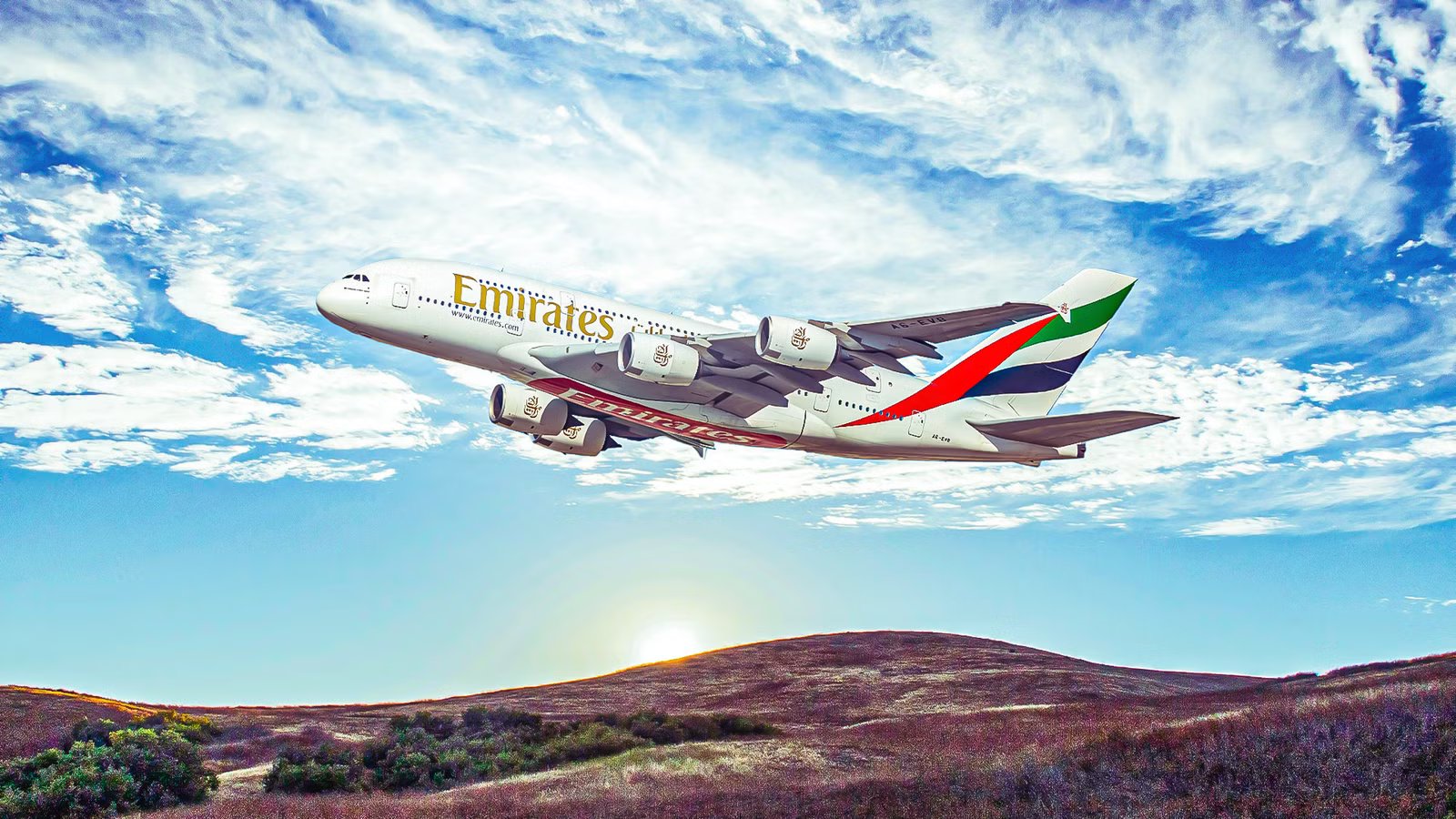
The Airbus A380 has slowly become an icon of modern long-haul travel, as it is the only full double-deck passenger jet ever to enter service. It remains the closest thing commercial aviation has to a floating flagship. The aircraft’s job is not just to cram in passengers. Rather, the aircraft’s impressive cabin volume gives carriers the ability to build experiences with larger premium cabins, wider aisles, social spaces, and features that simply do not fit on smaller widebody jets. This is why the aircraft remains a fan favorite, even in an industry that has increasingly shifted towards twin-engine aircraft. Nonetheless, the Airbus A380 remains an important tool for certain carriers, and this is no more true for any airline than Dubai-based legacy carrier  Emirates.
With four engines, a heavy airframe, and complex maintenance, the jet is undeniably costly to operate. Airlines certainly have to be surgical about where and how to deploy the model. The winners are carriers that have slot-constrained airports, thick long-haul demand, and a premium-heavy revenue mix that can justify the model’s high operating costs. It should come as no surprise to the trained observer that no budget airline operates the Airbus A380. Emirates has this exact profile. In 2026, the A380 is not a niche add-on to the Emirates strategy, but rather a core piece of the airline’s current network and growth plans, despite the model no longer being in production. The carrier continues to treat the aircraft as a core element of its long-term strategy.
A Brief Overview Of The Airbus A380 Itself

The Airbus A380 was designed for the era of hub-to-hub travel, when airlines primarily moved huge volumes of passengers between major global gateways, and where runway and slot constraints made it rather challenging for airlines, even the world’s most capable and financially sound ones, to add more flights. Some airports simply did not have enough space, even when they attempted to extend flying hours or adapt air traffic control schedules. This is where the Airbus A380 became increasingly attractive, as the jet could add significantly more capacity when adding another flight was not a viable option.
The Airbus A380 first entered passenger service in 2007, and it quickly earned a reputation for being exceptionally quiet and stable. This was helped by the jet’s impressive size, massive wing, and four-engine design. This large aircraft feeling is real, and it is a real reason why passengers still love the type.
Where the Airbus A380 really changed the game, however, was through premium real estate. A full upper deck in the aircraft creates design freedom, something carriers like Emirates really wanted and could roll with. Airlines could build larger business-class cabins, add lounges, and even introduce new amenities like shower suites. These were all impossible on early-generation aircraft. Even now, the jet remains the signature flagship for a few carriers that can make the economics work, with Emirates the chief among them.
An Overview Of Emirates Global Network Strategy

Emirates runs a classic, highly optimized hub-and-spoke system that is based out of a major global connecting hub at Dubai International Airport (DXB). The carrier’s superpower is its geography. Dubai currently sits in a sweet spot for one-stop travel flows between Europe, Africa, Asia, and the Americas. The airline’s dominance in premium markets is also a key piece of how it is able to consistently turn profits, and protecting margins in business-class cabins is essential for continued success.
A massive share of Emirates’ passengers are connecting between destinations all across Afro-Eurasia. Dubai is thus the hub, a place where carefully coordinated arrival and departure banks offer strong schedules for travelers who value convenience. The hub’s lounge system is also adequate for modern premium travelers who are in search of all the latest amenities. This business model is ultimately known for rewarding scale.
If one is capable of consolidating demand from dozens of cities into one hub, they can profitably operate large long-haul aircraft, especially in situations where premium demand remains exceptionally strong and airport capacity is excessively constrained. Emirates’ network also leans directly into continued scheduled utility and optimization, with multiple daily departures on routes between key city pairs and heavy-frequency services where demand supports it, making the product attractive to higher-yield travelers who care about choice and connectivity.

The Airbus A380’s Unique Cabin Design That Has Allowed Airlines To Generate More Revenue
Two decks and a wide airframe enable the A380 to transport more people than any other aircraft in a style only the “King of the Skies” can accomplish.
Where Does The Airbus A380 Fit Within This Broader Network Strategy Picture?

For Emirates, the Airbus A380 is a two-for-one weapon that allows it to increase capacity on marquee routes while also improving its premium brand. On slot-restricted routes, such as services to Dubai from airports like  London Heathrow Airport (LHR) or John F. Kennedy International Airport (JFK) in New York. The Airbus A380 allows Emirates to add seats without adding flights, which is the whole point when one cannot easily acquire more takeoff or landing slots, even if a carrier, in theory, had unlimited capital at its disposal.
Emirates itself has repeatedly framed the Airbus A380 as a tool that can efficiently serve demand at several slot-constrained airports, all while supporting continued network growth. The Airbus A380 also acts like a flying billboard. The onboard lounge, the shower spa, the mystique of having two separate passenger decks, and the spectacle of having showers onboard all help reinforce Emirates’ narrative as a premium carrier.
This especially matters for the airline in competitive long-haul markets where the soft product and brand halo can fundamentally impact buying decisions. In 2026, Emirates continues to operate the type at scale, with hundreds of weekly Airbus A380 flights to and from Dubai, a route footprint that spans across dozens of different markets. In other words, this is not exactly the nostalgia of flying; it is a living, revenue-driving fleet. At the end of the day, Emirates simply would not be Emirates without the Airbus A380.
A Look At The Emirates Airbus A380 Fleet In 2026
Emirates ultimately became the defining customer for the Airbus A380, although Singapore Airlines, on paper, was the aircraft’s launch customer. The carrier received its 123rd Airbus A380 in December 2021, which was also the final A380 to ever roll off the production line. This marked Emirates’ long commitment to the program, dating all the way back to the experimental A3XX program that later morphed into what we know today as the Airbus A380.
Today, Emirates has 116 Airbus A380s in service, as the airline elected to retire some earlier airframes. The very first Airbus A380 to be delivered to the carrier, airframe A6-EDA, has already been retired and repurposed. By the end of 2025, the airline had reached its current number of 116 Airbus A380s. Emirates CEO Tim Clark has noted that he plans on having around 110 operational Airbus A380 jets by the end of 2026, according to Aviation Week.
On the operational side, the carrier tends to have around 98 of its Airbus A380 models flying at any given point in time, while the remaining 18 are typically parked in Dubai. At the carrier’s principal hub, it performs line maintenance on its entire fleet, which can certainly take some time, given the complexity of A380 maintenance.

Why Does Emirates Keep Upgrading Its Airbus A380s?
This article explains why the carrier has chosen to commit so strongly to the A380.
What Airbus A380 Cabin Configurations Can You Expect?

One thing that is critical to understand about the Airbus A380 is that it is not just a product for Emirates but rather a platform on its own. The cabin configuration that one may choose to book a ticket in can radically change the overall experience. The classic flagship configuration for the carrier is a three-class 489-seat setup, featuring First, Business, and Economy, to maximize premium real estate.
This is perfect for the kinds of slot-constrained trunk routes where Emirates can sell a lot of high-yield seats without adding more frequencies. The newer showpiece is a four-class 484-seat jet with Premium Economy, a place where Emirates sees future revenue growth. The carrier plans to carve out a profitable middle cabin while keeping the Airbus A380’s massive premium halo intact.
There is an outlier we have yet to discuss. The carrier also has a two-class 615-seat Airbus A380, which strips out First Class in favor of becoming a pure volume machine for demand-heavy leisure markets. This allows the airline to turn this jet into a high-capacity shuttle rather than just a luxury flagship. At the end of the day, Emirates uses different A380 layouts as a demand-matching tool.
What Is Our Bottom Line?

At the end of the day, the Airbus A380 is a critical tool for Emirates as it looks to continue servicing global destinations with a premium-oriented hub-and-spoke model. In most aviation management textbooks, Emirates is typically used as the basic example of a hub-and-spoke carrier due to the simplicity of its network.
The airline, quite literally (except for some fifth-freedom routes), has all of its routes either originating or terminating at Dubai International. The simplicity of its network and the lack of complexity in its operations are what make the Airbus A380 work for Emirates, and it is the exclusive reason why the carrier has been able to make this jet work at scale.
Emirates is a carrier with a very straightforward purpose. Its streamlined operations through one hub are what allow it to accommodate the additional complexity of operating the Airbus A380. The jet is expensive, and only for Emirates is there a reason to justify this massive expense.