dailynewsnblog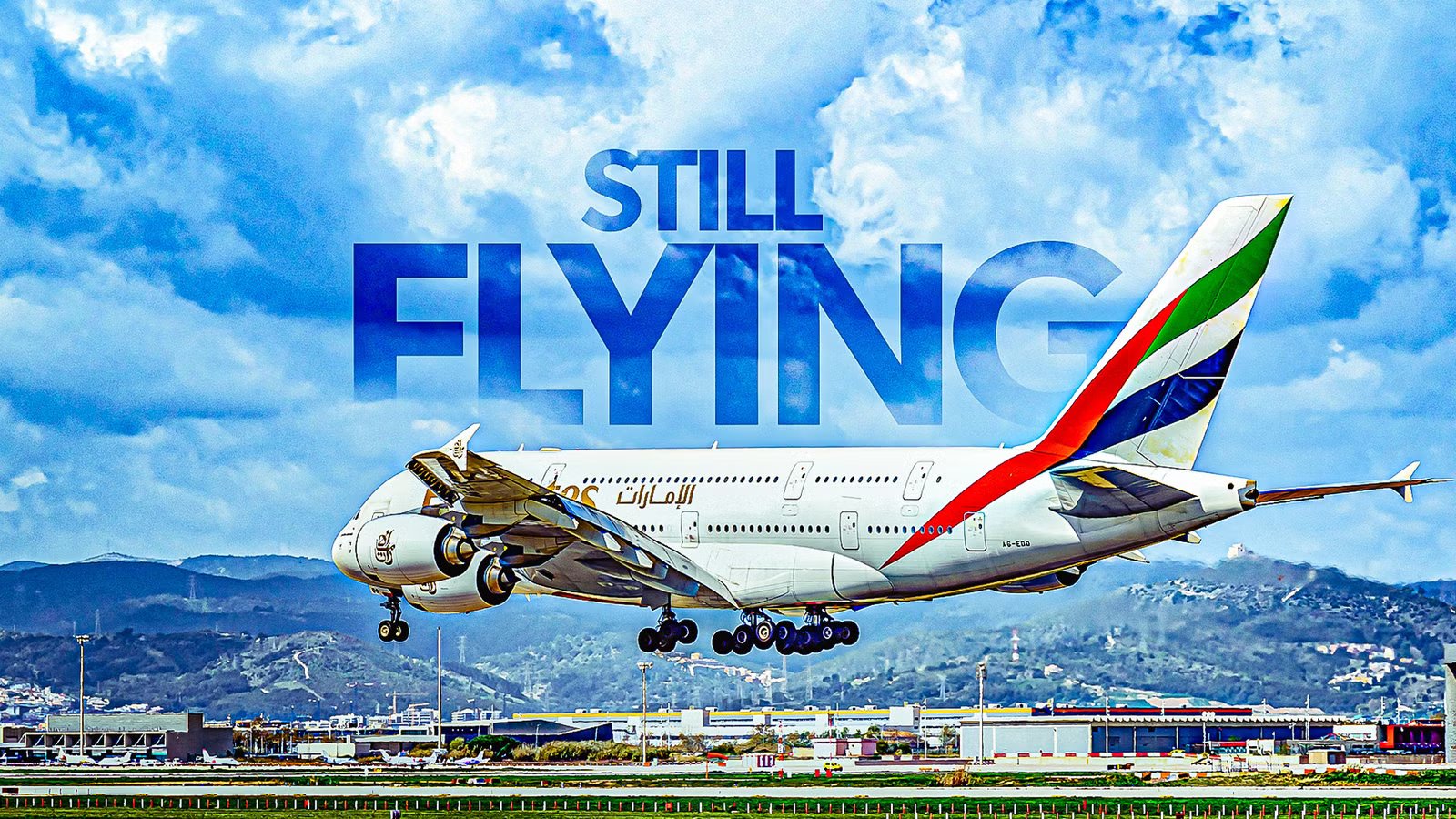
For an aircraft that many left in deserts, the Airbus A380 has staged a return so massive it has surprised even its greatest critics. The question now is no longer whether the superjumbo will survive, but how many more of these giants can be reactivated to meet the insatiable demand for global travel. Tracking the number of active A380s has become increasingly meaningful for aviation analysts and enthusiasts alike, as it signals the industry’s continued reliance on the hub-and-spoke model and provides a clear metric for the recovery of international long-haul capacity.
This article will explore the current status of the global A380 fleet as of early 2026, utilizing real-time data to clarify which airlines are doubling down on the double-decker and which are preparing for its final descent, displaying the numbers by carrier, examine the technical maintenance hurdles that determine if a plane is active or parked, and look at the projected retirement dates that define the aircraft’s remaining lifespan.
New Resurgence

According to the latest data from ch-aviation, there are currently 159 active Airbus A380 aircraft operating worldwide as of February 2026, spread across 11 different operators from global giants like  Emirates to niche carriers like All Nippon Airways(ANA). While the production of the A380 ended in 2021, the active fleet remains relatively young, with many airframes having significant life left. For instance, ANA’s “Flying Honu” fleet averages just under 7 years in age, while the youngest Emirates airframes are less than 8 years old. This suggests that for many carriers, the A380 will remain a core asset for at least another decade if not longer.
Cirium schedule data reveals that these 159 aircraft are being utilized with remarkable intensity, serving a total of 63 airports globally throughout 2026. The network is heavily anchored by  Dubai, which remains the capital of the superjumbo. From January to August 2026 alone, Dubai is scheduled to handle over 20,225 one-way A380 departures. However, the reach of the aircraft extends far beyond the Middle East. Major hubs like
  London Heathrow,
  Singapore Changi, and
  Sydneyremain critical strongholds where the A380’s high capacity is essential for managing limited takeoff and landing slots.
Rather than flying to hundreds of secondary cities, airlines are focusing the A380 on high-density trunk routes where they can maximize the 450 to 600+ seats available per flight. While some carriers like  Etihad and
  Qatar Airways are operating smaller sub-fleets of seven to 10 aircraft, they are doing so with high precision, deploying them only on routes like London, Paris, and Sydney where premium demand is highest. The result is a global fleet that is smaller than its peak in 2019 but arguably more efficiently utilized than ever before.
Why Is The Total Figure Changing?

The fluctuation in the number of active A380s is dictated by a complex intersection of infrastructure limits, airframe longevity, and global supply chain health. While 159 aircraft are currently in the air, this figure is a moving total influenced by heavy maintenance schedules, such as C-checks and D-checks, which can ground an aircraft for months at a time. Furthermore, the operational count is heavily skewed by the hub-and-spoke strategy of specific regions, particularly the Middle East and Asia-Pacific, where airport congestion makes the A380’s high-density capacity indispensable.
Emirates, the largest A380 operator, has stated that delays in Boeing 777X deliveries have forced the airline to extend the life of its A380 fleet significantly, aiming to keep 110 units active by the end of 2026. Simultaneously, airlines like  British Airways and
  Lufthansa are finding that the A380 is the only viable way to maximize passenger throughput at slot-constrained airports like London Heathrow and Munich. Additionally, the high revenue generated by first-class suites and onboard lounges makes the aircraft profitable on competitive routes even with higher fuel costs compared to twin-engine jets.
A prime example of this second life is Lufthansa’s strategic U-turn. After grounding its entire fleet during the pandemic, the airline is reactivating its existing aircraft to serve high-demand US routes like  Munich to
  Los Angeles and Washington. Similarly, Qantas has utilized the A380 to restore capacity on its flagship “Kangaroo Route” to London and its ultra-long-haul service from Sydney to Dallas, proving the aircraft’s necessity in markets where range and volume are both critical. These case studies highlight that the A380 is no longer seen as a vanity project but as a necessary bridge until mid-sized, high-capacity twin jets are available in sufficient numbers.

Where To Fly The Airbus A380 Next Year: Airlines & Routes
Find out where the double-decker will be flying to next year.
No Longer A Burden?

Airline leadership has transitioned from viewing the A380 as a legacy burden to treating it as a vital capacity utility. Sir Tim Clark, President of Emirates, has been the aircraft’s most vocal defender, frequently noting that on routes into Paris, London, and Sydney, the airline simply cannot find enough seats to satisfy demand, particularly in premium cabins. This sentiment is echoed across the industry, where the narrative has shifted from retirement to refurbishment.
“Every time we fly into Paris or London or Sydney, we’ve got no seats, and our spill rate is so high,” explained Sir Tim Clark in a 2026 interview with Key.Aero, confirming that Emirates intends to keep the superjumbo flying until 2041. To support this, Emirates is investing billions in retrofitting over 100 aircraft with new premium economy cabins and upgraded interiors. Even more conservative operators like British Airways have committed to a fleet-wide retrofit starting in mid-2026, introducing brand-new first suites and Club Suites with doors, a clear signal that the aircraft will remain in their frontline service for the next decade.
|
Region |
Scheduled A380 Flights (2026) |
Top Hub |
|
Middle East |
52,400 |
Dubai (DXB) |
|
Europe |
18,120 |
London (LHR) |
|
Asia-Pacific |
14,850 |
Singapore (SIN) |
|
North America |
5,948 |
Los Angeles (LAX) |
The A380’s survival is tied very strongly to the experience of travel. By maintaining the superjumbo, airlines can offer unique amenities, like showers on Emirates or residence suites on Etihad, that are physically impossible to replicate on smaller aircraft. As long as airports remain congested and travelers willing to pay for premium space, the A380 will maintain a niche that no other aircraft can fill, effectively buying time for the industry to solve the production bottlenecks of the 2020s.
Can’t Match Competitor Efficiency

The primary alternative to the A380 is the shift toward ultra-efficient twin-engine widebodies like the Boeing 777-9 and the Airbus A350-1000. While the A380 is the capacity king, capable of carrying over 500 passengers in a typical three-class layout, the newer twin-jets offer a more pragmatic balance of capacity and cost. The 777-9, according to  Boeing, is designed to carry approximately 426 passengers while burning 15 to 25% less fuel per seat than the superjumbo. This efficiency gap is the main reason why production of the A380 ended in 2021, as airlines increasingly favored the flexibility of point-to-point travel over the massive hub-to-hub model the A380 requires.
However, the efficiency of a twin-jet is often negated by infrastructure reality. At slot-constrained airports like London Heathrow or Dubai, an airline cannot simply add more flights with smaller aircraft because there are no available takeoff or landing slots. In these specific environments, the A380 remains the superior option because it maximizes the revenue potential of every single slot. Furthermore, from a technical safety perspective, the A380’s four engines provide a unique redundancy. An engine failure results in only a 25% loss of total thrust, compared to a 50% loss on a twin-engine jet, allowing for broader operational margins in certain long-haul scenarios.
The continued reliance on the A380 in 2026 is also a byproduct of the delivery gap. With the Boeing 777X program facing years of certification delays, carriers like Emirates and Lufthansa have been forced to reactivate or extend the life of their superjumbo fleets simply because there is no other aircraft on the market that can replace the A380’s sheer volume.

How Much Does It Cost To Operate An Airbus A380 In 2025?
Discover how much it costs to operate an Airbus A380 in 2025, and why airlines like Emirates and Global Airlines still see value in the superjumbo.
Expensive Parts And Limited Flexibility

While the A380’s return is celebrated by passengers, it carries some significant operational risks, most notably the escalating cost of maintenance and a fractured supply chain. As an out-of-production aircraft, parts for the A380 are becoming increasingly expensive and difficult to source. A major D-check for the superjumbo can consume over 60,000 hours of labor, and the aircraft has seen nearly 95 airworthiness directives from EASA since 2020, covering issues from cracked wing fittings to leaking escape slides.
Another risk is the specialized infrastructure required. The A380’s 80-meter wingspan requires code F airport status, which limits it to a fixed list of global hubs. This lack of flexibility makes the aircraft a liability during economic downturns, as it is nearly impossible to redeploy to secondary markets if demand on major routes stays low. Furthermore, some airlines are maintaining mixed retirement strategies that create uncertainty. For example, while  Singapore Airlines has committed to year-round service to Dubai through 2027, it has also indicated that the A380 will eventually leave the fleet to maintain its young fleet value proposition.
|
Airline |
Estimated Retirement Start |
Key Reason |
|
Singapore Airlines |
Ongoing (partial) / 2027+ |
Transition to all-twin-engine fleet |
|
Korean Air |
2027 |
Merger with Asiana – fleet simplification |
|
Lufthansa |
2030 |
Arrival of 777-9 and A350-1000 |
|
Qantas |
2032 |
Replacement by Project Sunrise A350s |
|
Emirates |
2041 |
Final transition to 777X and A350 |
Carriers like new startup Global Airlines have also proven that operating such a large aircraft can be economically challenging. The airline made headlines for acquiring the A380 but has yet to launch regular scheduled commercial service as of early 2026. Their sole aircraft remains in long-term maintenance, highlighting the difficulty of launching a startup based on such a complex and expensive airframe. For established carriers, the A380 risk is a financial one as it typically requires a load factor of over 55% just to break even, meaning that in a volatile fuel market, the giant can quickly become a nuisance if cabins aren’t full.
How Long Will This Resurgence Last?

The resurgence of the Airbus A380 in 2026 is a definitive signal that capacity remains king in the post-pandemic era. With 159 active aircraft across 11 airlines, the superjumbo has transitioned from a grounded relic to an essential tool for managing global travel demand. For carriers like Emirates, which accounts for the vast majority of the fleet, the aircraft is not just a plane but a cornerstone of their business model, scheduled to operate over 91,000 flights this year alone.
The superjumbo experience is more accessible now than it was five years ago. Major hubs like London, Singapore, and Dubai have solidified their roles as A380 strongholds, offering a level of cabin space and quietness that twin-engine jets struggle to match. However, the clock is ticking for many European and Asian carriers. While Emirates plans to fly the giant until 2041, other airlines like Korean Air and Lufthansa are eyeing the late 2020s for the start of their final retirements.
The A380 will remain a rare but powerful fixture of the skies. Its survival is a testament to the fact that until the industry can solve the slot crisis at the world’s busiest airports, there is simply no substitute for the sheer volume of the A380. If you want to experience the onboard lounges and showers of this aviation icon, the next 5 to 10 years represent the peak of its second act.