dailynewsnblog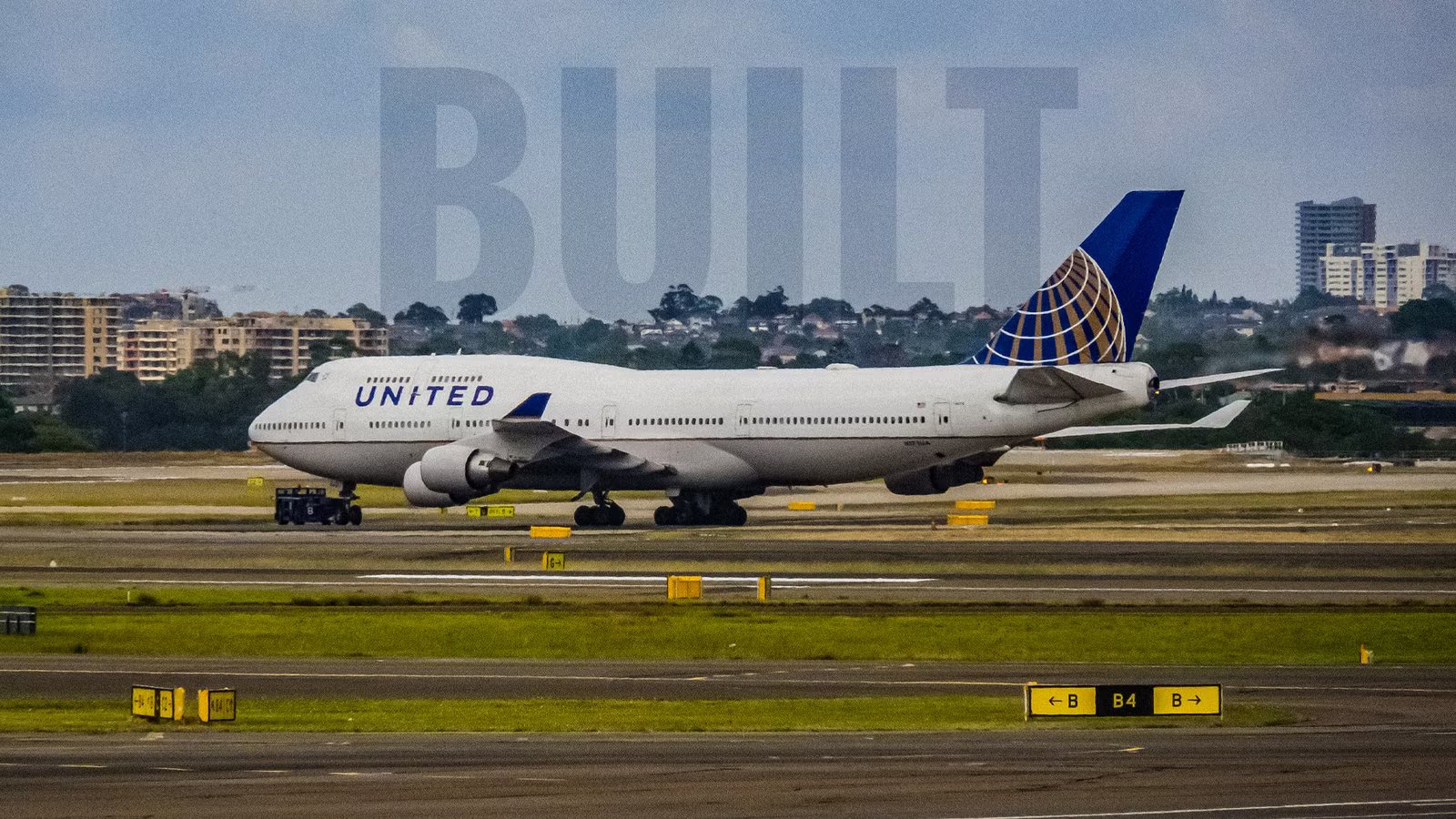
For decades, the  Boeing 747 reigned as the undisputed Queen of the Skies, transforming international travel and air cargo logistics. The true number of how many of these incredible aircraft were built is a measure of its immense industrial footprint and its role in democratizing global flight. As we move further into the current decade, the total production count serves as a definitive end to a 54-year manufacturing era that began in the late 1960s and concluded only recently, leaving a legacy that few other commercial jets can match.
This article provides a comprehensive look at the production lifespan of the 747, from the first prototype that rolled out in 1968 to the very last freighter delivered in early 2023. Utilizing data from ch-aviation, we will explore the breakdown of various models, including the best-selling Boeing 747-400 and the final Boeing 747-8 series. The article also examines how the fleet’s status has shifted over time, transitioning from a passenger icon to a vital outlet for the global freight industry.
Popular For Decades

The final and definitive production count for the Boeing 747 family stands at exactly 1,574 aircraft, according to Boeing records. This total encompasses every variant produced between 1968 and 2022, including the original RA001 prototype and the final 747-8 freighter. According to the latest registry data from ch-aviation, these airframes represent one of the most successful widebody programs in aviation history, spanning more than five decades of continuous assembly at the Everett, Washington, factory.
While the jumbo jet is often viewed as a singular entity, the 1,574 units are actually comprised of several distinct generations, each reflecting the technological advancements of its time. The original Boeing 747-100 launched the program with 205 units, while the Boeing 747-200 and Boeing 747-300 followed with 393 and 81 deliveries, respectively. The program reached its zenith with the 747-400, which accounted for nearly half of all production with 694 airframes built, before concluding with the 155 units of the 747-8 series.
Historical production rates peaked in 1970 and 1990, when Boeing delivered as many as 70 aircraft in a single year to meet the surging demand for high-capacity long-haul travel. However, as the industry shifted toward more fuel-efficient twin-engine jets like the Boeing 777 and Boeing 787, production slowed significantly in the 2010s. The final delivery, a 747-8F registered as N863GT, was handed over to Atlas Air on January 31, 2023, marking the official closure of the 747 assembly line.
Arriving At The Perfect Time

Wikimedia Commons | Simple Flying
The production of 1,574 Boeing 747s was driven by a unique convergence of mid-century ambition, burgeoning global trade, and the direct influence of pioneering airline executives. Initially, the aircraft’s high production numbers were fueled by the need for massive capacity to lower the per-seat cost of air travel, making international flight affordable for the general public for the first time. Boeing also hedged its bets on the aircraft’s longevity by designing it with a hinged nose capability, ensuring that even if passenger demand for jumbo jets waned, the airframe would remain a dominant force in the global cargo market.
The market dominance of the 747 between the 1970s and the 1990s was a primary factor in its long-term production success, as it was the only aircraft capable of such high-capacity long-haul travel. During these peak years, the assembly lines in Everett, Washington, saw intense activity to meet the global demand from major flag carriers, with variants like the 747-400 eventually becoming the program’s most-produced model. This era of supremacy only began to shift with the rise of ETOPS, which eventually allowed more fuel-efficient twin-engine jets to compete on the same transoceanic routes.
In its final decade, the production program pivoted almost exclusively toward the 747-8 freighter as cargo operators recognized the aircraft’s unique structural advantages for oversized payloads. While the passenger version of the latest generation struggled against newer widebody designs, the freighter variant found a dedicated home with global logistics giants such as  UPS Airlines and Atlas Air. This specialized demand allowed the 747 to stay in production until late 2022, with many of these late-build aircraft projected to remain in service until 2040 and beyond.

Why Didn’t Boeing Build The 747-9?
Unveiling the Mystery of Boeing’s Shelved 747-9
Loved By All

Industry leaders and airline executives have framed the conclusion of the 747 production line as a transition into a specialized strategic era rather than a total retirement of the type. At the delivery of the final aircraft in early 2023, Boeing CEO David Calhoun emphasized that the company’s identity is permanently anchored to the 747’s legacy, stating that the program embodied the innovation necessary for Boeing to stand tall in the global market. Rather than mourning an ending, the primary customers for the final airframes, such as Atlas Air, have publicly shifted the narrative toward the aircraft’s future as a dominant force in logistics for the next 20 to 30 years.
This sentiment is echoed by major operators who continue to find unique value in the Queen of the Skies that smaller twin-engine jets cannot replicate. John Dietrich, CEO of Atlas Air, described the final 747-8 as the “biggest and baddest” commercial aircraft in the sky, noting that his company’s entire history is inextricably linked to the platform. Similarly,  Lufthansa CEO Carsten Spohr has highlighted the airline’s long-standing “love” for the design, a commitment evidenced by the carrier’s decision to continue operating the 747-8 on its longest flagship routes, such as Frankfurt to Buenos Aires, well into the late 2020s.
The impact of these executive insights is best seen in the aircraft’s transition from a mass-market passenger jet to a high-value government and logistics tool. Experts note that because the 747-8 is no longer in production, its value as a finite resource has increased, leading the United States Air Force to strategically purchase used Lufthansa airframes in 2026 to support the future Air Force One program. This shift underscores the reality that while assembly has stopped, the 747 remains a non-negotiable, critical asset for the world’s most demanding operators.
Twin Engines Over Four

While the 1,574 aircraft produced is a staggering figure for a superjumbo, the Boeing 747 is no longer the most-delivered widebody aircraft in history. That title was officially claimed by the Boeing 777 in March 2018, which has since extended its lead with over 1,776 deliveries, based on Boeing figures. When contrasted with its direct four-engine rival, the Airbus A380, the 747’s production run was more than six times larger, illustrating the difference between a jet that defined an era and one that arrived just as the market began to shift.
The primary reason for the 747’s numerical superiority over the A380, which ended production with only 251 units, was its early entry into the market and its dual-purpose design. The 747 was built to be easily converted into a freighter, whereas the A380 was strictly a passenger-carrying platform, a limitation that became a major disadvantage as airlines moved toward smaller, twin-engine point-to-point aircraft like the Boeing 787 and Airbus A350. While the 747’s production was ultimately surpassed by the more efficient twin-engine 777, it remained the leader for high-capacity flight for nearly 40 years.
|
Aircraft Model |
Engines |
Total Units Built |
Status |
|
Boeing 777 |
2 |
1,776+ |
In Production |
|
Boeing 747 |
4 |
1,574 |
Discontinued |
|
Airbus A330 |
2 |
1,560+ |
In Production |
|
Airbus A380 |
4 |
251 |
Discontinued |
|
Boeing 787 |
2 |
1,150+ |
In Production |
Ultimately, the 1,574 production count for the 747 remains a monumental achievement because it spans across 54 years of aviation history. Most aircraft programs struggle to reach 500 units before being replaced by newer technology, yet the 747 managed to adapt through five distinct generations. Even as newer twin-engine jets offer better fuel economics, the sheer volume of 747s built ensures that the type will remain a common sight at global cargo hubs for several more decades.

Why Might The Queen Of The Skies Still Have Airbus Worried?
The Boeing 747 still remains hugely popular in the air cargo sector.
Where Is The 747 Still Flying?

While the production total is the definitive industry figure, it does not reflect the number of Boeing 747s currently in the sky. In reality, the vast majority of the global production run has already been retired, with a significant portion listed as scrapped or beyond repair after decades of service. For enthusiasts, this means that while the 747 exists in history books, the opportunity to fly on one as a passenger is rapidly diminishing, as most remaining active airframes are dedicated exclusively to cargo or specialized military roles.
There are, however, notable exceptions where the aircraft continues to operate in unconventional capacities long after its peers have been dismantled. For example, Pratt & Whitney Canada maintains a Boeing 747SP as a dedicated engine testbed, allowing it to remain active at over 45 years of age. Additionally, the United States Air Force continues to operate several 747-200-based E-4B Nightwatch aircraft that are over 52 years old, proving that with rigorous maintenance and government-level funding, the airframe’s operational lifespan can be extended far beyond typical commercial limits.
The primary risk facing the remaining 747 fleet is the soaring cost of maintenance and specialized parts for an out-of-production aircraft. As the global fleet of active 747s continues to shrink, the economies of scale for spare parts diminish, making it increasingly expensive for smaller carriers to keep the aircraft flight-ready. Furthermore, environmental regulations and carbon taxes in various regions are placing a drawback on the four-engine design, often making it more financially viable to scrap a midlife 747 in favor of a new twin-engine freighter.
Half A Century Of Success

The Boeing 747’s production run of 1,574 aircraft is more than just a number; it represents the definitive era of aviation that made global travel accessible to the general public. Over its 54-year production lifespan, the aircraft evolved from a prestigious passenger flagship into the world’s most reliable heavy-lift cargo platform.
For pilots and enthusiasts looking to experience the Queen of the Skies today, the opportunities are becoming sparse. While most of the airframes have been retired or scrapped, Lufthansa remains the primary gateway for passenger travel on the 747-8 flagship, particularly on routes through Frankfurt, with Korean Air and  Air China being the other final passenger operators. If you are spotting at major global cargo hubs like Anchorage or Luxembourg, you will still see the 747 in its most natural modern element, carrying the world’s freight for operators like Atlas Air, Cargolux, and UPS Airlines.
Looking forward, the 747 is far from a relic of the past. Current fleet data indicates that the newest 747-8F freighters are projected to remain in active service until at least December 2040, meaning the Queen will likely grace the skies more than 70 years after its first flight. Whether as a cargo workhorse or the high-tech foundation for the next generation of Air Force One, the Boeing 747’s legacy is secured.