dailynewsnblog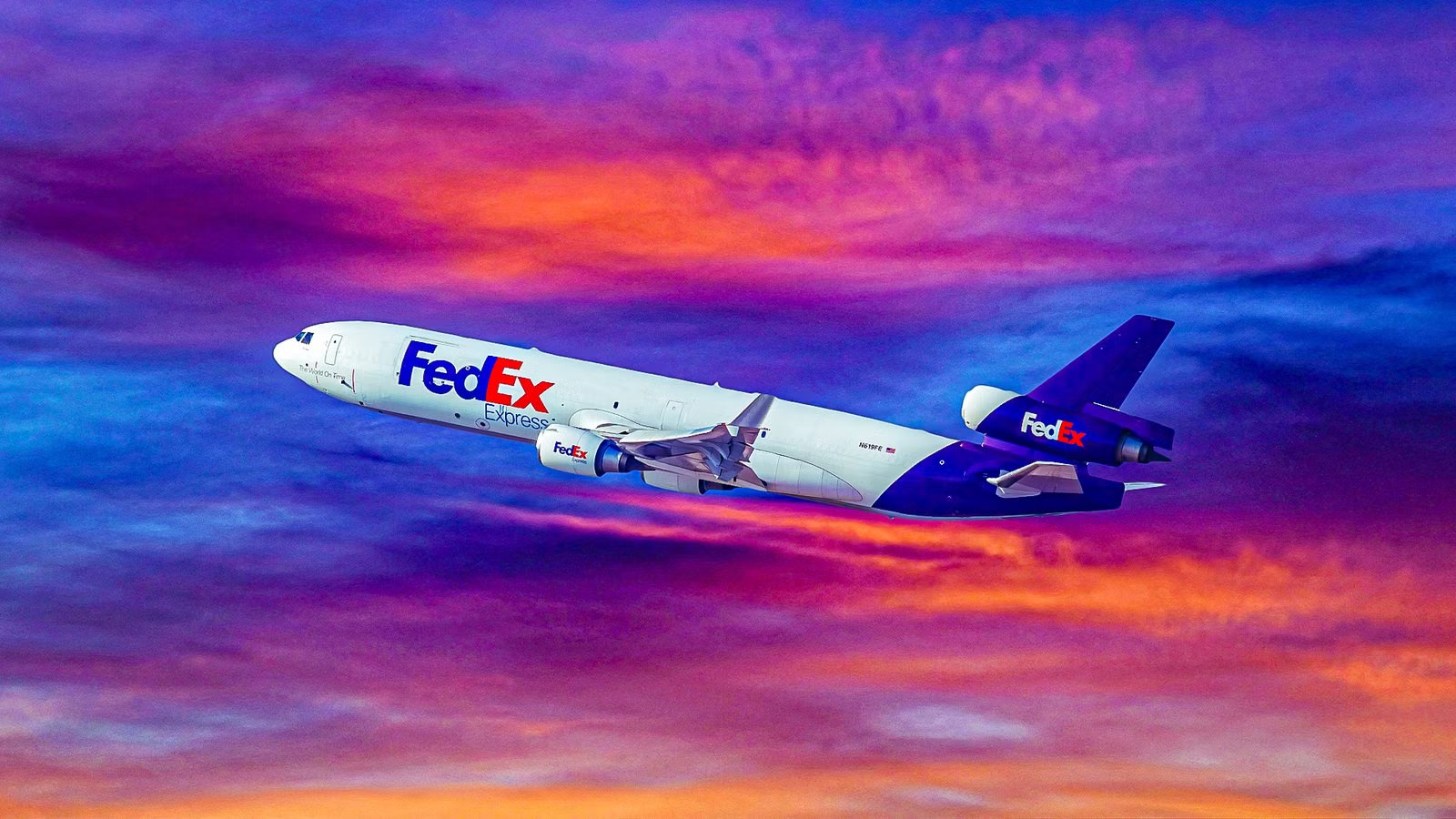
The McDonnell Douglas MD-11 is one of the most infamous commercial airliners in history. First announced in the late 1980s, this aircraft was a refresh of the McDonnell Douglas DC-10. Although the DC-10’s reputation was marred by early accidents, some of which were due to design flaws, the DC-10 became known as a durable workhorse for large airlines. The MD-11, however, would receive just over half as many orders as the DC-10, and its commercial airline career would be short-lived.
The MD-11 was a sign that the end was near for the once-legendary planemaker, as McDonnell Douglas was selling a refreshed version of a 1970s-era widebody while competing against clean-sheet designs from Boeing and Airbus. McDonnell Douglas was unable to invest significantly in a modern aircraft suited to the needs of the 1990s, resulting in a plane that was uncompetitive. To make matters worse, the MD-11 missed initial fuel burn and range requirements, and it has a spotty safety record, too.
The Selling Proposition Of The McDonnell Douglas MD-11

In 1970, Boeing introduced the four-engined 747, the world’s first widebody airliner. Soon after, McDonnell Douglas introduced the smaller three-engined DC-10, which competed with the similar Lockheed L-1011 TriStar, while Airbus introduced the two-engined A300, which ended up outselling both trijets. In the 1980s, Airbus followed up with the smaller A310, while Boeing introduced the smaller 767. In 1988, Boeing introduced the significantly improved 747-400, the world’s longest-ranged airliner at the time.
In the 1990s, McDonnell Douglas unveiled the long-range MD-11, Boeing introduced the long-range 777, and Airbus began selling the short-to-medium-range A330 as well as the long-range A340. Introduced in 1990, the McDonnell Douglas MD-11 was the first of the four to enter service, which gave it a first-to-market advantage. The main benefit of the MD-11 was its superior range to even a late-model Boeing 747-200, while being smaller, more fuel-efficient, and therefore more cost-effective.
The MD-11 was a stretched variant of the DC-10, but with updated technology and improved capabilities. It featured upgraded General Electric CF6-80 or Pratt & Whitney PW4000-94 high bypass turbofans, along with a higher Maximum Takeoff Weight (MTOW). In addition, the MD-11 introduced a full glass cockpit, winglets, and a smaller horizontal stabilizer, among other changes. Unlike its competitors, the Airbus or the Boeing 777, the MD-11 was offered in a passenger and freighter variant from launch.
The Production Of The McDonnell Douglas MD-11

The MD-11 entered commercial service with Finnair in 1990, while the MD-11F followed the next year. In addition, McDonnell Douglas produced the MD-11C combi, the MD-11CF convertible freighter, and the MD-11ER. In total, McDonnell Douglas built 200 MD-11s from 1988 to 2000, a total of 12 years. The final MD-11 was delivered to Lufthansa Cargo in early 2001, while the last passenger MD-11 was delivered in 1988. A total of 131 passenger MD-11s were built, along with 53 MD-11Fs, and many MD-11s would be converted to freighters later on.
Most commercial airliners are assembled for at least 20 years, making the MD-11 program one of the shortest-lived commercial programs in recent history. The DC-10 was produced for 20 years, while the L-1011, which sold fewer examples than the DC-10, was built for 16 years. With only 200 built, the MD-11 was also one of the worst sales flops in modern aviation history. As a point of comparison, the Airbus A380 received 251 orders, all for passenger planes (as the A380 was never built as a freighter).
|
McDonnell Douglas MD-11 Variants |
Description |
Sales |
|---|---|---|
|
MD-11 |
Standard passenger model |
131 |
|
MD-11ER |
Extended range model |
Five |
|
MD-11F |
Standard freighter model |
53 |
|
MD-11C |
Combi model |
Five |
|
MD-11CF |
Convertible freighter model |
Six |
The most direct reason why the MD-11’s production life is  Boeing. In 1997, Boeing and McDonnell Douglas merged, with Boeing being the surviving name. The MD-11 program directly competed with Boeing’s 777 program, and Boeing preferred to sell its own aircraft. In addition, the 777 was already the most popular widebody on the market and a major source of profit for Boeing, whereas the MD-11 never gained real traction. Therefore, the 777 stayed, while the MD-11 was quickly pulled from production.

Why Wasn’t The Airbus A340 Popular With Airlines?
Four engines for long-haul, except not really?
The MD-11’s Early In-Service Challenges

The MD-11 had largely the same selling proposition as the Airbus A340 and Boeing 777. The benefit of the MD-11, specifically, was that it was first on the market and didn’t require ETOPS like the Boeing 777 (still a new concept in 1990). The MD-11 received early orders from large reputable carriers like American Airlines, Swissair, and Singapore Airlines. Although it was based on the DC-10, airlines were mainly interested in using it to open new long-range routes, such as from Dallas/Fort Worth to Hong Kong.
The MD-11 ended up being significantly overweight, burning more fuel than promised and therefore arriving with significantly less range than advertised. McDonnell Douglas engineers worked diligently to rectify the plane’s shortcomings, promptly releasing performance improvement packages and also launching an extended-range MD-11ER. Even so, these efforts were needed just to get the MD-11 to perform to its original specs, and customers turned away from it.
 American Airlines ended up selling its entire 19-strong MD-11 fleet in 1995, as even after all the upgrades, the plane still couldn’t operate the DFW to Hong Kong route with an economical payload. Perhaps most prominently, Singapore Airlines canceled its order for 20 MD-11s as the type’s performance shortcomings became known, instead switching to the Airbus A340-300. The MD-11 couldn’t get past this rocky start, and airlines quickly began preferring the Airbus A340-300 or the Boeing 777-200ER.
The McDonnell Douglas MD-11 Against the Competition

Although McDonnell Douglas solved most of the issues with the MD-11, the aircraft found itself hopelessly outclassed by its competition. The Airbus A340-300 entered service less than three years later, and despite being a quadjet, the plane burned less fuel than the MD-11. What’s more, the A340’s four CFM56-5C engines were extremely cheap to maintain due to commonality with other CFM56 variants, and also had extremely high commonality with the Airbus A330, in addition to having a similar cockpit to the Airbus A320.
Airbus sold 218 A340-300s compared to 200 sales for the MD-11, but the A340-300 was never sold as a freighter. McDonnell Douglas sold 147 passenger MD-11s (including 131 MD-11s, five MD-11Cs, six MD-11CFs, and five MD-11ERs). As a point of comparison, Boeing sold 422 777-200ERs, the 777 variant most comparable in size and capability to the MD-11 and A340-300. In actuality, the 777-200ER sold to a similar number of customers as the A340-300, but in higher numbers.
|
Aircraft |
Entry Into Service |
Number Of Customers |
Number Of Orders |
|---|---|---|---|
|
McDonnell Douglas MD-11 (Passenger only) |
1990 |
24 |
147 |
|
Airbus A340-300 |
1993 |
30 |
218 |
|
Boeing 777-200ER |
1997 |
32 |
422 |
ETOPS was first introduced in 1985, but the initial ETOPS 120 rating was still restrictive for transpacific crossings in particular. In addition, receiving an ETOPS rating is an expensive, laborious process for airlines, and both Airbus and McDonnell Douglas bet that their jets could sell on the basis of not requiring an ETOPS rating. The 777-200ER, of course, was tremendously popular and more capable than the A340, although it was more expensive, which evened the playing field. The MD-11 was more expensive to operate and less capable than either.

Why The McDonnell Douglas MD-11’s Nose & Main Landing Gear Needs 12 Tires
The heavy weight of the aircraft combined with the aircraft’s design requires 12 tires on the main landing gear.
Why The MD-11 Was An Excellent Freighter

An aircraft’s quality and competitiveness can only be measured against its competition. The passenger MD-11 was not a good aircraft, as the competing Airbus A340 and Boeing 777 were simultaneously more capable and more economical. However, Airbus never sold a freighter A340, while the A330-200F only entered service in 2010, and is comparable in size to a Boeing 767-400ER rather than an MD-11F. The Boeing 777F was sized similarly to the MD-11F, but it entered service in 2009, 18 years after the MD-11F.
When the MD-11F entered service, the only newbuild freighters on the market were cargo versions of the Airbus A300, Airbus A310, and Boeing 747-200. The MD-11F was more capable and more fuel-efficient than any of them. The Boeing 747-400F and 767-300F would enter service later in the 1990s, but the MD-11F is positioned squarely between the two regarding size and capability. As such, it has carved out its own niche in the freighter market and therefore proved popular with freight operators.
53 MD-11Fs were sold from the factory, along with six MD-11CFs. However, in the 2000s, many passenger MD-11s came up for sale, and since no passenger airlines wanted them, they became even more attractive to cargo operators due to their low acquisition costs. Only within the past several years, with many MD-11s pushing 30 years old, have cargo airlines begun to phase out their MD-11 fleets in favor of new Boeing 767-300Fs and 777Fs, as the cost to maintain these aging trijets has skyrocketed.