dailynewsnblog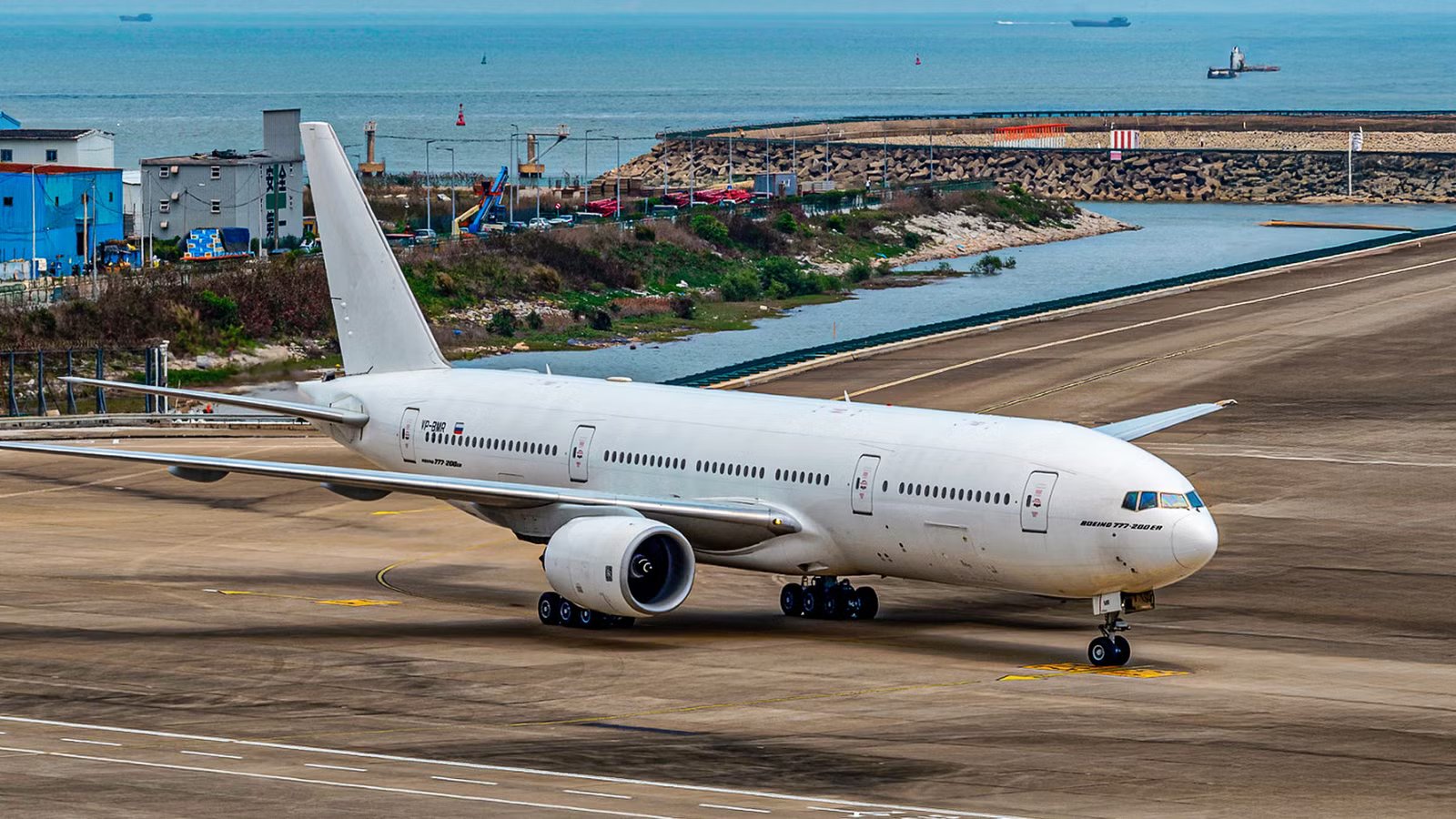
For decades, Iran has used a ‘ shadow’ network through dummy companies and shell businesses that allowed it to sustain its commercial fleet of Boeing and Airbus aircraft, as well as expanding and acquiring new airframes despite global sanctions. Those international sanctions are meant to block Iran from the aerospace market and cut it off from the supply chain, but around 60 Boeing airliners are believed to be in service today. It is estimated that fewer than 200 of Iran’s total 330 civilian jetliners are currently airworthy. The planes that can fly are used to project power, move illicit cargo, and sustain regional proxies. Once Iran successfully smuggles a  Boeing airliner into its territory, the aircraft ceases to be a simple commercial asset and is integrated into a dual-use logistics network managed by the Islamic Revolutionary Guard Corps (IRGC).
Due to sanctions, Iranian airlines cannot purchase parts directly, which has driven the government to create a parallel ecosystem that allows civil aviation to survive within its borders. Iran and its partners have established countless front companies in nations with loose jurisdiction or even executed deceptive flight plans in order to deliver airplanes to Iran in defiance of international law.
Hijacking Old Airframes

Iran uses a network of accomplices to perform document forgery and coordinate fraudulent mid-flight diversions that conceal flight paths of ‘hijacked’ second-hand aircraft when they enter Iranian airspace. Only through this process is it possible for the airlines of Iran to acquire Boeing airframes. This strategy evades export control and International Aerospace regulation because the planes originally take off using valid flight plan data.
Just last year, five widebody Boeing 777-200ER planes were flown directly to Tehran under false pretenses. The aircraft were allegedly fraudulently registered in Madagascar before being stolen, according to Aviator Africa. They filed a flight plan for maintenance in Kenya, but on July 15, 2025, they diverted to Iran. The aircraft were supposed to be moved from storage in China to Cambodia.
Smugglers submit aircraft schedules for seemingly routine destinations in the same region, like Kazakhstan or Uzbekistan. The pilot either requests an unscheduled landing in Tehran or declares a fake emergency as the plane enters or nears Iranian airspace. Before landing at Iranian airports such as Mehrabad (THR), pilots have been said to turn off ADS-B transponders flying over Afghanistan or Iraq to break off the digital trail.
Any Means Necessary

To acquire used parts from other airlines, carriers like Mahan and Iran Air rely on a global network of brokers. Iran exploits the global secondary market in a game of high-stakes fraud to overcome sanctions. Before reaching Iran, used parts that are acquired in the US or Europe are passed through a number of front companies. These parts are scavenged from cannibalized aircraft in many cases.
At the same time, Iranian domestic manufacturers have been striving to reverse-engineer crucial spare parts to the same level of quality that they can match the standards required to replace original components imported from the West. Iran’s Civil Aviation Organization (CAO) announced in 2024 that it had mastered the technology required to manufacture critical components for Airbus and Boeing aircraft.
Iran announced it was producing its own parts for Airbus and Boeing aircraft in late 2025, but the engine is a significant obstacle to true industrial independence. Iran’s domestic industrial capability remains stalled by the extreme material science and precision engineering required to manufacture modern high-bypass turbofans.
The Moscow Connection

In 2022, Iran and Russia signed a cooperation agreement to provide technical support, repair services, and aircraft parts production. The two states agreed to this reciprocal technical exchange after sanctions were placed on Russia’s aerospace sector because Vladimir Putin ordered the invasion of Ukraine in 2022.
In 2023, for the first time in history, Russia’s flag carrier, Aeroflot, sent an Airbus A330-300 to Iran’s Mahan Air for a heavy maintenance check. Later in 2025, Iran and Russia reached a landmark agreement to recognize each other’s aviation standards under a unified regulatory system. This allows Russian airlines to use parts manufactured by Iranian companies legally, and aircraft repaired in Iran can be returned to service in Russia without any hurdles over paperwork.
Iran Watch reports that Russian officials expressed satisfaction with the superior quality of Iranian engineering despite delays caused by a shortage of spare parts. The flow of Iranian-made components to Russia in place of blocked Western supplies is a key element of the partnership. Russian authorities have now granted three Iranian companies official licenses to offer maintenance, repair, and overhaul (MRO) services in the Russian market.

Do It Yourself? Iran Begins Producing Its Own Airbus & Boeing Aircraft Parts
Iran has begun producing its own parts, as it struggles to obtain them through official means due to Western sanctions.
Not So Civil Aviation

Once Iran successfully smuggles an airliner into its territory, the aircraft ceases to be a purely commercial asset and is inducted into a dual-use logistics network managed by the Islamic Revolutionary Guard Corps (IRGC). Within hours of landing, old foreign registrations are removed, and original airline liveries are painted over or erased. The aircraft are given new Iranian registration numbers and officially leased or sold between various domestic airlines to create a confusing paper trail for international watchdogs.
These planes are then used to project power, move illicit cargo, and supply regional allies. One of the most common uses for illegally acquired aircraft is serving the IRGC air bridge to the insurgents, Hezbollah. Iranian airlines have reportedly been spotted on missions to deliver weapons and military equipment to conflict zones in Ethiopia and to provide logistics for IRGC-linked activities in Africa.
Airlines like Mahan Air and Caspian Airlines use these jets to transport IRGC commanders, high-level technicians, and weaponry like missile components and UAVs to regional allies. The IRGC has a dedicated unit specialized in smuggling, dubbed Unit 190. By flying military cargo on regularly scheduled passenger flights, Iran uses civilian passengers as a shield to protect against being targeted by foreign powers.
Since late 2022, Iranian civilian airliners have been used to transport Shahed-series drones, ammunition, and personnel directly to Moscow, according to the nonprofit group United Against Nuclear Iran. This watchdog group also claims that aircraft acquired via shell companies have been used to fly technicians and equipment to Venezuela in exchange for gold bars, which are then transported back to Tehran.

How Iran Keeps Its Airline Fleet Flying Through Sanctions
Iran is able to buy retired aircraft through shelf companies while smuggling parts on the black market.
Military Industrial Overlap

There are some indications that Iran may have made a deal with Russia to acquire 48 Sequoia Su-35 Super Flanker Multirole Fighters as part of the Aerospace exchange between the two Nations. Recent developments indicate that the relationship has shifted from simple repairs to large-scale military procurement and potentially even local assembly. Before the recent attacks by the United States and Israel, Iran was rapidly pushing towards modernizing its Air Force, and integrating the new fighters would have significantly improved its air defenses.
Under the terms of the potential deal, Russia was considering establishing a partial assembly facility inside Iran that would allow for Iranian technicians to complete domestic assembly of the 235 and potentially other Russian Jets. This would have been the first modern fighter production line ever to be stood up within the borders of Iran. Tehran had also signed a deal in early 2026 for advanced shoulder-fired missiles from Russia, estimated to be valued at over $500 million.
Before the launch of Operation Epic Fury, it was reported that at least six Mil Mi-28 attack helicopters had been delivered to Iran from Russia. There was also a report of a squadron of Yakovlev Yak-130 trainer jets received by Tehran in early 2026. These modern jet trainers would have been the most important stepping stone in establishing a new fighter pilot training pipeline for 4.5-generation fighters like the Super Flanker.

Iranian Air Force Will Finally Retire Its F-14A Tomcats: Russian Su-35SE Replacement
Iran seems poised to finally retire its worn-out F-14 Tomcats are the new Su-35 Flankers enter service.
Iranian Aviation Under Fire

Operation Epic Fury specifically targets Iranian military airfields and facilities used by the Islamic Revolutionary Guard Corps (IRGC). There have been no confirmed reports of commercial passenger aircraft being shot down during the ongoing hostilities. However, the Iranian civil aviation industry has suffered significant damage to its infrastructure, and commercial aviation in the region is in a state of total disruption.
Since many Iranian civil airlines, like Mahan Air, operate out of shared military-civilian hubs, the strikes have caused collateral or direct damage to commercial aviation infrastructure. Previous Iranian efforts to build a domestic maintenance ecosystem are now severely compromised by strikes on military-industrial complexes. Precision strikes have targeted the HESA (Iran Aircraft Manufacturing Industrial Company) in Shahin Shahr, which is central to both drone production and the maintenance of Iran’s commercial fleet.
With the closure of the Strait of Hormuz and regional escalation, international commercial flights have been diverted or canceled en masse, leaving hundreds of thousands of travelers stranded. Iran officially closed its national airspace immediately following the initial strikes on February 28. Over 11,000 flights have been canceled across the Middle East since the start of Operation Epic Fury.
While limited evacuation flights from Dubai and Abu Dhabi have flown out of the area, the vast majority of commercial traffic remains grounded due to regional airspace closures. Unlike previous surgical strikes, the stated goal of Operation Epic Fury is regime change. If successful, the existing clandestine procurement networks and deceptive flight strategies will be rendered a thing of the past as the industry either collapses entirely or is completely restructured under a new government.