How income and costs affect everyone differently


A version of this post first appeared on TKer.co

A $4 gallon of gas or an extra $1,000 of income means different things to different people.

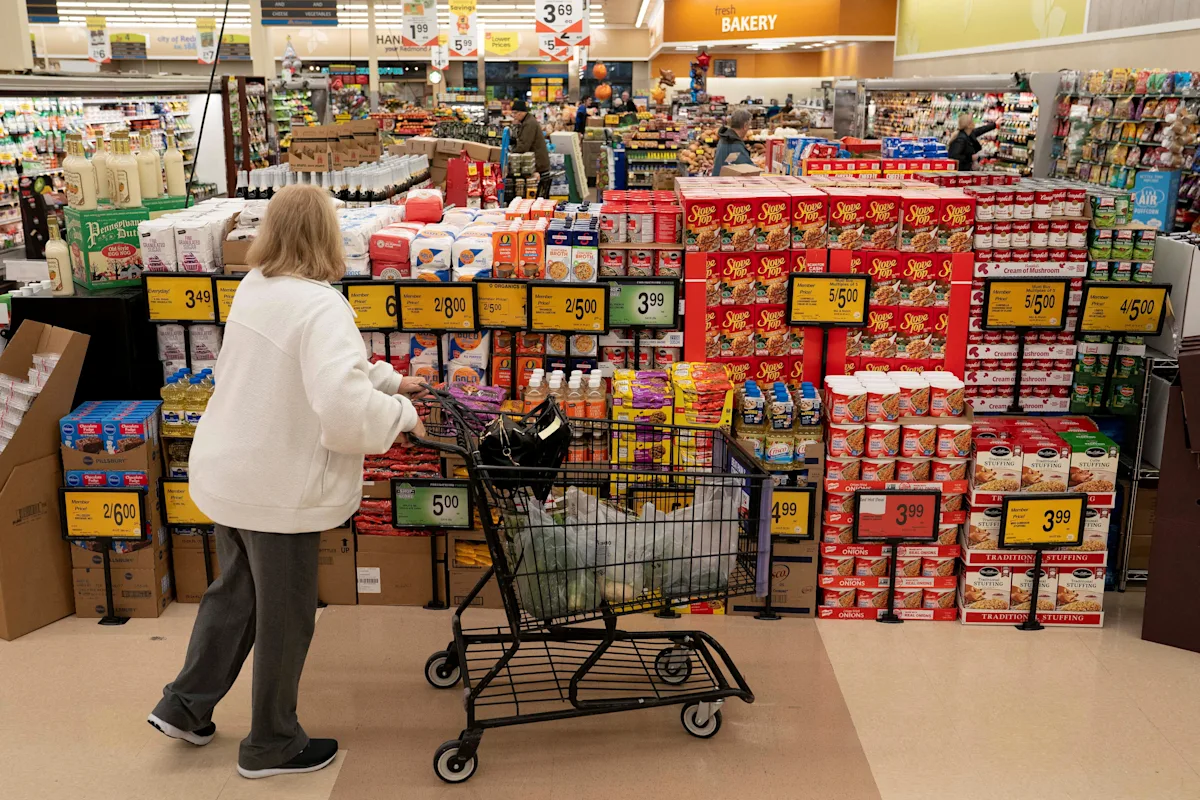
Most drivers notice when the price of a gallon of gas goes up by a dollar. But those earning high income don’t feel the pinch quite like those earning low income.

“For low-income consumers, spending on essentials, including energy and food, is a larger share of both their total spending and their income,” Morgan Stanley economists wrote last month. “As of the most recent Consumer Expenditure Survey from 2024, energy spend made up 8.2% of total spending for the bottom 20% income cohort compared to 4.8% for the top. Limiting to just gasoline, gas made up 3.6% for the bottom cohort versus 2.6% for the top.”

Energy and food account for a larger share of spending for lower-income consumers. (Source: Morgan Stanley)
Energy and food account for a larger share of spending for lower-income consumers. (Source: Morgan Stanley) · Yahoo finance

Furthermore, fiscal policy affects consumers differently depending on their income level. It usually benefits those at the bottom — but that is not currently happening.

“[We] do not expect the lowest-income cohort (bottom 10-20%) to benefit much from the fiscal bill this year,” the economists added. “Much of this low-income cohort already does not pay federal income taxes because of other credits and deductions, and therefore cannot benefit from the new tax provisions. Meanwhile, some of the spending cuts in the fiscal bill start to ramp up this year, including cuts to SNAP benefits and Medicaid. This will hurt some consumers in that low-income group.”

As a result, the economists expect us to keep hearing about the “K-shaped” narrative, which explains how the economy is being bolstered by wealthier, higher-income folks as they do better while poorer, lower-income folks do worse.

Investors sometimes take the K-shaped dynamic for granted, because revenue is revenue regardless of who’s spending. And if revenue is holding up and earnings are growing, what’s the big deal?

Well, it’s somewhat well-known that if you give two people checks for the same amount of money, the poorer person is likely to spend more of that check right away than the richer person.

Morgan Stanley’s Lisa Shalett discussed this in November: “Much has been made about higher-income cohorts driving a larger share of spending, given wealth effects. That said, on the margin, it remains the lower income cohorts that can impact annual growth of consumption the most, as their marginal propensity to spend an incremental dollar of earnings is more than six times more impactful than that of the wealthiest cohort. On this point, the 2026 outlook is increasingly fragile.”

Lower-income consumers are more likely to spend incremental earnings. (Source: Morgan Stanley)

An incremental dollar of earnings can improve a low-income person’s standard of living materially, whereas that same dollar may do little for someone whose living standards are already high.

So, the low-income person is more likely to spend that dollar instead of saving it. This is why economists often argue that fiscal policy favoring low-income folks can have a more immediate stimulative effect on the economy.

In the context of the stock market, we’ve mostly talked about the consumer as a monolith that has been in a healthy financial position.

Because while the retailer or the airline or the restaurant may talk about how customer mix and spending behavior are shifting between demographics, from a financial perspective, it doesn’t matter if it’s a high-income or low-income customer who’s spending. Spending is spending.

The economy is complicated. Familiarizing yourself with the many nuances of demographics can help you better understand how the economy functions, why it will behave in counterintuitive ways, and how policy can affect it.

A version of this post first appeared on TKer.co


Source link

  • Related Posts

    Texas mother accused of ‘horrific’ medical child abuse, forcing needless surgeries on 3-year-old

    A Texas woman has been charged with falsifying her toddler’s medical history to manipulate doctors into performing unnecessary procedures, including the surgical insertion of feeding tubes, in what officials are…

    Trading Open Shadowed by Trump Escalation Threats: Markets Wrap

    Recent events undercut the Trump administration’s claims that Iran’s military capabilities have been decimated. Military briefings cited by Israeli media this weekend indicate Iran still has more than 1,000 missiles…

    Leave a Reply

    Your email address will not be published. Required fields are marked *

    You Missed

    Texas mother accused of ‘horrific’ medical child abuse, forcing needless surgeries on 3-year-old

    Texas mother accused of ‘horrific’ medical child abuse, forcing needless surgeries on 3-year-old

    Here’s a Timeline of Trump’s Ultimatums Over the Strait of Hormuz

    N.S. premier calls First Nations protests that blocked highways unacceptable – Halifax

    N.S. premier calls First Nations protests that blocked highways unacceptable – Halifax

    Canada Gazette – Part I, June 22, 2024, volume 158, number 25

    Trading Open Shadowed by Trump Escalation Threats: Markets Wrap

    In 2007, two game music GOATs collaborated on the criminally underrated soundtrack to a similarly underrated D&D RPG

    In 2007, two game music GOATs collaborated on the criminally underrated soundtrack to a similarly underrated D&D RPG