dailynewsnblog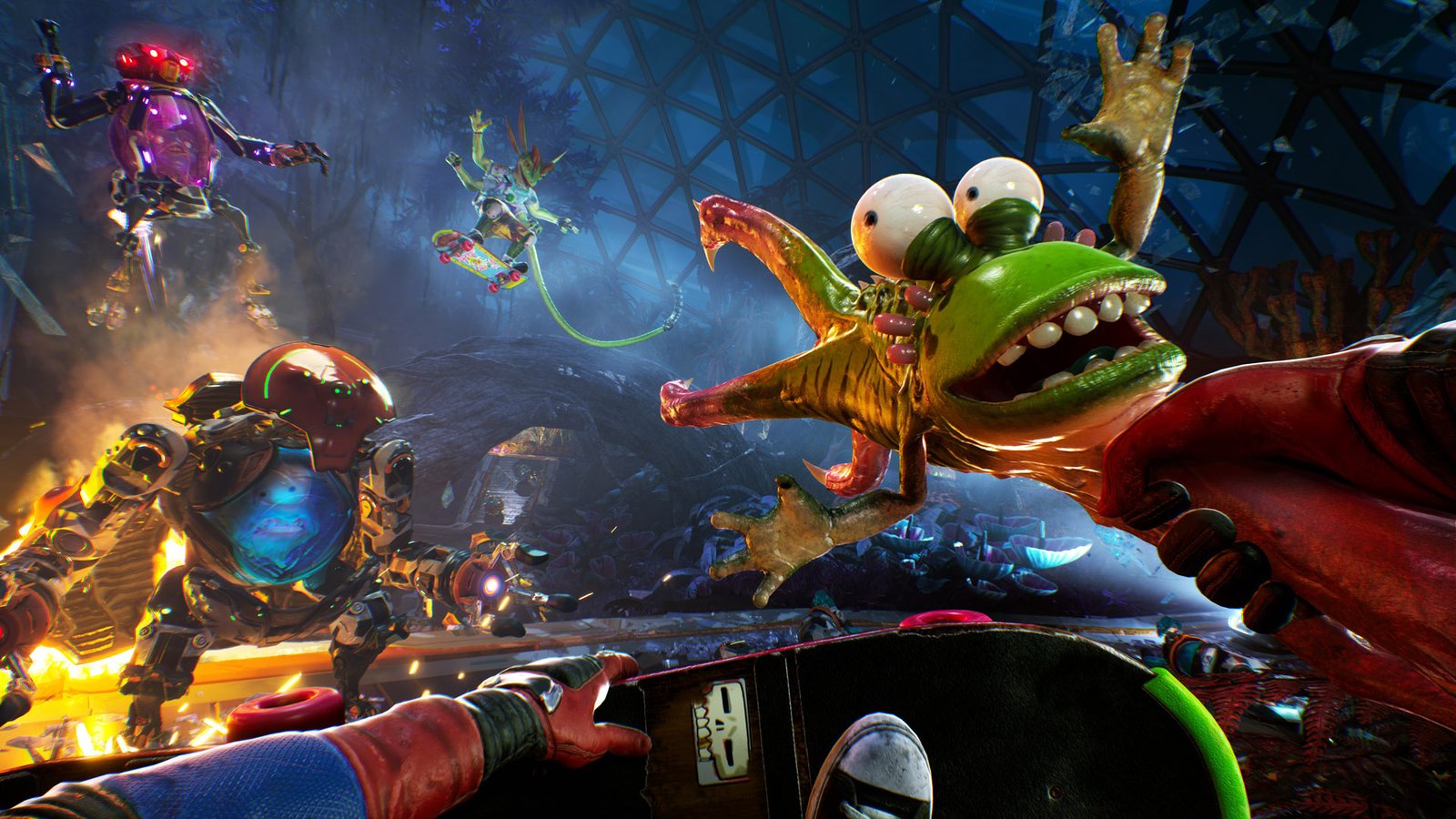
“In the first game we typically paced gameplay to cycle between traversal, combat, and narrative beats. The skateboard fit pretty easily into the traversal piece of that formula,” Meyr explains. “Skating has a large influence on the combat aspect of the game, but we didn’t let it take over. In the end, we wanted the game to still have a lot of what makes a traditional shooter feel fun. We didn’t want the skateboard to muddy the FPS experience by having to blow out aim assist or let you move so fast enemies have to do crazy things to keep up with you.”
The game wastes little time in getting me on the board and it isn’t long until I’m unleashing this tandem of skateboarding and shooting in High On Life 2, like sliding across powerlines as I dispatch a variety of alien goons in the opening zoo level. The skateboard never feels like it gets in the way of the shooting; it amplifies it, nudging me to mix it into my newfound ability to reach alien foes on rooftops who would otherwise be inaccessible without it.
The first game already featured a lot of verticality and unique traversal elements thanks to the Gatlians like Knifey and their grapple ability – but the skateboard only intensifies that ambition. Grinding, riding in sewer pipes, and wall riding all create opportunities for unexpectedly complex riding options in the environment. Every level features unique opportunities to test your skills, like navigating across a mix of floating rails and pools, giant balloons to bounce on, and other zany obstacles while traversing the planet ConCon as one such example.
Board riding can also be vital, as highlighted in some of the boss fights so far. With the bounty hunter Sheath, it took place in a large room with slanted, quarter-pipes that run up the walls, making for plenty of opportunities to remain on the move while dishing damage. Or fighting against Brutakis, the mini-boss of MurderCon, the entire zone felt like a skatepark with plenty of ramps, rails, and stairs to navigate. This all feels designed with purposeful intent to keep you moving to help bring a natural fun and flow to the battle.
Letting Go of Your Hands
It’s always a balance to teach a new mechanic to a player while making it not feel like you’re holding up the momentum of the game. Initially, the team did a lot of “hand holding tutorial” tests for the skateboard and found it made for a terrible experience. In the end, they pared the tutorials back until they were just hitting the essentials and letting the player grasp and play with the mechanics on their own time.