dailynewsnblog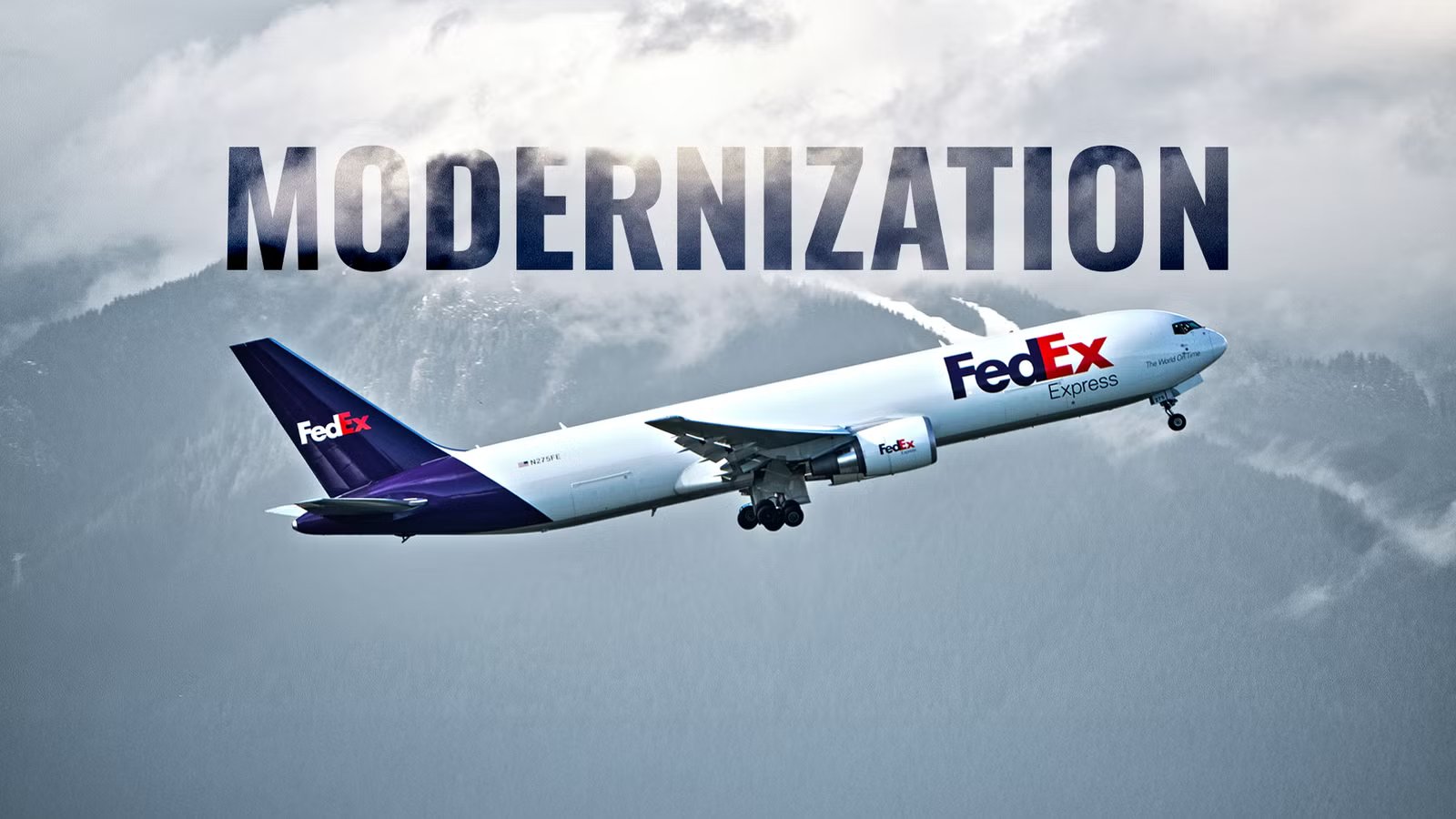
As 2025 comes to a close, Fedex Express is in the throes of a major fleet overhaul. As the world’s largest cargo carrier, the steady replacement of legacy airframes with modern aircraft not only improves operations but also reduces the airline’s carbon footprint significantly.
The primary platform that is being introduced as the next generation of the FedEx Fleet is the Boeing 767-300F. Deliveries are expected to continue until at least the end of next year. These planes are not only more fuel-efficient, which helps achieve the goal of carbon neutrality by 2040, but also offer significant benefits, including reduced maintenance and operational costs. The airline is phasing out McDonnell Douglas MD-11 as well as other airplanes like the Cessna SkyCourier 408. The carrier has also implemented fleet-wide technologies to improve preventive maintenance, extend airframe longevity, and maintain uninterrupted deliveries.
Sunsetting Veteran Freighters

As of November 2025, the FedEx Express air cargo fleet comprises 468 aircraft, according to Planespotters.netdata. The Boeing 767 remains the largest airframe in use with almost 150 aircraft total, which is triple the size of the next most popular types like the A300, 757, or 777. FedEx is the largest operator of the 767-300F in the world. As part of a broader modernization program, FedEx permanently retired 12 aircraft from its fleet in 2024, recording a $21 million impairment charge. This move is designed to improve operations in line with current demand and streamline the carrier’s network.
Three MD-11 trijets, two  Boeing 757-200s, 7 Airbus A300-600s, and eight engines were liquidated at the end of 2024, according to CA&AS. The move built upon the preceding decommissioning of 22 Boeing 757 freighters earlier in the same quarter.
Prior to grounding all of its MD-11 trijet freighters (of which it is the largest operator in the world), FedEx Express had stated the retirement would be extended to 2032 at the earliest. That entire fleet is now grounded following the tragic crash of UPS Flight 2976 at Louisville Muhammad Ali International Airport (SDF). Pending the results of the National Transportation Safety Board (NTSB) investigation, it’s unclear what the fate of these planes will be.
Last Mile Deliveries

In Spring of this year, FedEx Feeder (the regional sub-brand) announced the purchase of 10 ATR 72 – 600 regional freighter aircraft. Delivery is expected to begin in 2027 and run until the end of 2029. The acquisition comes with an expectation for increased traffic from higher market demand in the future that will make these short-range, relatively small turboprops valuable.
Traxtech projects that the global air cargo market will see demand increase by 6% year over year. The smaller aircraft are critical for feeder routes that allow the airline to penetrate destinations that cannot be serviced by larger aircraft in the mainline fleet. The ATR 72 is expected to help FedEx Express maintain comprehensive network coverage while also streamlining operations with an efficient platform.
The new ATR 72-600Fs (Freighters) are replacing older, less fuel-efficient aircraft in the FedEx feeder network, including older ATR variants. This improves overall fleet reliability and helps achieve long-term operating savings. The carrier currently has 15 ATR 42s and 43 ATR 72s in its fleet, according to Planespotters.net information.
Ahead Of The Curve

FedEx Express aircraft deliver 11 million pounds of cargo and 4 million packages to $375 airports spread across 220 countries every day, according to Avionics International. Its industry-leading fleet of cargo aircraft delivers almost half a billion packages during the peak holiday season.
Boeing’s aviation health management (AHM) platform is one of the major tools FedEx uses to ensure its Fleet operates at the highest level of efficiency and with the minimum necessary maintenance. The company has refined and digitally redeveloped the tool over the years, using real-world data and experience. AHM allows FedEx to have engine operations to not only have the aircraft run efficiently but also use their maximum capacity on every flight.
The tool combines ARINC 429 data streams to the graphical user interface (GUI) of the AHM, which an airplane mechanic can readily access using an iPad or iPhone. AHM data helps FedEx Express by enabling predictive maintenance, thereby minimizing aircraft delays and cancellations, reducing costs, and improving operational efficiency.
AHM monitors aircraft systems in real-time to detect developing issues before they become failures. FedEx has integrated AHM across various aircraft types in its fleet, including the Boeing 777, 767, 757, and MD-11, leveraging the system’s ability to handle many reportable faults.
Next-Gen Freighters

In March 2025, FedEx purchased eight 777Fs, or “triple seven” freighters, as Air Cargo News reported. Three are expected to be delivered in 2026, and the other five are projected to arrive in 2027. Boeing received 35 orders for the 777F in 2024, meaning the FedEx order could account for 25% to 30% of the annual total.
The 777F is currently the state-of-the-art freighter in production at Boeing. However, the long-delayed 77x program will be certified by 2027, according to the latest predictions. The 777X freighter variant is likely to follow within 1 to 2 years of the passenger variant’s certification. Although FedEx has not yet placed any orders for the 777X freighter, it’s expected that it will likely do so as other models in their fleet age out.
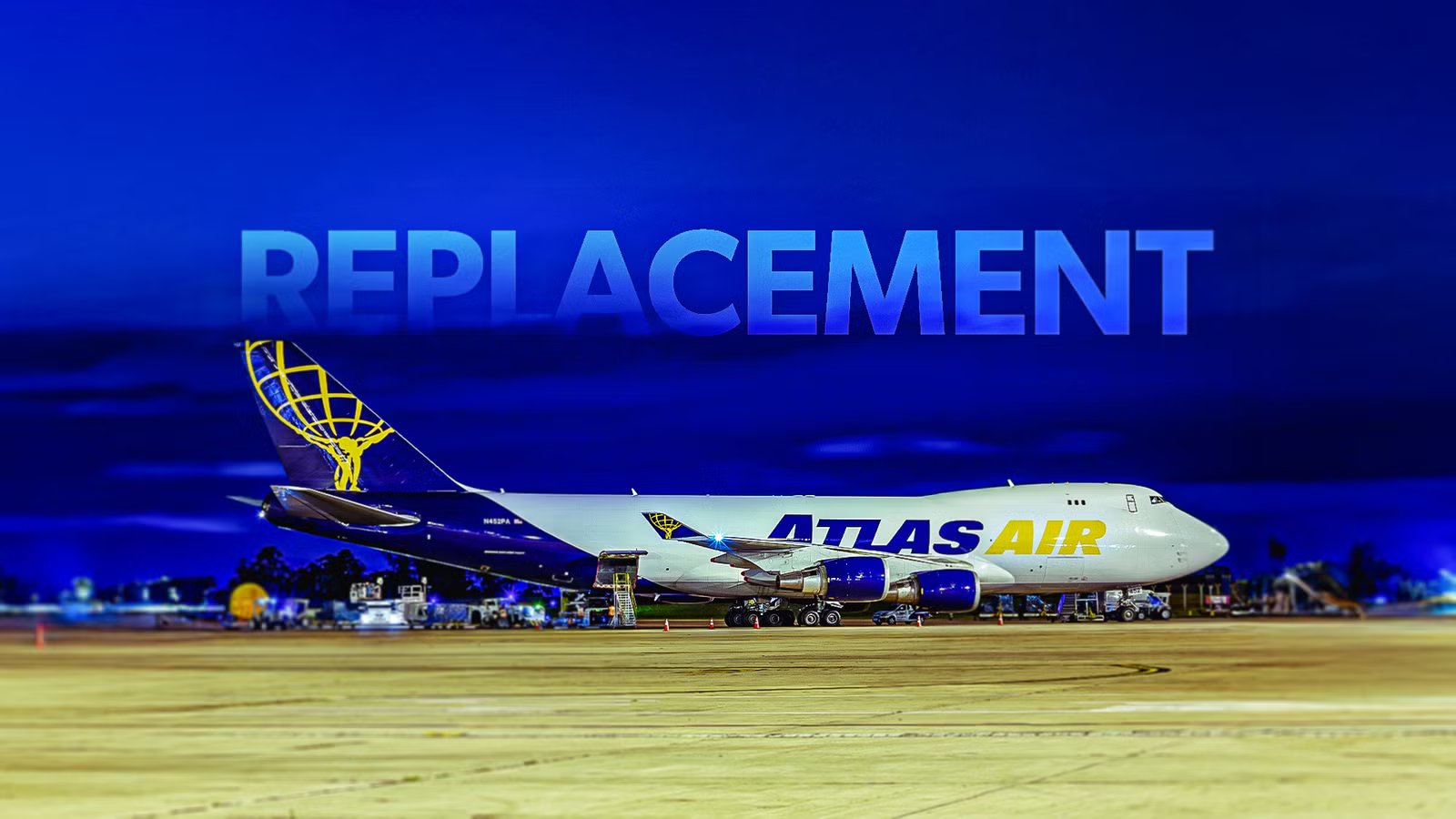
FedEx no longer has any 747 freighters, and the 777X would be the next best replacement should the company choose to resume operating large widebodies. The absence of the type from their Fleet is notable as its competitor,  UPS Airlines, is currently the largest operator of 747-8 Freighters in the world, and Atlas Air is close behind with a large Fleet comprised of multiple variants of the 747 family.
The 747 series is one of the most popular Air Cargo transports in the world for its outsize capacity, payload, and range. FedEx acquired a small number in 1989 through a merger with Flying Tiger Line, but decommissioned them just a few years later due to poor economics and inefficiencies stemming from a lack of fleet commonality. The 777X would likely address all of the reasons that the 747 was not successful at FedEx, making the chances of it eventually wearing the FedEx livery much higher.
Tragedy Strikes The Industry

The UPS Airlines MD-11F crashin Louisville on Tuesday has had chilling implications for the air cargo industry and highlights urgent operational safety concerns for the aging aircraft. Following the mishap, both UPS and FedEx grounded their MD-11 fleets as a precautionary measure. FedEx owns 29 MD-11s, which is the most in the world at present.
An investigation into the aircraft’s maintenance history has been launched by the National Transportation Safety Board (NTSB). The aircraft appeared to have crashed due to an uncontained, explosive failure of the left engine, which may have been caused by or contributed to the failure of the fuse pins in the engine pylon. The accident is hauntingly similar to the deadliest Aviation crash in American commercial flying history, American Airlines Flight 191, which resulted in the death of 271 people.
It is unclear yet how this accident will affect the remaining MD-11F aircraft in service. However, there will most certainly be some consequences. One highly likely outcome is an accelerated push to replace the 35-year-old airframes with newer aircraft. That is already the current trajectory, but with a catastrophic safety failure of this magnitude, the urgency will likely be much higher.
A related element of the UPS Flight 2976 crash is higher scrutiny of the maintenance practices used to sustain General Electric CF6 turbofan engines. These engines are used not only on the MD-11F but also on thousands of aircraft around the world. GE Aerospace has produced around $8,500 of the turbine engines for 10 different aircraft families and at least 25 variants across commercial and military platforms. FedEx is a long-time customer with a loyal relationship with GE’s aircraft engine division.
Powered By General Electric

Hopefully, there will be no discovery of production defects that caused flight 2976 to crash. Until the NTSB releases its preliminary report, we can only speculate. The CF6 doesn’t have an exceptional reliability reputation or a strong safety record. The majority of engine-related mishaps were found to have root causes stemming from incorrect maintenance or operation.
The CF6-80C2 engine is GE’s best-selling widebody engine with a service record that boasts Hundreds of millions of flight hours and tens of millions of cycles. GE describes the global fleet’s service record as equal to nearly half a million trips to the Moon and back. Going back to some of the first 767-300F Jets purchased by FedEx, the GE CF6 engines have been the carrier’s preferred powerplants.
David J. Bronczek, President and CEO of FedEx Express, commented on the aircraft back in 2011.
“FedEx Express is excited to be adding the Boeing 767-300F to its fleet as part of its ongoing fleet renewal program,” said. “We look forward to extending our outstanding partnership with GE as their engines power these aircraft in the years to come.”
First entering service in 1971, the CF6 engine is the most widely used turbofan in widebody aviation. The evolution from the first iteration to the modern day has seen the engine nearly double in size, triple in durability between major overhauls, and improve by 15% in fuel efficiency.