dailynewsnblog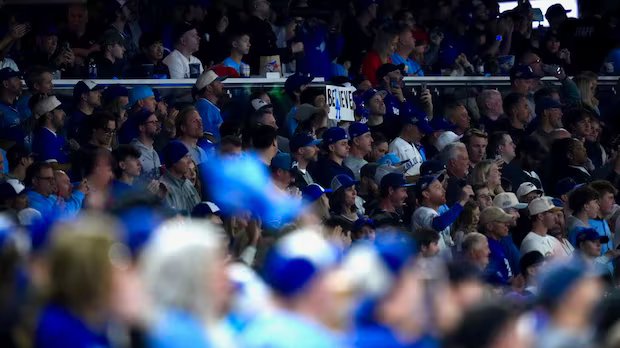

Listen to this article
Estimated 4 minutes
The audio version of this article is generated by AI-based technology. Mispronunciations can occur. We are working with our partners to continually review and improve the results.
Local fans and industry insiders say the province’s move to ban the reselling of event tickets for more than their original value is a step in the right direction, but some say there are still larger issues that need to be addressed.
The announcement was made Friday in a news release and over social media posts by Premier Doug Ford.
This is good news to Michael Brown, a Toronto Blue Jays fan who paid more than three times the face value price for four tickets to a game in last fall’s World Series.
He told CBC Toronto a glitch on the Ticketmaster website caused him to accidentally purchase resale tickets.
“We were expecting to pay $1,380 and instead the price of those same four tickets was $5,043,” Brown said. “We immediately contacted Ticketmaster to try and cancel the transaction. They said that there was nothing that could be done.”
Stories like his are part of what’s driving the provincial government’s latest effort to crack down on ticket resales. In 2019, the Ford government scrapped an anti-scalping rule that would have capped ticket resales at 50 per cent above face value. But on Friday, the province proposed changes to the 2017 Ticket Sales Act that would prohibit live event tickets from being resold above their original cost.

Alongside the new rules for resales, the province is looking to strengthen requirements against selling fake tickets and to create new policies to curb unfair service charges.
CBC Toronto reached out to Ticketmaster Canada and Live Nation for responses to comments on this story but did not hear back in time for publication.
Some wish resale price caps had come sooner
Slater Manzo, a Toronto-based music producer and music fan who frequently attends shows, is optimistic the changes will mean more fans will be able to access the artists they love.
But he also wishes the move had come sooner.
“It’s a little too late,” Manzo told CBC Toronto. “Especially when you think about something like Taylor [Swift‘s Eras Tour], where the ticket gouging was crazy.”
He feels concert tickets are already too expensive, even before resale, noting he and friends paid $230 each for Lady Gaga tickets last September.
“That’s already a crazy price per person just to go see an artist, and we weren’t even close to the stage,” Manzo said.

Jonathan Bunce, executive and artistic director at Wavelength Music, a non-profit that puts on concerts and festivals in Toronto, agreed.
“Capping ticket resale is a really good first step, but it won’t fix affordability on its own,” he told CBC Toronto.
Price inflation often happens before tickets even go to resale, Bunce said. Dynamic pricing is an example of this, where prices are adjusted in real time based on market demand, competitor pricing and customer behavior.
“The real issue is how tickets are priced and who controls the system in the first place,” he said.
Guillaume Moffet, owner of Friends & Family co., an artist development and talent management company, echoed the same sentiment.
“On the surface, [the province’s plan] gives the general population something to latch onto, but it doesn’t address the true problem,” he told CBC Toronto.
Monopoly on live events is bigger problem, insiders say
Without addressing the monopoly that Ticketmaster and Live Nation has on the industry at large, Moffet said he doesn’t expect attending live events to become much more affordable.
“My biggest concern is that prices may shift elsewhere, higher base ticket prices, hidden fees,” he said.
When it comes to smaller music venues in the city, El Mocambo executive director Mike Chalut told CBC Toronto the proposed changes are welcome news.
“I feel like this is a real celebratory moment for live music and live events,” he said.
When resale prices climb far beyond face value, it risks turning fans off of live shows, Chalut said.
But now he hopes fewer people will be priced out, allowing audiences to focus on the experience rather than the cost.
“Let’s focus on the art again. Let’s focus on the artists,” said Chalut.