dailynewsnblog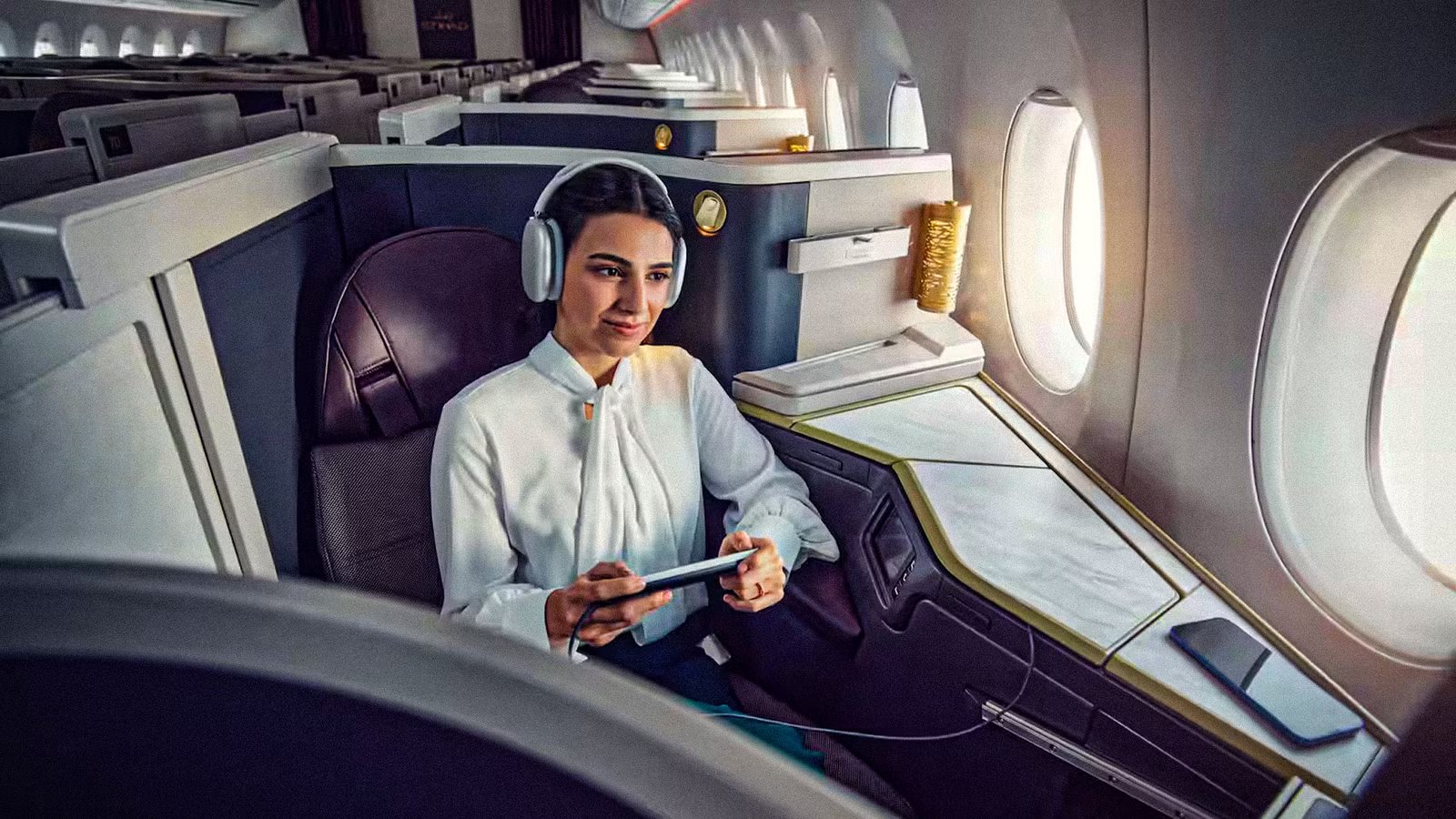
Few regions compete as aggressively in premium air travel as the Middle East, where airlines have invested heavily in redefining the modern business class experience.  Emirates,
  Qatar Airways, and
  Etihad Airways have each built global reputations around luxury cabins, innovative seat designs, and highly refined onboard service. Operating long-haul networks that connect nearly every continent through their Gulf hubs, the three carriers rely heavily on business class to attract premium travelers willing to pay for comfort and privacy on some of the world’s longest routes.
In 2025, Qatar Airways reinforced its dominance in the premium segment by taking top honors in multiple Skytrax categories, including World’s Best Business Class Airline, Best Business Class Seat, and Best Business Class Lounge. While those awards highlight Qatar Airways’ continued success, Emirates and Etihad remain formidable competitors. Comparing their seats, onboard experiences, and ground services reveals how each airline defines business class luxury heading into 2026.
A Quick Background On Each Middle Eastern Airline

The Middle East’s three largest global network carriers, Emirates, Qatar Airways, and Etihad Airways, have built their reputations around long-haul connectivity and premium onboard experiences. Each airline operates from a strategically located Gulf hub that allows passengers to connect between Europe, Asia, Africa, Oceania, and the Americas with a single stop. This geographic advantage helped the carriers rapidly expand throughout the 2000s and 2010s, positioning them as major competitors to traditional European and Asian legacy airlines.
Emirates, based in Dubai, focused heavily on scale and consistency as it grew into one of the world’s largest international airlines. Operating a fleet dominated by widebody aircraft such as the Airbus A380 and Boeing 777, the airline built its brand around onboard luxury, large premium cabins, and extensive global connectivity. Its strategy emphasized high passenger volume through Dubai, supported by recognizable premium features, including onboard lounges and private suites that helped elevate expectations for long-haul travel.
Qatar Airways, operating from Doha, pursued a slightly different approach centered around product innovation and service refinement. The airline invested heavily in cabin design and customer experience, most notably introducing the Qsuite business class product, which emphasized privacy and flexibility for both solo travelers and groups. Meanwhile, Etihad Airways, based in Abu Dhabi, initially expanded aggressively with premium-heavy aircraft interiors and ambitious partnerships before shifting toward a more financially disciplined strategy in recent years. Today, each airline continues to compete at the top end of the market, using business class as a key differentiator to attract premium travelers across its global network.
Qatar Airways Business Class

Qatar Airways has built much of its premium reputation around the Qsuite, a business class product widely considered one of the most innovative seats currently flying. Designed around privacy and flexibility, the suite features sliding doors that allow passengers to create a fully enclosed personal space. This feature helped redefine expectations for business class when it first entered service. The cabin uses ambient lighting and modern design elements to create a calmer environment during long-haul flights, helping passengers adjust to time zones and rest more comfortably during overnight journeys.
The seat converts into a fully flat bed and provides a spacious workspace and dining area, allowing travelers to transition easily between productivity and relaxation. One of the unique aspects of the Qsuite is its adaptability. Middle seats can be configured into a shared space for couples traveling together, including the option to create a double bed. Larger groups can also combine adjacent suites into a shared seating area, creating a social space more commonly associated with private aviation than commercial airline travel. It is important to note that the Qsuite is not available on all aircraft.
Beyond the hard product, Qatar Airways emphasizes a highly personalized onboard experience. Passengers benefit from dine-on-demand service, allowing meals to be enjoyed at any point during the flight rather than following a fixed schedule. Large entertainment screens featuring the airline’s Oryx One system offer extensive viewing options, while onboard WiFi is available across much of the widebody fleet. Premium bedding, amenity kits featuring high-end skincare products, and loungewear on longer flights further reinforce the airline’s focus on comfort, helping position Qsuite as one of the benchmark business class products in 2026.

What Are The Best Seats In Each Class Of Qatar Airways’ Airbus A380 In 2026?
Which seat should you book for your next flight?
Emirates Business Class

Emirates operates multiple business class seat designs depending on aircraft type, most notably on the Airbus A380, Boeing 777, and newer Airbus A350 aircraft. While layouts vary, each product emphasizes long-haul comfort through lie-flat seating, extensive entertainment options, and premium dining service.
On the Airbus A380, business class is located entirely on the upper deck and remains one of the most recognizable cabins in the sky. Seats convert into fully flat beds and provide direct aisle access for most passengers, along with personal storage areas, charging ports, and large entertainment screens connected to Emirates’ ICE inflight entertainment system, which offers thousands of viewing options. A major differentiator is access to the onboard lounge at the rear of the upper deck, where passengers can stand, socialize, and enjoy drinks during the flight, something few other airlines offer at scale.
Across the Boeing 777 fleet, Emirates has begun introducing redesigned business class seating to improve comfort and modernize the experience. These seats feature softer leather finishes, large high-definition entertainment displays, and upgraded technology designed for both relaxation and productivity. Meanwhile, the airline’s newest Airbus A350 business class cabins feature next-generation seats with enhanced privacy, personal minibar storage, and 4K entertainment screens. Together, these products highlight Emirates’ strategy of combining comfort and onboard lifestyle features, particularly social spaces like the A380 lounge, as a key differentiator in the competitive Gulf carrier market.
Etihad Business Class

Etihad Airways has steadily refined its business class product in recent years, focusing on privacy, modern styling, and personalized onboard service. Found primarily on the airline’s Boeing 787 Dreamliner and Airbus A350 fleets, the current business class experience emphasizes a suite-style design that blends comfort with practicality for long-haul travel. Many seats now feature sliding privacy doors, allowing passengers to create a more secluded environment during overnight flights or when working in the air.
The hard product centers around a fully flat bed designed for extended journeys. Seats convert into lie-flat sleeping surfaces supported by memory foam mattresses and premium bedding developed in partnership with Armani Casa, helping elevate rest quality on ultra-long-haul routes. Storage compartments, large entertainment screens, and multiple charging options allow passengers to transition easily between relaxation and productivity. The cabin aesthetic leans toward understated luxury, with neutral tones and modern materials intended to create a calm, spacious atmosphere in contrast to more visually bold competitors.
Service remains a key part of the Etihad experience. Menus often include a mix of regional Emirati dishes alongside international options, offering flexibility throughout the flight. Amenity kits designed in collaboration with Giorgio Armani and stocked with ESPA skincare products further reinforce the airline’s premium positioning, combining thoughtful service touches with a suite-style seat designed to compete directly with other leading Gulf carriers in 2026.

Sky-High Luxury: Comparing Qatar Airways & Emirates’ Premium Suites
Discover how Qatar Airways and Emirates premium suites stack up in the sky-high world of luxury travel: suite doors, double-beds, showers, and more!
Second Best Business Class Seat

While the Gulf carriers continue to dominate much of the premium travel conversation, the Skytrax rankings also highlight strong competition from outside the region. In the 2025 awards, All Nippon Airways earned second place for Best Business Class Seat with its highly regarded product known as “The Room.” Installed on select Boeing 777-300ER aircraft, the seat has gained widespread praise for prioritizing personal space and privacy in a way rarely seen in traditional business class cabins.
“The Room” stands out primarily because of its sheer size and unconventional layout. Instead of a narrow pod-style seat, ANA opted for a wider, almost bench-like design that gives passengers significantly more shoulder and elbow space. The suite features sliding privacy doors, large side consoles for storage, and a wide ottoman that forms part of the fully flat bed when reclined. The result is a seat that feels open and spacious while still offering strong privacy, creating a different experience compared to more tightly engineered staggered business class layouts.
Rather than prioritizing cabin density, ANA focused on maximizing usable personal space, something passengers immediately notice when seated. The wide seat allows travelers to sit cross-legged, stretch out, or shift positions more naturally during long flights, thereby significantly improving comfort on overnight routes. Large entertainment screens, extensive storage areas, and a deep work surface further reinforce the feeling of a private suite rather than a traditional airline seat. Combined with thoughtful ergonomics and strong sleep comfort, “The Room” demonstrates how business class innovation increasingly centers on space and versatility rather than simply adding more features.