dailynewsnblog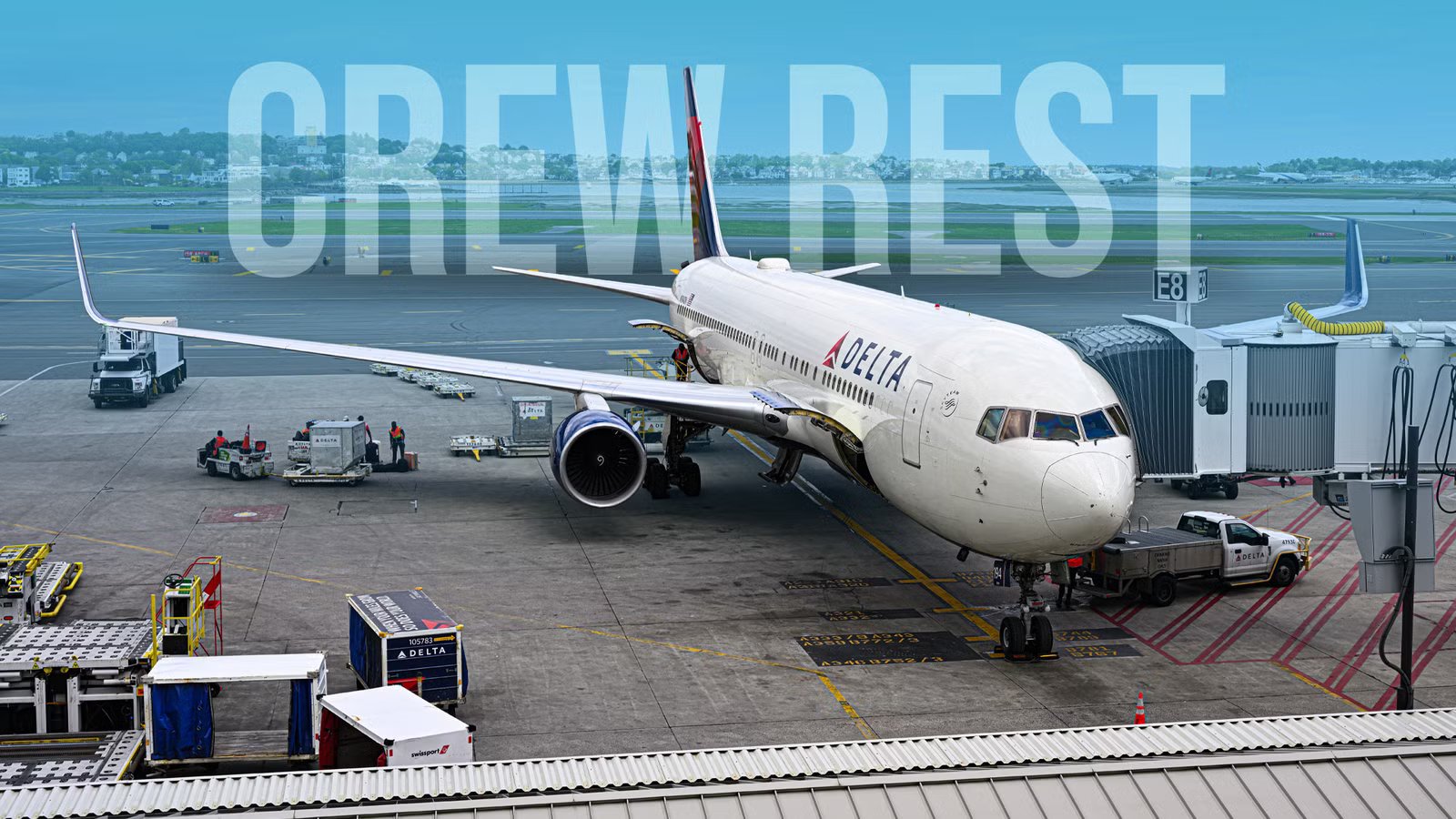
Long-duration flights place sustained physiological and cognitive strain on the crew, whose responsibilities extend far beyond passenger service. Throughout the flight, flight attendants are required to monitor safety equipment, manage medical situations, respond to unexpected turbulence, and remain prepared for rare but high-consequence emergencies. Unlike passengers, they cannot disengage or rest informally, and fatigue research used by aviation authorities shows that alertness, reaction time, and decision-making begin to decline measurably after several consecutive hours on duty, particularly during overnight or low-activity phases of the cruise.
On aircraft such as the Boeing 767, managing crew fatigue requires solutions shaped by an earlier era of aircraft design. Introduced decades before enclosed crew bunk modules became standard, the 767 relies on certified in-cabin rest arrangements rather than hidden sleeping compartments. While these setups may appear modest compared to those on newer widebody jets, they are the result of regulatory standards, operational experience, and practical constraints, ensuring that cabin crew can obtain meaningful rest while maintaining the aircraft’s efficiency and safety profile.
Why Crew Rest Is Built Into Long-Haul Operations

Long-haul flights place continuous cognitive and physical demands on the crew, who must remain fully capable throughout the journey despite extended duty hours and limited opportunities for disengagement. Unlike passengers, flight attendants operate in a controlled but fatiguing environment marked by low lighting, steady noise, vibration, and disrupted circadian rhythms. At any moment, they may be required to respond to safety threats, medical incidents, severe turbulence, or a full cabin evacuation, situations that demand immediate clarity, coordination, and decisive action.
Fatigue research shows that alertness and mental performance decline noticeably after approximately six to eight hours of uninterrupted wakeful duty, even among well-rested and highly trained personnel. These effects are intensified during cruise flight, where low activity levels can accelerate cognitive slowdown and reduce situational awareness. Measurable impacts include slower reaction times, decreased vigilance, and a higher likelihood of procedural errors as duty time extends.
For this reason, regulators require airlines to formally plan and protect in-flight rest periods once flights approach or exceed defined duration thresholds, commonly around eight hours of block time. These rules are grounded in safety margins rather than comfort, as studies and operational experience show that even 45 to 90 minutes of genuine rest can significantly restore alertness and decision-making ability.
How The Boeing 767’s Age Shapes Its Crew Rest Solution

The Boeing 767 was designed and certified during an era when long-haul operations looked very different from today’s ultra-long-range flights. In the late 1970s and early 1980s, airlines focused heavily on range efficiency, payload capability, and cargo volume rather than onboard crew accommodations. Dedicated sleeping compartments for cabin crew were uncommon at the time, as typical long-haul sectors were shorter and fatigue-management standards were less prescriptive than those that exist today.
From an engineering perspective, the 767’s airframe offers limited opportunities to incorporate enclosed crew rest areas without significant compromise. Its fuselage cross-section and overhead crown space were not designed to house additional compartments, and the underfloor volume is largely allocated to cargo and systems. Installing full bunk modules would require major structural changes, extensive recertification, and added aircraft weight, all while displacing revenue-generating passenger seats or cargo capacity.
For most operators, these trade-offs outweigh the benefits, leading airlines to adopt certified in-cabin rest solutions instead of true bunk compartments. As a result, most operators adopted a certified alternative: in-cabin rest seating. This approach allows airlines to comply with fatigue regulations while keeping the aircraft economically viable on medium-to-long-haul routes.

How Cabin Crew Rest & Sleep On Transoceanic Flights
Unveiling the hidden world of cabin crew rest on ultra-long-haul flights.
What Makes A 767 Crew Rest Seat Different

Crew rest seats on the Boeing 767 are purpose-designed, certified rest positions rather than standard passenger seats reassigned to crew. They are engineered to meet regulatory fatigue-management standards, incorporating deeper recline angles, enhanced lumbar support, and extended leg or footrests beyond what is typical in economy class. Their location within the cabin is carefully selected, usually in lower-traffic areas away from galleys and lavatories, to reduce noise, light exposure, and passenger movement that can interfere with meaningful rest.
In most long-haul configurations, four seats are grouped to form a single crew rest zone. This layout aligns with common staffing models on mid-size widebody aircraft, where cabin crews are divided into rotating duty groups. While one group remains on active service, another rests, ensuring continuous safety coverage and regulatory compliance without overtaxing individual crew members. The four-seat footprint strikes a balance between operational needs and commercial efficiency, providing sufficient capacity for staggered rest breaks while limiting the number of revenue seats removed from sale.
A movable privacy curtain encloses the area during scheduled rest periods. Although not fully soundproof or sealed, it reduces light and visual disturbance from the surrounding cabin, factors shown in fatigue research to significantly influence rest effectiveness. Some airlines, including  Delta Air Lines, have adopted a different approach by installing dedicated crew rest modules in the forward cargo hold of certain 767 aircraft. These modules, accessed via a ladder or narrow stairway, contain enclosed bunks and provide a darker, quieter, and more isolated environment, illustrating how operators tailor fatigue-management solutions within the same airframe.
How Airlines Allocate And Protect These Seats

On aircraft that do not feature dedicated bunk compartments, airlines are required to strictly control access to crew rest seats whenever in-flight rest is mandated. This is managed through internal scheduling and inventory systems that evaluate variables such as planned block time, crew composition, duty-day length, and route classification. Once these parameters cross defined thresholds, the system automatically blocks the designated rest seats from passenger selection to ensure they remain available exclusively for cabin crew use.
For carriers such as  United Airlines, these seats are most often located in the mid-to-rear portion of the economy cabin, where passenger traffic and service activity are lower. On flights that fall below regulatory rest requirements, such as shorter transcontinental or domestic segments, the same seats may be released back into the booking system. In these cases, they are typically marketed as extra-legroom or preferred seating and sold either at the time of booking or as paid upgrades closer to departure.
This dual-use approach allows airlines to balance safety compliance with commercial efficiency. By keeping the seats available for sale whenever regulations permit, carriers avoid permanently removing revenue-generating capacity from the aircraft. Industry analyses indicate that this flexible allocation model can recover several thousand dollars per aircraft per month, particularly on fleets that operate a mix of short- and long-haul routes, while still fully meeting crew fatigue and safety requirements.

What Happens When Airline Crews Time Out?
Airlines ensure that alternate crew is available for such unique situations.
How Cabin Crew Use Rest Time In Practice

Cabin crew do not rest all at once during flight operations. Instead, the rest is carefully divided into rotations so that qualified staff remain available in the cabin at all times. On a typical long-haul flight operated by the Boeing 767, the crew is commonly split into two or three staggered rest groups, depending on flight length and total staffing. While one group rests, the others continue normal safety monitoring and service duties, ensuring uninterrupted operational coverage.
Before entering a rest period, crew members actively prepare to maximize the effectiveness of limited downtime. This often includes moderating caffeine intake earlier in the flight and using tools such as eye masks, blankets, and ear protection to reduce sensory stimulation. Even when continuous sleep is unlikely, reclining in a low-light, low-noise environment allows the body to shift into a recovery state, helping stabilize heart rate and reduce mental fatigue.
Operational fatigue research and airline data indicate that even 30 to 60 minutes of uninterrupted rest can restore a meaningful portion of alertness lost earlier in the duty period. This recovery is particularly important during the final phases of flight, when workload increases again, and cabin crew must be fully prepared to respond quickly and effectively to safety-critical situations.
Strengths And Limits Of The 767 Rest Arrangement

Compared with modern Widebody Aircraft that incorporate fully enclosed bunk rooms, the crew rest solution on the Boeing 767 is undeniably more basic. Noise from the cabin, low-frequency vibration, and intermittent movement from passengers or service activity cannot be fully isolated, even with curtains and careful seat placement. As a result, the rest on the 767 tends to be lighter and shorter, with crew members often achieving deep rest rather than continuous sleep.
Despite these limitations, the system remains fully compliant with aviation safety and fatigue-management standards and has been used reliably for decades across global operations. Airlines offset the reduced comfort of in-cabin rest by applying strict scheduling controls, increasing crew composition on longer sectors, and carefully managing duty and rest rotations. These operational measures are designed to ensure that no individual crew member reaches a critical fatigue threshold during safety-sensitive phases of flight.
Ultimately, the 767’s crew rest arrangement reflects the priorities and design philosophy of its era rather than any compromise in safety intent. While newer aircraft provide quieter, more private rest environments through dedicated bunk modules, the 767 continues to operate safely by combining certified rest seating, structured rotation planning, and conservative fatigue risk management. The result is a system that, while less refined, remains effective within the aircraft’s original design constraints.