dailynewsnblog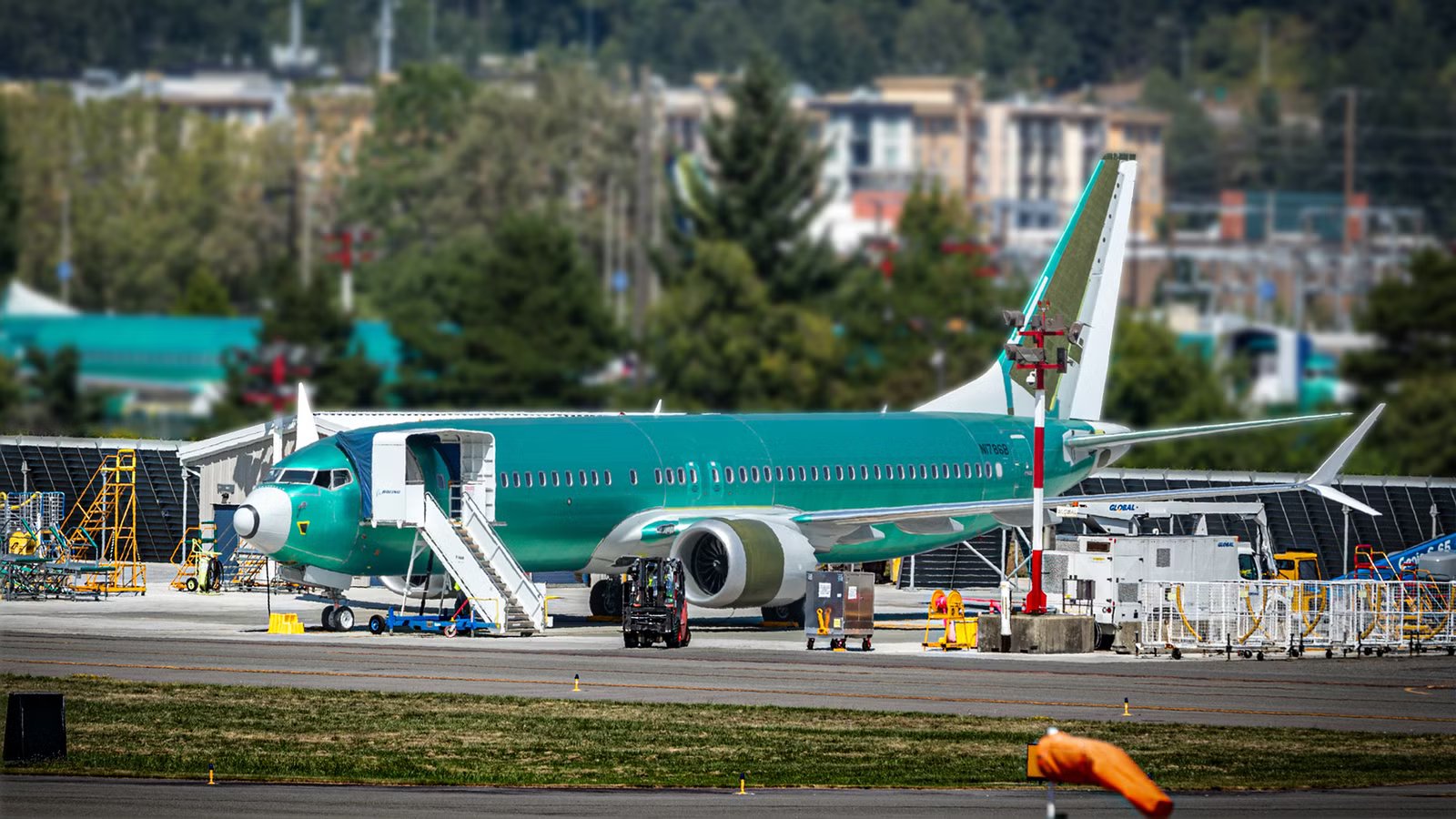
Almost two years ago, Boeing’s 737 MAX program was almost struck with another disaster when an  Alaska Airlines flight had to divert after a sudden blowout of an emergency exit door plug. Since then, Boeing has announced a “war on defects”, greatly improving its quality control regime to ensure that faulty Boeing 737 MAX aircraft don’t take to the skies, as reported by The New York Times.
We revisit the Alaska Airlines incident and the resulting quality control developments below. We then cover other changes made to improve Boeing’s working culture and simplify manufacturing processes. Boeing hopes that these steps will improve 737 MAX safety and allow production to accelerate. It will be fascinating to see how these lessons learned from the MAX will be translated onto the delayed 777X program.
The Incident That Sparked The Changes

On 6 January 2024, a Boeing 737 MAX 9 operated by Alaska Airlines diverted to Portland International Airport (PDX). A mid-aft door plug, a window, and an unoccupied seat were lost mid-flight. These issues caused a rapid decompression, forcing the crew to make an emergency landing. All 171 passengers and crew members survived the flight, and there were just three minor injuries.
Despite the lack of injuries sustained in the incident, many cabin crew and passengers were shaken up by what they had been through. One member of the cabin crew said, “We got so lucky. When this is all said and done, investigations are over … how can we know this is not going to happen again and this is safe? Because that should not have happened.” “I was absolutely certain that we had lost people out of the hole and that we had casualties,” another said.
The National Transportation Safety Board (NTSB) final report linked the door plug blowout to failures in the manufacturing process and to a lack of proper oversight by the Federal Aviation Administration (FAA). Four bolts had been removed from the door plug, but were never reinstalled before the jet took to the skies, making it a time bomb before such an incident would occur.
Changes On The Production Line

Boeing began by limiting the tasks performed out of order. Known as “traveled work”, this practice makes mistakes much less likely as the usual procedures aren’t followed. Such tasks have fallen by 75% since February 2024.
The manufacturer also introduced a rigorous quality control process, during which mechanics spend two hours checking an aircraft’s interior and the majority of a workday checking the exterior. Boeing has also identified 40 tasks that must be completed before the jet moves through each of its 10 manufacturing stations.
Previously, mechanics had just illustrations from engineers when checking an aircraft. Daily and weekly reviews are also used to identify persistent problems. Now, they have a selection of high-definition imagery. It is important to note that engineers and mechanics were doing a lot of these processes already, but these have now been standardized and made more robust. Jennifer Boland-Masterson, the director of 737 manufacturing operations, said: “We have really homed in on our feedback loops. The goal is to permanently fix it.”
Another significant change has been a change in working location for the 737 MAX’s final touches. Previously, these last steps before an aircraft is delivered were conducted outside. Many almost-complete aircraft were parked by the lake at the Boeing site. Now, this work has been moved inside so it can be completed in a meticulous, orderly environment.

FAA Chief Says Boeing Needs A “Fundamental Cultural Shift” To Put Safety Over Profits
In the past year, the American aircraft manufacturer has made headlines amid safety and quality concerns related to its manufacturing.
Boeing’s Working Culture

Establishing better processes is only half of the story. It is ultimately workers on the factory floor who complete the work and determine if an aircraft can fly safely. Kelly Ortberg, Boeing’s chief executive, has acknowledged that there has been too much distance between Boeing’s corporate and manufacturing teams.
The last decade has seen a decline in Boeing worker satisfaction. 67% said they were proud of the company’s work, a substantial drop from 91% in 2013. Around six Boeing employees spoke to The New York Times, telling the outlet that, while they were optimistic about the company’s direction, they felt that progress was too slow. It is unsurprising that Boeing has faced industrial action, including a walkout by over 30,000 workers in a large-scale machinists’ strike in late 2024.
Boeing is taking substantial steps to bring its rank-and-file and management closer together. This includes an hour put aside each week for employees to raise defects and constraints with managers. There is then a collaborative process to fix any issues. The New York Times spoke with the production manager, Glenda Heggie. She recalled an incident where workers reported racks holding electrical components were arriving with missing and misaligned holes. She then arranged a solution with Boeing’s engineers. Jon Holden, the president of District 751 of the International Association of Machinists and Aerospace Workers, said: “They’re definitely moving in the right direction. Now, we just need to see that month after month, quarter after quarter, year after year.”
Reducing Production Complexities

Aircraft manufacturing is a ridiculously complex process, involving thousands of parts, and the consequences of getting it wrong are unimaginably horrific. It is no surprise that reinstalling the Alaska Airlines 737 MAX’s door plug bolts got lost in this high-stakes and confusing environment. Boeing is working to reduce such incidents by simplifying its complicated documentation. It is getting assistance from other industries that have to address complex challenges, such as the pharmaceutical industry.
The manufacturer has also been bringing in measures to track parts. Examples include testing of tracking devices and scanners. The factory floor also now uses locked racks so that parts are safely stored in between shifts and cannot be misplaced.
There is also an undeniable need for Boeing to upgrade its workforce so that it can better deal with the complexities that cannot be avoided. Boeing’s workforce has been declining in experience, but the manufacturer has historically failed to address this issue. A National Transportation Safety Board report found that, over the last decade, the number of Boeing employees with over 10 years of experience has fallen from 50% to 25%. Recently introduced programs that have expanded training by two weeks are beginning to fill this gap.

Pete Buttigieg Believes Boeing Has “Much More To Do” With 737 MAX Safety
Boeing’s new CEO was surprised to hear that repairs are now being made on already assembled jets inside the production line.
Improving Manufacturing Processes Isn’t Only About Safety

Standardizing and simplifying production processes and introducing better quality-control checks aren’t just about making Boeing jets safer. It is also essential for the company to address the commercial disasters it has faced in recent years, including vast sums of money lost due to the 737 MAX groundings and the ongoing 777X delays. Boeing currently has a backlog of well over 4,000 737 MAX orders, meaning there is a lot of money on the table for the manufacturer if it can fulfill these orders.
The table below shows the number of Boeing 737 MAX aircraft delivered year-on-year, showing significant declines at points that have resulted from the program’s accidents and incidents:
|
Year |
Boeing 737 MAX Deliveries |
|---|---|
|
2018 |
580 |
|
2019 |
127 |
|
2020 |
43 |
|
2021 |
263 |
|
2022 |
387 |
|
2023 |
396 |
|
2024 |
265 |
|
2025 (as of September 2025) |
198 |
Boeing has recently received FAA approval to increase 737 MAX production to 42 jets a month. This is still a long way behind Airbus’ production of around 60 A320s a month, which could hit 75 by 2027. Boeing hopes to catch up by getting a fourth 737 MAX production facility online during 2026. This will be done by expanding its pre-existing factory north of Renton.
Airlines Are Also Waiting On The 777X

Churning out 737 MAX aircraft that pass rigorous quality control checks isn’t the only pressure that Boeing’s engineers and mechanics are under. They also need to build 777X aircraft and pass the remaining certification steps. The aircraft has a number of customers with sizable orders, including Emirates, which has 205 on order, who are becoming increasingly frustrated.
The Seattle Times’ reporting in July 2024 suggested that 22 customer versions of the 777X had been completed and were awaiting delivery after certification. A further five prototype 777Xs have been built. Around six 777Xs were also in varying stages of completeness at Boeing’s Everett factory. All of these aircraft have been built before certification, so they may need further modification to bring them in line with the final version of the 777X.
Production will ramp up once Boeing receives the long-awaited certification for the 777X. Plans are to reach a combined 777/777X production rate of four aircraft per month. This small number is to ensure that proper checks and procedures can be followed to avoid repeats of quality and structural issues. Whether Boeing can deliver on its lengthy 777X order sheet without the disasters and incidents that faced the 737 MAX remains to be seen.