dailynewsnblog
 Boeing’s evolution since the 747 is defined by a clear shift in priorities: modern aircraft like the 787 Dreamliner and 777X deliver up to 20–25% lower fuel consumption, carry between 240 and over 400 passengers, and fly routes exceeding 7,500 nautical miles (14,000 km), all while using just two engines instead of four. Based on manufacturer specifications and global fleet data, this transition reflects a move away from sheer size toward efficiency, flexibility, and lower operating costs, key factors shaping modern long-haul travel.
Drawing on aircraft performance data, production figures, and operational trends across global airlines, this analysis explains how and why Boeing’s design philosophy has changed since the 747 first entered service in 1969. Below are key shifts, including advances in engines, materials, aerodynamics, and route economics, that highlight how Boeing moved from building the world’s largest passenger jet to developing aircraft optimized for efficiency, range, and sustainability in today’s aviation landscape.
The Birth Of The Jumbo Jet

The introduction of the 747with its first test flight and delivery in 1969 fundamentally changed the scale of commercial aviation. As the first true widebody airliner, it introduced a dual-aisle cabin and dramatically increased passenger capacity, with typical layouts accommodating between 350 and nearly 500 passengers depending on configuration. This allowed airlines to spread operating costs across more passengers, significantly lowering ticket prices and opening international travel to a broader segment of society.
Its four high-thrust engines were essential for long-haul reliability at a time when engine technology had not yet reached today’s efficiency or durability. While the aircraft consumed roughly 22,000-26,500 lbs (10,000–12,000kg) of fuel per hour during the cruise, its per-passenger efficiency was competitive because of the sheer number of passengers it could carry. The distinctive upper-deck “hump,” originally intended for cargo loading flexibility, became an iconic design feature that also symbolized the aircraft’s groundbreaking nature.
Beyond the aircraft itself, the 747 reshaped global aviation infrastructure and airline strategy. Airports had to expand gates, taxiways, and baggage systems to handle the aircraft’s size, while airlines increasingly adopted hub-and-spoke networks to fill such large planes efficiently. Over more than five decades, a total of 1,574 units were produced, making it one of the most influential aircraft in aviation history and a cornerstone of long-haul travel for generations.
The Move Toward Efficiency

Following the dominance of the 747, Boeing gradually shifted its design philosophy toward efficiency and flexibility rather than maximum size. Aircraft like the 757, 767, and most famously, the 777, introduced slimmer fuselages and relied on just two engines, reducing both fuel burn and maintenance complexity. This marked the beginning of a broader industry transition away from large, four-engine aircraft toward more economical twin-engine designs.
A key factor enabling this shift was the development of highly reliable turbofan engines alongside regulatory frameworks such as ETOPS. These rules allowed twin-engine aircraft to fly long distances over oceans and remote regions, something previously restricted to aircraft with three or four engines. The 767 played a crucial role in proving this capability on transatlantic routes, while the 757 showed that even smaller aircraft could efficiently serve long, less-dense routes. Building on these successes, the 777 was designed from the outset for long-haul operations under ETOPS, ultimately setting the benchmark for modern twin-engine efficiency and reliability.
The efficiency gains were significant. Compared to older four-engine aircraft, modern twin-engine jets can deliver around 25–30% lower fuel consumption per seat, depending on configuration and route. This not only reduced operating costs but also allowed airlines to offer more frequent flights on smaller aircraft, shifting the industry away from reliance on massive hub-based operations toward more flexible point-to-point networks.

What Plane Has The Highest ETOPS Rating?
The A350 has the highest ETOPS rating of 370, meaning it can fly up to six hours and 10 minutes from the nearest usable landing strip.
Advancements In Flight Technology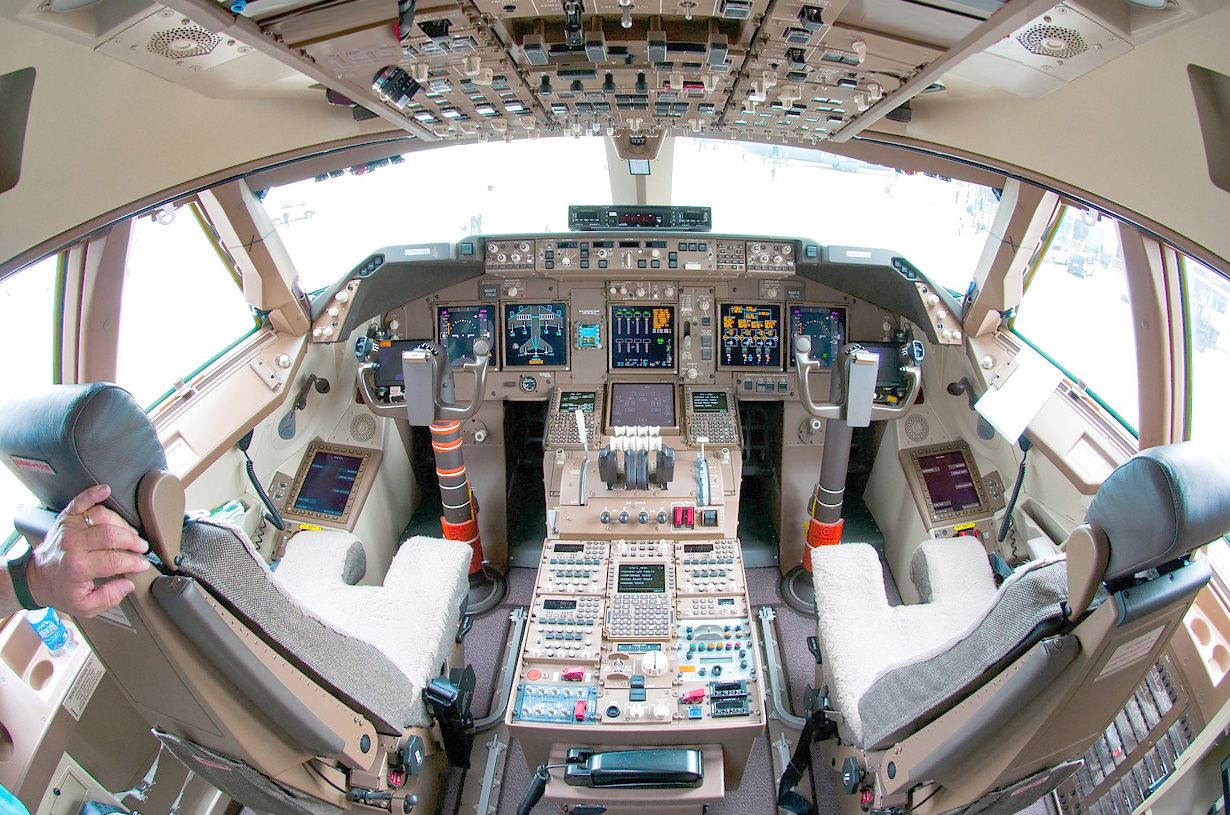
By the 1990s, Boeing began integrating advanced digital systems that transformed how aircraft were designed and flown. The 777 was a major milestone, as it was the first commercial aircraft developed entirely using computer-aided design. This approach allowed engineers to optimize aerodynamics, structural integrity, and system integration with unprecedented precision. For example, eliminating the need for costly full-scale mockups and enabling a smoother assembly process with fewer fitting errors. In contrast, earlier aircraft such as the 757 and 767 were still designed using more traditional methods, underscoring the significance of this digital shift.
One of the most important technological advancements introduced during this era was fly-by-wire control. The 777 became Boeing’s first aircraft to feature a fully digital fly-by-wire system, replacing conventional mechanical linkages with computer-mediated controls.
Instead of direct physical connections, pilot inputs are interpreted by onboard computers, which then adjust control surfaces for optimal performance and safety, automatically preventing stalls, limiting excessive banking, and smoothing out turbulence through rapid micro-adjustments. Later aircraft like the 787 Dreamliner further advanced this technology, while earlier models such as the 757 and 767 retained conventional control systems, underscoring the 777’s role as a turning point in Boeing’s flight control design.
Cockpit design also evolved dramatically, with digital displays replacing traditional analog gauges. These “glass cockpits” provided pilots with clearer, more organized information, improving situational awareness and decision-making. In addition, onboard diagnostics became more sophisticated, enabling real-time monitoring of aircraft systems and predictive maintenance, thereby reducing delays and improving overall fleet reliability.
The Rise Of Composite Materials

The launch of the 787 Dreamliner marked a major shift in how aircraft are constructed. Unlike earlier models such as the 747, which relied heavily on aluminum, the 787 uses composite materials for about 50% of its primary structure. These carbon-fiber composites are lighter, stronger, and more resistant to environmental wear, offering significant advantages over traditional materials.
Weight reduction plays a crucial role in aircraft efficiency. By using composites, the 787 achieves approximately 20-25% better fuel efficiency compared to older widebody aircraft of similar size. This translates into lower operating costs for airlines and reduced carbon emissions, aligning with the aviation industry’s increasing focus on sustainability and environmental responsibility.
The benefits of composites extend beyond fuel savings. These materials are less prone to corrosion and fatigue, reducing maintenance requirements and extending the aircraft’s service life. Additionally, the design flexibility of composites enables passenger-focused improvements, such as larger windows, cabin pressure equivalent to lower altitudes, and higher humidity—features that significantly enhance comfort on long-haul flights.

Why Doesn’t The Boeing 787 Use Traditional Aluminum Construction?
Lightweight, strong, and flexible, composite materials are the wave of the future.
The Decline Of The Queen Of The Skies

Despite its historic success, the 747 gradually became less suited to the needs of modern aviation. Its large seating capacity made it challenging for airlines to consistently fill flights, particularly as travel demand shifted toward direct routes rather than connections through major hubs. Operating partially filled aircraft of that size often resulted in reduced profitability.
Fuel efficiency also became a decisive factor. A four-engine aircraft like the 747 consumes substantially more fuel than newer twin-engine models, with hourly burn rates reaching 10,000-12,000 kilograms. In contrast, newer aircraft can achieve similar ranges with significantly lower fuel consumption, making them far more attractive in an era of rising fuel costs and environmental awareness.
As a result, airlines began retiring their 747 fleets in favor of smaller, more efficient alternatives. Boeing officially ended production of the aircraft in 2023 after more than five decades. This marked the conclusion of an era in which size and capacity were the primary drivers of aircraft design, giving way to a new focus on efficiency and adaptability.
The Modern Focus: Range, Efficiency, and Sustainability

Today, Boeing’s aircraft development strategy continues, but centers more on maximizing efficiency while maintaining long-range capability. Modern aircraft like the 787 Dreamliner can carry between 240 and 340 passengers and fly distances of up to 14,000 kilometers, allowing airlines to connect cities directly without relying on large hub airports. This has transformed route planning, enabling more point-to-point travel and reducing overall journey times for passengers.
Fuel consumption has improved dramatically compared to earlier generations, but Boeing has continued pushing boundaries with newer models such as the 777X. It eatures the largest commercial aircraft engines ever built (GE9X), advanced composite wings, and distinctive folding wingtips that extend its wingspan in flight while allowing compatibility with existing airport gates. It is designed to deliver around 10% lower fuel use and emissions than its closest competitors, while carrying between 350 and over 400 passengers, depending on configuration.
Together, these aircraft represent a new era focused on sustainability and smart design. Across Boeing’s latest programs, each generation typically achieves 15-25% improvements in fuel efficiency and emissions over the previous one. Rather than prioritizing sheer size, modern aircraft balance capacity, range, and environmental impact, showing that the future of aviation lies in building planes that are not just larger but significantly more efficient and technologically advanced.

![18 Flights A Day? Delta Air Lines’ 10 Most Popular Routes Ranked [List & Map]](https://dailynewsnblog.com/wp-content/uploads/2026/04/delta-air-lines-airbus-a330-900-on-final-approach-after-a-long-flight.jpg)