dailynewsnblog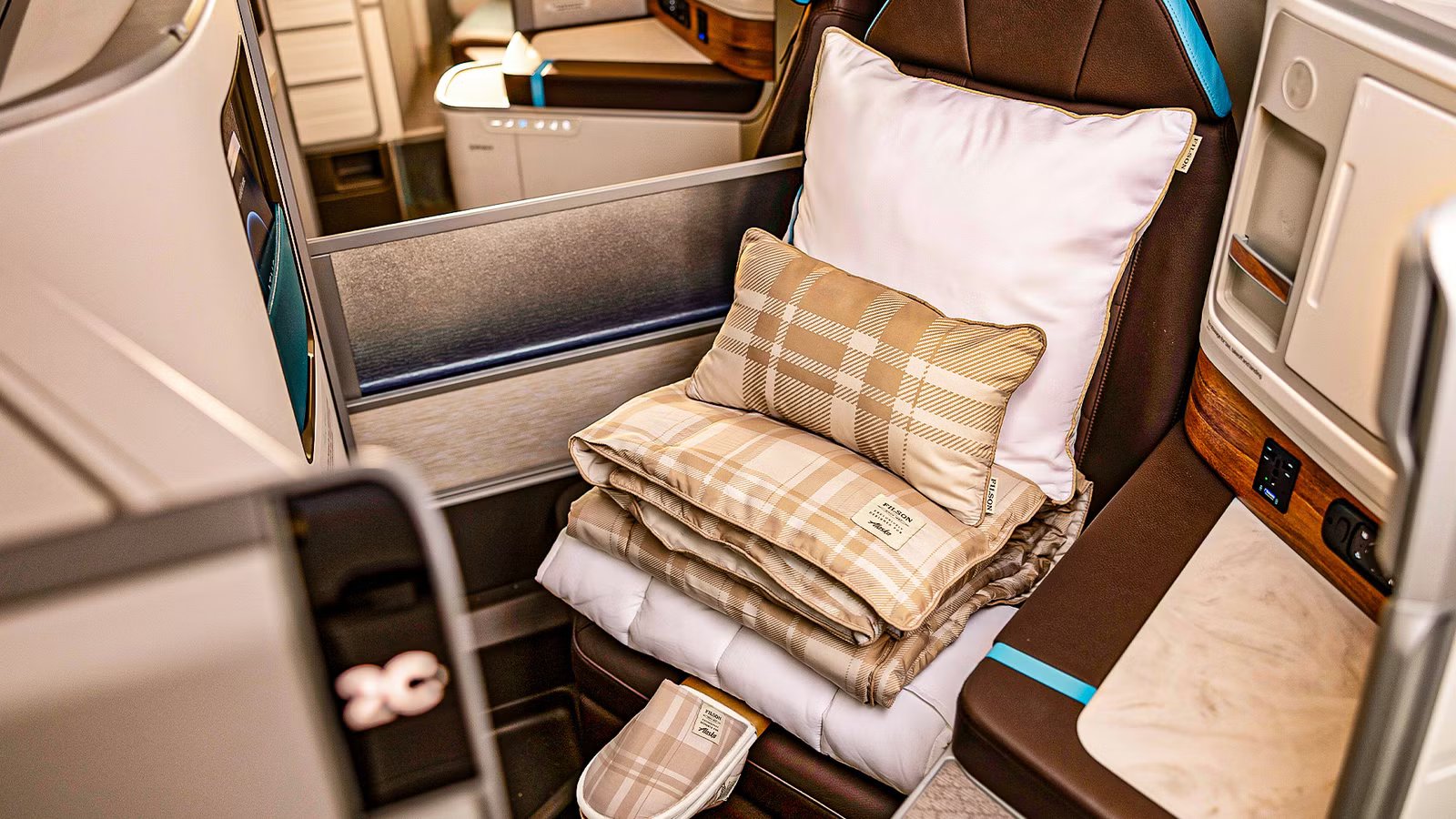
 Alaska Airlines is making one of its boldest moves yet since its 2024 merger with Hawaiian Airlines, investing significantly in its long-haul premium travel offering in 2026. Later this month, Alaska will roll out its reimagined business class experience onboard its Boeing 787-9 Dreamliners featuring 34 enclosed suites with sliding doors and lie-flat beds. Until now, Alaska had been operating former Hawaiian Airlines 787 aircraft with Hawaiian crews, service, and onboard amenities. While the physical remains unchanged, the entire experience is being rebranded into a distinct Alaska Airlines product, including new high-quality dining and beverage options, upgraded bedding, and refreshed amenity offerings delivered by an Alaska flight crew.
This new experience, which will initially launch on routes from Seattle to Seoul and Rome, marks Alaska’s entry into the competitive global business class market, competing directly with other products like Delta One and United Polaris. With Alaska aiming to serve at least 12 long-haul international destinations from Seattle by the end of the decade, the pressure is on for the airline’s premium strategy. Looking at the major parts of the business class experience, this is how Alaska Airlines’ new business class stacks up against Delta and United in 2026.
The Reimagined Alaska Airlines Boeing 787-9 Business Class Experience

Alaska Airlines’ re-imagined Boeing 787-9 business class represents a dramatic departure from the airline’s previous short- to medium-haul premium offerings. The carrier’s new business class, which retains the same hard product (or physical seat) as Hawaiian Airlines’ 787, offers 34 fully enclosed suites arranged in a 1-2-1 configuration. Each seat will feel modern and spacious, finished with white marble tops, light wood panels, and teal accents, all of which remain from the previous Hawaiian Airlines branding.
In addition, each seat will feature a fully closing door, making it a true business class suite. Once in flight, the seat converts into a fully lie-flat bed, with passengers able to lower armrests to provide even more space for relaxation. The suite also incorporates a wide range of technological features, including wireless charging pads, large entertainment screens, Bluetooth connectivity, and upcoming Starlink WiFi connectivity. With the rebranding, Alaska will also introduce upgraded bedding, including a mattress pad, two pillows, and a plush duvet. Passengers will also receive a West Coast-inspired amenity kit with Salt & Stone skincare products and a custom reusable water bottle in partnership with PATH Water.
Alaska will also provide a new dining experience onboard, introducing a new multi-course menu with dishes tailored to each destination while also paying homage to Alaska’s roots in the Pacific Northwest. According to Alaska’s announcement of its new business class experience, this includes a cheese and charcuterie board welcome service, an expanded selection of wines from the West Coast and regions in Europe, Roederer Champagne, cocktails, West Coast craft beer, mineral water, and Stumptown coffee. As for the food itself, each passenger will receive an appetizer course followed by one of six entrée options, which could include Gochujang chicken, carbonara, or beef short rib. One of the most exciting additions is Alaska’s new dessert cart, including a sundae service alongside other high-quality desserts.
Commenting on the airline’s announcement, Andrew Harrison, executive vice president and chief commercial officer of Alaska Airlines, remarked:
“We set out to design a Business Class experience that is both sophisticated and authentically Alaska: premium, comfortable and thoughtfully created for our guests. When we debut our new product this spring, it will raise the bar and redefine long-haul travel, while continuing to deliver the remarkable care that sets Alaska apart on the global stage.
Alaska Vs. Delta Vs. United: Seat Design, Privacy, And Cabin Layout
Between Alaska,  Delta Air Lines, and
  United Airlines, seat design remains one of the most significant differentiators. Alaska’s 1-2-1 layout with privacy doors ensures direct aisle access and ample personal space. With 34 suites onboard the carrier’s Boeing 787-9, Alaska’s business class cabin density is relatively low, especially compared to United’s newest configuration. The combination of reverse herringbone seats by the window and herringbone seats in the center aisle enhances privacy by preventing passengers from facing each other directly. In fact, this seat, based on the Adient Ascent platform, was one of the first to introduce this combination of reverse herringbone and herringbone seats in a mixed cabin.
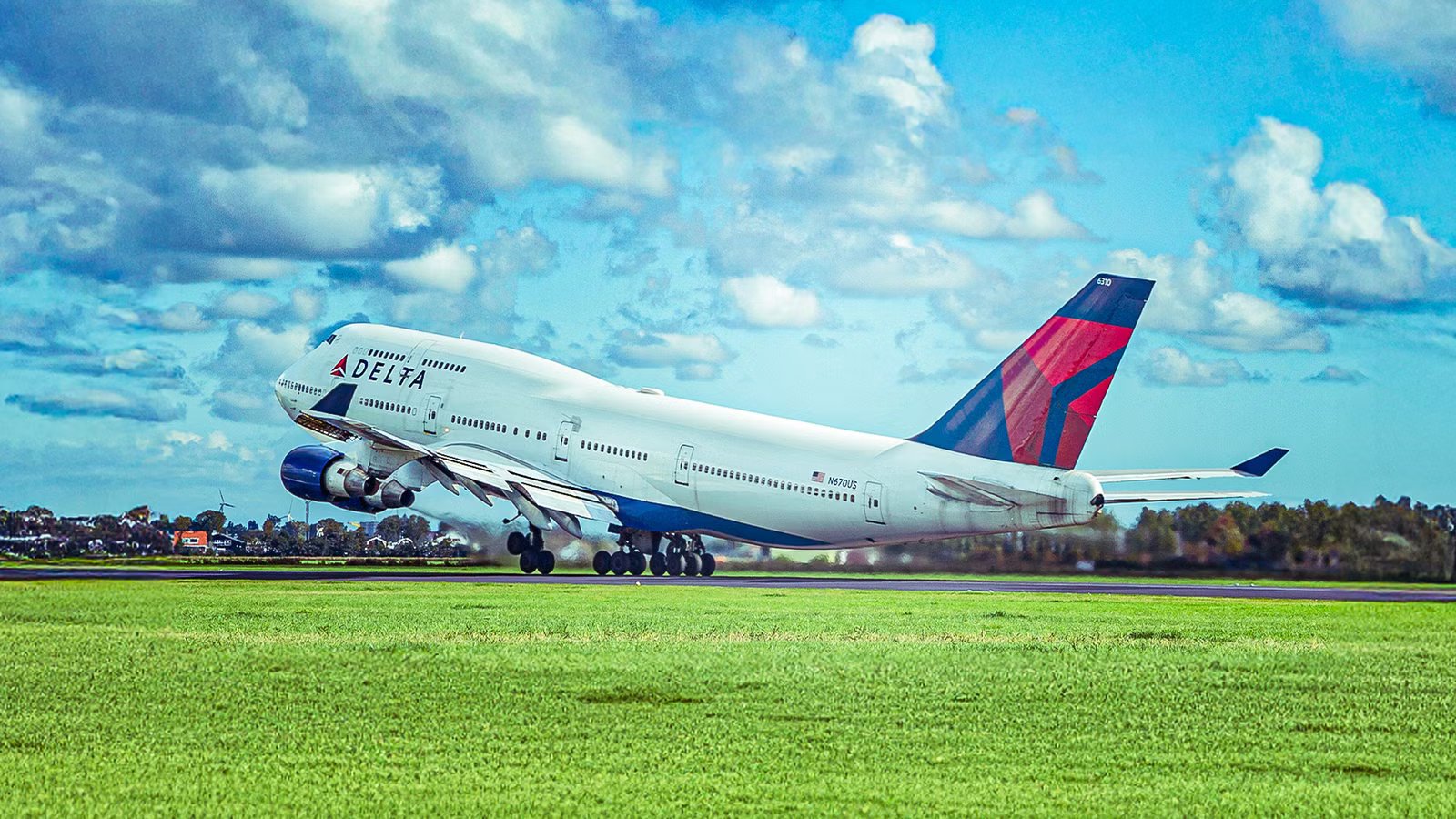
Delta One Suites, on the other hand, provide privacy and comfort in a different way. While Delta’s premium offerings vary widely by aircraft type, the airline’s flagship suites on most Airbus A350-900 and Airbus A330-900neo aircraft feature staggered suites with fully closing doors. Each row of seats alternates between being closer to the window or closer to the aisle, in many cases, meaning privacy varies depending on the seat choice, with those closer to the aisle feeling more exposed to the rest of the aircraft. In contrast to Alaska, which went for a lighter tone onboard, Delta’s suites feature dark blue and black hues with red accents throughout, in line with the carrier’s branding as a premium airline.
Like Alaska and Delta, United Polaris also offers strong comfort, although historically without privacy doors. The previous (and most common) generation of Polaris, found on many Boeing 777s, 767s, and 787s, utilizes a staggered configuration with alternating seating positions to promote a sense of privacy, even without a door. However, United’s newest “Elevated” Polaris suites on new 787-9 aircraft feature sliding doors, a suite nearly identical to Alaska’s. Based on the same seating platform, United’s new Polaris features all reverse herringbone suites in the first half of the cabin, with the second half configured similarly to Alaska, with a mix of reverse and traditional herringbone suites. United’s business class density is also dramatically higher than both Alaska and Delta, with 64 Polaris suites (including 8 Polaris Studio Suites) onboard.

The Most Comfortable US Business Class Seats You Can Book Today
Don’t count out American Airlines.
Strong Inflight Technology Onboard All Three Airlines

In 2026, onboard technology is a crucial factor in premium travel. Alaska’s new suites bring the airline up to modern standards. Each suite includes a large 18-inch HD entertainment screen, offering over 1,500 movies and TV shows for passengers to enjoy. Additional travelers can find personal universal charging outlets at each seat, as well as USB-C ports and wireless charging pads. Additionally, Starlink WiFi will be installed on the carrier’s 787 fleet starting this fall, providing lightning-fast, free inflight connectivity for Atmos Rewards or T-Mobile members.
United’s elevated interior takes a step above Alaska, with digital seat controls for reclining and lighting and ample charging (both wired and wireless options are available). Additionally, United’s new Polaris features in-flight screens that are slightly larger and crisper than Alaska’s, with each screen measuring 19 inches and providing 4K quality streaming. These new screens also support Bluetooth connectivity, so passengers can use their own wireless headphones rather than the ones United provides. As for the airline’s older Polaris offering, each seat features all the basics, including universal charging ports, a 16-inch HD display, and individual lighting options.
Delta’s inflight technology is also strong. Delta One suites on newer aircraft feature large high-definition entertainment screens with Bluetooth pairing features. Delta also offers free Wi-Fi on most of its fleet, excluding a small portion of its A350 and regional fleets. Beginning in 2028, however, Delta will expand its free Wi-Fi offering, recently partnering with Amazon to bring Amazon Leo Wi-Fi onboard, making it one of a few U.S. carriers, including JetBlue, to opt for Amazon Wi-Fi over Starlink.
Three Premium Onboard Dining and Service Strategies

Dining and service represent one of the more impactful parts of the business class experience, and is another competitive battleground amongst the three airlines. As previously mentioned, Alaska’s new long-haul experience introduces multi-course meals tailored to each destination. Numerous Pacific Northwest influences, such as regional seafood, among other locally sourced ingredients, will be included to add the Alaska flair to every dish. Passengers will also receive pre-departure beverages as well as a substantial pre-arrival meal, like a full English breakfast, before landing in London, in addition to the appetizer, main, and dessert courses in flight.
Delta One, similarly, places an emphasis on chef-curated dining and premium beverage offerings. On long-haul routes, Delta typically offers multi-course meals crafted with regionally sourced ingredients, with a pre-meal service of warm nuts and complimentary beverages, followed by an appetizer, main course, and dessert. As for amenities, passengers onboard every Delta One flight receive a collectible amenity kit from Italian designer brand Missoni, as well as Missoni bedding options, including a recently added mattress pad.
In recent years, United has begun to invest heavily in its onboard experience, including new partnerships meant to elevate its Polaris offering, including new menus in collaboration with Chef’s Table. In 2025, United also launched Laurent-Perrier La Cuvée Champagne on all Polaris flights, making it one of the most premium champagne options available on any US airline. Like Alaska, United also offers a dessert cart service, including custom ice cream sundaes. In terms of bedding, United is the only airline out of the three that provides complimentary pajamas to its business-class passengers, as well as Saks Fifth Avenue blankets, duvets, mattress pads, and pillows.

Same Seats, Different Branding: Alaska Airlines Unveils Boeing 787-9 Business Class Suites
It comes as the airline is set to launch Seattle–Rome flights and expand long-haul service worldwide.
New Elevated Ground Experience On Alaska To Stack Up Against Delta And United

In terms of ground experience, both Delta and United already operate extensive lounge networks across the United States. The two airlines both operate traditional lounges, Delta Sky Clubs and United Clubs, respectively, at many of the airports they serve. These spaces offer all the necessities, including complimentary food and beverages, bathrooms, and ample space to relax before a flight. However, for passengers traveling in international business class or select transcontinental routes, access to the exclusive Delta One Lounge and United Polaris Lounge is included with the ticket. These spaces offer more premium food and beverage offerings, often with a sit-down restaurant inside the lounge, as well as more spaces to enjoy, like shower suites or nap rooms.
In contrast, since Alaska only began long-haul flights less than two years ago, the carrier’s lounge network is substantially smaller than both Delta’s and United’s. Nearly every Alaska Airlines lounge is akin to a Sky Club or United Club, fulfilling the needs of domestic first-class passengers. However, Alaska will soon debut its first business-class only lounge in Seattle as part of the ongoing C Concourse expansion. This space is expected to feature many of the same amenities as a Delta One or Polaris Lounge, including stunning design elements, high-quality food and drink, and plenty of seating options.
Service To Four International Hubs: Alaska Airlines’ 787 Network Strategy In 2026

Since merging with Hawaiian Airlines in 2024, Alaska has expanded its international ambitions significantly. On September 12, 2025, the airline launched its first-ever long-haul international flight from Seattle to Seoul Incheon (ICN). Initially operated five times weekly by Hawaiian Airlines aircraft and crews, the route will transition to Alaska’s new business class experience in late April. This expanded premium offering will look to capitalize on strong demand between the Pacific Northwest and Korea, with competition from Delta, Korean Air, and Asiana Airlines. Pricing on this route will start at about $5,800 round-trip for business class onboard Alaska Airlines.
In addition to Alaska’s existing Seoul service, the airline plans three more Boeing 787-9 routes that will launch this year. Service from Seattle to Rome will begin on April 28th, with the 11-hour flight being operated once daily for summer. About a month later, flights to London will begin, also with once daily service. Finally, later this fall, Alaska will introduce its new business class product on its Seattle to Tokyo route, complementing the airline’s nonstop service to Seoul.
|
Route |
Flight Numbers (Outbound/Inbound) |
Average Flight Time |
Frequency |
Competitors |
|---|---|---|---|---|
|
SEA – ICN |
AS171/AS172 |
10 hr 55 min |
6x weekly |
Delta, Korean Air, Asiana Airlines |
|
SEA – FCO |
AS180/AS181 |
11 hr |
Daily |
Delta |
|
SEA – LHR |
AS100/AS101 |
9 hr 35 min |
Daily |
British Airways, Virgin Atlantic, Delta |
|
SEA – NRT |
AS123/AS123 |
9 hr 40 min |
Daily |
Japan Airlines |
In total, Alaska currently operates a fleet of five Boeing 787-9 aircraft, with orders for 12 more, including future Boeing 787-10 variants. These planes will help the airline grow to reach its goal of serving 12 long-haul international destinations from Seattle by 2030. Additionally, in January, Alaska placed a record-breaking order for 105 Boeing 737 MAX 10 aircraft, supporting its domestic capabilities. By 2035, the carrier expects its fleet to grow from 343 to more than 550 aircraft, thanks in large part to its order book of 245 airframes.