dailynewsnblog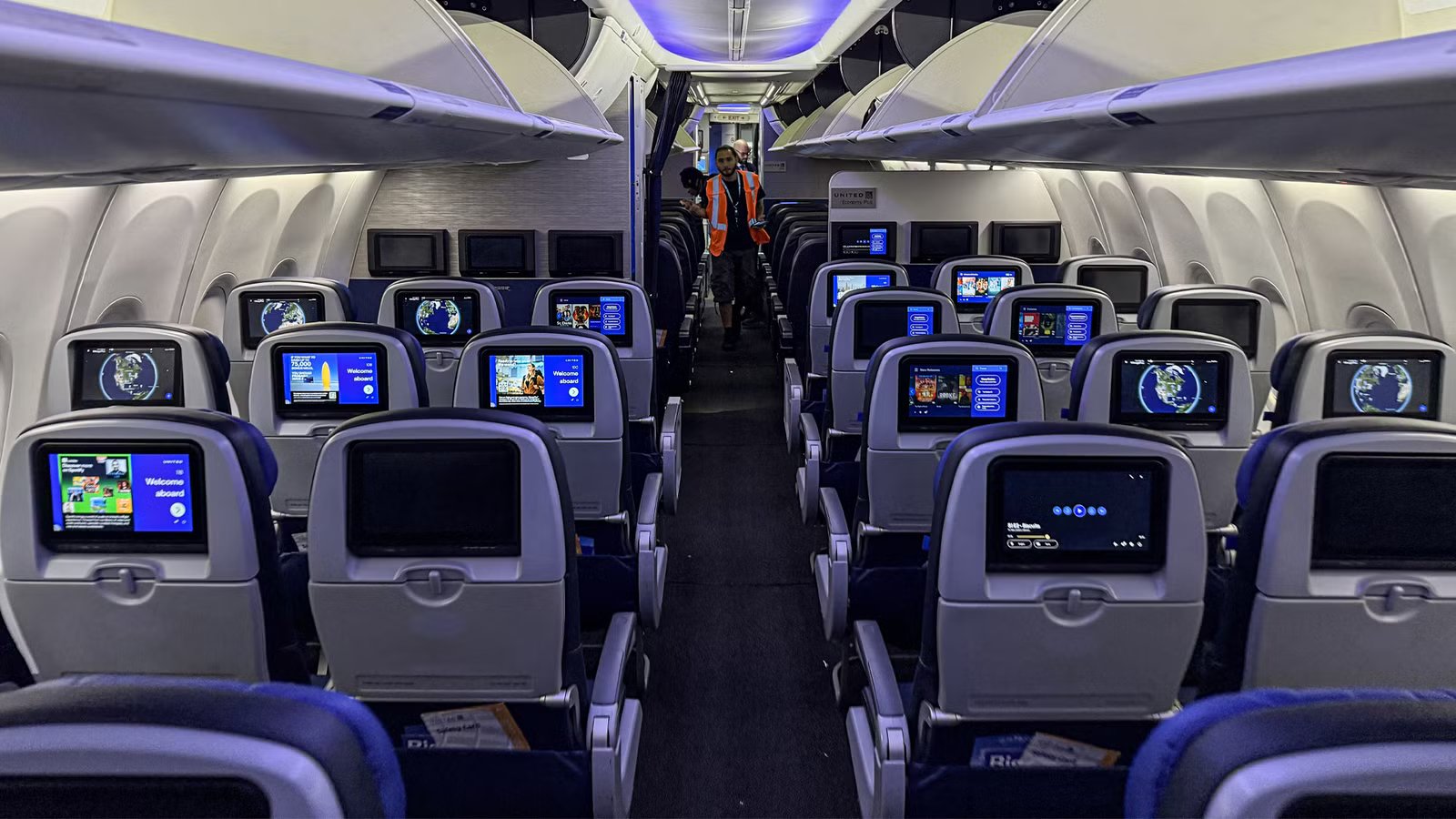
Since the turn of the millennium, the interior of a commercial aircraft has undergone a transformation more radical than the four decades preceding it. What began in 2000 as a simple quest for better sleep has evolved into a multi-billion-dollar race to redefine personal space and digital connectivity. This guide examines the mechanical, digital, and ergonomic shifts that have turned the modern cabin into a high-tech paradise, focusing on how technology has physically reshaped the passenger journey.
To understand just how far cabin design has come, one must recall the cradle seats of the late 1990s, where business class was often merely an oversized recliner with limited legroom. The industry-wide move toward total privacy and horizontal comfort has not only changed how we fly but has totally altered the profitability of global airlines. By analyzing these shifts, travelers can now better navigate the complex landscape of modern aircraft configurations and choose the products that best suit their biological and professional needs in an era of ultra-long-haul travel.
The Turn Of The Century

In the year 2000,  British Airways introduced the world’s first fully flat bed in business class, a move that sent shockwaves through the competitive landscape of long-haul travel. Before this milestone, a horizontal sleeping surface was a luxury reserved exclusively for the ultra-wealthy in first class. This new configuration proved that airlines could fit flat beds into a business class cabin without sacrificing too much density, forever raising the bar for every international carrier.
This innovation triggered a frantic decade of seat wars as global giants like  Singapore Airlines and Cathay Pacific raced to develop their own proprietary designs to stay relevant. By 2010, the angled-lie-flat seat, once considered cutting-edge, had become an obsolete product that savvy passengers actively avoided on long-haul segments. This transition was particularly visible as airlines like All Nippon Airways (ANA) and Japan Airlines (JAL) moved away from regional recliners to provide direct aisle access for every traveler on their flagship transpacific routes during the early 2010s, a standard that was previously unthinkable.
Today, the flat bed is no longer a differentiator but a baseline requirement for any airline hoping to capture premium corporate contracts. Engineering has moved beyond mere mechanics to focus on the tactile experience, incorporating memory foam mattresses and cooling fabrics that regulate body temperature throughout the flight. Now, the focus has shifted from the bed itself to the suite environment surrounding it, ensuring that the transition from work to sleep is as seamless as a high-end hotel room.
An Additional Cabin Section

As the top of the plane was getting flatter, a new class of service was quietly revolutionizing the middle of the cabin. Premium economy, originally pioneered by EVA Air and Virgin Atlantic, has transitioned from a niche experiment into the most profitable section on a modern widebody aircraft. This fourth cabin provides a vital bridge for travelers who find economy too restrictive but cannot justify the five-figure price tag of a business class suite.
The physical design of these seats has evolved from simple extra legroom benches into sophisticated shells that offer an average of 38 inches (96.5 cm) of pitch and dedicated footrests. Many carriers have introduced fixed-back shells in this cabin, ensuring that the passenger in front never encroaches on the personal space of the person behind. For the original promoters of this concept, this class has become a staple of their respective services and innovation in premium economy is still being paved by these carriers even today.
|
Cabin Class |
Space Occupied (Relative) |
Revenue Generated (Per Sq Ft) |
Typical Seat Pitch |
|
First Class |
100% |
Moderate |
80+ inches (203.2+ cm) |
|
Business Class |
60% |
High |
75+ inches (190.5+ cm) |
|
Premium Economy |
25% |
Very High |
38 inches (96.5 cm) |
|
Economy Class |
10% |
Bulk/Volume |
30–32 inches (76.2–81.3 cm) |
The success of this class has led to somewhat of a gentrification of the cabin, where the distinction between the front and back of the plane is sharper than ever. Airlines now use premium economy to entice business travelers on a budget or leisure travelers looking for a once-in-a-lifetime upgrade. As seat densities in economy continue to rise, the demand for this middle-ground sanctuary is expected to drive cabin configurations for the next ten years, or even more.

The Airlines With The World’s Most Spacious Premium Economy Cabins In 2026
These cabins are incredibly comfortable.
Connected Even In The Sky

The transition from bulky cathode-ray tube monitors to ultra-thin 4K OLED screens is perhaps the most visible digital shift in the modern cabin. In the early 2000s, entertainment was a communal experience dictated by the airline, often involving a single projector or a grainy overhead screen that required everyone to watch the same film. Today, the individual seatback monitor has become a high-performance computer capable of storing ten thousand hours of content and providing a personalized interface that rivals a high-end tablet.
Modern in-flight entertainment systems have moved beyond mere movie playback to become integrated hubs for the entire passenger experience. With the new adoption of Bluetooth 5.3, the era of the tangled dual-prong headphone jack has finally ended, allowing travelers to use their own wireless noise-canceling headsets with zero latency. Many leading carriers, particularly those operating the Boeing 787 and Airbus A350, now offer 17-inch (43.2 cm) screens in economy and massive 32-inch (81.3 cm) monitors in first class, providing a cinematic experience that was unheard of two decades ago.
High-speed connectivity has shifted from a rare luxury to a fundamental expectation for the modern professional. The introduction of Low Earth Orbit (LEO) satellite constellations has brought fiber-like speeds to the cockpit and cabin, enabling 4K streaming and lag-free video conferencing even over the most remote parts of the Pacific Ocean. This enhancement has changed the social fabric of the cabin, as passengers now spend more time engaged with their digital lives than with the physical environment of the aircraft.
What Material Changes Can Do

For some time, aircraft were constructed primarily of aluminum, which required the cabin to be kept at a very low humidity level to prevent the airframe from corroding. This resulted in the dry eyes, fatigue, and jet lag symptoms that travelers historically associated with long-haul flying. The arrival of composite-bodied aircraft like the Boeing 787 and the Airbus A350 changed the biological impact of flying forever.
Carbon-fiber composites do not rust, meaning engineers can safely increase the cabin humidity and lower the effective cabin altitude. In an older Boeing 777-200, the cabin is pressurized to approximately 8,000 feet (2,438.4 meters), whereas a modern A350 can maintain a much more comfortable 6,000 feet (1,828.8 meters). This 2,000-foot (609.6 meters) difference allows the body to absorb more oxygen, significantly reducing the physical toll of a very long flight.
Modern cabins now also utilize advanced HEPA filtration and localized climate control to ensure that the air is replaced every two to three minutes. This focus on air quality became a primary design driver in the post-pandemic era, leading to the development of contactless cabins where ultraviolet-C (UVC) lighting systems are integrated into the overhead architecture to sanitize surfaces automatically between flights. These technical upgrades mean arriving at a destination feeling refreshed rather than merely surviving the journey.

5 Most Innovative Widebody Premium Seats You Can Book Today
Step onboard the Emirates A380 Suites, Qatar Airways QSuite, and more in our list of the 5 most innovative widebody premium seats you can book today.
How The Back Has Evolved

The premium cabins have expanded substantially into luxurious suites. All the while, the experience at the back of the aircraft has been defined by a relentless drive for density and weight reduction. The introduction of slimline seats in the early 2010s allowed airlines to pack more rows into the same fuselage by reducing the thickness of the seatback cushion. While this often increased the knee room for passengers, it also led to complaints about reduced padding and comfort during long-haul sectors.
A clear example of how economy has changed is in the transition from nine-abreast to ten-abreast seating on the Boeing 777. By narrowing the aisles and reducing seat width by approximately one inch (2.54 cm), airlines were able to add 30 to 40 additional passengers to each flight. This configuration, which was once a rarity, has now become the global standard for almost all major carriers.
|
Metric |
Economy (Year 2000) |
Economy (Year 2026) |
Trend Direction |
|
Seat Width |
18–18.5 inches (45.7 cm) |
16.8–17.3 inches (42.7 cm) |
Decreasing |
|
Seat Pitch |
32–34 inches (81.3 cm) |
30–31 inches (76.2 cm) |
Decreasing |
|
Screen Size |
5 inches (12.7 cm) |
13.3 inches (33.8 cm) |
Increasing |
|
Cushion Thickness |
4 inches (10.2 cm) |
1.5 inches (3.8 cm) |
Decreasing |
The saving grace for the modern economy passenger is the improvement in seat ergonomics. Manufacturers like Recaro and Safran have used 3D-mapping to design seat frames that provide better lumbar support even with less foam. Additionally, the inclusion of personal power outlets and USB-C ports at every seat has become a standard requirement, acknowledging that a charged phone or laptop is now as essential to passenger comfort as the seat itself.
More To Come

The final and perhaps most dramatic shift in cabin architecture since 2000 is the complete reimagining of first class from a seat into a self-contained apartment. In the early 2000s, first class was often defined by an open-plan sleeper seat that offered more space than business class but very little in the way of visual privacy. Today, the segment has transitioned into the suite era, where floor-to-ceiling doors, personal wardrobes, and even multi-room configurations have become the competitive standard for the world’s leading carriers. Airlines like Singapore Airlines and  Etihad Airways have led this charge, treating the aircraft cabin not as a vehicle for transportation but as a luxury hotel that happens to be at cruising altitude.
These innovations provide a level of autonomy over the environment that was previously impossible. Passengers in these ultra-premium cabins can now use biometric sensors to adjust seat firmness, ambient lighting, and even the scent of the localized air to align with their natural circadian rhythms. This level of granular control is moving toward a future where the aircraft cabin becomes a series of individual micro-climates tailored to each passenger.
The next frontier for cabin design will likely involve the total integration of AI-driven wellness and sustainable material science. We are already seeing prototypes of smart surfaces that can monitor a passenger’s hydration and heart rate through the seat fabric, automatically prompting the cabin crew to provide water or adjust the oxygen flow. The physical dimensions of the aircraft fuselage remain fixed, but the creative use of light, data, and biology is ensuring that the interior of the plane continues to evolve at a rapid pace.