dailynewsnblog
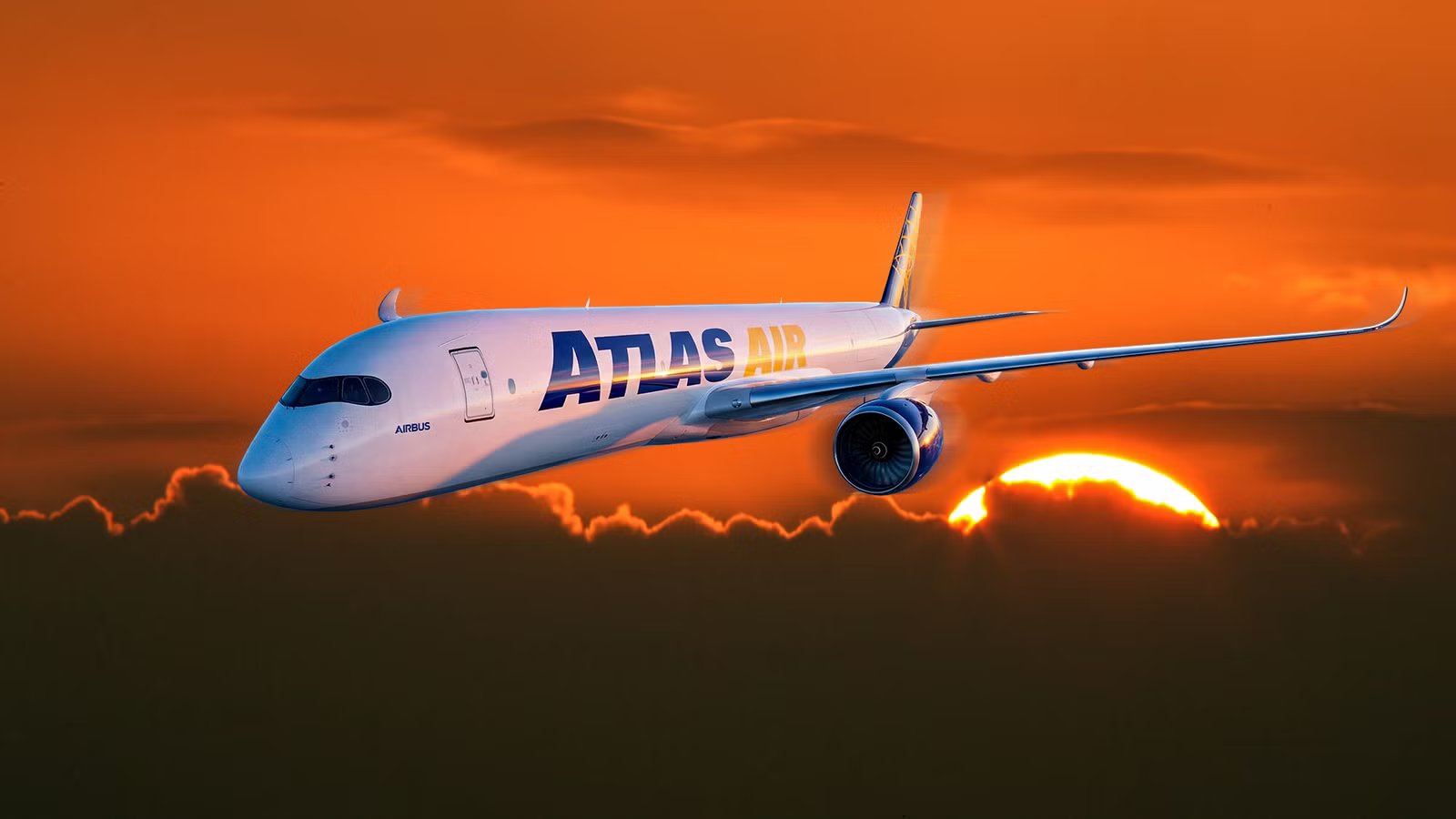
Spanish carrier Air Europa has inked a deal that is set to revolutionize its widebody fleet, with the decision to add 40 new Airbus Airbus A350-900, which will bolster its long-haul operations. The airline, which had already signalled the move with a memorandum of understanding (MOU) at the Dubai Air Show last year, finalised the deal at FITUR in Madrid this week.
Representatives from European aircraft manufacturer Airbus and Air Europa met at FITUR to finalize the deal, including the airline’s president, Juan Jose Hidalgo, and the Airbus Head of Sales Western Europe, Ville Arhippainen. The two parties celebrated the agreement at the Air Europa exhibit stand.
A350-900 Destined For Air Europa

Air Europa, which currently is an all-Boeing operator, will see a shift towards Airbus widebodies as part of a fleet replacement programme, and will support the airline’s ambitions to continue expanding into key Latin America markets. The order is part of a strategic decision to accelerate the airline’s profitable growth, while also providing a comfortable onboard cabin experience for passengers.
The operational performance of the new airplanes offers desirable economics for the airlines’ network, while still being able to offer the highest standards for air travel. The A350-900 can fly up to 9,700 nautical miles (18,000 km) non-stop, positioning the aircraft to be a perfect choice for UX to continue developing its trans-Atlantic operations between Europe and Latin America Latin America
fleet development, accelerating its profitable growth by renewal of the current widebody fleet. The A350-900 is a game-changer for key destinations in Latin America. It provides an exceptional cabin experience and the operational performance and economics needed to expand the airline’s network without compromise, delivering the highest standards in air travel.”
World’s Most Modern Widebody

While the 29 active Dreamliners at Air Europa have served the airline’s long-haul markets well for the last decade, the airline was attracted to the A350 due to its advanced aerodynamics and fuel efficient Tolls Royce Trent XWB engines. The A350 will become the backbone of the airline’s long-haul fleet, and bolster capacity and operations to one of Europe’s most attractive and strategically important markets (Latin America).
The decision to opt for the A350-900, as suggested by The Aviation Hub, was based on the improved fuel efficiency of the European aircraft, with it offering a lower fuel burn per seat when compared to other widebody aircraft, supporting the airlines’ overhead costs, and also sustainability goals. The range of the aircraft also allows UX to fly non-stop to key Latin America markets such as Argentina, Brazil, and Uruguay.
Improved onboard experiences for passengers, including better pressurization, a wider cabin, and improved pressurization, should allow passengers to minimise the effects of jetlag once they arrive at their final destinations. The advanced operational flexibility will also allow the airline to open new routes, optimize its schedules, and increase frequencies on popular routes to and from Europe.

Airbus A390: What We Know So Far
What will the European planemaker’s next clean-sheet aircraft design entail?
The Current Air Europa Fleet

As of January 2026, data from ch-aviation identifies that Air Europa is currently an all-Boeing operator, with a total of 47 active Boeing aircraft. These are made up of 18 Boeing 737 aircraft (13 737-800 and five 737 MAX 8), with 27 Boeing 787 (nine 787-8 and 18 787-9).
Air Europa deploys its narrowbody fleet on its intra-European network, connecting passengers to and from its hub at Adolfo Suárez Madrid–Barajas Airport (MAD), and focus cities Palma de Mallorca Airport (PMI) and Tenerife North Airport (TFN). Widebody aircraft primarily support the carrier’s long-haul network to destinations in Argentina, Bolivia, Brazil, Colombia, Cuba, Dominican Republic, Ecuador, Honduras, Mexico, Panama, Paraguay, Peru, Uruguay, and Venezuela.
Historically, the airline has been an Airbus widebody operator, previously flying the Airbus A330-200, Airbus A330-300, and Airbus A340-200, before these were gradually replaced with the 787. The airline now shows its return to Airbus with this game-changing order, which will see 40 new Airbus A350-900 be destined for the Spanish carrier to broaden its reach to key Latin America markets.