dailynewsnblog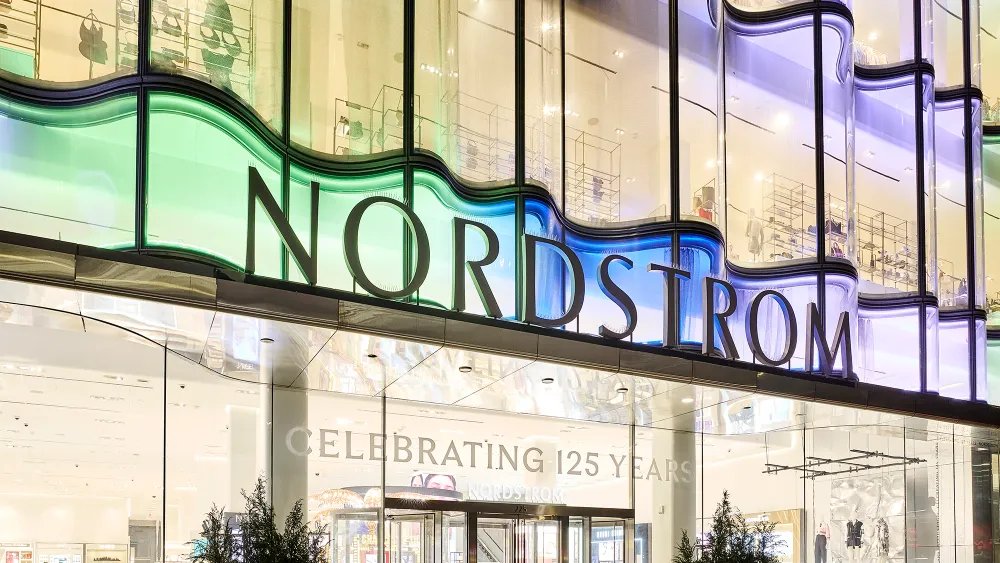
PARIS — Retail technology and buying intelligence platform NuOrder by Lightspeed announced Wednesday it is accelerating its European expansion through a new partnership with Boozt, one of the largest e-commerce retailers in the Nordics.
Boozt serves more than 3.5 million active customers and generates roughly 700 million euros in annual sales.
The partnership will streamline its buying operations and replace manual workflows and comes as retailers increasingly embrace AI and centralized product data to make faster, more informed assortment decisions.
Buyers have long acted as fashion’s tastemakers, relying on instinct, experience and brand relationships to decide what ends up on store shelves. But as AI becomes more embedded in forecasting and assortment planning, that authority is starting to shift.
“Retailers are realizing in order for the [buying] model to work, they have to have clean data. In order to have clean data, they have to remove all the friction in a lot of these manual processes,” said Danielle Fairfield, vice president of retail at NuOrder.
The platform already works with department stores including Bloomingdale’s, Nordstrom and Saks in the U.S., as well as David Jones in Australia.
Its partnership with Boozt underscores a broader industry trend toward “buying intelligence,” where structured data and centralized workflows allow retailers to reduce duplication, respond more quickly to consumer trends, and collaborate more closely with brand partners.
Yet, the shift is less about automation than replacing siloed processes with a redistribution of power within the buying process itself — a recalibration that could redefine how fashion assortments are decided in the AI era.
While AI has long been used in areas like site search and product descriptions, its role is expanding into core commercial decisions such as what retailers buy and how much of it.
That marks a significant departure from traditional models, where buying teams operated independently, often within siloed categories and with limited visibility across the broader business, making decisions based on instinct.
“That process is insanely manual,” said Fairfield. In many cases, buyers could only assess a narrow slice of their assortment. “You have no idea what you’re buying,” she said, describing how decisions were often based on partial or outdated information.
AI is beginning to change that by enabling retailers to centralize and standardize product data, creating a single, shared view of the assortment. With cleaner inputs, retailers can use AI-driven tools to forecast demand more accurately, visualize how collections will look as a whole and identify imbalances — from over-indexing on certain categories to duplicating similar products across brands.
The result is a shift from intuition-led decision-making to a more systematized approach, where buyers are increasingly guided by data.
According to NuOrder’s recent “The Age of Intelligent Buying” study, 40 percent of retailers said investing in AI and automation was a top priority in 2025, compared to just 20 percent in 2024. And AI-based forecasting adoption grew from 11 percent in 2024 to 17 percent in 2025.
However, a lack of trust in AI remains a major barrier, particularly given the financial stakes involved in buying decisions. “You have to have very strong, very clean data,” said Fairfield, which has traditionally been an issue with manual inputs into spreadsheets.
Without it, even the most advanced models risk generating flawed recommendations.
That has placed data infrastructure at the center of retailers’ AI strategies. Before they can fully rely on predictive tools, many are focused on eliminating manual processes, standardizing inputs and ensuring consistency across systems — a foundational overhaul that is proving both time-consuming and organizationally complex.
Retailers that are performing well “tend to embrace technology,” said Fairfield, adding that price-sensitive consumers and increasing competitive pressures are making the need to adapt urgent.
Buying teams will be better enabled to build assortments that reflect real consumer behavior, and will reshape internal processes and departments across retail, she said.
The current focus on price-sensitivity has also led to a de-prioritization of sustainability. “It is not the focus of our conversations anymore,” said Fairfield, noting that the topic dominated discussions with retail partners just a couple of years ago. Though environmental concerns seem to have receded from the forefront of operational decision-making, AI efficiency can still support sustainability goals by reducing overproduction and excess inventory, she noted.
Change management will be the biggest challenge for retailers, Fairfield said, as they reorganize buying teams and their roles evolve from instinct-based decision makers to working within data-driven models.