dailynewsnblog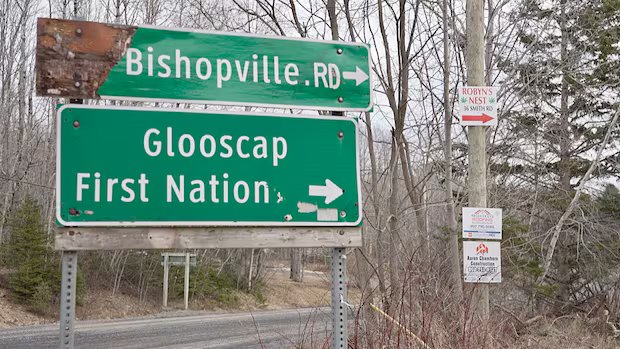
On a road leading to the Glooscap First Nation, a community of a few dozen homes near Hantsport, N.S., a sign points to the band administration office. Next to it, a placard with cannabis leaves shows the way to a truckhouse, a term from the days of trading posts that’s returned to assert treaty rights.
The signs at this crossroad are a metaphor for the position this Mi’kmaw community finds itself in.
Following the RCMP raids on what police call illegal storefronts in Nova Scotia, Glooscap is asking whether it wants cannabis sold on the reserve at all. If the answer is yes, who should sell it and profit from it. That could be private retailers — one is already operating on the reserve — or the band itself.
The three options will go on a ballot in a referendum to be voted on by 340 eligible voters, likely in August at the band’s annual general meeting, said Chief Sidney Peters.

“It’s not, you know, leadership is just making all these decisions, you know in the boardroom and then moving forward,” said Peters. “We’re doing what the community would like.”
Community engagement, an exercise in self-governance, is nothing new in Glooscap.
It’s through this process that the community was founded when it separated from Annapolis Valley First Nation in 1984, becoming the newest of Nova Scotia’s 13 bands. It tackles seemingly every issue this way: from garbage to elver management, to setting salaries for the chief and councillors.
There are 450 members, of which only about 125 live on-reserve. Among them, roughly three-quarters are old enough to vote.
Health and safety raised as concerns
The cannabis consultation is happening amid escalating tensions ever since the RCMP started cracking down on Indigenous-owned truckhouses and dispensaries under a directive from the provincial government. The province has cited a court decision that does not recognize cannabis sales as a treaty right.
The chief said the health and safety of the community is a primary consideration as they work to develop a cannabis law.
Police recently displayed high THC cannabis products from seizures that look like popular brands of cookies, chips and breakfast cereals. RCMP have said the cannabis source is organized crime.

In a community with an increasing number of young families, there’s concern on Glooscap about a proliferation of cannabis retailers and the message to youth.
Gail Tupper, a band councillor and grandmother, says she’s worried about traffic and crime coming into the community.
“We don’t know who they are,” she said. “Is it going to be normal for them to see cannabis selling everywhere? That’s the part that concerns me, is the normalization of using cannabis.”
Who will profit?
The privately owned cannabis store, Robyn’s Nest Treaty Truckhouse, is located in a residential area of the reserve.
Band members voted to create a new zone for commercial activity, Glooscap Landing, away from homes. The landing, just off a busy highway, was built in 2018.

Run by the band’s business development arm, Glooscap Ventures, there’s a busy gas station and a doughnut shop. Across from it, a wigwam and the Canada, Nova Scotia, Mik’maq Nation and Every Child Matters flags are planted in a gravel lot. That’s where a community-operated cannabis store would be built.
Glooscap would be open to talking to the NSLC about selling regulated cannabis, said Peters.
Having profits flow back to the community is how the band does business, he said. That formula has helped the band increase its financial self-reliance and prosperity.
Peters said 83 per cent of the band’s budget comes from “own source” revenue: profits from its fisheries, gaming, retail and renewable energy businesses. The remainder is funded by the federal government.
After funding Glooscap salaries, programs and services, each adult member received a $1,000 dividend last Christmas, an increase from previous years. The wealth sharing program cost $340,000 last year, he said.
Truckhouse owner vows court challenge

Robyn Hazard is the owner of Robyn’s Nest, where she employs five or six people, she said.
She said her products do not come from organized crime, nor does she sell them in the ‘Trips Ahoy’ or ‘Cap’n Crunch!’ packaging that was seized in recent raids.
She noted alcohol sold by the NSLC is often colourfully packaged to be attractive to young people.
However, she would not disclose the source of the cannabis she sells, referring to that as “minuscule” information.
While acknowledging that community engagement is “standard” in Glooscap, if members vote against privately owned cannabis stores, Hazard vows to launch a court appeal.
“Even if the community was to say no, that we couldn’t, I would say that they’re then infringing on my rights as a [certificate of possession] title owner to not be able to use my land as I see fit,” she said.
She said that some band members have paid from $1 to $100,000 for a certificate of possession for land. It’s a fee paid by a band member to secure land tenure on reserves.
Without agreements ‘bad situations’ occur
Indigenous cannabis retailers have cases going through the courts, attempting to confirm their treaty right to sell and earn a “moderate livelihood.”
Peters said these cannabis conflicts were preventable had deals been worked out between the chiefs across the province and the previous Liberal government during the time of legalization, and now the Progressive Conservative government. In joint statements, they affirmed their self-governance over cannabis law in their communities, and said the raids have damaged relations with the province. They are calling for a moratorium on the enforcement action.

“When [an agreement] doesn’t happen, this is what kind of happens — bad situations start to occur,” he said.
Tupper won’t predict the outcome of the referendum, but having a grassroots approach to this divisive issue, she said, is what’s needed in her home community.
“Some people will be upset regardless of what side they sit on, but that’s the democratic way,” Tupper said.
MORE TOP STORIES