dailynewsnblog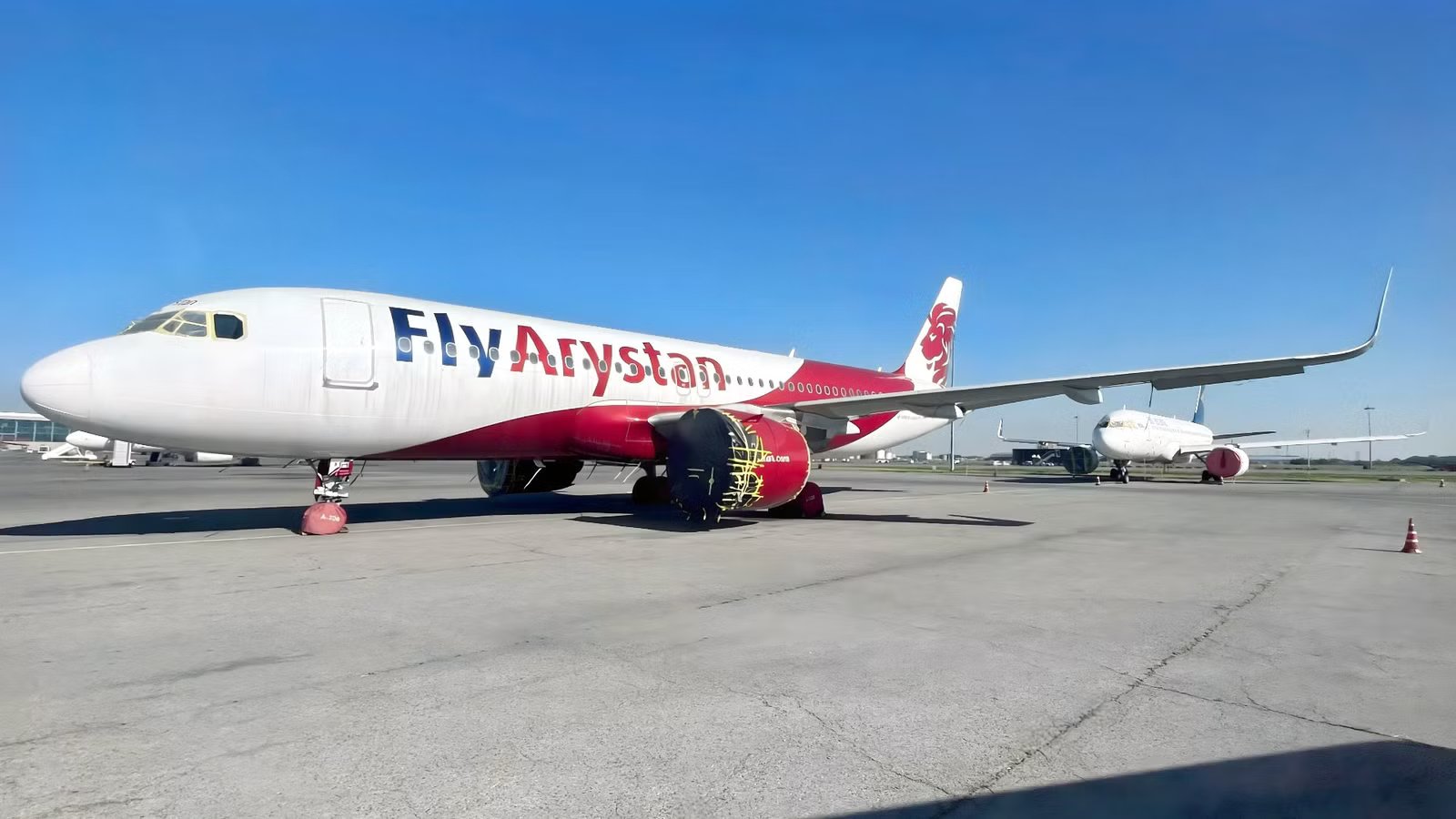
Kazakh flag carrier Air Astana today released its full-year results for the 2025 calendar year. The carrier called out unscheduled engine removals (UER) caused by ongoing Pratt & Whitney engine recalls. It remarked that 13 of its aircraft had been grounded during the peak season, with engine replacements costing it $42.3 million.
Despite the impact of unscheduled engine replacements, the Air Astana Group (formed of full-service  Air Astana and low-cost FlyArystan) recorded an 11% increase in revenue, reaching $1.4 billion. The group remained profitable despite its profit after tax dipping to $13.6 million. This was primarily driven by the grounding of aircraft during the peak season, according to the airline’s CEO, Peter Foster.
Air Astana Is Still Unhappy With Pratt & Whitney

While presenting the Air Astana Group’s financials, Foster spent a significant chunk of his presentation talking about the impact of the Pratt & Whitney engine removals. This has been a hot topic for annual results presentations so far this year. Last month, Airbus CEO Guillaume Faury was particularly critical of the ongoing issues, criticizing the company for putting airline customers before the OEM.
Air Astana has been grounding aircraft due to engine overhauls since the summer of 2023, when Foster previously told Simple Flying that the issues had become a “Chronic Illness”. Today, Foster did share some positivity on the situation, remarking, “We see the impact from UERs as diminishing over time.” He added,
“Pratt & Whitney prompted Unscheduled Engine Removals are an industry-wide issue. UERs have impacted profitability by limiting our growth opportunities and thereby increasing unit costs, driven primarily by lost capacity, compressing the margin between [revenue] and [costs] across the year.”
Simple Flying has reached out to representatives of Pratt & Whitney for comment. This story will be updated as appropriate.
How Air Astana Is Dealing With The Ongoing Impacts

Air Astana is using a range of tactics to try to reduce the impact of unscheduled engine removals on its operations. Firstly, the airline has leased five additional A320 family aircraft. These are predominantly the older CEO models, which are unaffected as they use a different engine. In addition, it has 13 spare leased engines that can be swapped into aircraft as needed.
The Air Astana Group has also deployed a tactic called Dynamic Capacity Management. This means that the airline is “proactively resting” its engines to give them more potential usage during the peak travel periods. The airline’s MRO team is also getting more skilled with engine replacements, having undertaken 208 since January 2024.
It’s not all bad news, though. Things are looking up as far as Air Astana is concerned, with Foster pointing out that Pratt & Whitney is picking up the pace with engine shop visits. Air Astana has as many slots for the first half of 2026 as the entirety of 2025. While new engines are being delivered without issues, the airline believes that it will be affected by the Pratt & Whitney engine impacts through 2028.

Air Astana CEO: Pratt & Whitney Issues Have Become “A Chronic Illness”
Although the airline only has two A320neos on the ground at present, things could change very rapidly.
An Exciting Year Ahead For Air Astana With The Boeing 787

The remainder of 2026 is set to be an exciting year for Air Astana as the Kazakh flag carrier will expand its fleet, finally taking delivery of its first Boeing 787. Two of the jets are due to be delivered by the end of the year, followed by a third in early 2027. This will enable the carrier to retire its fleet of three Boeing 767 jets in 2027.
In addition to these three 787s, Air Astana confirmed an additional order for up to 15 more Dreamliners last month. Air Astana has had the 787 Dreamliner on its order book since 2012. This means that the first delivery will come almost 15 years after the first order.
Telling Simple Flying about the 787s due to come into the fleet, Foster remarked that the aircraft will have 30 business class seats to match the 767 cabin. Interestingly, the airline swapped from the -8 to the -9 to be able to put the entire business cabin between doors one & two. With the -8, the cabin would be split by a galley. At the rear of the aircraft will be 273 economy seats.
The route network will initially mirror the current 767 network. With more time, Foster remarked that the airline could continue to expand east, west, and south. However, difficulties caused by the Russian airspace closures mean that it would currently only be possible to fly to the United States with a payload cap.